Blackened Chicken Recipe: Chef’s Proven Method for Restaurant-Quality Results
Blackened chicken is one of the most dramatic and flavorful cooking techniques in modern cuisine, originating from the Creole kitchens of New Orleans. This method creates a bold, spiced crust while keeping the interior juicy and tender—a combination that seems impossible until you master the technique. The key lies in understanding heat control, spice balance, and the Maillard reaction that creates that signature dark, caramelized exterior.
Many home cooks shy away from blackening because they fear burning their chicken or creating an unpleasantly bitter crust. However, with the right approach and proper equipment, you can achieve the same results that made this dish famous in upscale restaurants. This guide walks you through every step of creating perfectly blackened chicken that impresses family and guests alike.
Understanding the Blackening Technique
Blackening is a dry-heat cooking method that relies on extremely high temperatures to create a flavorful crust through caramelization. Unlike grilling or pan-searing at moderate temperatures, blackening requires cast iron skillets heated to 500°F or higher. This intense heat causes the spices to bloom and bond with the chicken’s surface, creating layers of complex flavor.
The technique was popularized by Chef Paul Prudhomme in the 1970s and 1980s, transforming Creole cooking from a regional specialty into a nationwide phenomenon. The magic happens in seconds—the spice crust forms rapidly while the chicken’s interior remains protected from overcooking. This contrast between the charred exterior and moist interior is what makes blackened chicken so compelling.
Temperature control is absolutely critical. If your skillet isn’t hot enough, you’ll end up with steamed chicken with burnt spices. If it’s too hot, the spices burn before the chicken cooks through. Finding that sweet spot—around 500-550°F—ensures even cooking and proper crust development. Cast iron is essential because it retains heat better than stainless steel and distributes it more evenly.
Essential Ingredients and Spice Blend
The spice blend is where blackened chicken gets its distinctive character. Traditional recipes include paprika, cayenne pepper, garlic powder, onion powder, thyme, oregano, black pepper, and salt. The paprika provides color and mild flavor, while cayenne delivers heat. Garlic and onion powders contribute savory depth, and the dried herbs add aromatic complexity.
Here’s the classic spice blend for four chicken breasts:
- 2 tablespoons paprika (sweet or smoked)
- 1 tablespoon cayenne pepper (adjust for heat preference)
- 1 tablespoon garlic powder
- 1 tablespoon onion powder
- 1 tablespoon dried thyme
- 1 tablespoon dried oregano
- 1 tablespoon black pepper
- 2 teaspoons salt
- ½ teaspoon cayenne (optional, for extra heat)
For the chicken itself, boneless, skinless chicken breasts work best for even cooking. You’ll also need butter—about 2 tablespoons per batch—and optionally lemon juice for finishing. Many chefs add a small amount of dried mustard powder (½ teaspoon) for extra depth.
Mix your spice blend in a shallow bowl and keep it nearby. Some cooks prefer to make a larger batch and store it in an airtight container for future use. The homemade sauce options for serving blackened chicken are nearly endless—from simple lemon butter to complex Creole reductions.
Preparation and Seasoning
Proper preparation determines your success rate. Start by patting your chicken breasts completely dry with paper towels. Any moisture on the surface will create steam, preventing that crucial crust from forming. If your chicken breasts are thicker than ¾ inch, gently pound them to uniform thickness—about ¾ inch is ideal.
Place your cast iron skillet in a cold oven and preheat to 500°F. This ensures even heating throughout the pan. While the oven preheats, prepare your workspace. Have your spice blend ready in a shallow dish, your chicken on a plate, and your butter measured and ready. Organization is crucial when working with such high temperatures.
About 5 minutes before cooking, remove the skillet from the oven using an oven mitt—it will be extremely hot. Place it on your stovetop over medium-high heat. Add a small amount of oil with a high smoke point (vegetable or canola) and let it heat for 1-2 minutes. The oil should shimmer and move easily across the pan.
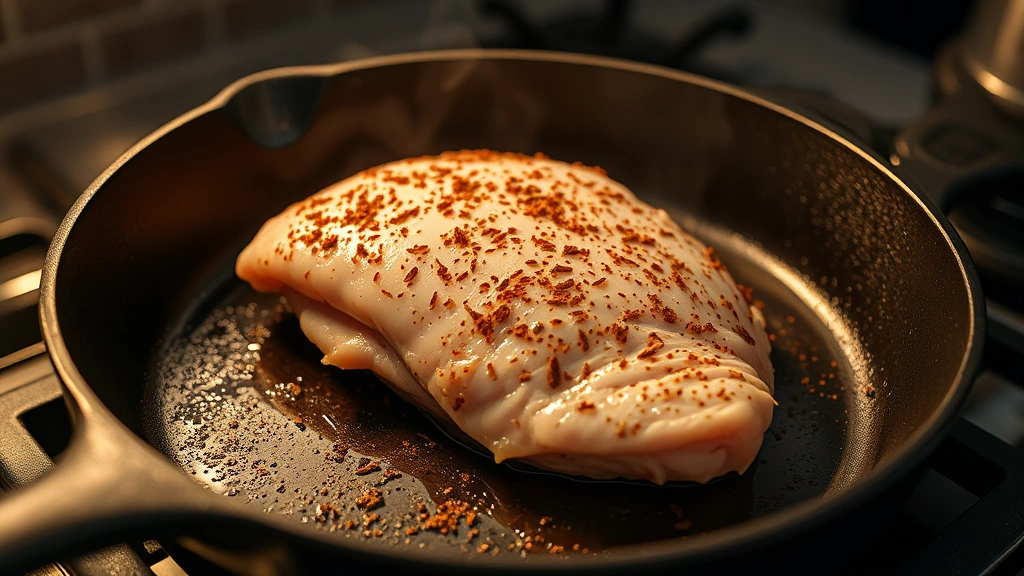
While the skillet continues heating, coat both sides of each chicken breast generously with the spice blend. Press the seasoning into the chicken so it adheres properly. Don’t be shy—the spices should form a visible crust on the surface. Some chefs lightly brush the chicken with melted butter before applying spices, which helps them stick better.
The Cooking Method
This is where precision matters most. Your skillet should be smoking slightly—this indicates it’s reached the proper temperature. Carefully place the seasoned chicken breasts into the hot skillet. You’ll hear an aggressive sizzle and see smoke—this is exactly what you want. Do not move the chicken for the first 2-3 minutes.
During these first few minutes, the spice crust is forming through the Maillard reaction, a chemical process that creates hundreds of new flavor compounds. Moving the chicken disrupts this process and prevents proper crust development. Resist the urge to flip or adjust the chicken.
After 2-3 minutes, carefully flip each piece using tongs. The underside should be dark brown to nearly black—not burnt, but definitely dark. If it’s pale, your skillet wasn’t hot enough. Cook the second side for another 2-3 minutes, depending on thickness.
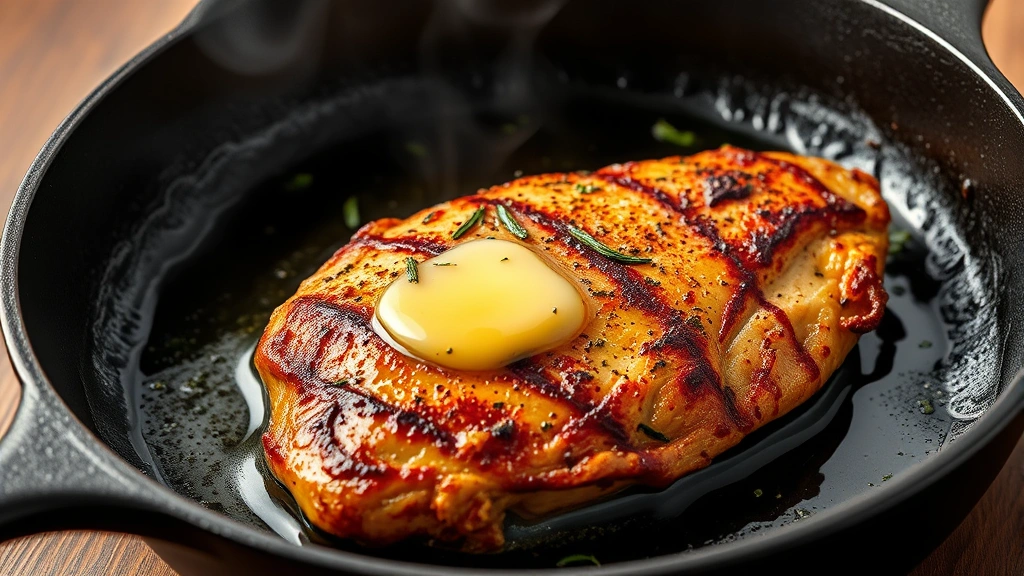
At this point, add a small pat of butter to the skillet around each piece. The butter will foam and may briefly ignite—this is fine and adds flavor. Tilt the pan and baste the chicken with the melted butter for 30-45 seconds. This finishing step adds richness and ensures even cooking.
Remove the chicken from the skillet and let it rest on a cutting board for 3-5 minutes. This allows the juices to redistribute, ensuring moist meat throughout. The internal temperature should reach 165°F, which you can verify with an instant-read thermometer.
Serving Suggestions and Pairings
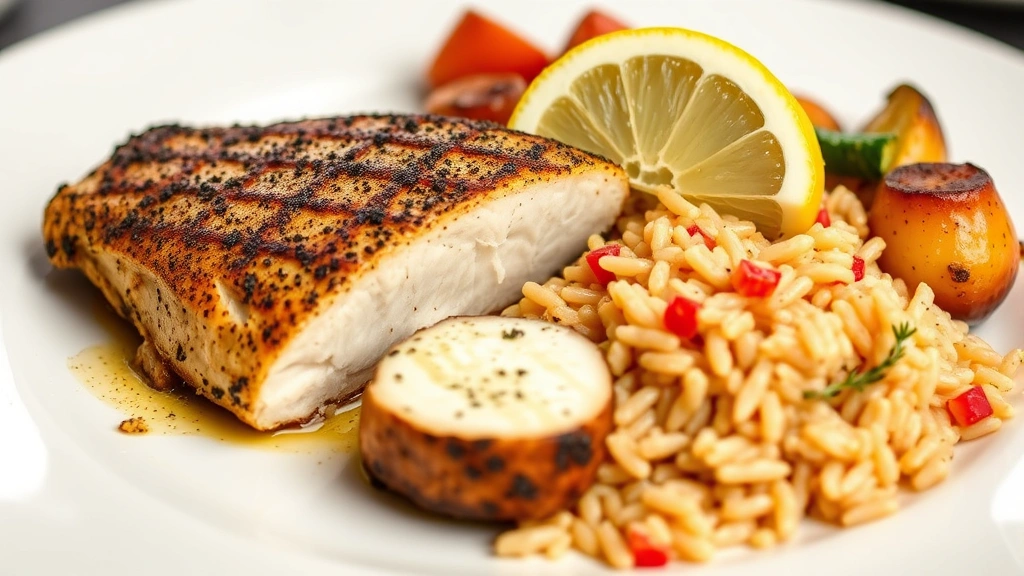
Blackened chicken is incredibly versatile and pairs well with numerous sides and sauces. Classic New Orleans accompaniments include creamy pasta, rice pilaf, and roasted vegetables. The bold spices complement acidic sides—consider serving with a fresh salad dressed in vinaigrette or steamed vegetables with lemon.
For sauce options, a simple lemon butter sauce is traditional. Melt 2 tablespoons butter with 1 tablespoon fresh lemon juice and pour over the finished chicken. More adventurous cooks might prepare a Creole sauce or a spicy remoulade. Check out our guide to how to make homemade sauces for detailed recipes.
Blackened chicken also works beautifully in grain bowls, tacos, and salads. Slice the cooked chicken and layer it over rice with black beans and corn for a quick weeknight meal. For quick breakfast recipes, you can shred leftover blackened chicken and use it in breakfast burritos or scrambled eggs.
Wine pairings deserve consideration. The bold spices and smoky crust pair well with medium-bodied red wines like Pinot Noir or Grenache, or with crisp white wines like Sauvignon Blanc. Avoid heavy, oaky wines that compete with the chicken’s flavors.
Troubleshooting Common Issues
Problem: The spices burn before the chicken cooks through. Your skillet is too hot. Reduce the heat slightly or ensure your chicken pieces are uniform in thickness. Thicker pieces need slightly lower heat and longer cooking times.
Problem: The crust is pale instead of dark. Your skillet wasn’t hot enough at the start. Preheat longer and verify the temperature with an infrared thermometer. The surface should be at least 500°F.
Problem: The chicken is dry inside. You’re cooking it too long. Reduce heat slightly and use thinner, uniform pieces. Always use an instant-read thermometer—remove the chicken at exactly 165°F.
Problem: The spices fall off during cooking. Your chicken wasn’t dry enough before seasoning. Pat it completely dry and consider lightly brushing with melted butter before applying the spice blend.
Problem: Uneven browning. Your skillet heat isn’t distributed evenly. Cast iron should solve this, but ensure it’s fully preheated. Avoid moving the chicken unnecessarily during the first side.
For more complex flavor development, consider exploring vintage grandma recipes that use similar spice-forward techniques, or consult resources from the Culinary Institute of America for advanced techniques.
Storage and Reheating
Leftover blackened chicken stores well in an airtight container in the refrigerator for up to 4 days. The crust may soften slightly, but the flavor remains excellent. To reheat, place the chicken in a 350°F oven for 8-10 minutes until warmed through. Avoid microwaving, which can make the crust soggy.
For longer storage, freeze blackened chicken for up to 3 months. Wrap each piece individually in plastic wrap, then place in a freezer bag. Thaw overnight in the refrigerator before reheating. The texture may be slightly less perfect than fresh, but the flavor remains vibrant.
Blackened chicken transforms into excellent components for other dishes. Shred it for sandwiches, dice it for grain bowls, or slice it for salads. Its bold flavor works particularly well in Cajun-inspired dishes and pairs wonderfully with rice-based meals.
FAQ
Can I use chicken thighs instead of breasts?
Absolutely. Chicken thighs actually have more forgiving cooking windows because they stay moist even with slight overcooking. Increase cooking time by 1-2 minutes per side and verify they reach 165°F internally.
What if I don’t have a cast iron skillet?
Cast iron is strongly recommended because it retains heat better than other materials. If unavailable, use a heavy stainless steel skillet, but preheat it longer and monitor the temperature carefully with an infrared thermometer.
Can I make blackened chicken in the oven?
Traditional blackening requires stovetop cooking for proper crust development. However, you can season chicken and finish it under a preheated broiler for 3-4 minutes per side, though the results differ from stovetop blackening.
How spicy is blackened chicken?
The heat level depends on cayenne quantity. The recipe above is moderately spicy but not extreme. Reduce cayenne to 1 teaspoon for milder results, or increase to 1½ teaspoons for more heat.
Can I prepare the spice blend ahead of time?
Yes. Mix the spices in advance and store in an airtight container for up to 3 months. This makes weeknight cooking much faster. Label the container with the date and contents.
What’s the best way to achieve even browning?
Use uniform chicken thickness, ensure your skillet is fully preheated, and avoid moving the chicken during the first 2-3 minutes of cooking. Even heat distribution from cast iron is crucial.
Can I add other spices to the blend?
Certainly. Smoked paprika, dried mustard powder, or a pinch of ground cumin add interesting variations. Start with small amounts and adjust to your preference. Some cooks add a tiny amount of sugar to enhance caramelization.


