How to Make Chicken Mole? Authentic Recipe
Chicken mole is one of Mexico’s most iconic and complex dishes, representing centuries of culinary tradition and cultural heritage. This rich, deeply flavored sauce combines an intricate blend of chiles, spices, chocolate, and other ingredients to create a dish that’s far more sophisticated than its simple appearance suggests. Learning how to make authentic chicken mole transforms your cooking repertoire and opens doors to understanding Mexican gastronomy at its deepest level.
The beauty of chicken mole lies in its balance of flavors—sweet, savory, spicy, and slightly bitter notes dance together in perfect harmony. What makes this dish truly special is that no two mole recipes are identical; each family, region, and cook brings their own interpretation to this traditional favorite. Whether you’re preparing it for a special celebration or simply want to explore authentic Mexican cuisine, this comprehensive guide will walk you through every step of creating restaurant-quality chicken mole in your own kitchen.
History and Origins of Mole
The word “mole” comes from the Nahuatl word “molli,” meaning sauce or mixture. Chicken mole has deep roots in Mexican culinary history, with origins tracing back to pre-Hispanic times when indigenous peoples combined native ingredients with cooking techniques that had been refined over generations. The dish gained prominence during the colonial period when Spanish ingredients like chocolate, almonds, and various spices were introduced to Mexico, creating a fusion that would become legendary.
According to culinary historians, mole negro—one of the most complex varieties—originated in Oaxaca, a region renowned for its mole traditions. The legend tells of nuns in a convent who created this elaborate sauce to impress an important church dignitary, combining their available ingredients into what became a masterpiece. Today, Oaxaca remains the mole capital of Mexico, with distinct regional variations including mole negro, mole rojo, mole amarillo, and mole pipián, each with unique characteristics and ingredient profiles.
This culinary institute resource provides excellent context on traditional Mexican cooking methods and their historical significance. Understanding this background enriches your appreciation for the dish and informs your cooking approach.
Essential Ingredients Guide
Creating authentic chicken mole requires gathering specific ingredients that might not be in your everyday pantry. The good news is that most items are available at specialty stores, Mexican markets, or online retailers. Here’s what you’ll need:
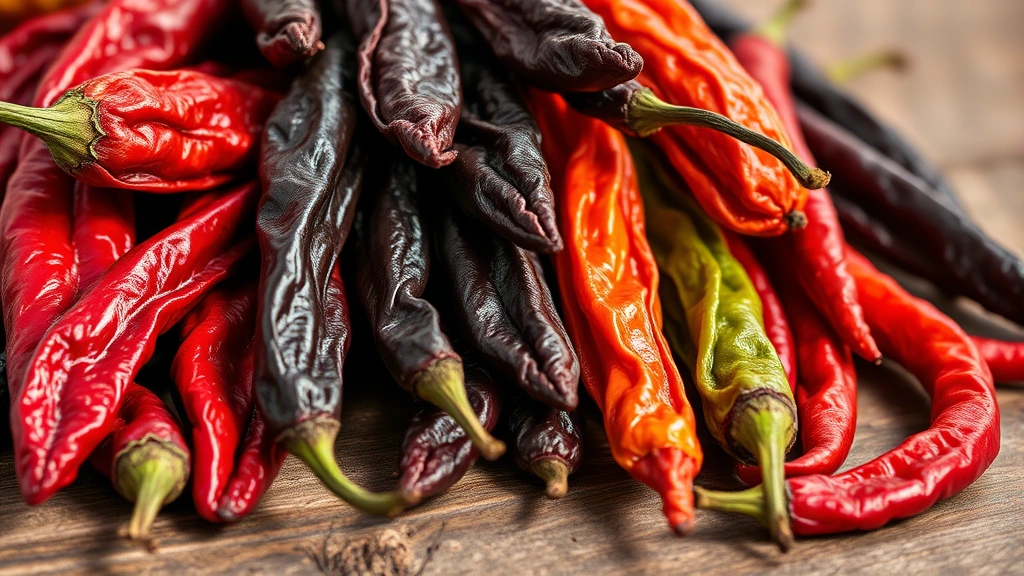
Dried Chiles: The foundation of any mole sauce, dried chiles provide depth, complexity, and varying heat levels. For a traditional mole negro, you’ll typically use mulato chiles (dark, fruity, mild), pasilla chiles (smoky, complex), and chipotle chiles (smoky, spicy). Ancho chiles work well in mole rojo versions.
Spices and Aromatics: Cinnamon sticks (Mexican canela preferred), whole cloves, cumin seeds, coriander seeds, black peppercorns, and Mexican oregano create the spice backbone. Fresh garlic and white onions are essential aromatic foundations.
Proteins and Thickeners: Unsweetened chocolate (Mexican chocolate or high-quality dark chocolate), raw almonds, raw peanuts, sesame seeds, and raisins add richness and help thicken the sauce while contributing subtle sweetness.
Pantry Staples: High-quality vegetable oil, good chicken broth, salt, and sometimes a touch of sugar balance the complex flavors. Some recipes include plantains or avocado leaves for additional depth.
The chicken itself should be bone-in, skin-on pieces—typically thighs and breasts work best as they remain tender during cooking. This ensures the mole sauce coats the chicken beautifully while the meat stays succulent.
Preparation and Toasting
Proper preparation is crucial for developing the deep, complex flavors that make chicken mole so extraordinary. Begin by cleaning your dried chiles: remove stems and seeds, then lightly toast them in a dry skillet over medium heat for just 30-45 seconds per side. This step is critical—toasting awakens the chiles’ essential oils and intensifies their flavor without burning them, which would create bitterness.
Place toasted chiles in a bowl and cover with hot water, allowing them to soak for 15-20 minutes until they’re completely soft and pliable. This softening makes them easier to blend and ensures smooth sauce texture. Reserve the soaking liquid—it’s flavorful and helps achieve the right consistency.
While chiles soak, prepare your spices by toasting them separately in a dry skillet. Add cinnamon stick pieces, whole cloves, cumin seeds, and coriander seeds. Toast for 2-3 minutes, stirring frequently until fragrant. Transfer to a spice grinder or molcajete and grind into a fine powder. This fresh-ground spice blend is far superior to pre-ground alternatives.
Toast your raw almonds and peanuts in the same skillet for 3-4 minutes until golden and fragrant. Separately toast sesame seeds for garnish until light brown. Dice your white onions and mince fresh garlic cloves. Having everything prepped before you begin blending ensures a smooth cooking process.
Making the Mole Sauce
This is where the magic happens. Drain your softened chiles, reserving the soaking liquid. In a blender, work in batches to avoid overloading: combine softened chiles, toasted almonds, toasted peanuts, half your ground spices, and about one cup of the reserved chile soaking liquid. Blend until completely smooth, adding more soaking liquid as needed to achieve a thick paste consistency.
Heat oil in a large, heavy-bottomed pot or Dutch oven over medium heat. Add diced onions and cook until translucent, about 4-5 minutes. Add minced garlic and cook another minute until fragrant. Pour in your blended chile-nut mixture and stir constantly for 5-7 minutes. This cooking step is essential—it removes the raw blended taste and allows flavors to marry and deepen.
Add your remaining ground spices, raisins, and finely chopped unsweetened chocolate. Stir well, cooking for another 3-4 minutes. The chocolate won’t be obvious in the final flavor—it adds depth and subtle sweetness rather than chocolate taste. Gradually add chicken broth (about 2-3 cups), stirring constantly to achieve a sauce consistency that coats the back of a spoon.
Simmer this sauce over low heat for 20-30 minutes, stirring occasionally. The sauce should be rich, dark, and aromatic. Taste and adjust seasonings—add more salt, spice, or a pinch of sugar if needed. The mole sauce should balance all flavor components: the heat from chiles, earthiness from spices, richness from nuts and chocolate, and slight sweetness from raisins and chocolate.
Cooking and Combining
While your mole sauce simmers, prepare the chicken. Pat chicken pieces dry with paper towels and season generously with salt and pepper. In a separate large skillet, heat oil over medium-high heat. Working in batches to avoid crowding, brown the chicken pieces on both sides until golden, about 4-5 minutes per side. This browning step adds flavor through the Maillard reaction.
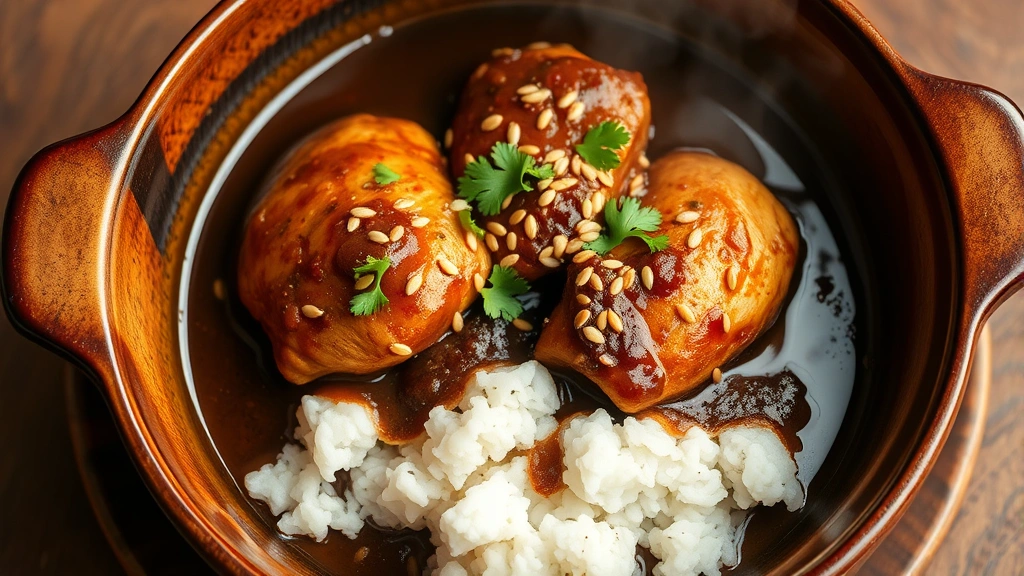
You don’t need to cook the chicken completely through at this stage—it will finish cooking in the mole sauce. Transfer browned chicken to a large pot or Dutch oven. Pour your finished mole sauce over the chicken pieces, ensuring they’re well coated. Add additional chicken broth if needed so the sauce comes about halfway up the chicken pieces.
Bring to a gentle simmer over medium heat, then reduce heat to low. Cover partially and simmer for 35-45 minutes until chicken is completely cooked through and tender. The chicken should be so tender it nearly falls off the bone. Stir occasionally and adjust seasonings as needed.
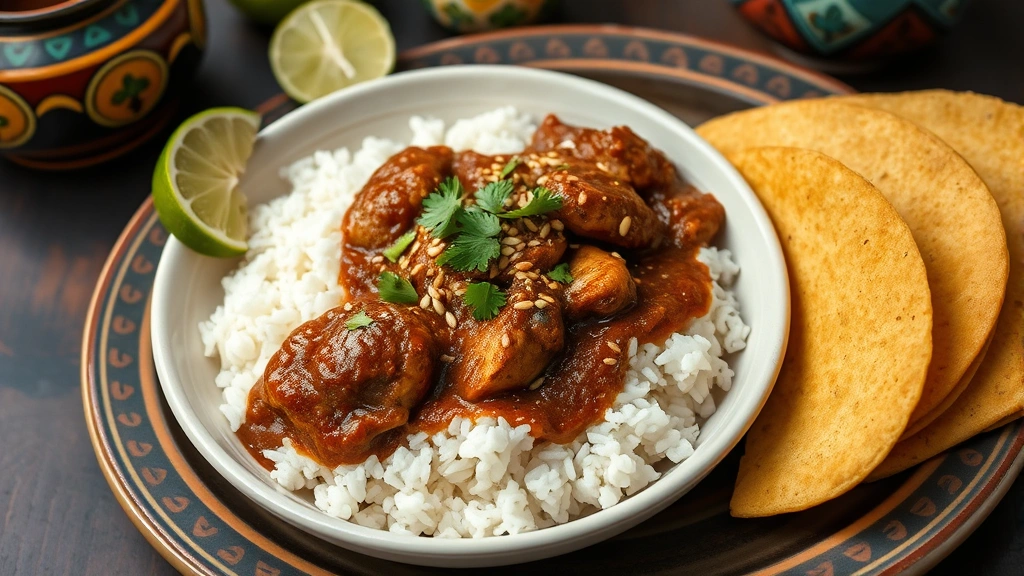
For a presentation that rivals restaurant versions, serve your chicken mole on a bed of white rice. This allows guests to enjoy the sauce with every bite. If you’re serving with street tacos, warm your tortillas separately and let guests assemble their own.
Serving and Storage
Authentic chicken mole is traditionally garnished with toasted sesame seeds, fresh cilantro, and sometimes sliced radishes or white onion. These garnishes add textural contrast and brightness to the rich sauce. Serve with warm corn or flour tortillas, allowing guests to enjoy the mole in multiple ways.
Chicken mole pairs beautifully with simple sides. Consider serving alongside cilantro-lime rice, roasted vegetables, or a simple green salad dressed with lime vinaigrette. If you’re planning a Mexican-themed meal, complement your mole with avocado crema or a fresh salsa recipe for canning to add bright, fresh flavors.
One of mole’s greatest advantages is that it actually improves with time. The flavors continue developing as it sits, making it perfect for advance preparation. Store finished mole sauce in airtight containers in the refrigerator for up to five days, or freeze for up to three months. When reheating, do so gently over low heat, stirring frequently and adding a splash of broth if the sauce has thickened too much.
You can also freeze the sauce separately from the chicken, allowing flexibility in how you use it. Leftover mole sauce works wonderfully as an enchilada sauce, a topping for eggs, or a dip for tortilla chips. Some cooks use it as a finishing sauce for grilled vegetables or even in unconventional applications like griddle recipes for unexpected flavor twists.
FAQ
What’s the difference between mole negro and mole rojo?
Mole negro is darker, more complex, and traditionally uses mulato and pasilla chiles along with chocolate and numerous spices. It’s richer and more time-intensive. Mole rojo uses ancho or guajillo chiles, resulting in a brighter red color and slightly fresher, less complex flavor profile. Both are authentic; the choice depends on your preference and regional tradition.
Can I make mole sauce without chocolate?
While chocolate is traditional in many mole recipes, it’s not absolutely essential. However, it adds depth and helps balance the heat from chiles. If you must omit it, increase the nut content slightly and consider adding a touch more spice to compensate for lost complexity.
How spicy is chicken mole?
Traditional mole isn’t typically very spicy despite using dried chiles. The heat is usually mild to moderate because the chiles are balanced with other ingredients. If you prefer less heat, use fewer chiles or remove more seeds before soaking. For more heat, add a chipotle chile or increase the quantity of spicy varieties.
Can I use rotisserie chicken instead of cooking chicken from scratch?
Yes, absolutely. Using store-bought rotisserie chicken saves significant time. Shred or cut the meat into pieces and simply heat it through in the mole sauce for 10-15 minutes. The result is slightly less flavorful than cooking raw chicken in the sauce, but it’s convenient and still delicious.
What if my mole sauce is too thick or too thin?
If too thick, add broth gradually while stirring until reaching desired consistency. If too thin, simmer uncovered for longer to allow liquid to reduce, or blend in additional nuts or chocolate to thicken. Mole sauce should coat the back of a spoon when ready.
Is mole gluten-free?
Traditional chicken mole made from scratch with whole ingredients is naturally gluten-free. However, always check ingredient labels on store-bought items like chocolate or spice blends. When serving to guests with gluten concerns, verify that all components are certified gluten-free.
How many servings does this recipe make?
This authentic recipe typically serves 6-8 people as a main course when served with rice and sides. The mole sauce is rich and flavorful, so a little goes a long way. You’ll have excellent leftovers that actually taste better the next day.


