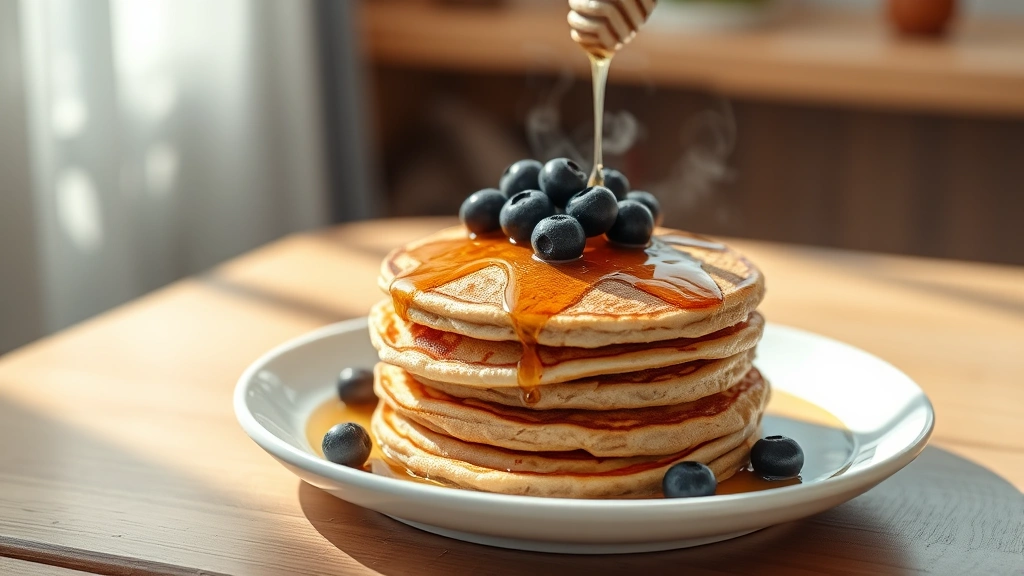
Best Coconut Flour Pancakes? Tried & True Recipe
Coconut flour pancakes represent a game-changing approach to breakfast for anyone seeking gluten-free, grain-free, or low-carb alternatives without sacrificing flavor or texture. Unlike traditional wheat flour pancakes that rely on gluten development, coconut flour demands a completely different technique—one that many home cooks struggle with initially. The secret lies in understanding coconut flour’s unique absorption properties and adjusting your liquid-to-flour ratio accordingly.
After testing dozens of variations, I’ve discovered that the best coconut flour pancakes balance structural integrity with tender crumb, delivering fluffy stacks that won’t crumble or taste dense. This recipe has been refined through countless breakfast mornings, feedback from family and friends, and careful attention to ingredient proportions. Whether you’re managing dietary restrictions or simply exploring new breakfast possibilities, these pancakes deserve a permanent spot in your rotation.
Why Coconut Flour Changes Everything
Coconut flour isn’t simply a one-to-one substitute for all-purpose flour—it’s an entirely different ingredient that behaves uniquely in batters and doughs. One-quarter cup of coconut flour absorbs approximately the same amount of liquid as one cup of wheat flour, meaning your typical pancake proportions will create a dry, crumbly mess if you don’t adjust accordingly.
The reason stems from coconut flour’s composition. When coconut meat is pressed to extract oil, the remaining solids are ground into a fine powder with exceptional absorbency. This powder contains minimal starch compared to grains, forcing you to rely on eggs for structure and binding rather than gluten development. The high fiber content—approximately 6 grams per 2-tablespoon serving—also contributes to moisture absorption.
Beyond the technical considerations, coconut flour pancakes offer significant nutritional advantages. They’re naturally gluten-free, making them safe for those with celiac disease or non-celiac gluten sensitivity. The medium-chain triglycerides (MCTs) in coconut flour provide sustained energy without the blood sugar spike associated with refined carbohydrates. For anyone following paleo, keto, or low-carb diets, these pancakes fit seamlessly into daily macros.
Understanding Your Ingredients
Success with coconut flour pancakes begins with understanding what each ingredient contributes to the final product:
- Coconut Flour: The foundation providing structure, fiber, and coconut flavor. Use unsweetened varieties to control sweetness levels.
- Eggs: Critical for binding and leavening. The yolks contribute richness while whites provide lift when incorporated properly.
- Coconut Milk or Cream: Supplies moisture and fat, creating tender crumb and rich flavor. Full-fat canned coconut milk works beautifully.
- Sweetener: Honey, maple syrup, or sugar options depend on dietary preferences. Liquid sweeteners integrate more smoothly than granulated varieties.
- Baking Powder: Essential for rise since coconut flour lacks the starches that trap air bubbles like wheat flour does.
- Vanilla Extract: Enhances coconut flavor rather than masking it.
- Salt: Balances sweetness and amplifies all flavors.
- Butter or Oil: Adds richness and prevents sticking on griddle surfaces.
Each ingredient serves a specific purpose, and substitutions require understanding these functions. This foundational knowledge prevents common frustrations and leads to consistent results.
The Perfect Coconut Flour Pancakes Recipe
Ingredients (makes 8-10 medium pancakes):
- ½ cup full-fat canned coconut milk
- ½ cup whole milk or almond milk
- 4 large eggs
- 3 tablespoons honey or maple syrup
- ⅓ cup coconut flour
- 1½ teaspoons baking powder
- ¼ teaspoon salt
- 1 teaspoon vanilla extract
- 2 tablespoons melted butter or coconut oil
- Additional butter for cooking
Instructions:
- Combine wet ingredients (coconut milk, whole milk, eggs, honey, vanilla, and melted butter) in a blender. Blend until completely smooth and homogeneous—this step is crucial for eliminating lumps.
- In a separate bowl, whisk together coconut flour, baking powder, and salt, breaking up any clumps with the back of a spoon.
- Pour wet mixture into dry ingredients, stirring gently until just combined. The batter will be thicker than traditional pancake batter—this is correct.
- Allow batter to rest for 3-5 minutes. This resting period permits coconut flour to fully hydrate, resulting in better texture and easier cooking.
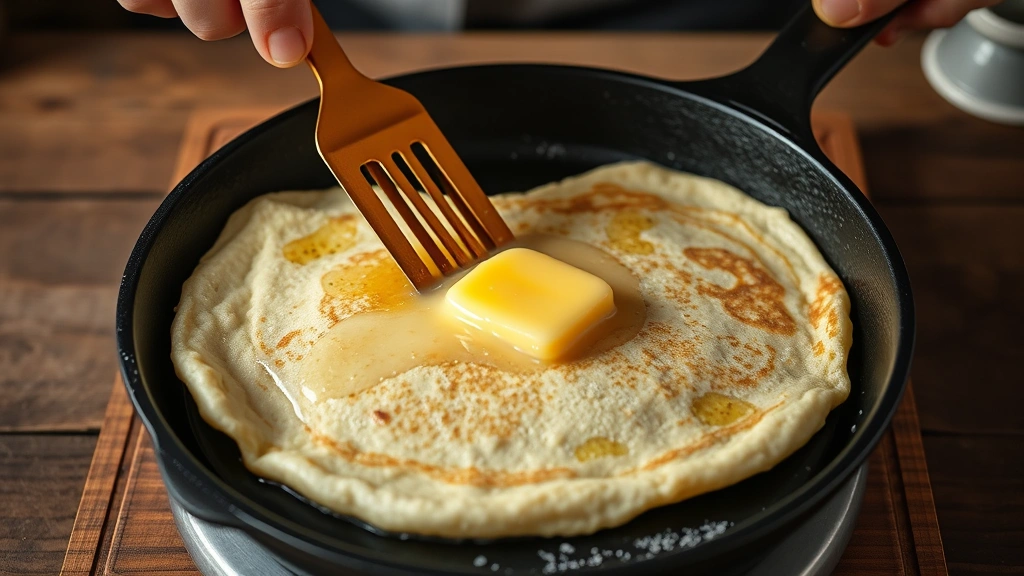
- Heat a griddle or skillet over medium heat. Lightly butter the cooking surface.
- Pour approximately 3 tablespoons of batter per pancake. These cook more slowly than wheat flour pancakes, so avoid the temptation to flip prematurely.
- Cook for 3-4 minutes until edges appear set and bubbles form on the surface. The bottom should achieve a light golden color.
- Flip gently and cook an additional 2-3 minutes until the second side reaches similar coloring.
- Transfer to a plate and serve immediately with desired toppings.
Step-by-Step Technique Mastery
The difference between mediocre and exceptional coconut flour pancakes often comes down to technique rather than ingredients. Understanding the why behind each step empowers you to troubleshoot and adapt confidently.
The Blending Advantage: Using a blender for wet ingredients might seem like an extra step, but it ensures egg proteins distribute evenly throughout the batter. This uniform distribution creates consistent structure. If you lack a blender, whisk the wet ingredients vigorously for at least 60 seconds until noticeably lighter in color and texture.
The Resting Period: Those 3-5 minutes between mixing and cooking make a measurable difference. Coconut flour’s fiber network gradually absorbs liquid, transforming a seemingly thin batter into one with proper body. Rushing this step results in pancakes that spread excessively and cook unevenly.
Temperature Control: Medium heat is critical. Higher temperatures cause the exterior to brown before the interior cooks through, leaving a raw or gummy center. Coconut flour pancakes require more cooking time than their wheat-based counterparts, necessitating slightly lower heat to permit thorough internal cooking.
The Flip Technique: Wait for visible bubbles on the surface before flipping. Unlike wheat pancakes where bubbles indicate adequate rise, coconut flour pancakes need those bubbles as a sign that the structure has set sufficiently to flip without falling apart. Use a thin, flexible spatula and flip decisively in one smooth motion.
When you master these techniques, you’ll notice the pancakes develop a subtle golden exterior with a tender, custard-like interior. This textural contrast elevates the entire eating experience.
Common Problems & Solutions
Problem: Pancakes are too dense and heavy
Dense pancakes typically result from insufficient eggs or inadequate blending of wet ingredients. Ensure you’re using the full egg quantity and that eggs are fully incorporated. Additionally, verify your baking powder hasn’t expired—stale leavening agents won’t provide adequate lift.
Problem: Pancakes are falling apart or crumbly
This indicates insufficient liquid. Double-check your coconut milk measurement—the difference between ½ cup and ⅓ cup dramatically affects binding. Also ensure you’re using full-fat coconut milk rather than the lighter varieties. If you’ve added extra coconut flour for any reason, increase liquid proportionally.
Problem: Pancakes taste too eggy
While eggs are essential, an overly prominent egg flavor suggests you might be using older eggs or cooking at excessive temperatures, which intensifies egg protein flavors. Use fresh eggs when possible, reduce heat slightly, and consider adding an extra ½ teaspoon vanilla extract to mask eggy notes.
Problem: They’re gummy in the center
Undercooked centers mean your heat is too high, cooking the exterior before the interior sets. Reduce temperature to medium-low, cook longer on the first side (4-5 minutes), and verify the bottom achieves light golden color before flipping. Thinner pancakes also cook more evenly than thick ones—use 3 tablespoons batter rather than 4.
Problem: Pancakes spread excessively on the griddle
If batter seems runny before cooking, you likely didn’t allow sufficient resting time. Return the batter to the bowl and wait another 2-3 minutes. Also confirm your griddle is adequately preheated and buttered—cold surfaces cause batter to spread as it seeks heat.
Creative Variations to Try
Chocolate Coconut Pancakes: Add 2 tablespoons unsweetened cocoa powder to the dry ingredients and reduce coconut flour to ¼ cup. Increase honey to 4 tablespoons. Serve with fresh berries or chocolate-hazelnut spread.
Tropical Mango Pancakes: Blend ½ cup fresh or frozen mango into the wet ingredients before mixing with dry components. This adds natural sweetness and vibrant flavor. Top with toasted coconut flakes and fresh mango slices.
Protein-Boosted Pancakes: Incorporate 2 tablespoons vanilla protein powder into the dry ingredients. This works particularly well if you’re pairing these with a light salad for balanced nutrition later in the day.
Almond Flour Blend: Replace ⅓ of the coconut flour with almond flour. This creates a slightly less dense pancake with additional nutty complexity. Almond flour has different absorption properties, so you may need to add 1-2 additional tablespoons milk.
Spiced Pancakes: Add 1 teaspoon cinnamon, ¼ teaspoon nutmeg, and ⅛ teaspoon cloves to the dry ingredients. These warming spices complement coconut beautifully and work wonderfully with maple syrup toppings.
Topping & Pairing Ideas
The beauty of coconut flour pancakes lies in their versatility. Their subtle coconut flavor serves as a canvas for numerous topping combinations:
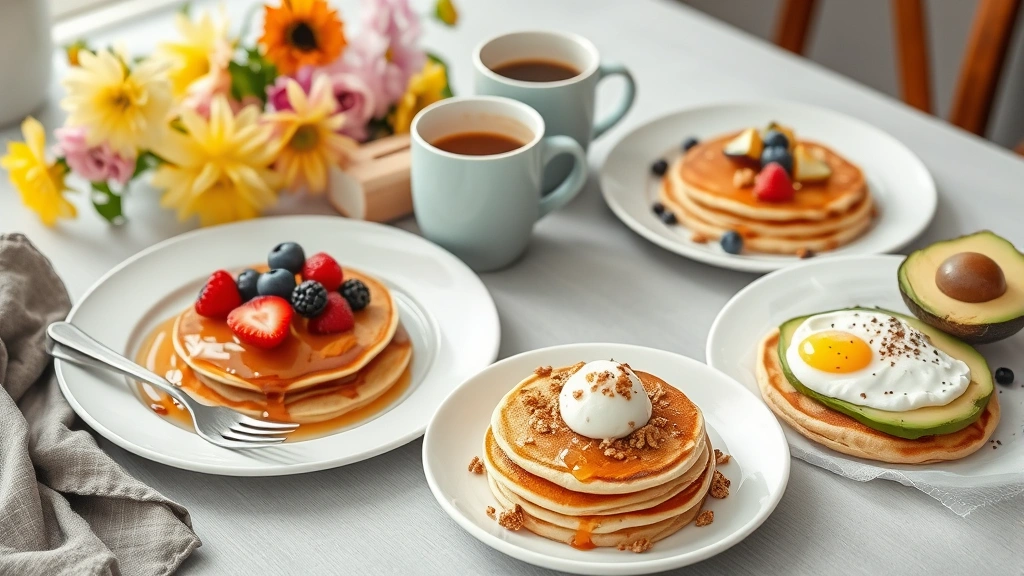
Classic Combinations: Maple syrup with butter remains timeless, but consider creative condiments that complement rather than mask the coconut base. Greek yogurt provides creamy tanginess that balances sweetness. Fresh berries—blueberries, strawberries, raspberries—add brightness and textural contrast.
Savory Applications: These pancakes work surprisingly well in savory contexts. Top with avocado, smoked salmon, and a poached egg for a sophisticated brunch dish. A dollop of sour cream with fresh herbs creates an entirely different experience from sweet preparations.
Nut Butter Pairings: Almond butter, peanut butter, or tahini spread on warm pancakes creates satisfying breakfast or light lunch options. Add sliced banana or apple for textural variety.
Protein Integration: If you’re building a complete meal, consider serving alongside breakfast sausage, smoked bacon, or herb-roasted chicken for balanced macronutrients. This approach works particularly well for those following specific dietary protocols.
Storage & Make-Ahead Tips
Coconut flour pancakes maintain quality for several days when stored properly, making them ideal for meal preparation:
Refrigerator Storage: Place cooled pancakes between parchment paper sheets in an airtight container. They’ll keep for 3-4 days. Reheat gently in a 300°F oven for 5-7 minutes to restore texture without drying them out.
Freezer Storage: Freeze cooled pancakes on a baking sheet until solid, then transfer to a freezer bag. They’ll maintain quality for up to two months. Thaw at room temperature or reheat directly from frozen in a toaster oven at 375°F for 8-10 minutes.
Batter Preparation: The batter can be prepared up to 24 hours in advance and refrigerated in an airtight container. The resting period may need to be shortened since the batter continues hydrating in cold storage. Add batter to the griddle directly from the refrigerator, using slightly lower heat to prevent burning.
Make-Ahead Strategy: Prepare pancakes on Sunday morning and refrigerate or freeze for weekday breakfasts. This approach ensures you have healthy, satisfying breakfast options available even on rushed mornings. Pair with overnight oats or other nutrition-focused meal planning for comprehensive breakfast solutions.
FAQ
Can I use light coconut milk instead of full-fat?
Light coconut milk contains significantly less fat and more water, altering the batter’s hydration balance. If you must use it, reduce total liquid by ¼ cup and add an extra egg yolk for richness. The results won’t be quite as tender, but they’ll still be acceptable.
What sweetener alternatives work best?
Liquid sweeteners (honey, maple syrup, agave) integrate most smoothly. If using granulated sugar, increase milk slightly to compensate for reduced liquid. For keto adherents, monk fruit sweetener or erythritol work well—use about ¾ the amount of honey since they’re sweeter by volume.
Are these pancakes truly gluten-free?
Yes, provided you use certified gluten-free baking powder and confirm all other ingredients lack gluten contamination. Coconut flour is naturally gluten-free, making these pancakes safe for celiac disease and non-celiac gluten sensitivity.
Can I make these without eggs?
Eggs provide critical binding and structure that’s difficult to replicate. You could attempt substitutes like flax eggs or aquafaba, but results will be substantially different—likely denser and more prone to falling apart. I recommend using eggs if possible.
How do I prevent sticking on the griddle?
Ensure your griddle is preheated for at least 2-3 minutes and properly buttered. Coconut oil works excellently due to its higher smoke point. Some cooks prefer a non-stick spray, but butter provides superior browning and flavor.
Why are my pancakes browning too quickly?
Your heat is too high. Reduce to medium or medium-low and extend cooking time accordingly. Remember that coconut flour pancakes require more time than wheat-based versions—patience is essential.
Can I add mix-ins like chocolate chips or nuts?
Absolutely. Fold in chocolate chips, chopped nuts, or dried fruit just before cooking. Use no more than ¼ cup additions per batch to avoid overwhelming the delicate structure. Toasted coconut flakes are particularly complementary.


