
How to Stew Tomatoes: Grandma’s Secret Method
There’s something magical about a pot of slowly simmering tomatoes that transforms the simplest ingredients into pure comfort. My grandmother taught me that stewed tomatoes aren’t just a side dish—they’re the foundation of countless beloved meals, from hearty soups to rich pasta sauces and savory braises. The secret isn’t exotic ingredients or complicated techniques; it’s patience, proper heat management, and understanding how tomatoes break down and release their natural sweetness and umami flavors.
When you learn how to stew tomatoes the right way, you unlock a versatile kitchen staple that can elevate everything from simple weeknight dinners to special occasion dishes. Whether you’re using fresh summer tomatoes or canned varieties during winter months, this time-honored method produces results that taste like they’ve been simmering all day—even if you’ve only spent a fraction of that time in the kitchen.
Choosing Your Tomatoes: Fresh vs. Canned
The foundation of exceptional stewed tomatoes begins with selecting quality fruit. During peak summer months (June through September), fresh, ripe tomatoes are your best choice. Look for tomatoes that are deeply colored, fragrant, and yield slightly to gentle pressure. Roma tomatoes, beefsteaks, and heirloom varieties all work beautifully because they contain fewer seeds and more flesh, which means less watery results and richer flavor concentration.
If you’re preparing stewed tomatoes during off-season months, don’t hesitate to use canned tomatoes—they’re often picked at peak ripeness and processed immediately, making them superior to mealy, flavorless fresh tomatoes shipped long distances. San Marzano canned tomatoes are particularly prized by cooks because of their naturally low acidity and dense flesh. Whether fresh or canned, avoid tomatoes that are underripe or overly soft, as they won’t provide the balanced flavor profile your dish deserves.
For fresh tomatoes, you’ll need to remove the skins before stewing. The easiest method involves blanching: score an X on the bottom of each tomato, place them in boiling water for 30-45 seconds, then transfer to ice water. The skins will slip off effortlessly. This step prevents bitter skin pieces from floating in your finished stew and ensures a smooth, refined texture.
Essential Ingredients and Aromatics
Grandma’s secret method relies on a carefully balanced combination of ingredients that work together to enhance tomato flavor rather than mask it. Beyond the tomatoes themselves, you’ll need aromatic vegetables (onions and garlic), fat (olive oil or butter), seasonings (salt, pepper, and herbs), and optional flavor boosters (balsamic vinegar, sugar, or red pepper flakes).
- Onions: Yellow or sweet onions provide a savory backbone and natural sweetness. Dice them finely so they soften completely during the stewing process, essentially melting into the sauce.
- Garlic: Fresh garlic cloves minced fine or pressed add pungent depth. Avoid pre-minced jarred garlic, which lacks the fresh bite you need for authentic flavor.
- Olive oil: High-quality extra virgin olive oil adds richness and carries fat-soluble flavor compounds. Use a generous amount—at least 3-4 tablespoons per pound of tomatoes.
- Fresh herbs: Basil, oregano, thyme, and parsley are traditional choices. Add tender herbs like basil near the end of cooking to preserve their bright flavor; use woody herbs earlier so they infuse gradually.
- Salt and pepper: These fundamental seasonings should be added gradually throughout cooking, allowing you to taste and adjust as the tomatoes release liquid and flavors concentrate.
Many home cooks make the mistake of using dried herbs at the same volume as fresh herbs, resulting in overpowering flavors. As a general rule, use one-third the amount of dried herbs compared to fresh, and add them during the initial cooking phase rather than at the end.
Step-by-Step Stewing Process
Now we arrive at the heart of Grandma’s method. Follow these steps carefully, and you’ll understand why this traditional technique has endured for generations.
- Prepare your tomatoes: If using fresh tomatoes, blanch and peel them as described earlier. Roughly chop them into chunks, capturing all juices. If using canned, drain excess liquid but reserve it—you may need it to adjust consistency later.
- Heat your fat: Pour olive oil into a heavy-bottomed pot or Dutch oven and place over medium heat. Allow it to warm for about one minute. The pot should be large enough to hold all ingredients comfortably; crowding inhibits proper cooking.
- Cook the aromatics: Add diced onions to the warm oil and cook for 5-7 minutes, stirring occasionally, until they become translucent and begin releasing their natural sugars. This process, called sweating, develops a sweet, mellow onion flavor that forms the base of your stew. Add minced garlic and cook for another minute until fragrant.
- Add tomatoes and herbs: Pour in your prepared tomatoes along with any accumulated juices. Stir in woody herbs like dried oregano or thyme if using them. Bring the mixture to a gentle simmer—you want small, lazy bubbles breaking the surface, not a vigorous rolling boil.
- Season gradually: Add salt and pepper in small increments, stirring well after each addition. Start with ½ teaspoon salt per pound of tomatoes, then taste and adjust. Remember that flavors will concentrate as liquid reduces, so it’s better to undersalt initially.
- Maintain a gentle simmer: Reduce heat to low and let the tomatoes cook uncovered, stirring occasionally to prevent sticking on the bottom. This is the essence of Grandma’s method—low, slow, patient cooking that allows flavors to meld and develop.
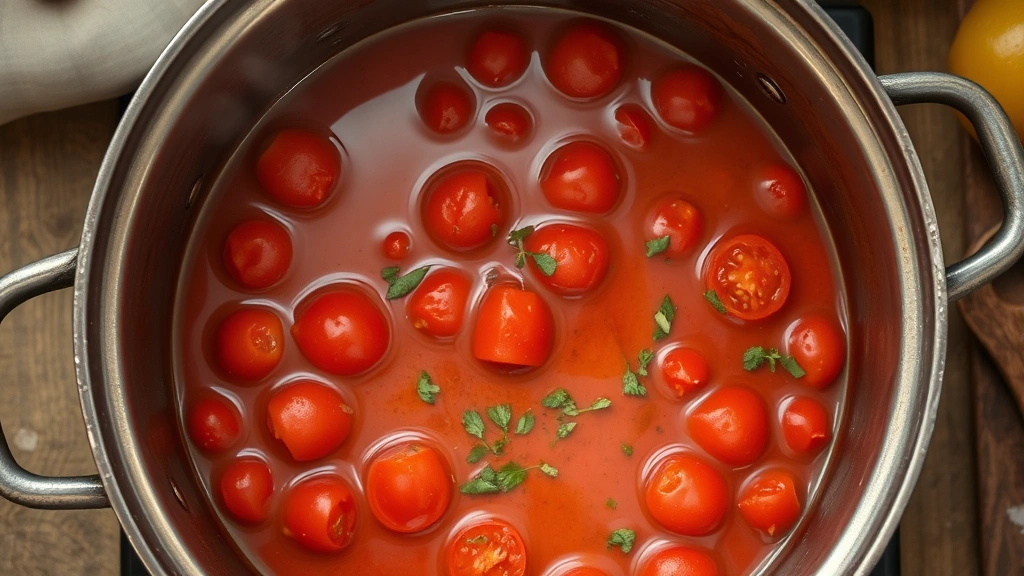
The transformation happens gradually. At first, your mixture will seem thin and watery. As the tomatoes break down and excess moisture evaporates, the consistency becomes progressively thicker and the flavors intensify dramatically. This is why patience matters so much.
Temperature and Timing Tips
The ideal cooking temperature for stewed tomatoes is between 180-200°F (82-93°C)—barely a simmer. If your heat is too high, you risk burning the bottom, developing bitter flavors, and losing the delicate taste of fresh tomatoes to harsh cooking. If your heat is too low, the cooking process takes excessively long without developing deeper flavors.
Cooking time depends on several factors: the water content of your tomatoes, desired final consistency, and quantity being prepared. Fresh summer tomatoes typically require 30-45 minutes of gentle simmering to achieve a thick, sauce-like consistency. Canned tomatoes, which have already released much of their liquid, may need only 20-30 minutes. The best indicator isn’t the clock—it’s your eyes and taste buds.
Watch for these visual cues: the mixture should reduce by about one-third to one-half its original volume, the color should deepen slightly, and when you drag a spoon across the bottom of the pot, it should leave a brief trail before the sauce flows back together. This indicates proper consistency.
If your stewed tomatoes finish cooking and seem too thin, continue simmering uncovered for another 10-15 minutes. Conversely, if they’re becoming too thick before flavors have fully developed, add reserved tomato juice or vegetable broth in small increments. This flexibility is part of what makes this method so foolproof.
Add fresh herbs like basil, parsley, or chives in the final 5 minutes of cooking. These tender herbs contribute bright flavor that would dissipate if added earlier. Finish with a splash of balsamic vinegar or a pinch of sugar if your tomatoes taste acidic—sometimes this simple adjustment transforms good stewed tomatoes into extraordinary ones.
Flavor Variations and Customizations
While Grandma’s basic method is perfect as-is, you can adapt stewed tomatoes to complement specific dishes. Understanding these variations helps you create high protein low calorie recipes centered around tomato-based sauces, or develop complex flavor profiles for special occasions.
Mediterranean Style: Add Kalamata olives, capers, and anchovies (optional) during the final minutes of cooking. Include dried oregano and fresh parsley. This version pairs beautifully with grilled fish or chicken.
Spanish-Inspired: Incorporate diced bell peppers with the onions, add smoked paprika and a pinch of saffron, and finish with fresh cilantro. This variation works wonderfully as a base for seafood stews or served alongside rice dishes.
Italian Country Style: Use abundant fresh basil, add a splash of red wine during the initial cooking phase, and incorporate a small piece of Parmigiano-Reggiano rind if available. This version becomes the foundation for countless pasta dishes and soups.
Spiced Version: Add red pepper flakes, cumin, and coriander for a more complex, warming profile. This works exceptionally well in 3 ingredient ground beef recipes where you layer stewed tomatoes with seasoned meat for quick, flavorful casseroles.
You can also boost the nutritional profile by stirring in finely diced vegetables during cooking—carrots, celery, zucchini, and bell peppers all soften beautifully and add nutritional value. Add them after the onions have begun softening but before the tomatoes, giving them time to cook through properly.
For deeper umami flavor, stir in a small spoonful of tomato paste during the initial cooking phase, or add a squeeze of anchovy paste (which adds savory depth without a fishy taste). A Parmesan rind simmered in the sauce for 20 minutes then removed contributes wonderful savory complexity.
Storage and Make-Ahead Strategies
One of the greatest advantages of Grandma’s stewed tomato method is that the finished product stores beautifully, improving in flavor as it sits. This makes it perfect for meal planning and batch cooking.
Refrigerator Storage: Allow stewed tomatoes to cool to room temperature, then transfer to airtight containers. They’ll keep for 4-5 days in the refrigerator. The flavors actually meld and deepen during storage, so don’t hesitate to make a large batch early in the week.
Freezer Storage: Stewed tomatoes freeze exceptionally well for up to 3 months. Divide into portion-sized containers or ice cube trays for convenient use. When ready to use, thaw overnight in the refrigerator or reheat gently from frozen in a saucepan over medium-low heat.
Make-Ahead Advantage: Prepare stewed tomatoes on Sunday and use them throughout the week in various dishes. Spoon over grilled chicken, fold into omelets, layer into protein powder recipes for tomato-based smoothie bowls, or use as a pizza sauce base. The versatility is remarkable.
Canning Option: If you preserve food at home, properly canned stewed tomatoes provide shelf-stable storage for a year or more. Follow tested USDA guidelines carefully, as tomatoes are low-acid foods requiring proper processing for safety.
Pro tip: Before freezing, consider the intended use. If you’ll use the stewed tomatoes in dishes requiring thin sauce, freeze them as-is. If you prefer thicker consistency for certain applications, reduce them further before freezing, which saves storage space and allows you to add liquid when reheating if needed.
FAQ
Can I use cherry tomatoes for stewing?
Cherry tomatoes contain more seeds and water relative to flesh, making them less ideal than larger varieties. However, they can work if you’re willing to seed them first and extend cooking time slightly. Their natural sweetness is lovely, so they’re worth trying if that’s what you have available.
Why is my stewed tomato sauce too acidic?
Acidity develops when tomatoes cook too quickly over high heat or when you use very acidic varieties. Solutions include: adding a pinch of sugar (¼ teaspoon at a time), incorporating a small knob of butter, adding grated carrot which has natural sugars, or stirring in a splash of balsamic vinegar. Low, slow cooking also naturally reduces perceived acidity.
Should I peel canned tomatoes?
Canned tomatoes are already peeled, so no additional preparation is needed. Simply drain excess liquid and proceed with the recipe. Some cooks prefer to crush canned tomatoes by hand for more rustic texture, while others leave them whole.
What’s the difference between stewed tomatoes and tomato sauce?
Stewed tomatoes are chunky, with visible pieces of tomato and aromatics, while tomato sauce is smoother, often blended or passed through a food mill. Stewed tomatoes maintain more texture and are typically less concentrated than sauce. You can blend stewed tomatoes to create sauce if needed.
Can I use a slow cooker for this method?
Absolutely. Combine all ingredients in a slow cooker and cook on low for 4-6 hours. The advantage is hands-off cooking; the disadvantage is longer cooking time and less opportunity to adjust seasoning during the process. Check consistency after 4 hours and adjust as needed.
How do I know when stewed tomatoes are done?
There’s no single endpoint—it depends on your preference. If you like chunkier texture, cook for 20-30 minutes. For medium consistency, aim for 40-50 minutes. For very thick, concentrated sauce, cook for 60-90 minutes. Taste as you go and remove from heat when the flavor satisfies you and consistency matches your needs.


