Table of Contents
Introduction
There’s something magical about cooking with cast iron. Maybe it’s the way a perfectly seasoned skillet can sear a steak better than any fancy pan, or how that same trusty piece of cookware can bake cornbread that’ll make your grandmother jealous. Whatever it is, once you fall in love with cast iron cooking, there’s no going back.
Here’s what makes cast iron so special: it holds heat like nobody’s business. Want an even sear on your chicken thighs? Cast iron’s got you covered. Need to get those vegetables perfectly caramelized? Same story. The best part? A well-cared-for cast iron pan actually gets better with age—kind of like a fine wine, but for your kitchen. The more you use it (and season it properly), the more naturally non-stick it becomes. Trust me, learning how to season and maintain your pan is worth the effort. And when you’re ready to take your cast iron game to the next level, check out our guide to making homemade sauces—nothing beats a rich pan sauce made in the same skillet you cooked your meat in.
What really blows my mind about cast iron is how versatile it is. Stovetop to oven? No problem. Want to sear a steak and then finish it in the oven? Done. Baking bread that needs a crispy bottom crust? Cast iron delivers every time. I’ve seen people get intimidated by temperature control and oil selection, but honestly, once you get the hang of it, it becomes second nature. The key is understanding that cast iron holds heat differently than other pans—it takes longer to heat up, but once it’s hot, it stays hot. Before you dive in, you might want to brush up on basics like how to preserve herbs so you can add fresh flavors to all those amazing cast iron creations you’re about to make.
Now, let’s be real about maintenance. Yes, cast iron needs a little TLC, but it’s not as scary as people make it out to be. Forget what your great-aunt told you about never using soap—modern dish soap won’t hurt your seasoning. The real secret? Keep it dry, keep it oiled, and use it regularly. That’s it. When you understand the simple care routine, your cast iron will literally last generations. (Mine belonged to my grandfather, and it’s still going strong.) Plus, learning proper cast iron care goes hand-in-hand with developing better cooking habits overall. Speaking of which, understanding whole grain benefits can help you make nutritious meals that taste incredible when cooked in cast iron.
What You’ll Learn in This Guide
Ready to become a cast iron pro? We’re going to cover everything you need to know, from day one to mastery. Here’s what’s coming up:
- Getting Started with Your Cast Iron Pan: Learn how to season your pan for optimal non-stick performance and understand proper cleaning and maintenance methods to preserve its quality over time.
- Cooking Techniques Using Cast Iron: Explore the best methods for searing, frying, baking, and roasting with cast iron to maximize taste and texture in your meals.
- Tips and Tricks for Best Results: Discover practical advice on managing temperature, choosing the right oils, and handling your pan like a pro for consistent cooking success.
- Common Mistakes to Avoid: Identify frequent errors beginners make and learn how to prevent damage to your pan and avoid cooking pitfalls.
We’re going to walk through everything step by step. No confusing jargon, no overly complicated techniques—just practical advice that actually works. Whether you’re making Sunday morning pancakes or hosting a dinner party, you’ll have the confidence to reach for your cast iron every time. And hey, while you’re expanding your cooking skills, you might want to explore some healthy food recipes that’ll showcase what your newly mastered cast iron can do.
You’ll also learn the ins and outs of maintaining that perfect seasoning—how to build it up, how to fix it when things go wrong, and how to keep your pan in prime condition for decades. Because let’s face it, buying quality cast iron is an investment, and I want to make sure you get every penny’s worth out of it. We’ll also cover safety tips and efficient techniques that’ll make cast iron cooking feel natural and effortless. Before we dive deeper, you might find it helpful to check out food waste reduction tips—cast iron cooking actually helps you use ingredients more efficiently and get better results from what you have.
By the time we’re done here, you’ll understand why cast iron enthusiasts are so passionate about their pans. You’ll know how to get that perfect sear, bake incredible cornbread, and maintain your cookware like a pro. More importantly, you’ll have the confidence to experiment and make cast iron cooking your own. Ready to get started? Let’s turn you into someone who reaches for cast iron first, not last.

There’s something magical about cooking with cast iron that just can’t be replicated. Maybe it’s the way it holds heat like a champ, or how it gets better with age (unlike most things in life). Cast iron cookware isn’t just durable—it’s practically indestructible, which explains why both weekend warriors and seasoned chefs swear by it. We’re going to walk through everything you need to know about cast iron cooking, starting with the basics like seasoning and maintenance, then moving into the fun stuff—searing, baking, and roasting techniques that’ll make your neighbors wonder what smells so amazing. Plus, we’ll cover the mistakes that can turn your trusty pan into a rusty mess (been there, done that) and when it’s time to call in the pros for restoration. Whether you want to nail that perfect sear or try your hand at cast iron baking, you’ll have the confidence to make every meal better.
Getting Started with Your Cast Iron Pan: Seasoning and Maintenance Essentials
Here’s the thing about cast iron—it needs a little love before it’ll love you back. Seasoning isn’t just some old-fashioned ritual; it’s what transforms a rough, sticky surface into a naturally non-stick powerhouse. Think of seasoning as building armor for your pan. Each layer of oil you heat and bond to the surface creates protection against rust and makes cooking so much easier. The magic happens when you learn the proper seasoning technique—applying just the right amount of oil and heating it until it polymerizes (fancy word for “becomes one with the pan”). Get this right, and your pan will reward you with decades of faithful service.
Now, let’s talk maintenance—because a well-cared-for cast iron pan is a thing of beauty. Forget what your grandmother might have told you about never using soap. You can absolutely clean your pan with warm water and a gentle brush or scrubber. Just don’t let it soak like it’s taking a bubble bath—that’s a one-way ticket to Rust City. The key is acting fast: clean it while it’s still warm, dry it completely (I mean bone dry), and give it a light coating of oil if needed. You know those techniques for preserving freshness without damage? Same principle applies here—gentle but thorough care keeps everything in perfect condition.
Key Aspects of Seasoning and Maintenance
Getting your cast iron game on point means mastering these essential elements:
- Seasoning Process: Grab an oil with a high smoke point, apply a thin layer (seriously, less is more), and heat it until it stops smoking. This creates that coveted non-stick surface that actually improves every time you cook. Bonus: it’s rust-proof armor for your pan.
- Cleaning Techniques: Strike while the iron’s warm—clean right after cooking with warm water and a brush. Skip the dishwasher and harsh detergents (they’re seasoning killers). Pat dry, then heat briefly on the stove to evaporate any lingering moisture.
- Storage Practices: Find a dry spot with good airflow for your pan. Pro tip: tuck a paper towel inside to absorb any sneaky moisture and keep dust at bay. Your pan will thank you.
- Routine Maintenance: Give your pan a seasoning refresh now and then, and go easy on the acidic ingredients during long cooking sessions. Learning to spot when your pan needs some TLC will keep it performing like new for years.
Once you nail these habits, your cast iron becomes more than cookware—it becomes a trusted kitchen partner. Every meal becomes an opportunity to improve that seasoning, creating a better cooking surface with each use. Ready to put that perfectly seasoned pan to work? Let’s dive into the cooking techniques that make cast iron truly shine.
Cooking Techniques Using Cast Iron: Searing, Frying, Baking, and Roasting
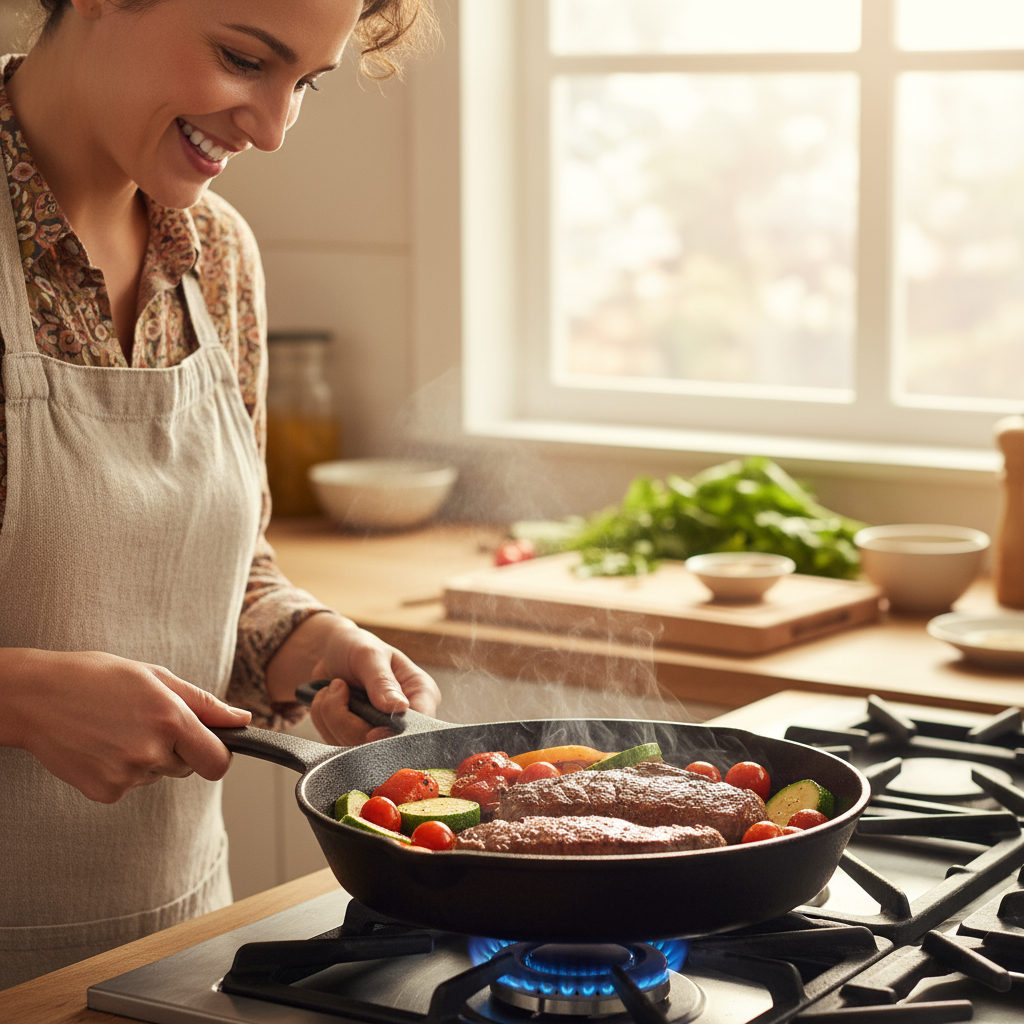
This is where cast iron really shows off. That incredible heat retention? Game-changer for searing. The even heat distribution? Perfect for frying without hot spots that burn your food. When you sear a steak in cast iron, you’re not just cooking—you’re creating that gorgeous caramelized crust that locks in all the juices. Same goes for vegetables; they get that perfect char while staying tender inside. And here’s something cool—learning about smart kitchen strategies and reducing waste actually pairs beautifully with cast iron cooking, since you can transform scraps into amazing meals using these same techniques.
But wait—there’s more. (I know, I sound like an infomercial, but seriously.) Cast iron baking is where things get really exciting. Cornbread that’s crispy on the bottom and fluffy inside? Check. Roasted chicken with skin so crispy it crackles? Double check. The beauty is in the versatility—start something on the stovetop, then slide the whole pan into the oven. No transferring, no extra dishes, just seamless cooking. The secret sauce? Temperature control and choosing the right oil. Get these two things right, and you’ll wonder why you ever used anything else.
Key Aspects of Cast Iron Cooking Techniques
Master these techniques and you’ll unlock cast iron’s full potential:
- Searing and Frying Mastery: Let the pan do the heavy lifting—its heat retention creates that perfect golden crust with minimal oil. Whether it’s a thick steak or delicate fish, the Maillard reaction (that’s the science behind the delicious browning) happens beautifully in cast iron.
- Baking and Roasting Benefits: Even heat means no surprise burnt spots or undercooked centers. Your bread gets that artisan-bakery crust, and roasts come out with crispy skin and juicy interiors every single time.
- Temperature Management: Patience pays off here—preheat gradually and adjust as you go. Cast iron holds heat like nobody’s business, so once it’s hot, it stays hot. This prevents sticking and gives you consistent results.
- Choosing the Right Oils: Stick with high smoke point oils like vegetable or canola for both cooking and seasoning. Low smoke point oils break down, create off-flavors, and can damage your carefully built seasoning layer.
The more you cook with cast iron, the more you’ll discover its quirks and capabilities. Each dish teaches you something new about heat management and timing. Before you know it, you’ll be that person who evangelizes about cast iron to anyone who’ll listen (trust me, it happens to all of us). But even the best cast iron cooks make mistakes—and knowing what to avoid can save you from some pretty frustrating kitchen disasters.

So here we are—you’ve just learned why cast iron cookware earns its spot as every serious cook’s best friend. Think about it: where else can you get heat retention that rivals a brick oven? Your steaks will sear like they’re supposed to, and your roasts will cook evenly from edge to center. Plus, this stuff goes from stovetop to oven without missing a beat. The real game-changer? Mastering that seasoning process. It’s like building armor for your pan—a natural non-stick surface that actually gets better with time while keeping rust at bay. And let’s be honest, the care routine isn’t rocket science: gentle cleaning (skip those harsh detergents), thorough drying, and you’re golden. Get your temperature control down, pick the right oils, and you’ll be cooking like a pro. Sure, everyone makes mistakes with seasoning or throws acidic ingredients in too early—we’ve all been there. But knowing when to call in professional restoration? That’s how you turn a beat-up pan into a family heirloom.
Want to take your cast iron game to the next level? Keep up with regular seasoning—your future self will thank you when that surface becomes practically bulletproof. While you’re at it, why not explore some skills that pair beautifully with cast iron cooking? Making homemade sauces will transform your cast iron dishes from good to incredible. Fresh herbs make everything better, and our herb preservation guide keeps them vibrant way longer than you’d expect. Speaking of perfect pairings, homemade pasta and cast iron cooking? Pure magic. And if you’re trying to be more mindful about waste (who isn’t these days?), check out our food waste reduction tips to squeeze every bit of goodness from your ingredients. For the health-conscious cooks out there, learning about omega-3 fatty acids can really elevate your approach to balanced, delicious meals.
You’re all set now. Really—you’ve got everything you need to cook confidently with cast iron and keep it in perfect shape for years to come. Every time you cook, you’re building skills and creating something special with this incredible piece of kitchen equipment. Trust the seasoning process (it works, even when it doesn’t look like it at first), embrace the amazing heat retention and flavor development, and don’t forget to explore our other guides when you’re ready for more culinary adventures. Your cast iron journey is just getting started, and honestly? The best meals are still ahead of you.
Frequently Asked Questions
-
How do I properly season my cast iron pan?
- Seasoning involves coating with oil and heating to create a non-stick layer.
-
Can I put a cast iron pan in the dishwasher?
- Dishwashers should be avoided as they can strip seasoning and cause rust.
-
What oils are best for cooking in cast iron?
- Use oils with high smoke points like vegetable or canola oil for best results.
-
How do I clean cooked-on food from my pan?
- Use warm water and a brush or non-abrasive scrubber; avoid harsh detergents.
-
Is it necessary to dry the pan immediately after washing?
- Yes, drying prevents rust and preserves the pan’s seasoning.