Venison Stew Recipe: Hunter’s Favorite Dish
Venison stew represents the pinnacle of rustic, hearty cooking—a dish that transforms wild game into a warming, deeply satisfying meal. Whether you’ve just returned from a successful hunt or sourced premium venison from a specialty butcher, this classic recipe captures the rich, earthy flavors that make venison such a prized ingredient among home cooks and professional chefs alike. The key to exceptional venison stew lies in proper preparation, patient cooking, and understanding how this lean meat differs from conventional beef.
This hunter’s favorite has been passed down through generations, perfected in hunting lodges and family kitchens across game-rich regions. Venison’s distinctive flavor profile—slightly gamey with subtle mineral notes—pairs beautifully with root vegetables, aromatic herbs, and robust red wine. Unlike beef stew, venison requires specific techniques to ensure the meat remains tender while developing complex, savory depths that make every spoonful memorable.
Why Venison Makes the Perfect Stew Meat
Venison possesses unique characteristics that make it exceptionally well-suited for slow-cooked stew preparations. This wild game meat is significantly leaner than beef, containing far fewer calories and less saturated fat while delivering superior protein content. The reduced fat content means you’ll need to adjust cooking techniques slightly—adding extra fat through bacon, butter, or oil becomes essential to prevent the meat from becoming dry during extended cooking.
The flavor profile of venison stew develops beautifully through the Maillard reaction, where high-heat browning creates hundreds of complex flavor compounds. Venison’s natural gaminess—often described as having subtle notes of forest floor and wild herbs—intensifies during long, slow cooking, creating a depth that beef simply cannot match. This is why experienced hunters and chefs specifically seek out venison for stew rather than quick-cooking applications.
Venison meat structure differs from domesticated beef. The muscle fibers in wild game are typically tighter and denser, requiring longer cooking times to break down connective tissue and achieve that fall-apart tenderness that defines exceptional stew. However, this same characteristic means venison stew actually improves when made a day or two ahead, as flavors continue melding and developing even after cooking completes.
Essential Ingredients and Sourcing
For the venison stew base (serves 6-8):
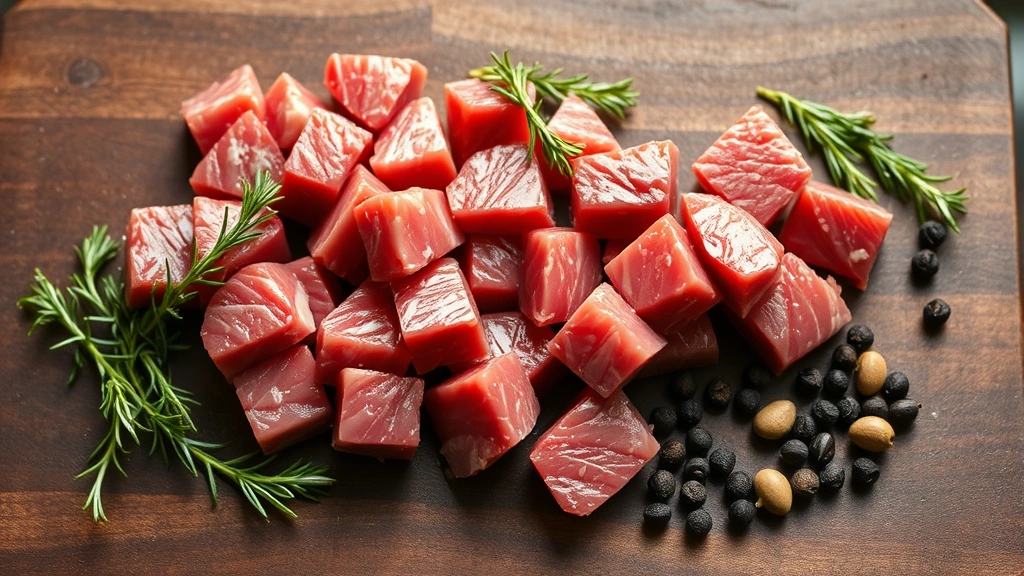
- 2.5 pounds venison shoulder or chuck, cut into 1.5-inch cubes
- 6 ounces bacon, diced
- 3 tablespoons all-purpose flour
- 2 cups dry red wine (Burgundy or Pinot Noir recommended)
- 3 cups beef or game stock
- 2 tablespoons tomato paste
- 4 medium carrots, cut into 1-inch pieces
- 3 medium potatoes, cubed
- 1 large onion, roughly chopped
- 8 ounces mushrooms, halved
- 4 garlic cloves, minced
- 2 bay leaves
- 1 teaspoon dried thyme
- 1 teaspoon dried rosemary
- Salt and freshly ground black pepper to taste
- 2 tablespoons olive oil
Sourcing Quality Venison: If you’re not a hunter yourself, sourcing excellent venison requires knowing where to look. Specialty butchers, game suppliers, and high-end grocery stores with dedicated meat departments typically stock farm-raised venison year-round. Look for meat that’s deep red with minimal visible fat—this indicates proper aging and handling. Farm-raised venison tends to be milder than wild venison, making it more approachable for those new to cooking with game. Online specialty meat suppliers ship vacuum-sealed portions directly to your door, offering convenience and guaranteed freshness.
When purchasing venison, request cuts specifically designated for stewing—shoulder and chuck are ideal as they contain enough connective tissue to create rich, velvety cooking liquid. Avoid premium cuts like backstrap or tenderloin, which are better suited for quick-cooking methods like roasting or pan-searing.
Preparation: The Foundation of Great Stew
Proper preparation separates mediocre stew from restaurant-quality results. Begin by patting your venison cubes completely dry with paper towels. Moisture on the meat’s surface prevents proper browning and creates steam rather than the desirable crust that develops through the Maillard reaction. This seemingly small step dramatically impacts final flavor.
Season your venison generously with salt and pepper at least 30 minutes before cooking—this allows salt to penetrate the meat and enhance its natural flavors. While seasoning, prepare your vegetables: cut carrots and potatoes into uniform 1-inch pieces (uniform sizing ensures even cooking), halve mushrooms, roughly chop onion, and mince garlic. Having all ingredients prepped and ready—what chefs call mise en place—ensures smooth cooking without interruptions.
Consider marinating your venison overnight in red wine with aromatics if you have time. Combine venison cubes with 1 cup red wine, 1 sliced onion, 2 crushed garlic cloves, 1 bay leaf, and 1 teaspoon thyme in a sealed container. This optional step tenderizes the meat further and infuses subtle wine flavors throughout. If marinating, remove venison from the marinade 20 minutes before cooking and pat dry—reserve the marinade liquid to add during cooking.
Step-by-Step Cooking Instructions
Step 1: Render the Bacon
Heat a large Dutch oven or heavy-bottomed pot over medium heat. Add diced bacon and cook, stirring occasionally, until crispy and fat renders (approximately 8-10 minutes). Using a slotted spoon, transfer cooked bacon to a paper towel-lined plate, leaving bacon fat in the pot. This fat serves as your cooking medium and adds incredible depth to the stew.
Step 2: Brown the Venison
Increase heat to medium-high. Working in batches to avoid overcrowding (which causes steaming rather than browning), add venison cubes to the hot bacon fat. Don’t move the meat for 3-4 minutes—allow an undisturbed crust to develop on the bottom. Turn each piece and brown remaining sides, approximately 2 minutes per side. Transfer browned venison to a plate. Repeat with remaining venison, adding additional olive oil if needed. This browning stage is crucial—it creates the foundation of deep, savory flavor that defines exceptional stew.
Step 3: Build the Aromatic Base
Reduce heat to medium. Add roughly chopped onion to the pot and cook for 3-4 minutes, stirring occasionally, until softened and beginning to caramelize. Add minced garlic and cook an additional minute until fragrant. Stir in tomato paste and cook for 2 minutes, allowing it to caramelize slightly against the pot’s bottom—this intensifies its umami properties.
Step 4: Create the Flour Roux
Sprinkle flour over the onion mixture and stir continuously for 2-3 minutes. This cooking step removes the raw flour taste and creates a light roux that will thicken your stew. The flour should coat all vegetables and combine with the rendered fats.
Step 5: Deglaze with Wine
Pour in your red wine slowly while scraping the pot’s bottom with a wooden spoon, releasing all the flavorful browned bits (called fond) that have adhered to the surface. These caramelized particles contain concentrated flavor compounds essential to stew complexity. Simmer for 3-4 minutes, allowing alcohol to partially evaporate and wine flavors to concentrate.
Step 6: Build the Braising Liquid
Return browned venison and reserved bacon to the pot. Add beef or game stock, bay leaves, thyme, and rosemary. Stir well, ensuring all meat is submerged or mostly covered by liquid. Bring to a gentle simmer over medium-high heat, then reduce to low. Cover partially with the lid (allowing steam to escape) and simmer gently for 90 minutes. Venison requires patient, low-temperature cooking—rapid boiling toughens the meat.
Step 7: Add Root Vegetables
After 90 minutes, add carrots and potatoes. These denser vegetables need adequate cooking time but shouldn’t break down completely. Continue simmering, covered, for another 45 minutes.
Step 8: Final Vegetable Addition
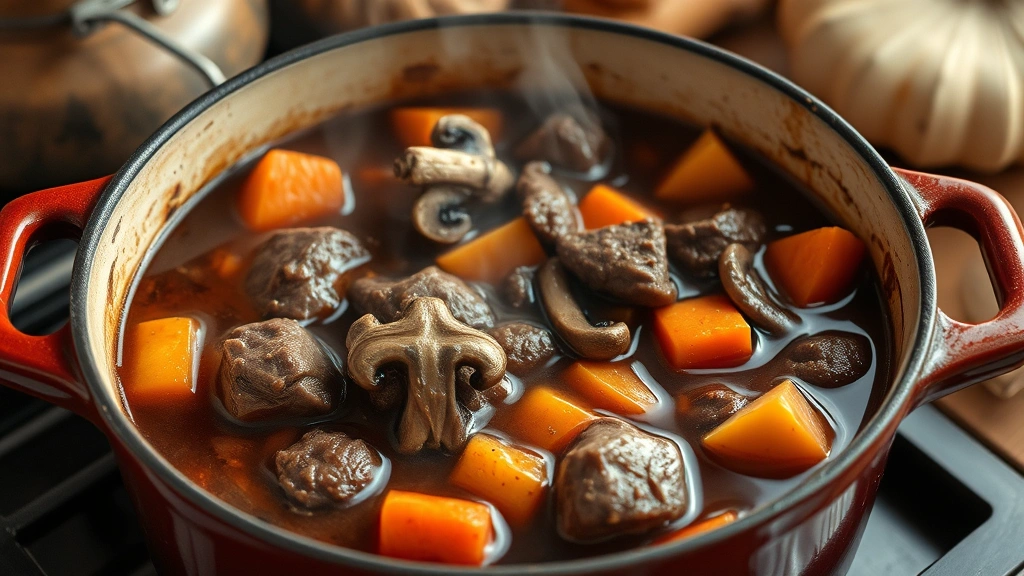
Add mushrooms and adjust seasoning with salt and pepper. Simmer uncovered for a final 15-20 minutes, allowing mushroom moisture to evaporate and flavors to concentrate. The stew should reach a gentle simmer—individual bubbles rising slowly to the surface rather than vigorous boiling.
Step 9: Rest and Serve
Remove from heat and let the stew rest for 10 minutes before serving. This resting period allows flavors to settle and meld. Remove bay leaves before serving. The finished stew should have venison so tender it breaks apart with a spoon, vegetables that maintain their shape but yield easily, and a rich, deeply flavored cooking liquid that coats the back of a spoon.
Flavor Enhancement and Seasoning Secrets
Achieving balanced flavor in venison stew requires understanding how different elements contribute to the final taste. Homemade sauces and reductions teach valuable lessons about building layered flavors that apply directly to stew-making.
Umami Development: Umami—the savory fifth taste—comes from glutamates and nucleotides naturally present in venison, mushrooms, and tomato paste. Maximize umami by ensuring proper browning of the meat and vegetables, incorporating mushrooms (which contain glutamates), and using quality stock. Consider adding a splash of soy sauce or Worcestershire sauce in the final minutes of cooking for additional umami depth without altering the stew’s fundamental character.
Acid Balance: Red wine provides necessary acidity that brightens flavors and prevents the stew from tasting flat or heavy. If your finished stew tastes dull, a squeeze of fresh lemon juice often revives it remarkably. The acid doesn’t make the stew taste lemony—it simply amplifies existing flavors, making them more vibrant and present.
Herb Integration: Fresh herbs added at the end—parsley, thyme, or rosemary—provide brightness that contrasts beautifully with the stew’s deep, cooked flavors. Dried herbs added during cooking develop subtle, integrated flavors, while fresh herbs maintain their volatile aromatics. Consider preserving fresh herbs during peak season for year-round availability.
Wine Selection: The wine you choose significantly impacts final flavor. Burgundy (Pinot Noir) provides elegant, slightly earthy notes that complement venison beautifully. Bordeaux blends (Cabernet Sauvignon-based) offer more structure and dark fruit notes. Avoid heavily oaked wines or fruit-forward New World wines—they clash with venison’s subtle gaminess. Inexpensive wines work perfectly; save your premium bottles for drinking rather than cooking.
Stock Quality: Homemade game stock creates superior results compared to commercial options, but quality beef stock works well when game stock isn’t available. If you’re a regular game cook, preparing and freezing homemade venison stock ensures you always have the perfect base for stew. Avoid bouillon cubes, which contain excessive sodium and artificial flavors that overpower venison’s delicate character.
Serving Suggestions and Pairings
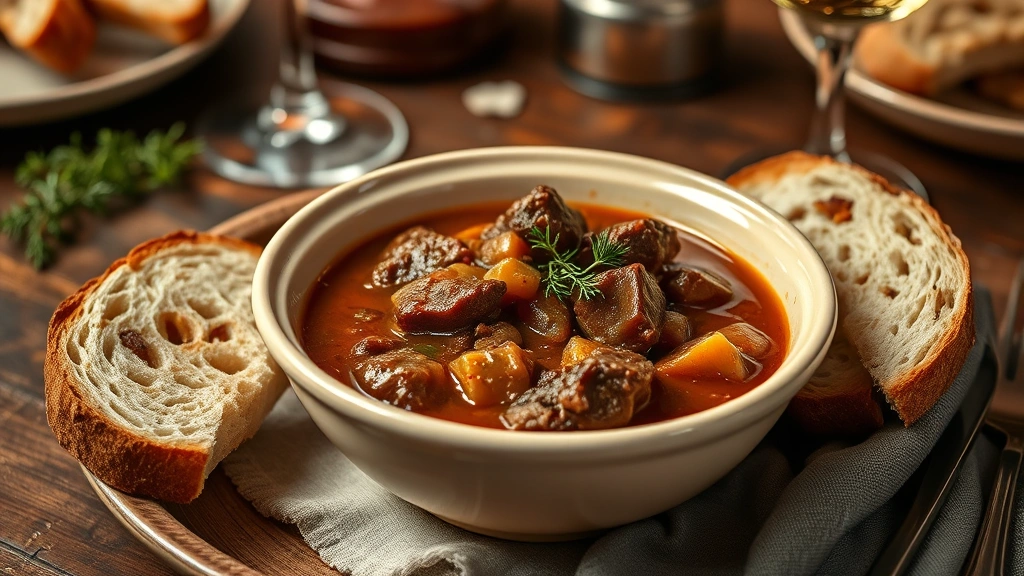
Venison stew deserves thoughtful presentation and complementary accompaniments. Serve in wide, shallow bowls that showcase the beautiful vegetables and tender meat suspended in glossy, rich broth. A crusty bread for soaking up every drop of sauce is essential—consider serving alongside fruit preserves for an unexpected sweet-savory contrast, or pickled onions for bright acidity.
Wine Pairings: The same red wine used in cooking makes an excellent pairing—Burgundy, Bordeaux, or Côtes du Rhône all complement venison stew beautifully. The tannins in these wines cut through the stew’s richness while their acidity cleanses the palate between spoonfuls. For non-alcoholic options, consider rich herbal teas or beef broth-based consommés.
Side Dish Suggestions: Creamy polenta or buttered egg noodles provide textural contrast to the stew. Roasted root vegetables offer heartiness, while a simple green salad with vinaigrette provides necessary brightness and acidity. Crusty bread remains the most traditional and arguably most satisfying accompaniment.
Make-Ahead Advantages: Venison stew actually improves when made 1-2 days ahead. The flavors continue developing as the stew sits, and any slight gaminess mellows into complexity. Refrigerate in an airtight container for up to 4 days, or freeze for up to 3 months. This make-ahead quality makes venison stew perfect for entertaining—you can focus on guests rather than last-minute cooking.
Reducing Food Waste: Food waste reduction tips apply beautifully to game cooking. Save vegetable scraps (carrot peels, onion skins, celery ends) for making stock. Freeze venison trim and bones for future stock preparation. Any leftover stew transforms into delicious pot pie filling or can be shredded and used as a base for venison hash.
FAQ
Can I use beef instead of venison?
While beef chuck or brisket can substitute for venison, the resulting stew loses the distinctive gamey character that makes venison special. If substituting, use beef and increase cooking time slightly—beef requires more time than venison to achieve comparable tenderness. The flavor profile will be more conventional and less complex, but the technique remains identical.
How do I reduce the gamey flavor if it’s too strong?
If your venison stew tastes overly gamey, acidic ingredients help significantly. Add a tablespoon of red wine vinegar or fresh lemon juice to brighten flavors and mellow the gaminess. Additionally, serving with sweet fruit preserves or pickled vegetables provides sweet-sour contrast that balances strong game flavors. For future batches, source farm-raised venison, which tastes significantly milder than wild venison.
What’s the difference between venison shoulder and venison chuck?
Both cuts come from the front legs and shoulder area and work equally well for stew. Shoulder typically contains slightly more fat, while chuck leans slightly leaner. Either cut has sufficient connective tissue to create rich, velvety braising liquid. Purchase whichever is available from your butcher, as the differences are minimal for stew preparation.
Can I make this recipe in a slow cooker?
Yes, but with modifications. Brown the venison and vegetables on the stovetop as directed, then transfer everything to a slow cooker with wine and stock. Cook on low for 6-8 hours until venison is tender. Add root vegetables during the final 2 hours to prevent overcooking. Slow cooker results are acceptable but lack the depth that stovetop cooking develops through proper browning and liquid reduction.
How thick should the finished stew be?
Properly finished venison stew should coat a spoon lightly without being gravy-like or watery. If too thin, simmer uncovered for 15-20 minutes to reduce and concentrate liquid. If too thick, add additional stock or red wine gradually while simmering. The stew should be soupy enough that you drink broth from your bowl alongside eating meat and vegetables.
Where can I learn more about cooking game meats?
Excellent resources for game cooking techniques include The Kitchn’s game cooking guides, Serious Eats’ comprehensive meat cooking articles, and Atlas Obscura’s global hunting and cooking traditions. Professional culinary education through The Culinary Institute of America offers specialized game cooking courses, while Institute of Food Science & Technology provides scientific understanding of meat cooking principles.


