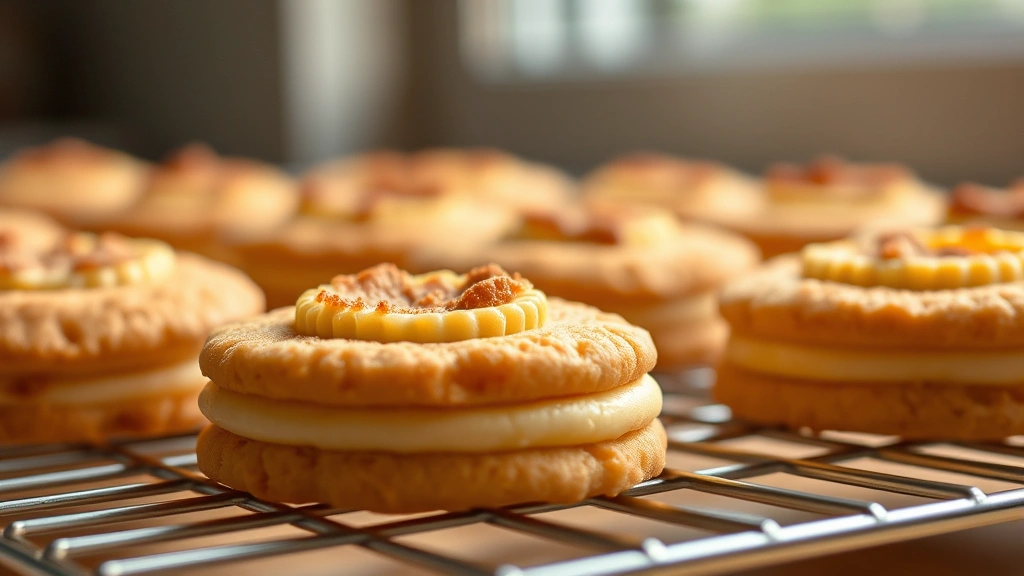
How to Make Alfajores: Traditional Method
Alfajores are one of South America’s most beloved treats, representing centuries of culinary tradition blended with Spanish heritage. These delicate sandwich cookies feature two tender, buttery layers held together with dulce de leche, creating a perfect balance of sweetness and texture. Whether you’re exploring Latin American desserts or seeking an impressive homemade treat, mastering the traditional alfajores recipe opens doors to authentic flavors that transport you straight to Argentina, Peru, or Chile.
The beauty of alfajores lies in their simplicity and elegance. Unlike many elaborate desserts requiring specialized equipment or obscure ingredients, traditional alfajores rely on basic pantry staples and fundamental baking techniques. The key to success involves understanding proper dough consistency, achieving the perfect golden color, and assembling these cookies with care. This comprehensive guide walks you through every step, from mixing your first batch of dough to presenting your finished alfajores with the classic coconut coating.
Essential Ingredients for Authentic Alfajores
Understanding your ingredients is fundamental to baking success. Each component in the traditional alfajores recipe serves a specific purpose, contributing to texture, flavor, and structure. The ingredient list appears deceptively simple, yet the quality and proportions of each element dramatically influence your final result.
Flour selection matters considerably. All-purpose flour works beautifully for alfajores, providing structure without creating excessive toughness. Measure your flour by spooning it into your measuring cup and leveling with a knife rather than scooping directly from the bag, which compacts the flour and throws off your ratios. You’ll need approximately 2 cups of all-purpose flour as your base ingredient.
Butter represents the soul of alfajores. Use unsalted, room-temperature butter exclusively. Cold or salted butter prevents proper creaming and introduces variables you cannot control. The butter should be soft enough to leave a slight fingerprint when pressed but not so warm that it becomes greasy. You’ll need 1 cup (2 sticks) of butter for the traditional dough. The fat content creates those tender, melt-in-your-mouth characteristics that define quality alfajores.
Sweeteners provide richness and structure. Combine ¾ cup granulated sugar with 1 tablespoon of honey or light brown sugar. The honey adds subtle depth and helps maintain moisture, while granulated sugar provides crystalline sweetness and aids in proper creaming. Avoid brown sugar as your primary sweetener, as it introduces moisture that alters dough consistency.
Egg yolks bind and enrich. Use only the yolks from 3 large eggs. Yolks contribute fat and richness without the moisture that egg whites introduce. Room-temperature yolks incorporate more smoothly into your creamed butter and sugar mixture. Reserve your egg whites for other applications like homemade bread recipes.
Cornstarch creates tender texture. This ingredient is absolutely crucial for authentic alfajores. Cornstarch limits gluten development, ensuring cookies remain delicate rather than tough. Use ½ cup of cornstarch, sifted to remove any lumps before measuring. This ratio of cornstarch to flour creates the signature tender crumb.
Leavening agents provide subtle lift. One teaspoon of baking powder and ½ teaspoon of baking soda work together to create gentle rising without creating cake-like texture. These agents are essential for achieving the proper thickness and crumb structure.
Vanilla extract adds aromatic depth. Use 2 teaspoons of pure vanilla extract, never imitation. Quality vanilla contributes complex flavor notes that enhance without overwhelming the delicate butter flavor.
Salt balances sweetness. A pinch of sea salt (approximately ¼ teaspoon) rounds out flavors and prevents one-dimensional sweetness. This small amount makes a surprising difference in the final taste.
Dulce de leche serves as the essential filling. You can use store-bought dulce de leche for convenience, or make your own by simmering sweetened condensed milk in a water bath for 2-3 hours. Homemade versions offer superior flavor complexity.
Shredded coconut creates the signature coating. Use unsweetened shredded coconut for the traditional finish. You’ll need approximately 1½ cups. The coconut should be finely shredded rather than flaked for better adhesion and appearance.

Equipment and Tools You’ll Need
Proper equipment streamlines the baking process and ensures consistent results. While alfajores don’t require specialized machinery, having the right tools makes preparation significantly easier and more enjoyable.
Mixing bowls should include at least two—one for dry ingredients and one for wet ingredients. Glass or ceramic bowls work best as they don’t retain odors or interact with acidic ingredients.
An electric mixer dramatically simplifies the creaming process. Stand mixers with paddle attachments work wonderfully, though handheld electric mixers suffice. The creaming stage requires 3-5 minutes of continuous beating, which becomes tedious by hand.
Measuring cups and spoons ensure accuracy. Use dry measuring cups for flour and sugar, and liquid measuring cups for liquids. Measuring spoons should be properly leveled for consistency.
A fine-mesh sieve or sifter removes lumps from cornstarch and helps distribute baking powder and baking soda evenly throughout the dry ingredients.
Baking sheets should be heavy-duty and flat. Avoid dark sheets, which brown cookies too quickly on the bottoms. Line your sheets with parchment paper for even browning and easy removal.
A cookie scoop (1-tablespoon size) ensures uniform cookie sizes, which promotes even baking. Uniform cookies also present more professionally when assembled.
Cooling racks allow air circulation around cooling cookies, preventing moisture from creating soggy bottoms. Wire racks work best.
A small offset spatula or butter knife helps spread dulce de leche between cookie layers with precision and control.
Shallow dishes hold your shredded coconut for coating. Wide plates or pie dishes work perfectly for this step.
Preparing Your Alfajores Dough
The dough-making process requires attention and patience, but the steps themselves remain straightforward. Success depends on understanding why each step matters and executing with care.
Step 1: Prepare your ingredients. Remove your butter from the refrigerator 30 minutes before starting. It should reach room temperature—soft enough to press slightly but not greasy or melting. Measure all dry ingredients and sift them together into a bowl. This includes your 2 cups all-purpose flour, ½ cup cornstarch, 1 teaspoon baking powder, ½ teaspoon baking soda, and ¼ teaspoon salt. Sifting ensures even distribution of leavening agents and removes lumps.
Step 2: Cream butter and sugar. Place your 1 cup softened butter in your mixer bowl with ¾ cup granulated sugar and 1 tablespoon honey. Beat on medium speed for 3-5 minutes until the mixture becomes light, fluffy, and pale—nearly white in appearance. This creaming process incorporates air into the butter, which helps create tender cookies. Scrape down bowl sides halfway through to ensure complete incorporation.
Step 3: Incorporate egg yolks. Add your 3 room-temperature egg yolks one at a time, beating well after each addition. Each yolk should be completely incorporated before adding the next. This step might take 2-3 minutes total. The mixture should remain light and fluffy.
Step 4: Add vanilla extract. Pour in your 2 teaspoons of pure vanilla extract and beat for 30 seconds to distribute evenly throughout the creamed mixture.
Step 5: Combine wet and dry ingredients. Reduce mixer speed to low and gradually add your sifted dry ingredients. Mix just until a soft dough forms—overmixing develops gluten and creates tough cookies. The dough should come together but not appear overworked. You can finish this step by hand with a spatula if you prefer to minimize mixing.
Step 6: Chill the dough. Divide your dough in half and wrap each portion in plastic wrap. Refrigerate for at least 1 hour, preferably 2 hours. Chilled dough handles more easily, spreads less during baking, and develops better flavor as ingredients meld. This resting period is not optional—it significantly improves your results.
Understanding dough consistency helps troubleshoot problems. If your dough appears too sticky, you likely added too much liquid or used warm ingredients. If it seems too dry and crumbly, your flour measurement was probably excessive or your butter insufficient. Small adjustments of 1-2 tablespoons of flour or drops of milk can correct these issues.
Shaping and Baking Perfect Cookies
The shaping and baking stage determines cookie appearance, texture, and overall quality. Attention to temperature, timing, and technique ensures professional-looking results.
Preheat your oven to 325°F. This relatively low temperature prevents over-browning while allowing cookies to bake through completely. Allow 15 minutes for proper preheating. Oven temperature accuracy matters considerably—use an oven thermometer to verify your actual temperature.
Remove one dough portion from the refrigerator. Keep the second portion chilled until needed. Let the dough sit for 5 minutes at room temperature to soften slightly, making it easier to scoop without being sticky.
Scoop uniform portions. Using your 1-tablespoon cookie scoop, portion dough onto parchment-lined baking sheets, spacing cookies 2 inches apart. Uniform sizing ensures even baking. You should yield approximately 24 cookies per batch.
Gently flatten cookies. Using the bottom of a glass or a cookie press, gently flatten each dough ball to approximately ¼-inch thickness. Alfajores should be relatively thin and delicate rather than thick and puffy. This thickness ensures proper texture—tender and crisp-edged rather than cake-like.
Bake for 12-15 minutes. Cookies should develop a light golden color around edges while remaining pale on top. The centers might appear very slightly underdone—this is correct. Alfajores continue cooking slightly after removal from the oven. Overbaking creates hard, dry cookies rather than tender ones.
Cool on the baking sheet for 5 minutes. This brief rest allows cookies to firm up enough for handling without becoming brittle. The residual heat continues the baking process.
Transfer to cooling racks. Using a thin spatula, carefully transfer cookies to wire racks. Allow complete cooling before assembly—approximately 30 minutes. Warm cookies crumble easily and won’t hold filling properly.
Repeat the baking process with your second dough portion. You should have approximately 48 cookies total, which yields 24 complete alfajores.
Making and Applying Dulce de Leche
Dulce de leche forms the heart of alfajores, providing sweetness, moisture, and binding. While store-bought versions work adequately, homemade dulce de leche elevates your alfajores significantly.
Store-bought option (quick method): Purchase prepared dulce de leche from specialty or international sections of your grocery store. Look for brands that list minimal ingredients—sweetened condensed milk, sugar, and vanilla are standard. Transfer to a small bowl before use. This method saves time without sacrificing quality.
Homemade option (superior flavor): Place one unopened can of sweetened condensed milk in a large pot. Cover completely with water (at least 2 inches above the can). Simmer gently for 2-3 hours, maintaining water level by adding hot water as needed. Never allow the can to become exposed above the water line, as this creates explosion risk. After simmering, carefully remove the can using tongs and allow complete cooling before opening. The condensed milk transforms into thick, caramel-colored dulce de leche. Transfer to a small bowl.
Consistency matters for assembly. Your dulce de leche should be spreadable but not runny. If homemade dulce de leche seems too thick, stir in milk or cream by the teaspoon until reaching the right consistency. If too thin, refrigerate for 15-20 minutes to thicken slightly.
Prepare for assembly. Arrange your completely cooled cookies on a clean work surface. Sort them into pairs of similar size and shape. Flat sides should face up for easier spreading and better adhesion.
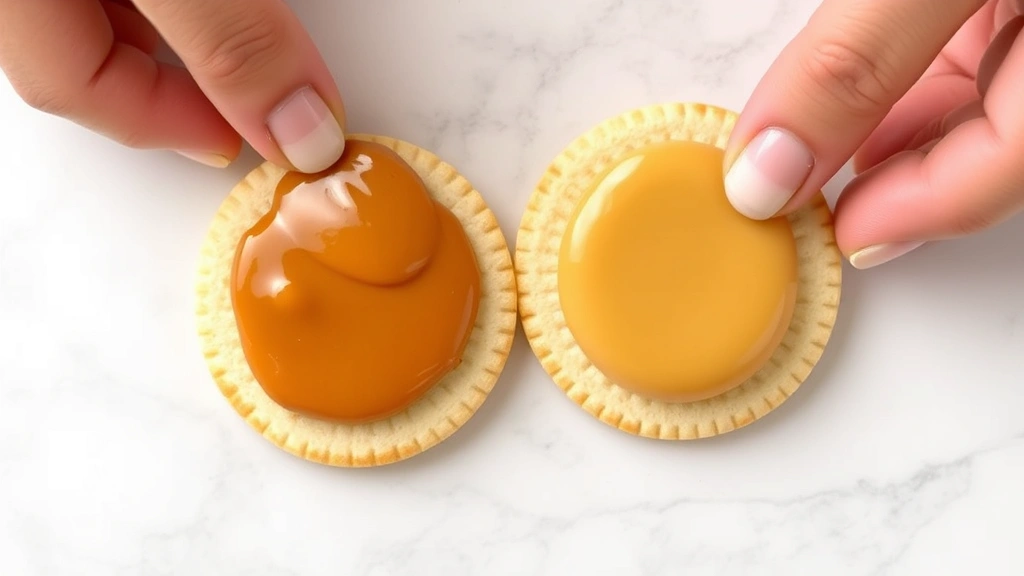
Apply dulce de leche. Using a small offset spatula or butter knife, spread approximately 1 teaspoon of dulce de leche onto the flat side of one cookie. The layer should be thin enough to not squeeze out when pressed but thick enough to hold the cookies together. Place a second cookie flat-side down onto the filling, creating a sandwich.
Work efficiently. Complete this assembly quickly so your dulce de leche doesn’t separate or crystallize. If it thickens while you work, gently warm it for 10 seconds in the microwave.
Assembly and Finishing Touches
The final assembly stage transforms individual components into elegant finished treats. This step requires only a few minutes and creates impressive presentation.
Prepare your coconut coating. Pour your 1½ cups of unsweetened shredded coconut into a shallow dish. If your coconut appears large-flaked rather than finely shredded, pulse it briefly in a food processor to achieve finer texture that adheres better.
Optional chocolate dipping: While traditional alfajores feature coconut coating, some regional variations include chocolate. If desired, melt 6 ounces of white or dark chocolate with 1 tablespoon of coconut oil in a double boiler or microwave. Dip the edges of assembled alfajores into melted chocolate, then immediately into coconut. This creates a professional-looking finish.
Apply coconut coating. Working with one assembled alfajore at a time, hold it by the edges and roll the exposed filling around the cookie perimeter in the shredded coconut. The coconut adheres to the dulce de leche, creating the signature appearance. This step works most easily immediately after assembly before the filling sets.
Place finished alfajores. Arrange completed alfajores on a parchment-lined plate or serving platter. They’re now ready to enjoy, though flavors meld and improve slightly as they rest for a few hours.
Storage and Serving Suggestions
Proper storage extends the enjoyment of your homemade alfajores while maintaining texture and flavor. These treats remain fresh far longer than many homemade cookies.
Room temperature storage: Place alfajores in an airtight container with parchment paper between layers. They maintain quality for 3-4 days at room temperature. Avoid storing in areas with temperature fluctuations or direct sunlight.
Refrigerator storage: Alfajores keep beautifully refrigerated for up to 1 week in an airtight container. Cool storage actually improves flavor development as ingredients continue melding.
Freezer storage: Fully assembled alfajores freeze excellently for up to 2 months. Thaw at room temperature for 30 minutes before serving. Alternatively, freeze unassembled cookies and dulce de leche separately, then assemble after thawing for maximum freshness.
Serving suggestions: Serve alfajores with strong coffee or hot chocolate—the richness of the cookies pairs beautifully with these beverages. In Argentina and Uruguay, alfajores accompany yerba mate tea as an afternoon treat. They also shine as gifts, as their elegant appearance and delicious flavor impress recipients.
Flavor variations to explore: Once you master the traditional method, experiment with additions. Dulce de leche mixed with a teaspoon of rum extract creates sophisticated flavor. A pinch of cinnamon in the dough provides subtle warmth. Crushed pistachios mixed with coconut create an elegant variation. These adaptations honor tradition while adding personal touches.
Troubleshooting common issues: If cookies spread excessively during baking, your dough was too warm or butter too soft. Chill dough longer next time. If cookies taste dry, you may have overbaked them or used too much flour. If dulce de leche leaks from sides, you applied too much filling. These learning experiences help refine your technique with each batch. Many bakers find their alfajores improve dramatically after making them 2-3 times as muscle memory develops.
Making alfajores connects you to centuries of South American culinary tradition. These elegant treats represent the intersection of Spanish colonial influence and local ingredient innovation. Whether you’re preparing them for a special occasion, sharing with loved ones, or simply enjoying a homemade dessert, the effort invested in mastering this traditional recipe yields rewards that extend far beyond the kitchen. Your homemade alfajores will taste noticeably superior to store-bought versions, offering the satisfaction of creating something beautiful and delicious from basic ingredients and personal care.
FAQ
Can I use salted butter instead of unsalted butter?
Technically yes, but unsalted butter gives you control over the salt content. If using salted butter, reduce the salt pinch to just a tiny amount. Different brands vary in salt content, making consistency difficult with salted butter.
What’s the difference between cornstarch and corn flour?
Cornstarch is pure starch, while corn flour contains the entire corn kernel. For alfajores, use cornstarch specifically. Corn flour creates different texture and may result in grittier cookies. This ingredient is essential for achieving that tender crumb.
Can I make alfajores without eggs?
Egg yolks provide fat and binding in traditional alfajores. Egg-free versions require substitutions like applesauce or flax eggs, but results differ noticeably. For the most authentic experience, using eggs is recommended. If you have allergies, try consulting specialized vegan baking resources.
How do I know when alfajores are perfectly baked?
Edges should be light golden while centers remain pale. The cookies should feel firm but not hard when gently pressed. If centers feel soft and doughy, they need more time. Remember they continue cooking after removal from the oven.
Why are my alfajores spreading too much during baking?
Spreading indicates dough temperature issues or excessive butter. Ensure your dough chills adequately—at least 1-2 hours. Your butter should be room temperature but not warm. If your kitchen is very hot, use the refrigerator to chill dough between batches.
Can I make dulce de leche in the oven instead of on the stove?
Yes, you can place an unopened can of sweetened condensed milk in a water bath in a 425°F oven for 1-2 hours. However, stovetop simmering offers better temperature control and reduces explosion risk. Many bakers prefer the stovetop method for safety.
What type of coconut works best for coating?
Unsweetened shredded coconut provides the traditional appearance and taste. Sweetened coconut adds excessive sweetness. Finely shredded coconut adheres better than flaked varieties. If you can only find flaked coconut, pulse it briefly in a food processor to create finer texture.
Can I make alfajores ahead for a party?
Absolutely! Alfajores actually improve 24 hours after assembly as flavors meld. Make them 1-2 days before your event and store in airtight containers. They’ll taste fresher and more flavorful than freshly made cookies. This advance preparation also reduces day-of stress.
How do I transport alfajores without damaging them?
Place assembled alfajores in a sturdy container with parchment paper between layers. Avoid stacking them too high. Refrigerate before transporting to firm up the dulce de leche, which prevents shifting. Transport in a cool environment if possible, as warmth softens the filling.
Can I double this recipe?
Yes, doubling works well. Simply multiply all ingredients by two. You may need to work in batches when creaming and baking, as your mixer might struggle with excessive dough volume. Ensure your oven can accommodate multiple baking sheets if baking simultaneously.
What’s the difference between alfajores and other dulce de leche cookies?
Alfajores specifically feature the cornstarch-flour combination creating tender, delicate cookies with the signature coconut coating. Other dulce de leche cookies might use different ratios or lack the coconut finish. The cornstarch ratio is what distinguishes authentic alfajores from similar treats.
Can I use alternative flours like almond flour or oat flour?
These create different results. The traditional recipe relies on all-purpose flour and cornstarch for specific texture. Substituting specialty flours alters the cookie structure significantly. For the authentic experience, stick with all-purpose flour. Once you master the traditional method, you can experiment with variations.
How do I prevent dulce de leche from leaking out of alfajores?
Use a thin, even layer of filling—approximately 1 teaspoon per cookie. Apply dulce de leche evenly to avoid thick spots. Press gently when sandwiching cookies together rather than firmly. Chilling assembled alfajores for 30 minutes before serving also helps the filling set and reduces leaking.


