Best Beef Short Ribs? Grandma’s Secret Recipe for Fall-Off-The-Bone Perfection
There’s something magical about beef short ribs that takes us back to simpler times, when slow-cooked meals meant love and patience. My grandmother guarded her beef short rib recipe like a treasured heirloom, and after years of watching her work her magic in the kitchen, I finally understand why. These meaty, succulent cuts transform into the most tender, flavorful dish when treated with respect and time. Whether you’re cooking for a special occasion or a cozy family dinner, this guide will unlock the secrets to creating beef short ribs that rival any restaurant.
The beauty of beef short ribs lies in their rich marbling and connective tissue that breaks down into gelatin during long, slow cooking. Unlike quick-cooking cuts, short ribs demand patience—but that patience rewards you with deep, complex flavors and meat so tender it practically melts on your tongue. This isn’t just another recipe; it’s a technique passed down through generations, refined and perfected to deliver consistently stunning results every single time.
Understanding Beef Short Ribs: Cuts and Selection
Before you even think about cooking, you need to understand what you’re working with. Beef short ribs come from the rib section of the cow, specifically the lower portion where the ribs connect to the plate. There are two main types: English-cut short ribs (which have the bone running perpendicular to the meat) and flanken-cut short ribs (which feature thin slices across the bone). For this grandmother’s recipe, we’ll focus on English-cut short ribs, as they’re more forgiving and deliver superior results.
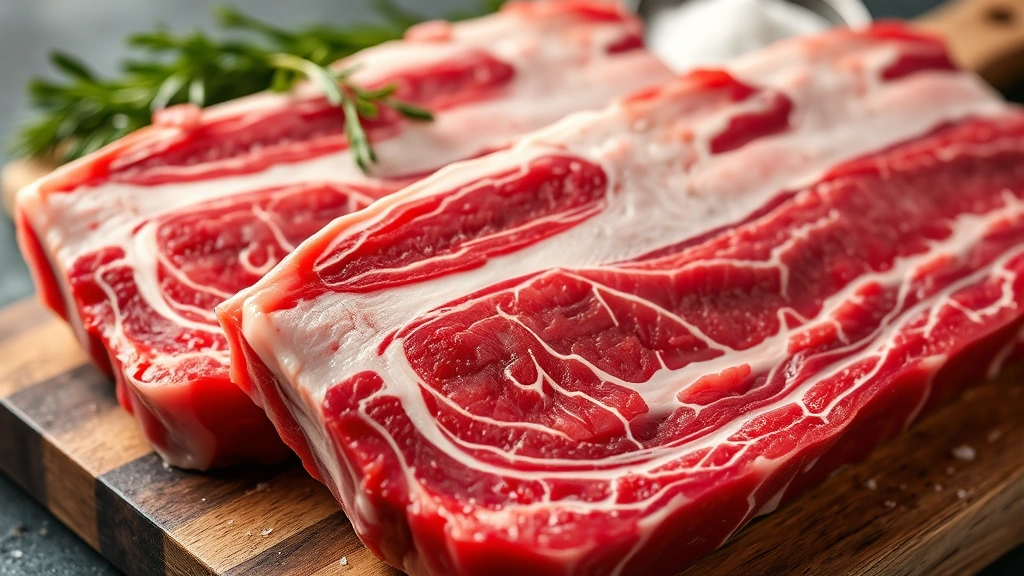
When selecting your short ribs at the butcher counter, look for meat with deep red color and white, not yellow, fat. The bones should be clean and the meat should have good marbling throughout—those white streaks of fat are what create that luxurious mouthfeel when cooked low and slow. Ask your butcher to cut the ribs to about 3-4 inches thick; this size ensures even cooking without drying out the exterior while the interior reaches perfect tenderness.
A typical serving includes 2-3 short ribs per person, depending on their size and appetite. For a family of four, plan on purchasing 8-12 ribs. Don’t shy away from buying extra—they freeze beautifully and make wonderful leftovers. Speaking of which, if you enjoy slow-cooked meat dishes, you’ll absolutely love our pork adobo recipe, which uses similar low-and-slow cooking principles.
Grandma’s Secret Preparation Method
My grandmother always said the preparation makes all the difference, and she was absolutely right. Here’s her method, which I’ve followed religiously:
Pat the ribs completely dry using paper towels. Moisture is the enemy of browning, and proper browning creates the flavorful crust that defines great short ribs. Don’t rush this step—take a full minute per rib if needed.
Season generously with kosher salt and freshly ground black pepper at least 30 minutes before cooking, or ideally, overnight. This allows the salt to penetrate the meat and enhance its natural flavors. Grandma always used a 1:1 ratio of salt to pepper, which might seem bold but creates the perfect balance.
Prepare your aromatics by roughly chopping two large onions, four carrots, and six garlic cloves. Don’t bother peeling the garlic; the papery skin adds nothing harmful and keeps your hands less sticky. These vegetables will caramelize alongside the ribs, creating a magnificent fond for your braising liquid.
The secret ingredient my grandmother swore by was a tablespoon of tomato paste, which adds umami depth without making the dish taste tomato-forward. This ingredient alone elevates the flavor profile considerably. She’d also add a splash of balsamic vinegar—just a quarter cup—which provides subtle sweetness and acidity that rounds out the final dish.
The Slow Cooking Technique
Heat a large Dutch oven or heavy-bottomed pot over medium-high heat. Add two tablespoons of high-heat oil (avocado or vegetable oil works perfectly). Once the oil shimmers, carefully place the short ribs in the pot, working in batches if necessary—never overcrowd the pan, as this drops the temperature and causes steaming rather than browning.
Brown each rib for 3-4 minutes per side, developing a deep mahogany crust. This Maillard reaction creates hundreds of new flavor compounds that simply cannot be replicated any other way. Grandma would never skip this step, and neither should you. Remove the ribs and set aside on a clean plate.
In the same pot, add your prepared aromatics and sauté for 5-7 minutes until they begin to soften and the onions turn translucent. Stir in the tomato paste and cook for another minute, allowing it to caramelize slightly against the hot pot. Add the balsamic vinegar and scrape up all those flavorful browned bits stuck to the bottom—this process is called deglazing and is absolutely crucial.
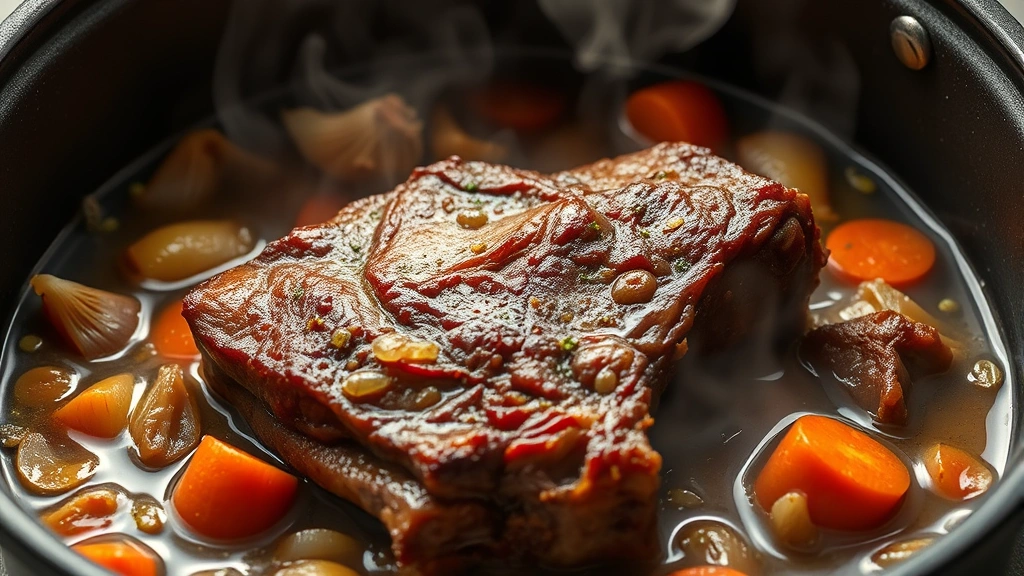
Pour in 2-3 cups of beef stock (homemade is ideal, but quality store-bought works fine) and add two bay leaves and a sprig of fresh thyme. Return the short ribs to the pot, nestling them among the vegetables. The liquid should come about three-quarters of the way up the sides of the ribs—not completely submerged, as this creates a steaming effect rather than braising.
Cover the pot with a heavy lid and transfer to a preheated 300°F oven. This low temperature allows the connective tissue to break down gradually into gelatin, creating that signature tender texture. Cook for 3-4 hours, checking after the first 90 minutes. The ribs are done when a fork pierces the meat with absolutely no resistance.
For an alternative approach that delivers equally stunning results, try our chicken and potatoes recipe, which demonstrates how braising works across different proteins.
Building Layers of Flavor
The true magic of Grandma’s recipe lies in layering flavors. Beyond the initial seasoning and browning, there are several techniques to deepen the taste profile:
Use beef stock strategically. Grandma insisted on using stock made from roasted bones rather than water. The roasted bones provide natural gelatin and minerals that enhance mouthfeel and create a silky sauce. If you have access to a culinary school resource, many offer stock-making classes that reveal professional techniques.
Add acid and sweetness. Beyond the balsamic vinegar, consider a teaspoon of Worcestershire sauce and a tablespoon of soy sauce. These ingredients don’t announce themselves but work behind the scenes to amplify meaty flavors. The acid from vinegar brightens everything, while the soy adds umami complexity that makes people say “this tastes incredible” without knowing why.
Fresh herbs matter. While the braising liquid uses dried herbs, finish the dish with fresh parsley and a pinch of fresh thyme scattered over top. The bright, volatile oils in fresh herbs provide contrast to the deep, rich braised flavors.
The braising liquid itself becomes the sauce, so don’t discard it. After removing the ribs, strain the liquid through a fine-mesh sieve, pressing the softened vegetables to extract all their flavor. Skim off excess fat if desired, though Grandma always said a little fat equals flavor. Return the sauce to the pot and reduce it over medium-high heat for 10-15 minutes until it coats the back of a spoon. This concentrated sauce is liquid gold.
Serving and Pairing Suggestions
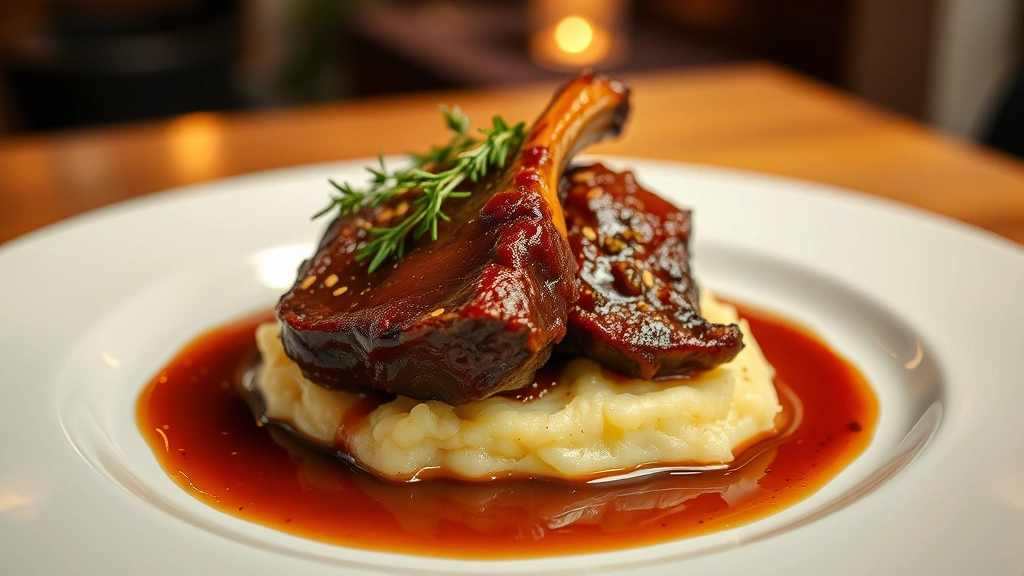
Grandma always served her beef short ribs with simple, elegant sides that didn’t compete with the main event. Creamy mashed potatoes are traditional and perfect—the starch absorbs the rich sauce beautifully. Alternatively, egg noodles tossed with a touch of butter and fresh parsley create a rustic, comforting plate.
Roasted root vegetables work wonderfully as a bed for the ribs. Carrots, parsnips, and celery root develop caramelized edges in the oven while you’re braising, and they pair naturally with beef. If you want something lighter, a simple green salad with mustard vinaigrette provides acidic contrast that cuts through the richness.
For bread, warm, crusty slices are essential for soaking up every drop of sauce. Our guide to easy homemade bread recipes includes several options that would be perfect alongside this dish.
Wine pairing matters more than people realize. A full-bodied red wine like Cabernet Sauvignon, Bordeaux, or Burgundy complements beef short ribs beautifully. The tannins in these wines cut through the fat while the fruit notes echo the braising liquid’s complexity. If you prefer white wine, an oaked Chardonnay provides sufficient body and richness.
For a complete meal experience, consider pairing with our Korean fried chicken recipe as a contrast course, or round out a special dinner with our homemade ice cream for dessert.
Troubleshooting Common Issues
Ribs are tough and chewy: This indicates insufficient cooking time. Short ribs need patience—at least 3 hours at 300°F, often closer to 4 hours for larger pieces. Collagen breaks down gradually, and rushing this process defeats the purpose. Additionally, ensure your oven temperature is accurate; use an oven thermometer to verify.
Meat falls off the bone too easily: While this might sound ideal, it actually indicates overcooking. The meat should be tender enough to cut with a fork but should still require a gentle pull to separate from the bone. Reduce cooking time by 15-20 minutes next time.
Sauce is too thin: After removing the ribs, reduce the liquid over medium-high heat for 15-20 minutes. If you want a thicker sauce, mix a tablespoon of cornstarch with two tablespoons of cold water, then whisk this slurry into the simmering sauce. Simmer for 2-3 minutes until thickened.
Sauce is too salty: Prevention is key—taste before adding extra salt. If you’ve oversalted, add a peeled potato to the liquid and simmer for 10 minutes; the starch absorbs excess salt. Remove the potato before serving.
Uneven cooking: Ensure ribs are similar in size and that they’re arranged in a single layer in the pot. Larger ribs may need additional time. Consider cutting thicker ribs in half lengthwise to ensure uniform cooking.
For additional food science insights into braising and cooking techniques, Serious Eats offers comprehensive guides on meat cooking and flavor development.
FAQ
Can I make beef short ribs in a slow cooker instead of the oven?
Absolutely. Brown the ribs in a skillet first, then transfer everything to a slow cooker on low for 8-10 hours. You’ll skip the oven step but still achieve tender results. However, the oven method gives superior browning and sauce development. If using a slow cooker, reduce the braising liquid to 1.5 cups, as slow cookers don’t allow for evaporation.
How far in advance can I prepare this dish?
Beef short ribs actually taste better the next day after flavors meld. Prepare them fully, cool completely, then refrigerate in an airtight container for up to 4 days. The fat will solidify on top, which you can skim off before reheating. Reheat gently in a 300°F oven for 20-30 minutes, covered, until warmed through.
Can I freeze beef short ribs?
Yes, freeze them in their braising liquid for up to 3 months. Thaw overnight in the refrigerator, then reheat as described above. Freezing actually helps tenderize the meat further as ice crystals break down cell walls.
What’s the best way to reduce food waste when cooking short ribs?
Save all vegetable scraps—carrot peels, onion skins, herb stems—for making stock. The braising liquid itself can be frozen and used as a base for soups or sauces. Our article on food waste reduction tips offers excellent strategies for maximizing every ingredient.
Can I use boneless short ribs?
While possible, boneless short ribs don’t deliver the same flavor or texture. The bone provides collagen that converts to gelatin, enriching the sauce. Stick with bone-in ribs for authentic results.
What if my oven temperature fluctuates?
Use an oven thermometer to monitor actual temperature. Many ovens run hot or cold, affecting cooking times significantly. If your oven runs hot, reduce temperature to 275°F. If it runs cold, increase to 325°F. The goal is consistent, gentle heat.
Can I cook beef short ribs on the stovetop?
Yes, though oven braising is preferable for even heat distribution. If cooking on the stovetop, brown the ribs, then maintain a gentle simmer (small bubbles occasionally breaking the surface) for 3-4 hours, covered. Monitor liquid level and add more stock if needed. The oven method is more reliable and requires less attention.


