Beef Tartare Recipe: Chef’s Secret Unveiled
Beef tartare stands as one of the most elegant and deceptively simple dishes in classical cuisine. This raw beef preparation, when executed with precision and respect for food safety, delivers an unparalleled depth of flavor that cooked beef simply cannot achieve. The beauty of beef tartare lies not in complexity, but in the quality of ingredients and the technique behind each careful cut and combination.
Many home cooks shy away from preparing beef tartare, assuming it requires professional training or mysterious culinary secrets. The truth is far more encouraging: armed with the right knowledge, proper sourcing, and attention to detail, you can create restaurant-quality beef tartare in your own kitchen. This comprehensive guide reveals the professional techniques that separate exceptional tartare from mediocre preparations, drawing from both classical French culinary traditions and modern food safety practices.
Understanding Beef Tartare: Origins and Essence
Beef tartare emerged from the nomadic Mongol warriors of Central Asia, who would tenderize raw meat by placing it under their saddles during long journeys. This culinary practice eventually evolved through Eastern European traditions and was refined into the sophisticated dish we know today through French haute cuisine.
The name “tartare” actually derives from the Tatars, a Mongolic people, though the dish gained prominence in France during the early 20th century. French chefs recognized that finely minced raw beef, when properly seasoned and combined with complementary ingredients, created a uniquely textured experience with concentrated beef flavor. Unlike cooked beef, raw beef tartare preserves the natural umami compounds and delicate flavor notes that heat destroys.
What makes beef tartare fundamentally different from ground beef is the preparation method and ingredient quality. While ground beef is mechanically processed, beef tartare is hand-cut or carefully minced to maintain the meat’s structure and texture. This distinction is crucial for achieving the signature tender, almost melting quality that defines authentic tartare.
Selecting the Perfect Beef Cut
The foundation of exceptional beef tartare rests entirely on beef quality. You cannot salvage inferior meat through technique or seasoning, so sourcing becomes your primary concern. The best beef tartare begins with premium cuts that possess excellent marbling, proper aging, and impeccable freshness.
Ideal cuts for beef tartare:
- Tenderloin (Filet Mignon): The most popular choice among professional chefs. Its natural tenderness, subtle flavor, and fine marbling create the ideal canvas for tartare preparation. The meat is buttery and luxurious without being overwhelming.
- Strip Steak (New York Strip): Offers more pronounced beef flavor than tenderloin while maintaining excellent texture. Contains slightly more marbling, which enhances the eating experience.
- Ribeye: Provides robust beef flavor and superior marbling. Some chefs prefer ribeye for its richness, though it requires careful fat distribution during mincing.
- Sirloin Tip: A leaner option that delivers clean beef flavor without excessive fat. Works well for those preferring a lighter preparation.
Always purchase beef from a trusted butcher who specializes in high-quality cuts and understands food safety protocols for raw meat preparations. Request a cut specifically intended for tartare, and ask about the beef’s age and origin. Properly aged beef (21-28 days) develops deeper flavor and more tender structure than fresh meat.
The meat should be bright red without any browning or discoloration. Any surface oxidation must be trimmed away before mincing. Never purchase pre-ground beef for tartare; the grinding process exposes too much surface area to potential contamination.
Food Safety and Handling Protocols
Preparing raw beef dishes requires absolute commitment to food safety. While beef tartare carries inherent risks, understanding and implementing proper protocols minimizes danger to negligible levels—no different than consuming sushi or ceviche.
Critical food safety measures:
- Source verification: Purchase beef exclusively from certified suppliers with documented food safety practices. Ask your butcher about their sourcing, storage temperatures, and handling procedures.
- Temperature control: Keep all ingredients and equipment at temperatures below 40°F (4°C) throughout preparation. Work quickly to minimize exposure to room temperature.
- Equipment sterilization: Sanitize all cutting boards, knives, and utensils with hot soapy water, then rinse thoroughly. Consider using separate cutting boards reserved exclusively for raw preparations.
- Timing: Prepare beef tartare no more than 2 hours before serving. The longer minced beef sits, the greater the bacterial proliferation risk.
- Ingredient freshness: Use fresh eggs (from reliable sources), quality condiments, and fresh herbs. Avoid any ingredient showing signs of age or spoilage.
- Vulnerable populations: Never serve beef tartare to pregnant women, young children, elderly individuals, or immunocompromised persons. These groups face elevated risk from foodborne pathogens.
Consider consulting FDA food safety guidelines for comprehensive information about raw meat handling. Many professional culinary programs, including those offered through The Culinary Institute of America, emphasize these protocols extensively.
Essential Ingredients and Flavor Building
Beyond the beef itself, beef tartare requires carefully selected complementary ingredients that enhance rather than mask the meat’s natural flavor. Each component serves a specific purpose in the overall composition.
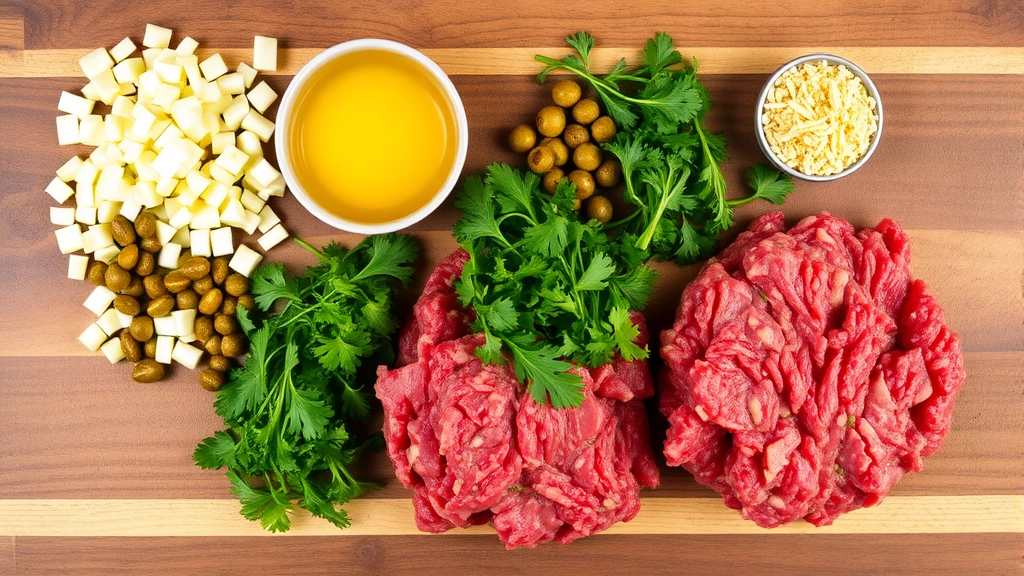
Core ingredients for classic beef tartare:
- Beef: 8 ounces high-quality tenderloin, finely minced
- Egg yolk: 1 raw, pasteurized egg yolk (raw yolk provides richness and binds flavors)
- Capers: 1 tablespoon, finely chopped (provides briny, acidic counterpoint)
- Shallots: 1 tablespoon, minced extremely fine (adds aromatic sharpness)
- Dijon mustard: 1 teaspoon (contributes subtle heat and flavor depth)
- Worcestershire sauce: 3-4 dashes (umami enhancement)
- Tabasco or hot sauce: 2-3 drops (optional, for subtle heat)
- Fresh parsley: 1 teaspoon, finely chopped (brightness and freshness)
- Cornichons: 1 tablespoon, finely diced (acidic crunch)
- Sea salt and freshly ground black pepper: To taste
- High-quality olive oil: 1 tablespoon, added at the end
Professional chefs understand that ingredient quality matters as much as technique. Use fleur de sel or other finishing salt rather than table salt. Grind black pepper fresh immediately before use. Select extra virgin olive oil with a flavor profile you enjoy—some prefer peppery, others prefer buttery varieties.
The egg yolk deserves special attention. Traditional recipes call for raw yolk, though you may request pasteurized eggs from your grocer for added safety. The yolk’s fat content and lecithin create an emulsifying effect, binding all components into a cohesive preparation while adding luxurious texture.
Step-by-Step Preparation Technique
The actual preparation of beef tartare, while straightforward, demands precision and care. Professional execution distinguishes excellent tartare from merely acceptable versions.
Preparation process:
- Chill all equipment: Place your cutting board, knife, and mixing bowl in the freezer for at least 15 minutes. Cold equipment maintains beef temperature and prevents bacterial growth.
- Trim the beef: Remove any surface discoloration, sinew, or fat from your beef cut. Use a sharp knife to make clean cuts, creating a uniform piece of meat.
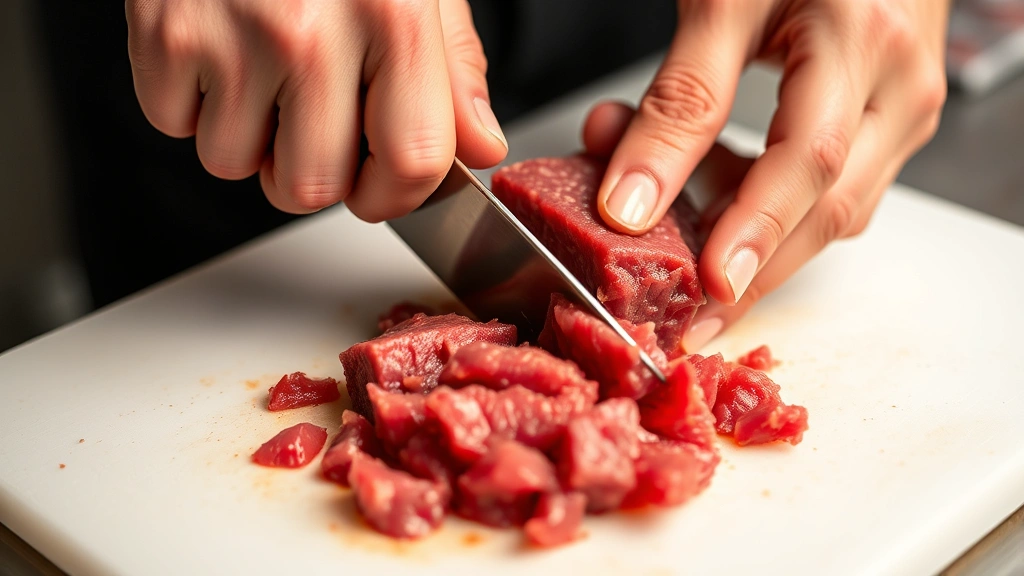
- Hand-mince the beef: Using a very sharp knife, cut the beef into small cubes (about 1/8 inch), then finely mince by rocking the knife back and forth. Some chefs prefer a meat grinder with a fine die, but hand-mincing provides superior control and texture. The meat should be finely minced but not pulverized—you want texture, not paste.
- Prepare the supporting ingredients: Finely mince shallots, chop capers and cornichons into small pieces, and mince parsley. These ingredients should be almost paste-like in consistency so they distribute evenly throughout the beef.
- Combine in stages: Place minced beef in your chilled bowl. Add the egg yolk and gently fold it into the meat using a spatula or fork. The yolk should distribute evenly without breaking. Add mustard, Worcestershire, and hot sauce if using. Fold gently to combine.
- Add vegetables and herbs: Fold in shallots, capers, cornichons, and parsley. Use gentle folding motions rather than aggressive stirring—you want to maintain the meat’s texture.
- Season and finish: Taste the mixture and adjust seasoning with sea salt and freshly ground black pepper. Add the olive oil in a thin stream while folding gently. The oil provides richness and helps bind components.
- Final check: The finished tartare should hold together slightly while maintaining a tender, almost creamy texture. If too wet, it lacks structure; if too dry, it becomes dense and unpalatable.
The entire process from mincing beef to finishing should take no more than 10-15 minutes. Work efficiently but never rush—precision matters more than speed. Keep everything cold throughout preparation.
Plating and Presentation Secrets
Professional presentation elevates beef tartare from a simple dish to a restaurant-quality experience. The visual appeal creates anticipation that enhances flavor perception.
Professional plating techniques:
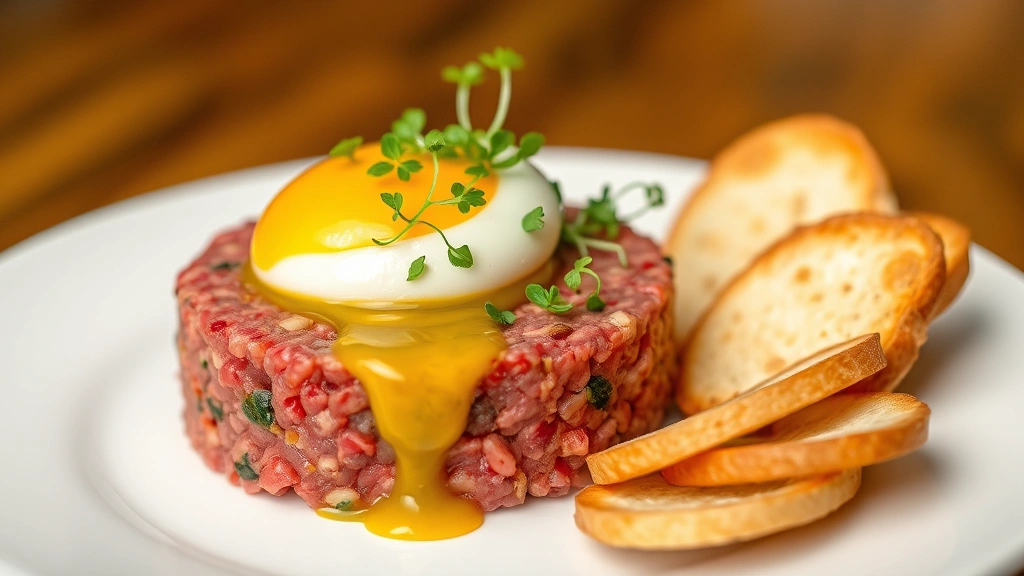
- Use a ring mold: A 3-inch stainless steel ring creates uniform, elegant presentation. Place the ring on a chilled plate, fill with tartare, and gently lift away. The result is a perfect cylinder that looks restaurant-quality.
- Create height: Stack tartare to create vertical dimension rather than spreading it flat. This presentation style looks more refined and encourages proper eating portions.
- Garnish strategically: Place a quail egg yolk (if serving additional yolks) in a small indentation on top. Arrange microgreens, chives, or edible flowers around the tartare. These garnishes should enhance presentation without overwhelming the plate.
- Plate temperature: Use chilled plates. The cold plate maintains tartare temperature and prevents the beef from warming during service.
- Negative space: Don’t crowd the plate. Leave space around the tartare so it becomes the focal point. Professional plating embraces emptiness as a design element.
- Sauce presentation: If adding any sauce (such as a light aioli or herb oil), use a squeeze bottle to create deliberate marks or dots rather than random drizzles.
Remember that you eat with your eyes first. A beautifully presented beef tartare creates anticipation and enhances the overall dining experience. Take time to arrange each element thoughtfully.
Serving Suggestions and Accompaniments
Beef tartare pairs beautifully with numerous accompaniments that complement rather than compete with the meat’s delicate flavor. The right sides transform tartare from an appetizer into a complete first course.
Classic accompaniments:
- Toasted bread: Thin slices of baguette or brioche, lightly toasted and brushed with olive oil. The crispy texture contrasts beautifully with tartare’s creamy consistency.
- Crudités: Thinly sliced vegetables like radishes, celery, or cucumber provide refreshing crunch and palate cleansing between bites.
- Potato crisps: Thin, crispy potato wafers offer textural contrast and sophistication. Some chefs serve tartare atop individual potato crisps for elegant presentation.
- Microgreens: Peppery or bitter varieties like arugula or mustard microgreens add complexity and visual appeal.
- Cornichons and capers: Serve additional quantities on the side, allowing diners to customize flavor intensity.
- Quail eggs: Serve additional raw quail egg yolks separately, allowing diners to add richness as desired.
- Fleur de sel: Offer finishing salt on the side so diners can adjust seasoning to personal preference.
Consider serving beef tartare as part of a composed appetizer course alongside other raw beef preparations or light starters. The richness of tartare means smaller portions satisfy, making it ideal for multi-course meals.
Storage and Make-Ahead Tips
While beef tartare is best served immediately after preparation, certain components can be prepared in advance, streamlining service for entertaining.
Make-ahead strategies:
- Ingredient prep: Mince shallots, chop capers and cornichons, and mince parsley up to 4 hours ahead. Store each in separate airtight containers in the refrigerator.
- Beef mincing: Mince beef no more than 2 hours before assembly. Store in the coldest part of your refrigerator in an airtight container.
- Assembling tartare: Combine all components immediately before serving. Do not assemble tartare more than 30 minutes before plating.
- Storage duration: Once assembled, beef tartare should be served within 30 minutes. Never store prepared tartare in the refrigerator for later service.
- Plate preparation: Chill plates at least 30 minutes before plating. You can prepare garnishes and arrange them on plates ahead of time, covering with plastic wrap until ready to serve.
For entertaining, prepare all components except the beef in advance. Mince beef just before guests arrive, then assemble and plate immediately. This approach ensures maximum freshness while minimizing last-minute stress.
If you’re unfamiliar with raw meat preparations, consider reviewing Serious Eats’ comprehensive cooking guides for additional confidence building. Many professional chefs recommend starting with simpler beef stew recipe techniques before advancing to raw preparations.
FAQ
Is it safe to eat raw beef?
Raw beef carries inherent risks, but proper sourcing, handling, and food safety protocols minimize danger to negligible levels. Purchase beef exclusively from trusted suppliers with documented food safety practices. Never serve to vulnerable populations including pregnant women, young children, elderly individuals, or immunocompromised persons. Many restaurants and professional chefs serve beef tartare safely daily by following rigorous protocols.
Can I use ground beef from the grocery store?
Never use pre-ground beef for tartare. Ground beef exposes too much surface area during mechanical processing, dramatically increasing bacterial contamination risk. Purchase whole beef cuts from a trusted butcher and mince by hand or with a clean grinder immediately before use.
What if I’m uncomfortable with raw egg yolk?
Request pasteurized eggs from your grocer. Pasteurization eliminates salmonella risk while preserving the yolk’s functional and flavor properties. Alternatively, some chefs substitute a small amount of high-quality mayonnaise (which contains pasteurized eggs) for similar binding effects, though this changes the flavor profile slightly.
How long does beef tartare keep?
Assembled beef tartare should be served within 30 minutes of preparation. Individual components (minced beef, vegetables, herbs) can be prepared up to 4 hours ahead if properly refrigerated. Never store prepared tartare for later consumption—always prepare immediately before serving.
Can I make beef tartare ahead for a party?
Prepare all components separately in advance, but assemble tartare immediately before guests arrive. Mince beef within 2 hours of serving, then combine all ingredients and plate right before service. This approach ensures food safety while minimizing last-minute stress.
What’s the difference between beef tartare and steak tartare?
These terms are used interchangeably. “Steak tartare” technically refers to tartare made from steak cuts, while “beef tartare” encompasses any high-quality beef preparation. The preparation and ingredients remain identical regardless of terminology.
How should I cut the beef for tartare?
Hand-mincing with a sharp knife provides superior control and texture compared to mechanical grinding. Cut beef into small cubes, then rock your knife back and forth to mince finely. The finished beef should be finely minced but not pulverized—you want texture and slight chew, not paste.
What wine pairs well with beef tartare?
Light red wines like Pinot Noir complement tartare beautifully, as do crisp white wines such as Sauvignon Blanc or Chablis. The acidity and light body don’t overwhelm the delicate beef flavor. Champagne or sparkling wine also works excellently, providing festive elegance.
Can I add other ingredients to beef tartare?
Absolutely. While the classic preparation is time-tested, many chefs create variations with additions like finely diced beets, truffle oil, anchovy paste, or different fresh herbs. Experiment respectfully, understanding that each addition changes the flavor balance. Start with classic preparation before exploring variations.
Why is my beef tartare too wet?
Excess moisture comes from too much egg yolk, insufficient mincing (creating more surface area that releases liquid), or adding ingredients with high water content. Use only one egg yolk, ensure beef is finely minced, and avoid watery additions. If tartare becomes too wet, fold in a small amount of finely crushed breadcrumbs or add a touch more beef.


