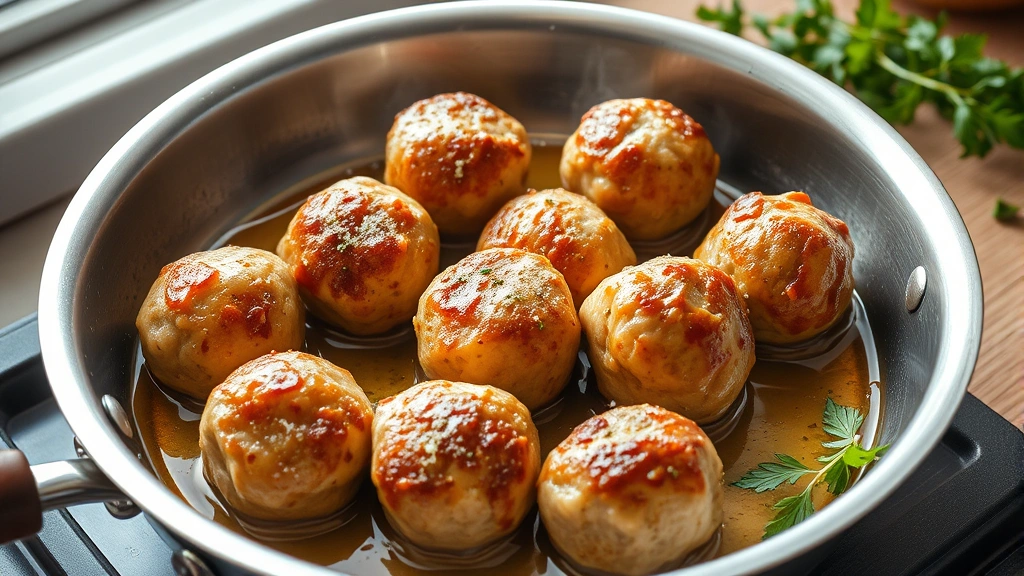
Juicy Chicken Meatballs? Tested Recipe Inside
There’s something deeply satisfying about biting into a perfectly cooked chicken meatball—one that’s tender, moist, and bursting with flavor rather than dense and dry. After countless batches, failed experiments, and kitchen mishaps, I’ve finally cracked the code to creating consistently juicy chicken meatballs that rival any restaurant version. The secret isn’t complicated, but it does require understanding a few key principles about how ground chicken behaves during cooking.
Most home cooks struggle with chicken meatballs because ground chicken lacks the fat content of beef or pork, making it prone to drying out quickly. This guide walks you through my tested method that keeps these meatballs succulent every single time. Whether you’re planning to serve them as an appetizer, toss them into pasta, or use them for meal prep, these chicken meatballs will become your go-to recipe.
Why Chicken Meatballs Dry Out (And How to Fix It)
Ground chicken contains approximately 1-2% fat, compared to ground beef’s 15-20%. This dramatic difference explains why so many home cooks end up with rubbery, disappointing results. When you cook lean ground poultry, the proteins contract tightly, squeezing out moisture. The solution involves three critical strategies: adding moisture-retaining ingredients, not overmixing the meat, and cooking at the right temperature.
The first strategy is incorporating a binder that holds moisture throughout cooking. Traditional breadcrumbs soaked in milk (called a panade) create a sponge-like structure that absorbs and retains liquid. This technique, widely used in professional kitchens and explained in detail at the Culinary Institute of America, is essential for lean meats. I’ve tested versions with panko, regular breadcrumbs, and crushed crackers—panko creates the most tender texture because of its larger structure.
Overmixing is the second major culprit. When you work the meat mixture too much, you develop gluten networks (from the breadcrumbs) and align the protein strands, both of which lead to dense, compact meatballs. Mix only until ingredients are just combined—you should still see small streaks of the mixture. This is counterintuitive for many cooks who associate thorough mixing with better results, but Serious Eats confirms that minimal mixing produces superior texture in ground meat applications.
Temperature control during cooking is equally crucial. Chicken proteins denature and expel moisture at 165°F (74°C), which is the safe internal temperature. However, cooking above this temperature causes excessive moisture loss. The key is cooking slowly at moderate heat, then checking temperature with an instant-read thermometer to avoid overcooking.
Essential Ingredients for Juicy Results
This recipe makes approximately 24 meatballs (serves 4-6 people). Here’s exactly what you need:
- 1.5 pounds ground chicken (use thighs or a mix of thighs and breasts—thighs have more fat)
- 1/2 cup panko breadcrumbs
- 1/4 cup whole milk
- 1 large egg
- 1/4 cup finely grated Parmesan cheese
- 3 cloves garlic, minced
- 2 tablespoons fresh parsley, chopped (or 1 tablespoon dried)
- 1 teaspoon salt
- 1/2 teaspoon black pepper
- 1/4 teaspoon red pepper flakes (optional)
- 2 tablespoons olive oil for cooking
The choice between ground chicken thighs and breasts significantly impacts juiciness. Ground chicken thighs contain roughly 5% fat compared to breast meat’s negligible fat content. For the juiciest results, purchase whole thighs and have your butcher grind them, or ask for a blend of 70% thigh and 30% breast meat. If you can only find all-breast ground chicken, add 2 tablespoons of softened butter to the mixture to compensate for the missing fat.
Fresh herbs make an enormous difference in flavor complexity. While dried parsley works, fresh herbs provide a brightness that elevates these meatballs beyond ordinary. If you grow herbs at home, check out our guide on preserving herbs for year-round use so you always have fresh options available.
Step-by-Step Instructions
Preparation (5 minutes):
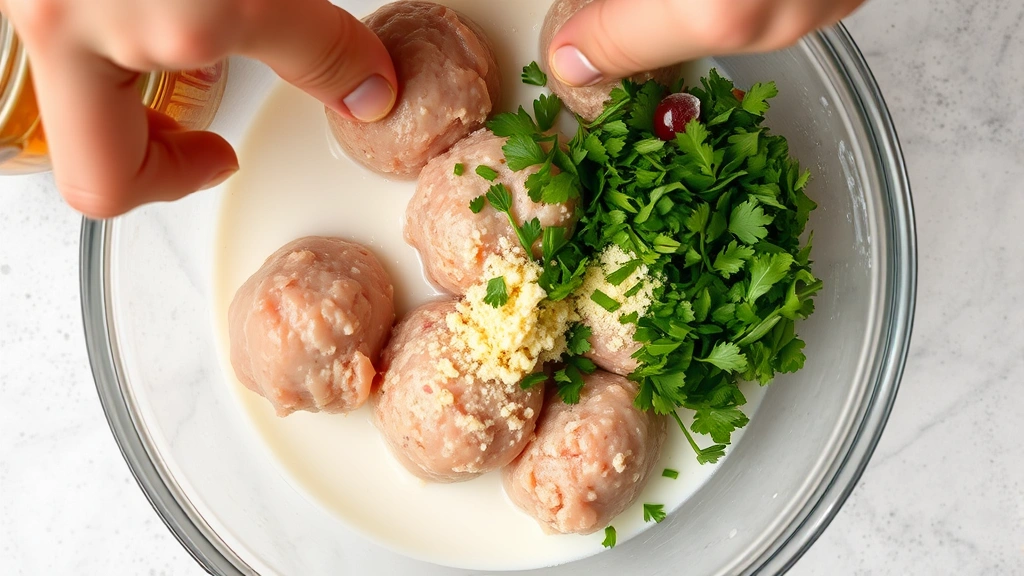
- Pour milk into a small bowl and add panko breadcrumbs. Stir gently and let sit for 2 minutes until the breadcrumbs absorb the milk. This creates the moisture-retaining panade.
- Mince garlic finely and chop fresh parsley. Set aside.
- Have all ingredients measured and ready before you begin mixing.
Mixing (3 minutes):
- Place ground chicken in a large mixing bowl. Add the soaked breadcrumb mixture, egg, Parmesan, garlic, parsley, salt, pepper, and red pepper flakes.
- Using your hands (clean hands work best), gently combine ingredients. Use a light touch—mix just until no streaks of raw chicken remain visible. This should take about 30-40 seconds of gentle folding. Stop immediately when the mixture comes together.
- Do not overwork the mixture. Overmixing develops a dense, bouncy texture that traps moisture rather than releasing it.
Shaping (5 minutes):
- Dampen your hands slightly with water to prevent sticking. Scoop approximately 1.5 tablespoons of mixture and roll gently between your palms into a ball about 1.25 inches in diameter.
- Place shaped meatballs on a parchment-lined baking sheet. Space them about 1 inch apart.
- If time permits, refrigerate shaped meatballs for 15-30 minutes before cooking. This allows the binder to fully set and helps meatballs hold together during cooking.
Cooking (Method A: Pan-Searing):
- Heat olive oil in a large skillet over medium heat for 1 minute. The oil should shimmer but not smoke.
- Carefully place meatballs in the skillet, working in batches if necessary to avoid crowding. They should sizzle gently when they hit the pan.
- Cook undisturbed for 3-4 minutes until the bottom develops a light golden crust. Gently shake the pan occasionally to roll the meatballs.
- Continue rolling and cooking for another 4-5 minutes until all sides are light golden and an instant-read thermometer inserted into the center reads 165°F (74°C).
- Transfer cooked meatballs to a plate. Do not overcrowd the pan—work in batches if needed.
Cooking (Method B: Baking):
- Preheat oven to 375°F (190°C). Line a baking sheet with parchment paper and lightly spray with cooking spray.
- Arrange shaped meatballs on the prepared baking sheet in a single layer.
- Bake for 12-14 minutes until an instant-read thermometer reads 165°F (74°C) at the center of the largest meatball.
- Remove from oven and let rest for 2 minutes before serving or adding to sauce.
Cooking Methods Compared
I’ve tested both pan-searing and baking extensively, and each method has distinct advantages. Pan-searing creates a flavorful golden crust through the Maillard reaction, developing deeper savory notes. This method works beautifully when serving meatballs with pasta or dipping sauces. The downside is that you must work in batches, which takes more active time.
Baking is more convenient for large quantities and requires no oil, making it slightly lighter. The meatballs emerge evenly cooked and tender, though they lack the golden crust of pan-seared versions. For meal prep or feeding a crowd, baking is superior. For special occasions or when you want maximum flavor, pan-searing wins.
A hybrid approach works wonderfully: bake the meatballs, then quickly pan-sear them in a hot skillet for 1-2 minutes per side to develop color and crust without risking overcooking the interior. This combines the efficiency of baking with the flavor benefits of searing.
Whichever method you choose, never skip the resting period after cooking. This allows residual heat to distribute evenly and lets the proteins relax slightly, keeping the meatballs juicier when you cut into them.
Serving Suggestions & Pairings
These chicken meatballs work in countless applications, from appetizers to main courses. Here are my favorite serving methods:
With Pasta: Toss warm meatballs with marinara sauce and serve over pasta. The meatballs absorb the sauce while warming through. Add a fresh green goddess dressing drizzle for brightness and herbaceous contrast.
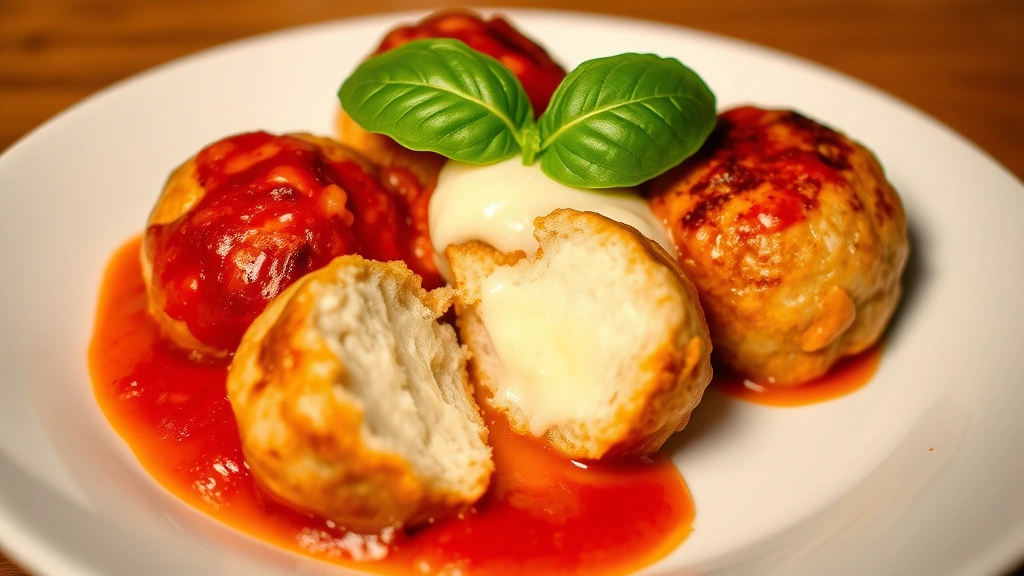
With Crusty Bread: Serve meatballs on toasted homemade bread with melted mozzarella and marinara for a meatball sub sandwich. The crusty exterior of fresh bread provides textural contrast to the tender meatballs.
As Appetizers: Serve warm with dipping sauces like marinara, sriracha mayo, or Greek yogurt mixed with herbs. Arrange on a platter with toothpicks for easy eating.
In Soup: Drop cooked meatballs into simmering broth with cherry tomatoes, spinach, and pasta for a quick weeknight soup.
In Bowls: Create grain bowls with cooked meatballs, quinoa or rice, roasted vegetables, and a flavorful sauce. The tender meatballs work well in Mediterranean, Asian, or Italian-inspired bowls.
With Grilled Sides: Pair with grilled vegetables and a light sauce for a complete meal. The charred exterior of grilled items complements the tender meatballs beautifully.
Storage & Make-Ahead Tips
Refrigerator Storage: Cooked meatballs keep in an airtight container for up to 4 days. Reheat gently in a 300°F (150°C) oven for 8-10 minutes with a light covering of foil to prevent drying.
Freezer Storage: Freeze shaped raw meatballs on a baking sheet for 2 hours, then transfer to a freezer bag for up to 3 months. Cook directly from frozen, adding 2-3 minutes to cooking time. Alternatively, freeze cooked meatballs in a single layer, then transfer to bags. Reheat in sauce or in the oven.
Meal Prep Strategy: Shape meatballs and freeze them unbaked. On busy weeknights, pull out what you need and bake from frozen. This gives you restaurant-quality dinner on the table in 20 minutes.
Sauce Storage: If serving with sauce, store meatballs separately from sauce to prevent them from absorbing excess liquid and becoming mushy. Combine just before serving or reheating.
FAQ
Can I use ground turkey instead of chicken?
Yes, ground turkey works well with the same recipe. Turkey has slightly more fat than chicken breast but less than chicken thighs, so the results will be similar. If using all-breast turkey, add 2 tablespoons of butter to the mixture for extra moisture.
Why are my meatballs falling apart during cooking?
This typically indicates insufficient binder or overmixing. Ensure you’re using the full 1/4 cup milk with 1/2 cup breadcrumbs, and mix only until just combined. Also, refrigerate shaped meatballs for at least 15 minutes before cooking to allow the binder to set.
Can I make these meatballs without breadcrumbs?
While possible, breadcrumbs are crucial for moisture retention in lean chicken. If you must avoid them, substitute with crushed crackers, panko, or even finely grated cauliflower. However, results won’t be as juicy without some type of binder.
What’s the best sauce to serve with these meatballs?
Marinara sauce is classic and allows the meatball flavor to shine. Swedish cream sauce, sweet and sour sauce, or a light lemon butter sauce also work beautifully. Avoid heavy, thick sauces that might overwhelm the delicate chicken flavor.
How do I know when the meatballs are done cooking?
Use an instant-read thermometer inserted into the center of the largest meatball. The internal temperature should reach 165°F (74°C). Cooking beyond this temperature causes excessive moisture loss and dryness.
Can I double this recipe?
Absolutely. Simply double all ingredients and work in batches when pan-searing, or use multiple baking sheets when baking. The cooking times remain the same.
Why does my recipe specify mostly chicken thighs?
Thigh meat contains more fat and connective tissue than breast meat, which translates to juicier, more flavorful meatballs. The fat content helps retain moisture during cooking, which is essential for lean poultry.


