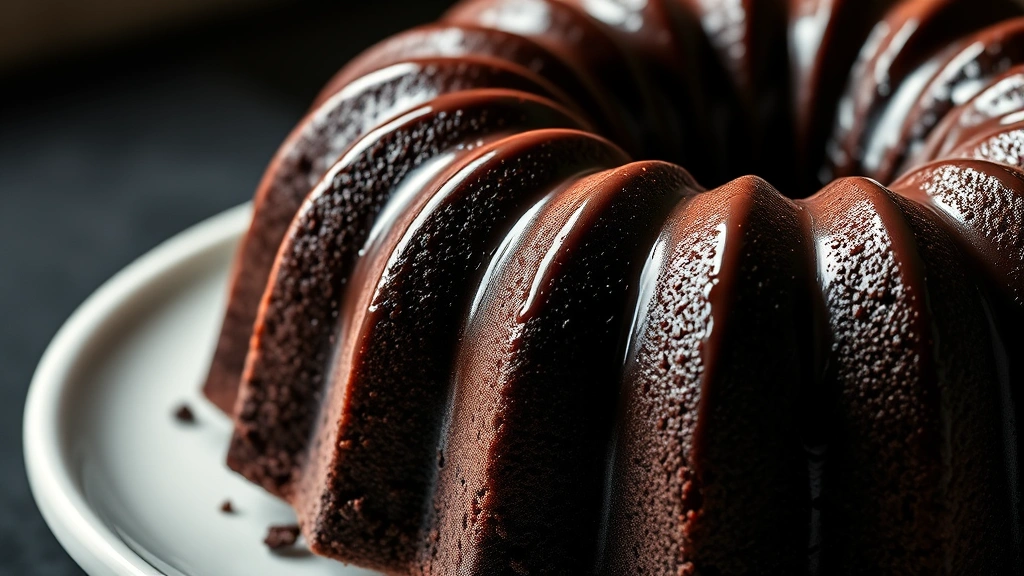
Ultimate Chocolate Bundt Cake: Baker’s Choice Recipe
There’s something undeniably magical about a chocolate bundt cake—the dramatic ring shape, the glossy crumb, the way it commands attention on any dessert table. This isn’t just any chocolate cake recipe; it’s the culmination of baking techniques perfected through countless kitchen experiments. Whether you’re a seasoned baker or someone who wants to impress guests with a showstopping dessert, this ultimate chocolate bundt cake delivers rich, moist layers of pure cocoa bliss every single time.
The secret to achieving bakery-quality results lies in understanding the science behind each ingredient and technique. We’ll walk you through everything from selecting the right chocolate to mastering the baking temperature, ensuring your chocolate bundt cake emerges from the oven with a tender crumb and that coveted dome-shaped top. This recipe has been tested, refined, and perfected to deliver consistent excellence.
Why Bundt Cakes Are Perfect for Chocolate Desserts
The bundt cake pan isn’t just a pretty shape—it’s an engineering marvel designed specifically for even baking and moisture retention. The center tube allows heat to penetrate from all sides, creating a uniformly baked cake with a tender crumb throughout. For chocolate cakes, this design is particularly beneficial because chocolate is sensitive to temperature fluctuations, and the bundt’s design minimizes hot spots that could cause uneven cooking.
Beyond the technical advantages, bundt cakes offer visual drama that makes them ideal for serving without additional decoration. A well-executed chocolate bundt cake speaks for itself. The intricate patterns created by the pan’s ridges become edible art when properly unmolded, making your presentation look professional without requiring advanced decorating skills.
If you’re looking for other impressive desserts, consider pairing your chocolate bundt cake with complementary flavors. Our lemon cheesecake recipe offers a bright contrast for those who prefer lighter desserts, while our pecan pie recipe without corn syrup provides another sophisticated option for holiday gatherings.
Essential Ingredients for Ultimate Chocolate Bundt Cake
The foundation of an exceptional chocolate bundt cake starts with quality ingredients. Don’t shortcut on chocolate—use real chocolate with at least 60% cocoa content for depth of flavor. Here’s your complete ingredient list:
- 2 cups all-purpose flour (spoon and level for accuracy)
- 3/4 cup unsweetened cocoa powder (Dutch-processed for deeper flavor)
- 2 teaspoons baking soda
- 1 teaspoon baking powder
- 1/2 teaspoon salt
- 8 ounces semi-sweet chocolate (chopped finely)
- 1/2 cup vegetable oil (neutral flavor preferred)
- 1 3/4 cups granulated sugar
- 3 large eggs (room temperature)
- 2 teaspoons vanilla extract
- 1 cup strong brewed coffee (cooled slightly)
- 1/2 cup sour cream (brings tanginess and moisture)
Each ingredient serves a specific purpose. The combination of baking soda and baking powder creates lift, while the coffee intensifies chocolate flavor without adding coffee taste. Sour cream contributes moisture and creates a tender crumb, something that distinguishes this recipe from standard chocolate cakes.
Preparation Steps: Setting Yourself Up for Success
Proper preparation prevents poor performance—this baker’s adage holds especially true for bundt cakes. Start by prepping your workspace and gathering all ingredients, a practice known as mise en place.
Prepare your bundt pan: This step cannot be overstated. Use a bundt cake pan release spray that contains flour, or thoroughly coat with softened butter and dust with cocoa powder. The goal is creating an invisible barrier between cake and pan. Many bakers find silicone bundt pans easier to work with since they require less preparation.
Preheat your oven: Set to 350°F and allow 15-20 minutes for full preheating. Use an oven thermometer to verify accuracy—ovens often run hot or cold, which dramatically affects baking time and results.
Combine dry ingredients: Whisk together flour, cocoa powder, baking soda, baking powder, and salt in a medium bowl. Whisking aerates the flour and distributes leavening agents evenly. This prevents pockets of unrisen cake or bitter baking soda taste.
Melt chocolate properly: Chop chocolate into small, uniform pieces and melt using a double boiler or microwave in 30-second intervals, stirring between pulses. Overheating chocolate causes it to seize and become grainy. Once melted, set aside to cool for 5 minutes.
Prepare wet ingredients: In a large mixing bowl, whisk together oil and sugar until combined. This creates an emulsion that distributes fat evenly throughout the batter, resulting in a more tender crumb. Add eggs one at a time, whisking thoroughly after each addition. The mixture should look pale and slightly thickened after all eggs are incorporated.
The Baking Process: Where Magic Happens
Now comes the critical stage where all your preparation pays off. This is where technique meets chemistry.
Combine wet and dry elements: Add the melted chocolate to your egg mixture and stir until fully combined. The batter should have a rich chocolate color. Alternate adding dry ingredients and wet ingredients (sour cream mixed with coffee) to your chocolate mixture. Start with one-third of dry mixture, then half of the sour cream mixture, another third of dry, remaining sour cream, and finally the last dry ingredients. This alternating method prevents overmixing while ensuring even distribution.
Mix with care: Stir until just combined—visible flour streaks are acceptable. Overmixing develops gluten, which creates a tough, dense cake. Unlike bread dough, cake batter benefits from minimal mixing.
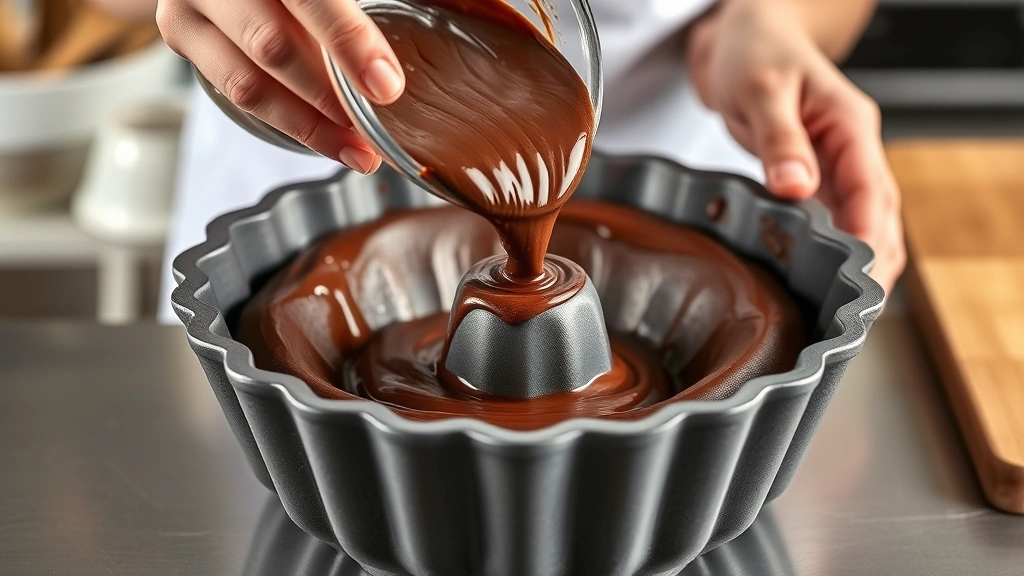
Pour into prepared pan: Transfer batter to your prepared bundt pan, smoothing the top with a rubber spatula. Tap the pan gently on the counter three to four times to release air bubbles that could create tunneling (large holes) in the finished cake.
Bake with precision: Place in the preheated 350°F oven. Bake for 45-55 minutes, depending on your specific oven. The cake is done when a toothpick inserted into the thickest part comes out with a few moist crumbs (not wet batter, but not completely clean either). This is called the “moist crumb” test and indicates perfect doneness for chocolate cake.
During baking, resist the urge to open the oven door frequently. Each opening drops the internal temperature and can cause uneven baking. If you notice the top browning too quickly, loosely tent with aluminum foil during the final 15 minutes.
Cooling and Unmolding: The Critical Finale
This stage determines whether your chocolate bundt cake emerges as a triumph or a tragedy. Patience is essential.
Cool in the pan: Allow the cake to rest in the bundt pan for 10-15 minutes. During this time, the crumb sets just enough to support itself. This is crucial—unmolding too early causes the warm, tender cake to break apart.
Check for release: After 10 minutes, run a thin, flexible knife around the outer and inner edges of the pan, being careful not to damage the cake’s surface. This ensures the cake isn’t stuck to the pan’s ridges.
Perform the unmold: Place a serving plate over the bundt pan and invert quickly with confidence. If the cake doesn’t release, don’t panic. Return it to the pan, let it cool another 5 minutes, and try again. Gentle tapping on the pan bottom sometimes helps.
Cool completely: Once unmolded, allow your chocolate bundt cake to cool completely on a wire rack—approximately 1-2 hours. This prevents the frosting or glaze from melting off a warm cake.
Frosting and Glaze Options
A beautiful chocolate bundt cake deserves equally beautiful finishing touches. You have several excellent options depending on your preference and time availability.
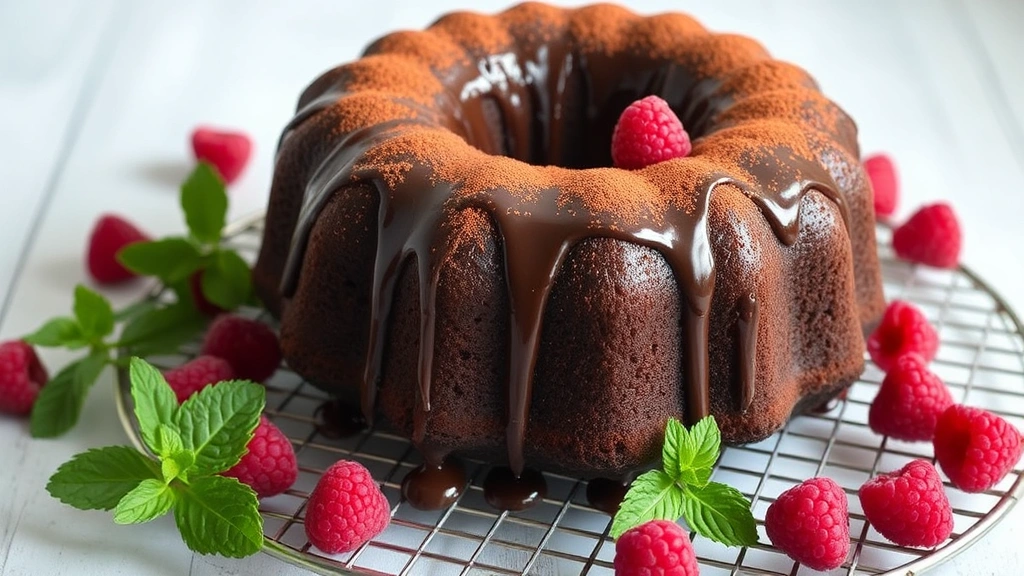
Simple Chocolate Glaze: Combine 4 ounces chopped chocolate with 1/4 cup heavy cream and 2 tablespoons butter. Warm in a double boiler until melted and smooth. Cool slightly, then drizzle over the cooled cake. This glaze sets to a glossy finish that highlights the cake’s natural beauty.
Rich Chocolate Ganache: For a more decadent option, use a 1:1 ratio of chocolate to heavy cream. Heat cream until steaming, pour over chopped chocolate, and let sit 2 minutes before stirring until silky. This creates a thick, luxurious coating that can be poured over the cake or used for frosting.
Classic Buttercream: Cream 1/2 cup softened butter with 2 cups powdered sugar, then add 1/3 cup cocoa powder and 1 teaspoon vanilla. Add milk 1 tablespoon at a time until you reach spreading consistency. Spread or pipe onto cooled cake for a more formal presentation.
Dust with cocoa powder: For simplicity, dust the completely cooled cake with unsweetened cocoa powder using a fine sieve. This adds elegance without requiring any additional cooking.
Storage and Make-Ahead Tips
One of the greatest advantages of bundt cakes is their excellent keeping qualities. Chocolate bundt cake actually improves slightly as flavors meld over 24 hours.
Room temperature storage: Keep your frosted or glazed chocolate bundt cake covered loosely with plastic wrap at room temperature for up to 3 days. The cake stays moist and flavorful, though the frosting may soften slightly.
Refrigerator storage: For longer storage, wrap the cooled, undecorated cake tightly in plastic wrap, then aluminum foil. Refrigerate for up to 1 week. Frost or glaze just before serving to prevent frosting from absorbing moisture and becoming sticky.
Freezer storage: This is where bundt cakes truly shine. Wrap the completely cooled, undecorated cake in plastic wrap, then foil, and freeze for up to 3 months. Thaw at room temperature for 3-4 hours before frosting and serving. The cake emerges tasting as fresh as the day it was baked.
Make-ahead strategy: Bake your chocolate bundt cake 1-2 days ahead, freeze it undecorated, then frost it the day you plan to serve. This reduces last-minute stress and ensures a perfect presentation.
For those planning elaborate dessert spreads, consider complementing your chocolate bundt cake with other make-ahead options. Our cocktail sauce recipe pairs beautifully with fruit-based desserts you might serve alongside your cake.
FAQ
Why did my chocolate bundt cake stick to the pan?
The most common cause is insufficient pan preparation. Bundt pans have intricate ridges that require thorough coverage with pan release spray or butter and cocoa powder. Additionally, unmolding too soon (before the cake has cooled adequately) can cause sticking. Always wait the full 10-15 minutes before attempting to unmold.
Can I make this chocolate bundt cake recipe gluten-free?
Yes! Substitute all-purpose flour with a high-quality gluten-free flour blend that includes xanthan gum. Use the same measurement (2 cups). You may need to add 1-2 tablespoons additional sour cream to compensate for the different absorption rate of gluten-free flour. The texture will be slightly different but equally delicious.
What’s the difference between Dutch-processed and natural cocoa powder?
Dutch-processed cocoa has been treated with an alkali, making it darker and less acidic with a smoother flavor. Natural cocoa powder is more acidic and has a brighter chocolate flavor. For this recipe, Dutch-processed cocoa creates a richer, more sophisticated chocolate taste, but natural cocoa works if that’s what you have available.
Can I substitute the sour cream in this chocolate bundt cake recipe?
Absolutely. Use Greek yogurt (plain, full-fat), regular yogurt, or buttermilk in equal amounts. Crème fraîche also works beautifully. Each creates slightly different moisture levels and tang, but all produce excellent results. Avoid low-fat or non-fat versions, as they don’t provide adequate moisture.
Why is my chocolate bundt cake dry?
Dry cake results from overbaking, which evaporates moisture. Use the moist crumb test rather than relying solely on baking time. Also ensure you’re not using too much flour—measure by spooning flour into your measuring cup and leveling off, not by scooping directly from the bag. Finally, confirm your oven temperature with a thermometer, as ovens that run hot cause premature drying.
How do I prevent tunneling in my bundt cake?
Tunneling (large holes running through the cake) results from air bubbles and overmixing. After pouring batter into your pan, tap it gently on the counter 3-4 times to release trapped air. Additionally, avoid overmixing the batter—mix just until combined. Don’t use an electric mixer for the final ingredient additions; switch to hand stirring with a spatula.
Can I add chocolate chips to this recipe?
Yes! Fold 1 cup semi-sweet or dark chocolate chips into the finished batter just before pouring into the pan. This adds extra chocolate pockets throughout the cake. Alternatively, sprinkle 1/2 cup chocolate chips into the bottom of your prepared pan before adding batter—they’ll create a surprise layer when the cake is unmolded.
What’s the best way to serve this chocolate bundt cake?
Serve at room temperature for optimal flavor and texture. If refrigerated, allow the cake to sit at room temperature for 30 minutes before serving. Pair with fresh berries, whipped cream, vanilla ice cream, or espresso for a complete dessert experience. A slice pairs beautifully with coffee or milk.


