Best Chow Fun Recipe? Family Favorite Method
Chow fun is a beloved Cantonese stir-fry dish that brings restaurant-quality results right to your home kitchen. Wide, flat rice noodles are tossed with tender proteins, crisp vegetables, and a savory sauce that coats every strand perfectly. This family favorite method combines traditional techniques with practical home-cooking wisdom, making it accessible for cooks of all skill levels.
What makes this chow fun recipe stand out is its balance of simplicity and authentic flavor. Unlike takeout versions that can be heavy or overly greasy, this approach focuses on proper heat management, ingredient quality, and timing. Whether you’re cooking for weeknight dinners or impressing guests, mastering this dish will elevate your stir-fry game significantly.
Essential Ingredients
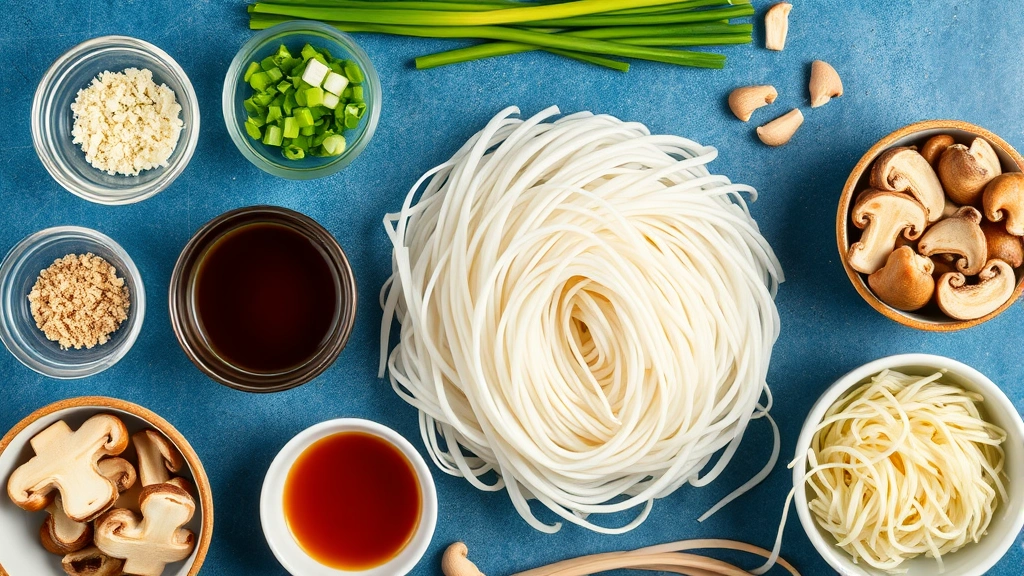
The foundation of an exceptional chow fun recipe starts with quality ingredients. Here’s what you’ll need for four servings:
- Rice noodles: One pound of fresh or dried wide chow fun noodles (about 1/4 inch wide)
- Protein: Half pound shrimp, chicken, beef, or a combination—cut into bite-sized pieces
- Vegetables: Two cups bean sprouts, one cup sliced bell peppers, two green onions (cut into 2-inch pieces), and one cup mushrooms (sliced)
- Aromatics: Three cloves garlic (minced), one tablespoon fresh ginger (minced)
- Sauce components: Three tablespoons soy sauce, one tablespoon oyster sauce, one tablespoon sesame oil, half teaspoon white pepper, one teaspoon cornstarch dissolved in two tablespoons water
- Cooking oil: Two tablespoons vegetable or peanut oil (for high-heat cooking)
The quality of soy sauce and oyster sauce dramatically impacts your final dish. Look for brands that use traditional fermentation methods rather than chemical additives. This investment in ingredients pays dividends in authenticity and taste.
Selecting Perfect Rice Noodles
Choosing the right noodles is crucial for achieving the authentic chow fun texture. Fresh rice noodles, typically found in the refrigerated section of Asian markets, offer the best results. They have a delicate, slightly chewy texture that absorbs sauce beautifully without becoming mushy.
If fresh noodles aren’t available, dried chow fun works well too—just follow package directions for soaking or cooking. The key difference is texture: fresh noodles require gentle handling to prevent breakage, while dried varieties need proper hydration before cooking.
Before cooking, gently separate the noodles with your fingers or chopsticks. If they’re stuck together, a light coating of oil helps without making them greasy. This preparation prevents clumping during the stir-fry and ensures even coating with sauce.
Many home cooks struggle with noodle texture. The solution lies in understanding that chow fun noodles should be silky and slightly loose, not compressed or broken into small pieces. Handle them with care throughout the cooking process.
Prep Work and Mise en Place
Professional cooks emphasize mise en place—having all ingredients prepared and organized before cooking begins. For a successful chow fun stir-fry, this step cannot be overstated.
Prepare in this order:
- Mix all sauce ingredients in a small bowl, stirring until cornstarch fully dissolves
- Mince garlic and ginger into separate piles
- Cut proteins into uniform, bite-sized pieces (about 1-inch cubes)
- Slice vegetables into similar sizes for even cooking
- Cut green onions into 2-inch segments
- Have noodles separated and ready on a clean plate
- Measure out your cooking oil
This preparation typically takes 15-20 minutes but is absolutely essential. Once heat hits the wok or large skillet, everything happens quickly—usually within 5-7 minutes. You won’t have time to chop ingredients mid-cooking.
Room temperature ingredients cook more evenly than cold ones straight from the refrigerator. Remove proteins and vegetables from the fridge about 10 minutes before cooking to bring them closer to room temperature.
Step-by-Step Cooking Technique
The magic of authentic chow fun lies in mastering the wok technique, though a large skillet works perfectly for home cooking. Here’s the family-favorite method used by generations of home cooks:
Step 1: Protein Foundation
Heat one tablespoon oil in your wok or large skillet over high heat until it shimmers slightly. Add the minced garlic and ginger, stirring constantly for 15-20 seconds until fragrant. This blooms the aromatics and infuses the oil with flavor.
Add your protein (shrimp, chicken, or beef) in a single layer. Let it cook undisturbed for 1-2 minutes to develop a light golden color, then stir and continue cooking until mostly done (shrimp should be pink, chicken opaque, beef browned). Remove to a clean plate, leaving any flavorful oil behind.
Step 2: Vegetable Cooking
Add remaining oil to the wok. Working quickly, add harder vegetables first (mushrooms, bell peppers) and stir-fry for 2 minutes. Add bean sprouts and continue for another minute. Vegetables should remain crisp-tender, not soft.
Step 3: Noodle Integration
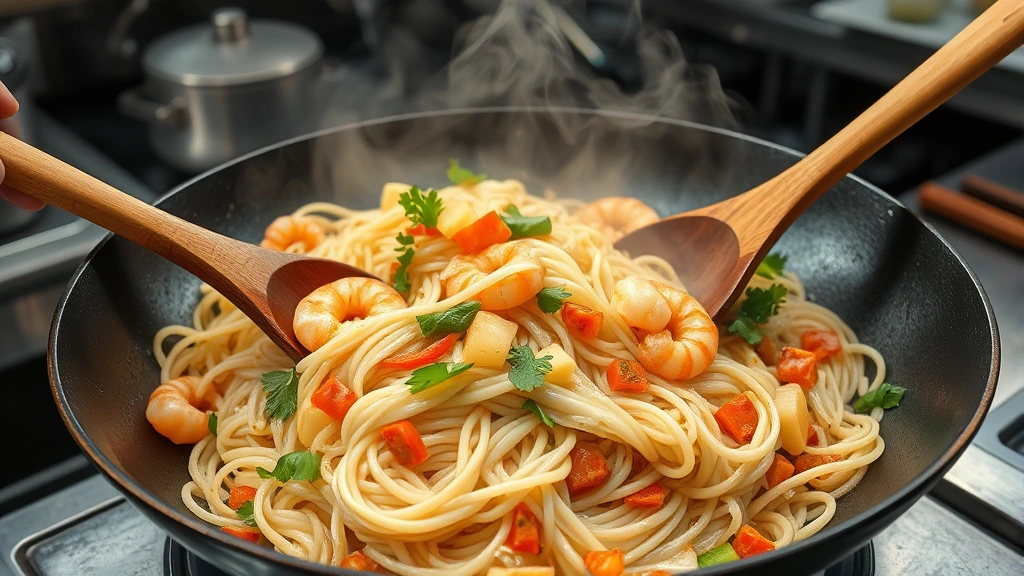
Add the prepared noodles to the wok, gently breaking them apart with two wooden spoons or spatulas. Toss continuously for 1-2 minutes, allowing the noodles to heat through and separate completely. This is when many home cooks add the sauce, but the family-favorite method adds it in stages.
Step 4: Sauce Application
Pour half the sauce over the noodles and toss vigorously for 30 seconds. The noodles should glisten and turn slightly darker. Add the remaining sauce and toss for another 30-45 seconds. The cornstarch slurry will thicken slightly, coating everything evenly.
Step 5: Final Assembly
Return the cooked protein to the wok along with the green onions. Toss everything together for 20-30 seconds until heated through and well combined. The entire cooking process from protein to finish should take about 8-10 minutes.
Transfer immediately to a serving platter. Chow fun is best enjoyed fresh and hot, though leftovers keep well in an airtight container for 2-3 days.
Flavor Variations
The basic chow fun recipe framework adapts beautifully to different flavor profiles and dietary preferences. Here are popular variations:
Shrimp Chow Fun with XO Sauce
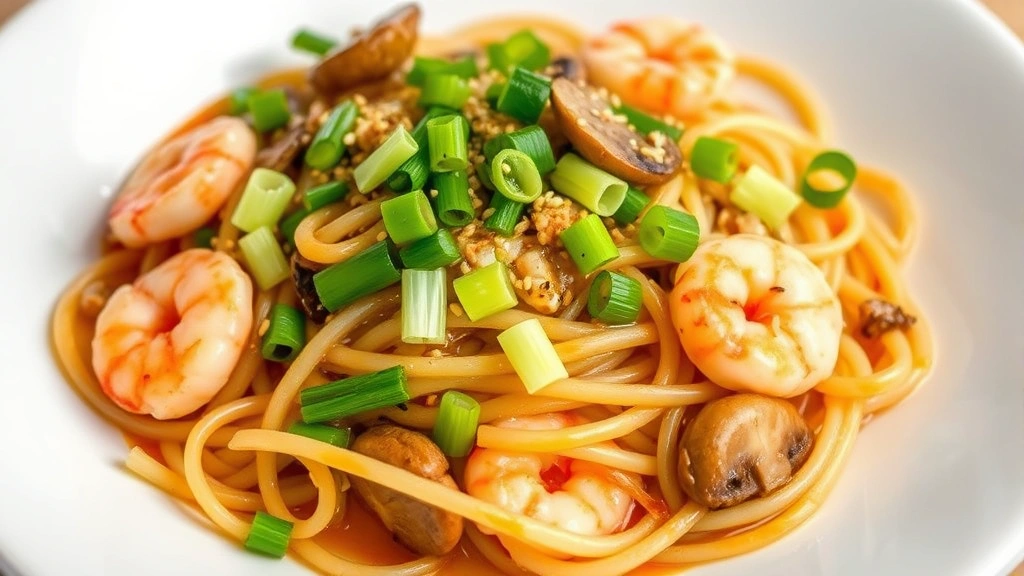
Substitute one tablespoon of oyster sauce with premium XO sauce for a spicy, umami-rich version. Add a pinch of dried chili flakes to the aromatics. This variation works wonderfully with high-protein cooking approaches if you’re focusing on nutritional content.
Vegetarian Chow Fun
Replace meat with extra vegetables: broccoli florets, snow peas, carrots, and cabbage. Add two tablespoons cashews or peanuts for textural contrast and protein. Increase oyster sauce to one and a half tablespoons for deeper umami flavor.
Spicy Chow Fun
Add one to two teaspoons of sambal oelek or sriracha to the sauce. Include sliced fresh Thai chilies or jalapeños in the vegetables. A splash of rice vinegar (one teaspoon) adds brightness to balance the heat.
Chicken and Mushroom Variation
Use chicken breast cut into thin strips. Include a mix of shiitake, oyster, and cremini mushrooms. Add one teaspoon of dark soy sauce to the sauce mixture for deeper color and richer flavor. This creates a more sophisticated, restaurant-style presentation.
Pro Tips for Restaurant Results
Heat Management
High heat is essential but requires attention. Your wok or skillet should be hot enough that oil shimmers immediately, but not so hot that it smokes excessively. If ingredients brown too quickly, your heat is too high. If they steam rather than sear, it’s too low. Finding this sweet spot takes practice but dramatically improves results.
Noodle Moisture Control
Fresh chow fun noodles contain significant moisture. If your finished dish seems wet, toss the noodles in the wok for an extra 30-45 seconds before adding sauce. This evaporates surface moisture and prevents a soupy final product.
Sauce Balance
Taste your sauce before adding it to the noodles. It should be balanced between salty, savory, and slightly sweet. Adjust soy sauce or oyster sauce to your preference. Remember that salt intensifies as the dish cools, so slightly underseasoned hot chow fun is better than oversalted leftovers.
Protein Doneness
Cooking protein separately prevents overcooking. Shrimp becomes rubbery, chicken dries out, and beef toughens with extended heat exposure. Adding it back at the end ensures perfect texture throughout.
Oil Quantity
Two tablespoons of oil might seem minimal, but proper heat distribution makes it sufficient. Too much oil creates a greasy dish that coats your mouth unpleasantly. Quality oil with a high smoke point (peanut or vegetable) is better than butter or olive oil for this application.
Green Onion Timing
Always add green onions at the very end. Their delicate flavor compounds dissipate with heat, so brief exposure preserves their fresh, oniony taste. This small detail significantly impacts the final dish’s flavor profile.
For more sophisticated cooking techniques, explore Serious Eats’ comprehensive cooking guides and Cook’s Illustrated’s recipe development approach. Understanding the science behind cooking methods elevates your execution of any recipe.
Many home cooks also benefit from studying specialized wok cooking resources to understand heat distribution and proper technique. Asian culinary institutes like the International Culinary Schools offer insights into traditional cooking methods that apply to home kitchens.
Ingredient Quality Impact
Investing in quality soy sauce, oyster sauce, and sesame oil transforms this dish from good to exceptional. Traditional fermented sauces contain complex flavor compounds that chemical alternatives cannot replicate. A bottle of premium sauce lasts months and elevates dozens of dishes.
Wok vs. Skillet
While a traditional wok with a round bottom provides ideal heat distribution, a large skillet (12-14 inches) works excellently for home cooking. The key is having enough surface area for ingredients to spread out rather than steam. Never crowd the pan—this is a common mistake that ruins texture.
Batch Cooking for Crowds
If cooking for more than four people, make two batches rather than doubling ingredients in one pan. Overcrowding reduces temperature and creates steam instead of the desired sear. Two 10-minute batches beat one 20-minute mess.
Leftover Management
Store cooled chow fun in airtight containers for up to three days. Reheat gently in a wok or skillet over medium heat with a splash of water to restore moisture. Microwaving tends to dry out the noodles, though it works in a pinch.
FAQ
Can I use dried chow fun noodles instead of fresh?
Yes, absolutely. Dried noodles work well when properly prepared. Soak them in room temperature water for 30-40 minutes until pliable but still slightly firm. Drain thoroughly before cooking. The texture differs slightly—less delicate than fresh noodles—but the final dish is delicious and authentic.
What’s the difference between chow fun and chow mein?
Chow fun uses wide, flat rice noodles with a delicate texture, while chow mein uses thin wheat noodles that are crispier and chewier. Chow fun sauce is typically thicker and coats the noodles evenly. Both are wonderful, but they’re distinct dishes with different flavor profiles.
Can I prepare ingredients the night before?
Yes, prep work can be done up to 24 hours in advance. Keep chopped vegetables and proteins in separate airtight containers in the refrigerator. Keep your sauce mixture separate as well. The only item that shouldn’t be prepared far in advance is the noodles—they begin deteriorating after a few hours.
My chow fun came out greasy. What went wrong?
This typically results from using too much oil or cooking at insufficient temperature. Oil distributes more evenly at high heat and coats rather than pools. Also ensure you’re draining proteins well before adding them back—excess liquid creates greasiness. Using quality, flavorful oil reduces the amount needed.
Is this dish suitable for meal prep?
Chow fun is best enjoyed fresh, but it stores well for 2-3 days. Cool completely before refrigerating in airtight containers. For meal prep, you might consider preparing components separately and assembling fresh daily. This maintains optimal texture better than storing the complete dish.
Can I make this vegetarian or vegan?
Absolutely. Replace meat with tofu, tempeh, or extra vegetables. Use vegetable broth instead of oyster sauce, or substitute with a plant-based oyster sauce alternative. Add nuts or seeds for protein and textural interest. The high-protein cooking approach works well with plant-based proteins too.
What proteins work best in chow fun?
Shrimp, chicken breast, beef sirloin, and pork tenderloin are classics. Each cooks quickly and absorbs sauce flavors well. For vegetarian versions, try firm tofu, tempeh, or cashews. The key is choosing proteins that cook quickly and maintain good texture under high heat.
How do I prevent noodles from sticking together?
Separate noodles gently with your fingers before cooking. If they’re still stuck after separating, coat lightly with oil. During cooking, use two utensils (spoons or spatulas) to gently break apart clumps. Avoid pressing down or stirring too aggressively, which breaks noodles.
Can I freeze chow fun?
Freezing isn’t recommended for finished chow fun as the noodles become mushy upon thawing. However, you can freeze individual components—cooked protein, blanched vegetables, and sauce—separately. Assemble fresh when needed. This approach works well for meal planning.
What’s the best way to learn wok cooking technique?
Practice is essential, but watching demonstrations helps tremendously. Online resources like culinary school websites and chef blogs provide valuable insights. Start with small batches to build confidence. Each time you cook, you’ll develop better heat sense and timing. Consistency matters more than perfection when learning.


