Healthy Crock Pot Recipes: Nutritionist Approved
Slow cookers have revolutionized the way busy families approach weeknight dinners. These versatile kitchen appliances transform simple ingredients into deeply flavorful, nutrient-dense meals with minimal effort. Whether you’re juggling work, family commitments, or fitness goals, healthy crock pot recipes offer the perfect solution for maintaining a balanced diet without sacrificing taste or spending hours in the kitchen.
The beauty of slow-cooking lies in its ability to preserve vitamins and minerals that might otherwise be lost during traditional cooking methods. Low heat over extended periods allows collagen to break down into gelatin, making proteins more bioavailable, while vegetables retain their nutritional integrity. This guide presents nutritionist-approved recipes that combine wholesome ingredients with the convenience of set-it-and-forget-it cooking.
Why Slow Cookers Are Perfect for Healthy Eating
Crock pots excel at creating nutrient-dense meals through several mechanisms. The moist-heat cooking environment prevents the oxidation that can destroy heat-sensitive vitamins. Unlike frying or high-heat searing, slow cooking requires minimal added fats, making it ideal for those monitoring calorie intake. The extended cooking time breaks down tough cuts of lean meat, eliminating the need for marbling fat to achieve tenderness.
Slow cookers also encourage portion control and mindful eating. A single batch typically yields four to eight servings, making it easy to portion meals and calculate macronutrients. This approach aligns with recommendations from the Academy of Nutrition and Dietetics, which emphasizes home-cooked meals as foundational to sustainable health.
The hands-off nature of slow cooking reduces stress, a significant factor in metabolic health. Elevated cortisol levels from rushed meal preparation can undermine nutritional efforts, making the relaxation factor of crock pot cooking genuinely beneficial for holistic wellness.
Lean Protein Crock Pot Recipes
Protein forms the foundation of satisfying, muscle-supporting meals. Slow cookers handle lean proteins beautifully, transforming potentially dry cuts into succulent dishes through gentle, consistent heat.
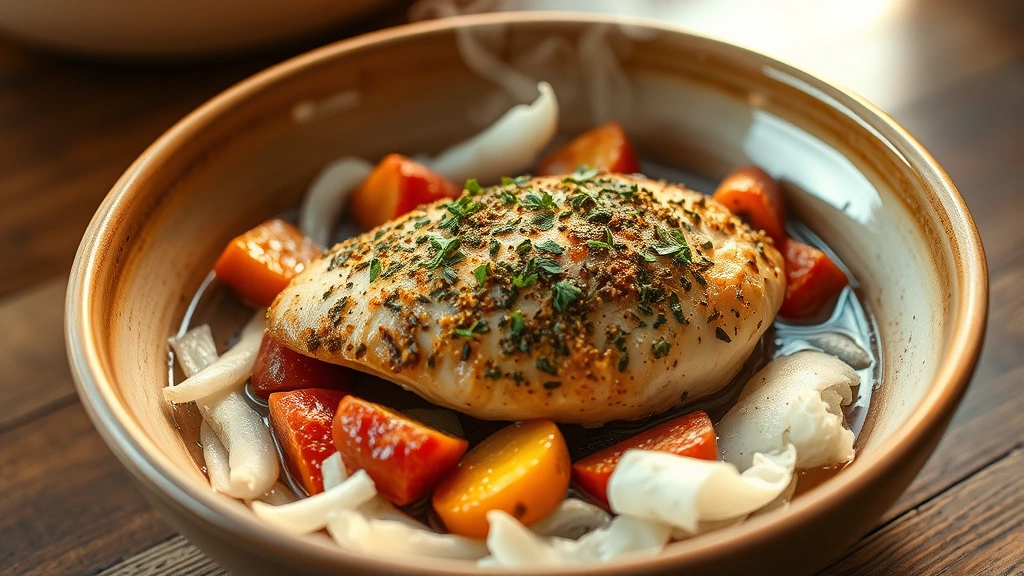
Herb-Crusted Chicken Breast with Root Vegetables combines four boneless, skinless chicken breasts with carrots, parsnips, and celery. Season with dried thyme, oregano, garlic powder, and black pepper. Add one cup low-sodium chicken broth and cook on low for six hours. This delivers approximately 35 grams of protein per serving with only 220 calories, making it excellent for weight management and muscle recovery.
Turkey Chili with Black Beans and Quinoa uses ground turkey breast instead of traditional beef, reducing saturated fat by 40 percent. Brown one pound of turkey with onions before adding to the crock pot with black beans, kidney beans, diced tomatoes, chili powder, cumin, and paprika. Cook on low for eight hours. Serve over cooked quinoa for complete amino acid profiles. One serving provides 28 grams of protein and 12 grams of fiber.
Lemon Herb Salmon with Broccoli might seem unconventional for slow cookers, but cooking salmon on low prevents the overcooking that makes it dry. Place salmon fillets on a bed of broccoli florets, lemon slices, and fresh dill. Cook on low for two to three hours. Salmon’s omega-3 fatty acids support cardiovascular and cognitive health, while the brief cooking time preserves heat-sensitive nutrients.
Grass-Fed Beef Stew with Sweet Potato uses lean cuts like sirloin tips. Layer beef chunks with sweet potatoes, carrots, celery, and pearl onions in the crock pot. Season with bay leaves, thyme, and black pepper. Cook on low for seven to eight hours. Sweet potatoes provide beta-carotene and complex carbohydrates for sustained energy, while grass-fed beef offers superior omega-3 to omega-6 ratios compared to conventional beef.
For those following specific dietary patterns, try Mediterranean Chicken with Olives and Tomatoes. Combine chicken thighs (which remain juicier than breast meat) with canned San Marzano tomatoes, kalamata olives, sun-dried tomatoes, garlic, and oregano. Cook on low for six hours. This recipe delivers polyphenols from olives and tomatoes, supporting antioxidant status and inflammation management.
Vegetable-Forward Slow Cooker Meals
Plant-based crock pot cooking doesn’t mean sacrificing satisfaction. Vegetables develop remarkable depth of flavor during extended slow cooking, and their natural starches create silky textures.
Tuscan White Bean Soup combines cannellini beans, spinach, diced tomatoes, carrots, celery, and garlic in a vegetable broth base. Season with Italian herbs and cook on low for seven hours. Spinach’s lutein and zeaxanthin support eye health, while white beans provide resistant starch that feeds beneficial gut bacteria. This 180-calorie bowl contains 9 grams of protein and 8 grams of fiber.
Roasted Red Pepper and Chickpea Curry creates restaurant-quality depth using roasted red peppers, chickpeas, coconut milk (light varieties reduce calories to 140 per serving), curry powder, turmeric, ginger, and garlic. Cook on low for five hours. Turmeric’s curcumin demonstrates anti-inflammatory properties supported by peer-reviewed research in nutritional biochemistry. Serve over cauliflower rice to keep carbohydrate content moderate.
Autumn Vegetable Medley with Quinoa celebrates seasonal produce: butternut squash, Brussels sprouts, mushrooms, and kale. Toss vegetables with vegetable broth, smoked paprika, and garlic powder. Cook on low for six hours, then stir in cooked quinoa during the last 30 minutes. This 195-calorie serving provides complete protein and substantial micronutrient diversity.
Thai-Inspired Vegetable Stew uses cauliflower, bell peppers, snap peas, and carrots in a light coconut milk broth with lime juice, Thai basil, and red curry paste. Cook on low for four hours. The capsaicin in curry paste supports metabolism and pain management, while vegetables provide phytonutrients across the color spectrum.
For cold-weather comfort, try Creamy Cauliflower and Broccoli Bisque. Blend cooked cauliflower and broccoli with vegetable broth and cashew cream (soaked raw cashews blended with water). Season with nutmeg, white pepper, and garlic. This 120-calorie bowl delivers 8 grams of protein and exceptional micronutrient density without heavy dairy.
Whole Grain and Legume Dishes
Legumes and whole grains form the backbone of longevity diets studied in Blue Zones around the world. Slow cookers excel at cooking these nutritional powerhouses to tender perfection.
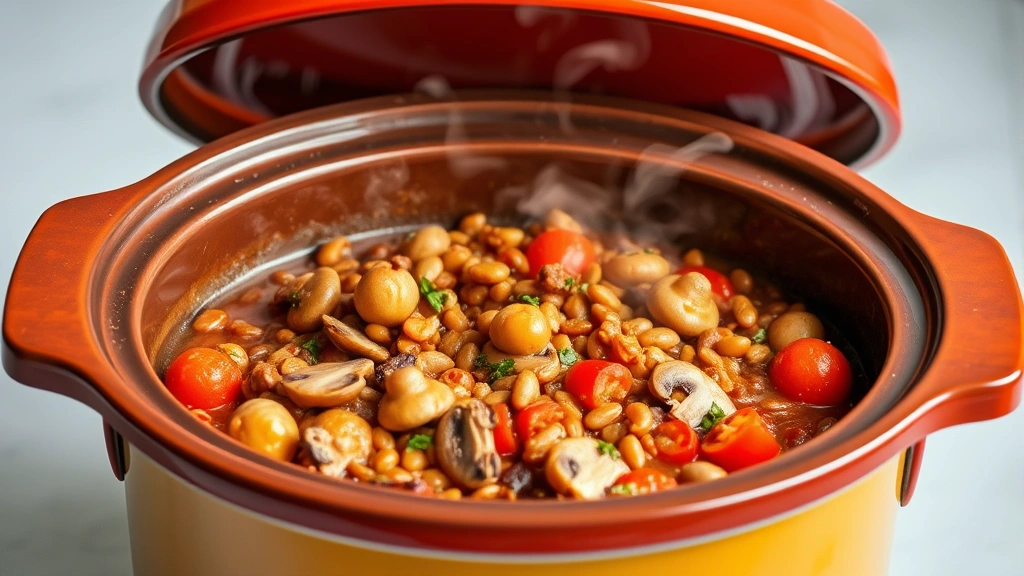
Lentil and Vegetable Bolognese replaces ground meat with brown and green lentils for a fiber-rich alternative. Combine lentils with diced tomatoes, mushrooms, carrots, celery, onions, and garlic. Season with Italian herbs and cook on low for six hours. Serve over whole wheat pasta or zucchini noodles. One serving provides 18 grams of protein, 12 grams of fiber, and just 210 calories. Lentils contain polyphenols that enhance cardiovascular health and support healthy blood sugar regulation.
Farro and Mushroom Risotto uses the slow cooker’s gentle heat to create creamy texture without constant stirring. Toast farro briefly before adding to the crock pot with vegetable broth, mushrooms, onions, and garlic. Cook on low for four hours. Add nutritional yeast and black pepper at the end for umami depth and B vitamins. Farro’s high fiber content (7 grams per half-cup cooked) supports digestive health and satiety.
Black Bean and Sweet Potato Chili combines black beans’ anthocyanins with sweet potatoes’ beta-carotene for a visually striking, antioxidant-rich meal. Add corn, diced tomatoes, jalapeños, cumin, and chili powder. Cook on low for eight hours. One serving delivers 11 grams of protein, 9 grams of fiber, and only 185 calories, making it ideal for weight management while supporting energy levels.
Millet and Vegetable Stew highlights an underutilized ancient grain. Millet’s slightly sweet flavor pairs beautifully with root vegetables, onions, and herbs. Cook on low for six hours until millet achieves a creamy consistency. Millet is naturally gluten-free and rich in magnesium, supporting muscle function and stress resilience.
Chickpea and Kale Buddha Bowl Base creates a foundation for customizable meals. Cook chickpeas with vegetable broth, turmeric, cumin, and paprika on low for five hours. Stir in chopped kale during the final hour. Combine with brown rice, roasted vegetables, and tahini dressing for a complete macronutrient profile. The Harvard School of Public Health Nutrition Source emphasizes such whole-food combinations for disease prevention.
Nutritionist Tips for Optimal Results
Maximizing the nutritional value of slow-cooked meals requires strategic ingredient selection and preparation techniques.
Brown meat before slow cooking to develop flavor compounds through the Maillard reaction while rendering excess fat. This step takes five minutes but dramatically enhances taste without adding calories, making meals more satisfying.
Layer vegetables strategically by placing dense vegetables like carrots and potatoes on the bottom where they receive direct heat, and delicate vegetables like leafy greens and zucchini on top to prevent overcooking. This ensures optimal texture and nutrient preservation across all ingredients.
Use low sodium broths and add fresh herbs late in cooking to maximize flavor without excess sodium. Many commercial broths contain 800+ milligrams of sodium per cup, which can undermine blood pressure management goals. Choose broths with fewer than 200 milligrams per cup, or use homemade bone broth for superior collagen content.
Incorporate acid at the end by stirring in lemon juice, lime juice, or vinegar during the final minutes. Acid brightens flavors and improves mineral absorption, particularly for iron from plant sources. This technique makes meals feel more vibrant and restaurant-quality.
Control fat content by using lean cuts, removing skin from poultry, and trimming visible fat before cooking. However, don’t eliminate all fat—omega-3 rich oils like olive oil and fatty fish provide essential nutrients for brain health and inflammation management. Aim for 25-35 percent of calories from quality fats.
Add vegetables in stages when recipes exceed six hours of cooking. Hearty vegetables like carrots and root vegetables withstand extended heat, while tender vegetables like spinach and zucchini benefit from being added in the final hour to preserve color, texture, and heat-sensitive vitamins like vitamin C.
Monitor cooking times carefully because slow cookers vary significantly in temperature. A recipe requiring six hours might need seven in one model and five in another. Check food after four hours to ensure optimal doneness, particularly for delicate proteins like fish.
For quick breakfast recipes using your slow cooker, consider overnight oatmeal or breakfast casseroles that can be prepared the evening before, providing convenient morning nutrition without extra effort.
Meal Prep Strategies
Integrating slow cookers into meal prep routines multiplies their efficiency and supports consistent healthy eating throughout the week.
Batch cook on Sundays by preparing two to three different recipes simultaneously if you own multiple slow cookers or have space to rotate batches. One recipe might cook overnight Saturday into Sunday morning, while others cook Sunday afternoon and evening. This approach yields 12-16 meals with minimal hands-on time.
Freeze in individual portions using glass containers or freezer bags. Properly frozen slow cooker meals maintain quality for three months. This strategy prevents food waste and ensures healthy options are always available, even during chaotic weeks when cooking feels impossible.
Prep ingredients in advance by chopping vegetables and portioning proteins into freezer bags. Label bags with recipe names, cooking instructions, and preparation dates. On cooking day, simply empty the bag into your crock pot and add liquid—a true hands-off approach.
Create themed cooking days by designating specific cuisines or protein types. Italian slow cooker night, Mexican-inspired night, and Asian-fusion night provide variety while streamlining shopping and ingredient preparation.
Maximize easy dinner recipes for beginners by starting with simple recipes that require fewer than five ingredients plus seasoning. This builds confidence and establishes slow cooking as a sustainable habit before attempting complex, multi-component recipes.
Consider pairing slow cooker mains with comfort food recipes that complement rather than duplicate flavors. A Mediterranean chicken slow cooker meal pairs beautifully with a Greek salad and whole grain bread, while a curry-based recipe works with cauliflower rice and steamed broccoli.

FAQ
Can I use frozen vegetables in slow cooker recipes?
Yes, frozen vegetables work well in slow cookers and often contain equivalent nutrition to fresh varieties since they’re frozen at peak ripeness. Add frozen vegetables during the final two hours of cooking to prevent mushiness, as they’ve already undergone partial cooking during the freezing process. Frozen vegetables may release additional liquid, so reduce broth slightly if using them instead of fresh.
How do I prevent slow cooker meals from becoming mushy?
Layer vegetables by density, placing hardy vegetables on the bottom and delicate ones on top. Keep the lid closed throughout cooking to maintain consistent temperature and prevent liquid loss. Avoid lifting the lid to check progress, as this extends cooking time by 15-20 minutes per peek. Add delicate vegetables like spinach and zucchini in the final hour of cooking for optimal texture.
What’s the best way to thicken slow cooker recipes without flour?
Mix arrowroot powder or cornstarch with cold water to create a slurry, then stir into the slow cooker during the final 30 minutes of cooking. Alternatively, remove the lid during the last hour to allow liquid to evaporate naturally. Puree a portion of cooked vegetables and return to the pot for a creamier texture without added thickeners. Mashed beans or potatoes also provide natural thickening.
Are slow cooker recipes suitable for people with diabetes?
Absolutely. Control carbohydrate content by limiting starchy vegetables and serving meals over cauliflower rice or zucchini noodles instead of grains. Focus on lean proteins, non-starchy vegetables, and healthy fats. Monitor portion sizes and pair meals with fiber-rich sides to moderate blood sugar response. Always consult healthcare providers for personalized recommendations based on individual medications and metabolic factors.
How much liquid should I use in slow cooker recipes?
Generally use one-quarter to one-half cup of liquid per pound of meat or vegetables. Slow cookers trap steam, so you’ll need less liquid than stovetop cooking. Start with the lower amount and add more if needed halfway through cooking. Avoid excess liquid, which dilutes flavors and creates watery results rather than the rich, concentrated taste that makes slow cooking special.
Can I adapt traditional recipes for slow cooking?
Yes, most recipes can be adapted by reducing liquid content, extending cooking times, and adding ingredients strategically. Divide stovetop cooking times by four to approximate slow cooker times on low heat. Add delicate ingredients during the final hour, and brown proteins first for enhanced flavor. Experiment with one adapted recipe at a time to understand how your specific slow cooker responds to adjustments.


