How to Cook Pollo Guisado: Chef’s Guide to Authentic Spanish Chicken Stew
Pollo guisado is a beloved Spanish and Latin American comfort dish that brings together tender chicken, aromatic vegetables, and a rich, savory sauce that tells the story of generations of home cooking. This rustic stew represents the heart of traditional cuisine, where simple ingredients transform into something truly magnificent through patience and proper technique. Whether you’re cooking for family dinner or exploring easy dinner recipes for beginners, pollo guisado offers the perfect balance of accessibility and authentic flavor.
The beauty of this dish lies in its versatility and forgiving nature. Unlike dishes that demand split-second timing, pollo guisado rewards slow cooking and allows flavors to meld together beautifully. The chicken becomes incredibly tender, the vegetables soften into the sauce, and the entire kitchen fills with an irresistible aroma that signals comfort and home. This guide will walk you through every step, from selecting your ingredients to serving this magnificent stew.
What is Pollo Guisado?
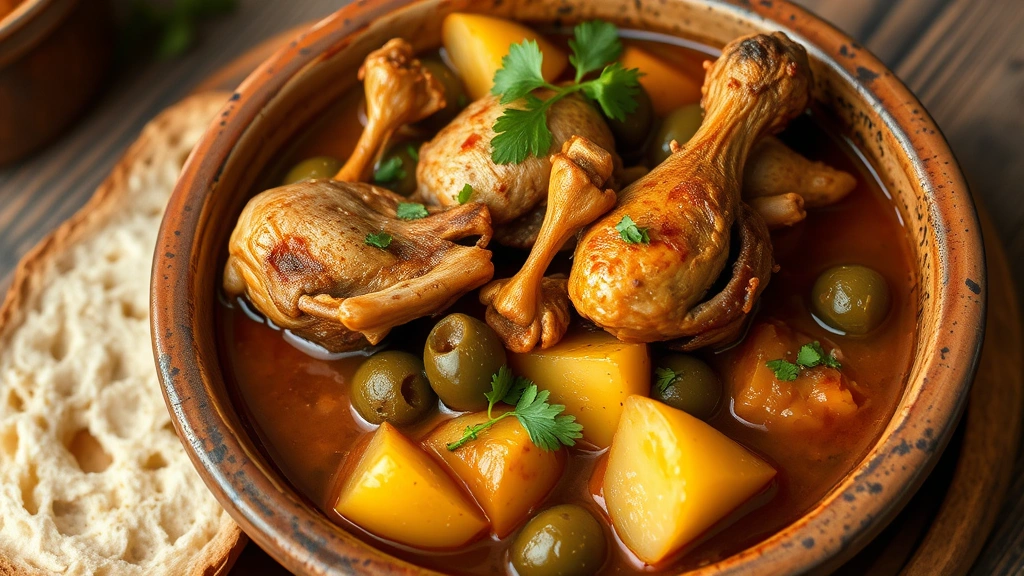
Pollo guisado translates to “stewed chicken” and represents one of the most fundamental dishes in Spanish, Puerto Rican, Dominican, and Cuban cuisines. This is not a delicate preparation—it’s a robust, hearty stew where chicken pieces simmer in a flavorful broth enriched with tomatoes, olives, and potatoes. The dish embodies the cooking philosophy of making maximum flavor from minimum fuss.
The foundation of pollo guisado rests on the sofrito, a aromatic base made from sautéed onions, garlic, and bell peppers. This flavor foundation appears throughout Latin and Spanish cooking, serving as the backbone for countless dishes. When you master sofrito, you unlock the door to authentic Caribbean and Spanish cuisine. The chicken itself is typically cut into bone-in, skin-on pieces, which contribute tremendous flavor to the braising liquid as they cook.
What distinguishes pollo guisado from other chicken stews is its characteristic flavor profile: savory, slightly tangy from tomatoes and olives, with hints of caramelization from the initial browning of chicken. The sauce should be rich enough to coat a spoon but not so thick that it overwhelms the tender meat. This balance separates a mediocre pollo guisado from an exceptional one.
Essential Ingredients for Authentic Flavor
Building an authentic pollo guisado requires understanding each ingredient’s role. Let’s break down what you’ll need:
- Chicken (4-5 pounds): Use bone-in, skin-on pieces—thighs and drumsticks work beautifully. The bones contribute gelatin and flavor to your broth, while skin renders fat for sautéing. Avoid boneless, skinless breasts unless you prefer drier meat.
- Olive oil: Spanish or Portuguese olive oil provides authentic flavor. You’ll need about ¼ cup for browning the chicken and building the sofrito.
- Onions (2 large): Yellow onions provide sweetness and body to the sauce. Dice them finely so they break down during cooking.
- Garlic (6-8 cloves): Mince finely to distribute throughout the dish. Garlic should perfume the entire stew without overpowering it.
- Bell peppers (1 red, 1 green): These add color, sweetness, and complexity. Remove seeds and cut into ½-inch pieces.
- Tomato sauce (2 cups): Use quality tomato sauce, not paste. This provides acidity and body to your sauce.
- Potatoes (1.5 pounds): Cut into 1-inch cubes. Yukon Gold potatoes hold their shape beautifully and add creamy texture.
- Green olives (¾ cup): Pitted olives provide the characteristic briny, savory flavor. Don’t skip this—it’s essential to authentic flavor.
- Chicken broth (1.5 cups): Low-sodium broth allows you to control salt levels. Quality matters here—consider caldo de pollo recipe for homemade broth.
- Bay leaves (2): These add subtle herbal notes without dominating.
- Dried oregano (1 teaspoon): Essential to Spanish cooking. Use quality oregano—it makes a noticeable difference.
- Cumin (½ teaspoon): Ground cumin adds warmth and depth.
- Salt and black pepper: Season in layers throughout cooking.
- Saffron (optional, pinch): Premium ingredient that adds complexity and subtle color.
Equipment and Cookware
Your choice of cookware significantly impacts the final result. A heavy-bottomed Dutch oven or large braising pot is ideal—the thermal mass ensures even heat distribution and prevents hot spots that can burn your sauce. Cast iron cookware works wonderfully and develops seasoning over time, adding subtle flavor to your dishes.
You’ll also need:
- Sharp chef’s knife for dicing vegetables and cutting chicken
- Cutting board (separate for raw chicken)
- Large spoon or wooden spoon for stirring
- Meat thermometer to verify doneness (165°F for chicken)
- Measuring cups and spoons
- Paper towels for patting chicken dry
Step-by-Step Cooking Instructions
Prep Work (15 minutes): Begin by patting your chicken pieces completely dry with paper towels. Moisture prevents proper browning, so don’t skip this step. Season generously with salt and black pepper on all sides. Cut your vegetables: onions and peppers into ½-inch dice, garlic minced finely, and potatoes into 1-inch cubes. Measure out all other ingredients. This mise en place approach prevents scrambling once cooking begins.
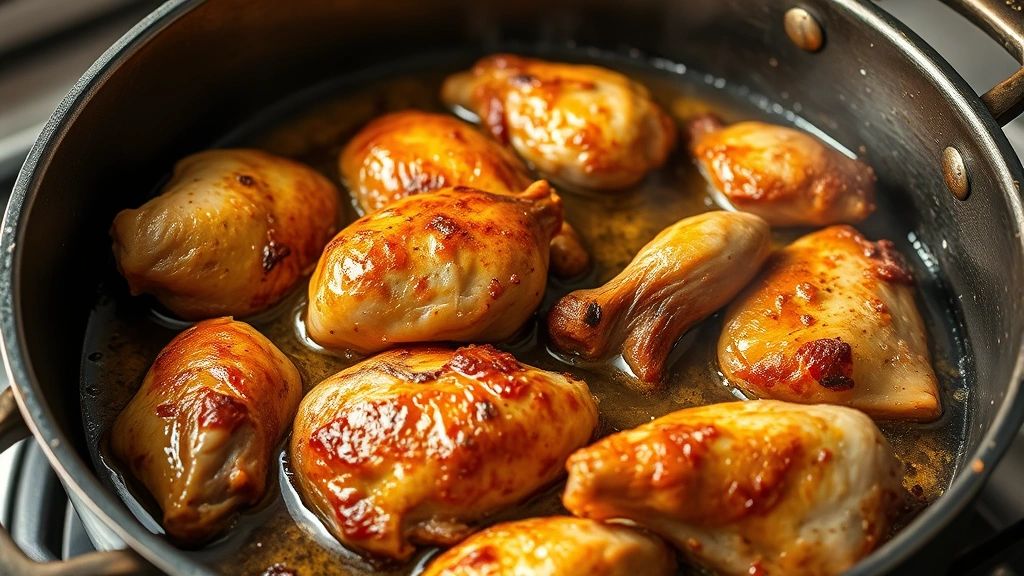
Step 1: Brown the Chicken (10 minutes): Heat olive oil in your Dutch oven over medium-high heat. When the oil shimmers, carefully place chicken pieces skin-side down. Don’t move them—allow the skin to develop a golden-brown crust for 4-5 minutes. This browning creates fond (browned bits) that will enrich your sauce. Flip each piece and brown the other side for 3-4 minutes. Don’t worry about cooking the chicken through; you’re simply developing flavor. Remove chicken to a plate.
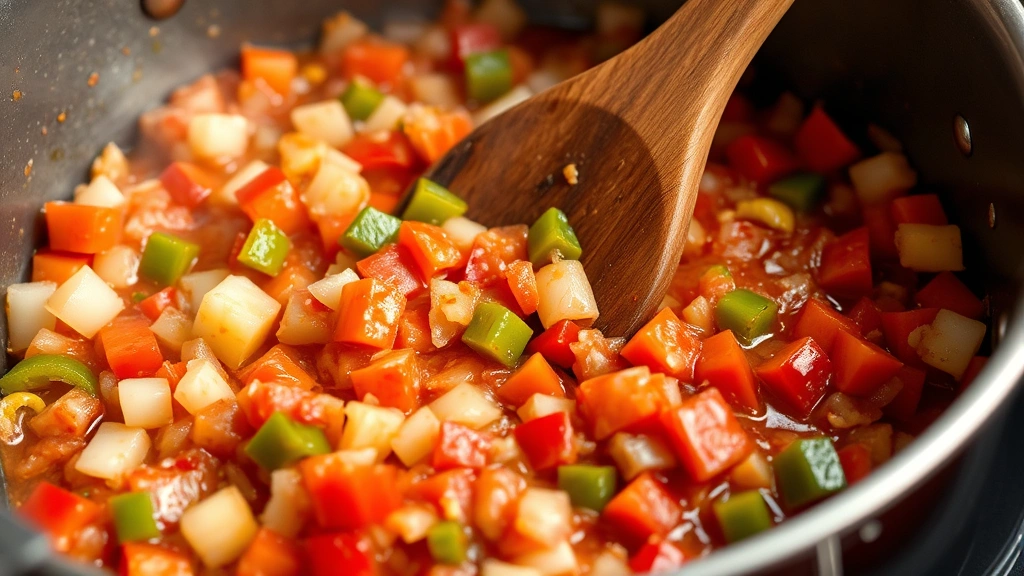
Step 2: Build the Sofrito (8 minutes): In the same pot with the rendered chicken fat, add diced onions. Cook for 3-4 minutes, stirring occasionally, until softened and beginning to turn translucent. Add diced bell peppers and cook for another 2 minutes. Now add minced garlic and cook for 30-45 seconds—you should smell the garlic perfume the pot. Don’t let garlic burn; it becomes bitter and unpleasant.
Step 3: Deglaze and Build the Sauce (5 minutes): Pour in your tomato sauce, stirring well to combine with the sofrito. Let this bubble gently for 2-3 minutes, allowing tomato flavors to concentrate slightly. This is when you add your bay leaves, oregano, cumin, and saffron if using. Stir everything together, ensuring spices are evenly distributed throughout the sauce.
Step 4: Return Chicken and Add Potatoes (2 minutes): Place browned chicken pieces back into the pot, nestling them among the vegetables. Pour in your chicken broth—the liquid should partially cover the chicken. Add your potato cubes and green olives. Stir gently to combine everything.
Step 5: Simmer Low and Slow (45-50 minutes): Bring the entire pot to a gentle simmer, then reduce heat to medium-low. You want small bubbles breaking the surface occasionally—not a rolling boil. Cover with a lid and let everything cook undisturbed for 30 minutes. Check at the 30-minute mark: potatoes should be becoming tender, and chicken should be very tender when pierced with a fork.
Continue cooking for another 15-20 minutes until potatoes are completely fork-tender and chicken meat practically falls from bones. The sauce should have thickened slightly as potatoes release their starches. If your sauce seems too thin, you can simmer uncovered for the final 10 minutes to reduce liquid slightly.
Step 6: Final Seasoning and Rest (5 minutes): Taste the stew and adjust seasoning with salt and pepper. Remember that olives contribute saltiness, so be cautious with additional salt. Remove from heat and let rest for 5 minutes—this allows flavors to fully integrate and makes serving easier.
Pro Tips from Professional Chefs
Temperature Control is Everything: Many home cooks cook pollo guisado too hot, which toughens chicken and causes sauce to reduce too quickly. Maintain a gentle simmer throughout—patience yields superior results. Professional chefs often use an instant-read thermometer to ensure chicken reaches exactly 165°F without overcooking.
Don’t Skip the Browning Step: The Maillard reaction that occurs when browning chicken creates hundreds of complex flavor compounds. This step, though it takes only 10 minutes, contributes immensely to the final dish. Some home cooks skip it to save time, but doing so noticeably diminishes flavor.
Use Quality Olives: Cheap, mealy olives disappear into the sauce. Invest in decent green olives—Spanish varieties like Castelvetrano or Manzanilla provide briny flavor and better texture. Some chefs add olives halfway through cooking to preserve their texture.
Make Your Own Sofrito: While store-bought sofrito exists, making it fresh from onions, peppers, and garlic takes only 8 minutes and provides noticeably superior flavor. This technique appears in countless Spanish and Latin dishes, so mastering it serves you well.
Consider Chicken Thighs Exclusively: While traditional recipes use mixed chicken pieces, many professional chefs prefer using only thighs and drumsticks. These cuts stay moist and tender even with longer cooking, whereas breasts can dry out. Thighs also contribute more flavor to the braising liquid.
Add Potatoes Strategically: Some chefs add potatoes after 20 minutes of cooking rather than at the beginning. This prevents them from becoming mushy and allows them to absorb flavors more efficiently. Experiment to find your preferred potato texture.
Finishing Touch with Fresh Cilantro: While not traditional in all regions, a handful of fresh cilantro stirred in at the end adds brightness and complexity. This is particularly common in Caribbean preparations.
Serving Suggestions and Pairings
Pollo guisado is incredibly versatile at the table. The most traditional serving method involves ladling the entire stew—chicken, potatoes, sauce, and all—into deep bowls. Serve with crusty bread for soaking up the delicious sauce, or alongside white rice to soak up flavors.
Rice Pairing: White rice is classic, but many cooks prefer cooking rice in chicken broth for added flavor. Some Caribbean preparations serve pollo guisado over rice rather than alongside it.
Bread Options: Spanish-style crusty bread, bolillo rolls, or even cornbread complement this dish beautifully. The bread serves a functional purpose—soaking up the precious sauce.
Vegetable Sides: A simple green salad with vinaigrette provides brightness and cuts through the richness of the stew. Some cooks add a squeeze of fresh lime juice to their salad.
Beverage Pairings: Spanish red wine, particularly Tempranillo or Garnacha, pairs wonderfully. For non-alcoholic options, sparkling water with lime or fresh lemonade provides refreshment.
Dietary Modifications: This dish is naturally gluten-free and dairy-free, making it suitable for various dietary needs. Simply verify that your chicken broth and tomato sauce contain no additives.
Storage and Make-Ahead Options
Refrigerator Storage: Pollo guisado actually improves after a day or two as flavors continue to meld. Store in an airtight container for up to 4 days. The sauce may thicken as it cools; simply add a splash of broth when reheating.
Freezer Storage: This dish freezes beautifully for up to 3 months. Cool completely before transferring to freezer-safe containers, leaving ½ inch headspace for expansion. Thaw overnight in the refrigerator before reheating.
Reheating: Reheat gently over medium-low heat, adding a splash of broth if needed. Alternatively, reheat in a 350°F oven covered with foil for 25-30 minutes. Avoid high heat, which can toughen the chicken.
Make-Ahead Strategy: You can complete steps 1-3 (browning chicken and building sofrito) up to 8 hours ahead. Store browned chicken and prepared sauce separately in the refrigerator. When ready to finish, combine and proceed with step 4, adding an extra 10 minutes to cooking time since everything starts cold.
Batch Cooking: Double or triple this recipe and freeze portions. Pollo guisado transforms weeknight dinners into something special without requiring hours at the stove. Many home cooks prepare this on weekends for quick weeknight meals.
FAQ
Can I use boneless, skinless chicken breasts for pollo guisado?
Technically yes, but results won’t be optimal. Breasts lack the fat and collagen found in thighs and drumsticks, resulting in drier, less flavorful meat. If using breasts, reduce cooking time to 25-30 minutes and monitor carefully to prevent overcooking. Many cooks find bone-in thighs superior in every way.
What if I don’t have green olives?
While green olives provide characteristic flavor, you can substitute with kalamata olives, though the taste profile shifts slightly—kalamatas are earthier and less briny. Some cooks omit olives entirely and add capers instead, which provides similar briny notes. Experiment to find your preference.
Can I make this in a slow cooker?
Yes! Brown the chicken and build the sofrito using the stovetop method, then transfer everything to a slow cooker. Cook on low for 6-7 hours or high for 3-4 hours. Add potatoes during the last hour of cooking to prevent mushiness. The result is slightly different from stovetop cooking but still delicious.
How do I prevent my sauce from being too thin?
If after 50 minutes your sauce seems watery, simmer uncovered for an additional 10-15 minutes to allow liquid to reduce. Alternatively, mix 1 tablespoon cornstarch with 2 tablespoons cold water, stir into the pot, and simmer for 2 minutes. The sauce should coat a spoon lightly.
Is saffron really necessary?
No, but it adds subtle complexity and a hint of color. Saffron is expensive, so many home cooks skip it without noticeably diminishing the dish. If you enjoy saffron’s flavor profile, a small pinch is worth including.
Can I use store-bought sofrito instead of making it fresh?
Yes, and it saves time. Use about ⅓ cup store-bought sofrito instead of making it from scratch. However, homemade sofrito takes only 8 minutes and provides noticeably fresher flavor. Consider making fresh sofrito when you have time.
What’s the best way to serve leftover pollo guisado?
Reheat gently and serve as you would fresh pollo guisado. Some cooks shred leftover chicken and use it in tacos or empanadas. The rich sauce works beautifully in these applications. You can also serve leftovers over rice for a different presentation.
How does pollo guisado compare to chicken wings recipe preparations?
Pollo guisado is a braise—a slow, moist cooking method—while wings are typically roasted or fried. Guisado yields tender, sauce-soaked chicken, while wings develop crispy exteriors. Both are delicious but serve different purposes. Guisado is comfort food; wings are appetizers or casual fare.
Is pollo guisado a healthy option?
Pollo guisado provides excellent protein and contains vegetables, making it nutritionally sound. Skin-on chicken contains more fat than skinless options, but this fat contributes flavor and helps keep meat moist. If concerned about calories, you can remove skin before eating or use foods to avoid for weight loss principles—simply portion control and balance with vegetables.
Can I add other vegetables to pollo guisado?
Absolutely! Carrots, celery, peas, and green beans all work beautifully. Add carrots and celery with the potatoes; add peas and green beans during the last 10 minutes of cooking. Each addition brings new flavor dimensions.
What’s the difference between pollo guisado and chicken stew?
Pollo guisado is specifically a Spanish and Latin American preparation featuring tomatoes, olives, and characteristic spices like cumin and oregano. Generic chicken stew typically uses cream or thickened gravy. Pollo guisado is lighter, more aromatic, and more flavorful than typical chicken stew.
Final Thoughts: Pollo guisado represents the pinnacle of simple, flavorful home cooking. This dish proves that extraordinary meals don’t require complicated techniques or exotic ingredients—just quality components, proper method, and patience. Master this recipe and you’ve unlocked a dish that works for weeknight dinners, special occasions, or casual entertaining. The flavors only improve with time, making it perfect for batch cooking and meal preparation. Welcome to the tradition of pollo guisado.


