
Smoked Prime Rib Perfection: BBQ Expert Tips for Restaurant-Quality Results
Smoking a prime rib is one of the most rewarding culinary experiences you can undertake at home. This premium cut of beef deserves meticulous attention to detail, precise temperature control, and the right techniques to transform it into a showstopping centerpiece. Whether you’re planning a holiday feast or an impressive dinner party, mastering the art of smoking prime rib will elevate your grilling credentials and impress even the most discerning guests.
The magic of smoked prime rib lies in the combination of low-and-slow cooking, strategic seasoning, and understanding how smoke interacts with the meat’s marbling. Unlike traditional roasting methods, smoking infuses subtle complexity into the beef while rendering the fat cap to a crispy, golden perfection. This comprehensive guide will walk you through every step of the process, from selecting the right cut to achieving that perfect smoke ring and crust.
Selecting Your Prime Rib Cut
The foundation of smoking prime rib perfection begins with selecting the right cut of meat. Prime rib, also known as a standing rib roast, comes from the rib section of the cow and is renowned for its exceptional marbling and tenderness. When shopping, look for cuts that are well-marbled with white fat running throughout the meat, as this intramuscular fat will render during smoking and keep your roast incredibly moist and flavorful.
Size matters significantly when smoking prime rib. Most experts recommend selecting a roast between 4 to 8 pounds, which typically represents a 2 to 4-bone section. A smaller roast (4-5 pounds) will smoke more evenly and cook faster, making it ideal for beginners or intimate dinners. Larger roasts (6-8 pounds) require more careful temperature management but provide impressive presentation and can feed larger groups. The bone-in variety is superior to boneless because the bones act as an insulating barrier, protecting the meat from direct heat and contributing rich flavor through collagen breakdown.
Ask your butcher to trim the fat cap to about a quarter-inch thickness. This provides enough protective fat while allowing smoke penetration and proper seasoning application. Avoid overly trimmed roasts, as insufficient fat coverage will result in dry, disappointing results. Also, request that bones be frenched (cleaned of meat and fat) if you prefer a more elegant presentation, though this is purely aesthetic and doesn’t affect flavor.
Purchase your prime rib 2-3 days before smoking to allow time for proper preparation and seasoning application. Quality matters tremendously—select USDA Prime grade beef if available, as the superior marbling justifies the premium price for such an important dish. Consider sourcing from a reputable butcher rather than supermarket chains for more personalized selection and expert advice.
Essential Equipment and Setup
Successful smoked prime rib requires proper equipment and meticulous smoker setup. You’ll need an offset smoker, drum smoker, or pellet smoker that can maintain consistent temperatures between 225-250°F for extended periods. Offset smokers provide excellent smoke flavor but demand more active management. Pellet smokers offer convenience and precision but may produce less pronounced smoke character. Drum smokers (like modified 55-gallon barrels) provide excellent results at a reasonable price point.
Temperature control is absolutely critical. Invest in a reliable dual-probe meat thermometer that monitors both the smoker’s chamber temperature and the internal meat temperature simultaneously. The ThermowWorks Smoke X4 or similar wireless systems allow you to monitor progress without opening the smoker door and losing precious heat and smoke.
You’ll also need high-quality grates or a meat rack designed to hold a large roast securely. A drip pan placed directly below the roast catches rendered fat and drippings, which can be used for gravy or basting. Water pans help regulate temperature fluctuations and add moisture to the smoking environment. Heavy-duty aluminum foil is essential for wrapping during the final stages of cooking.
Before beginning your cook, perform a thorough inspection of your smoker. Clean the grates, ensure all vents operate smoothly, and verify that your thermometer readings are accurate by comparing multiple probes. Proper setup prevents mid-cook frustrations and ensures consistent results every time you smoke a prime rib.
Preparing Your Meat for Smoking
Preparation determines success more than any other single factor. Remove your prime rib from the refrigerator 2-4 hours before smoking to allow it to reach room temperature. Cold meat smokes unevenly and requires longer cooking times. Pat the entire roast dry with paper towels—moisture on the surface inhibits smoke ring formation and prevents proper crust development.
Create a custom dry rub that complements beef’s natural flavors without overpowering them. A classic smoked prime rib rub combines coarse kosher salt (2 tablespoons), freshly cracked black pepper (1 tablespoon), garlic powder (1 tablespoon), onion powder (1 teaspoon), smoked paprika (1 teaspoon), and brown sugar (1 teaspoon). Some pitmasters add cayenne pepper for subtle heat or dried thyme for herbaceous complexity. Mix these ingredients thoroughly and apply generously to all surfaces, paying special attention to crevices between bones.
For enhanced flavor depth, consider applying a thin layer of Dijon mustard or beef broth to the meat 30 minutes before smoking. This creates a tacky surface that helps the rub adhere and develops a more cohesive bark. Some advanced techniques involve injecting beef broth mixed with butter, Worcestershire sauce, and beef bouillon 12-24 hours before smoking, which enhances moisture retention and flavor penetration throughout the meat.
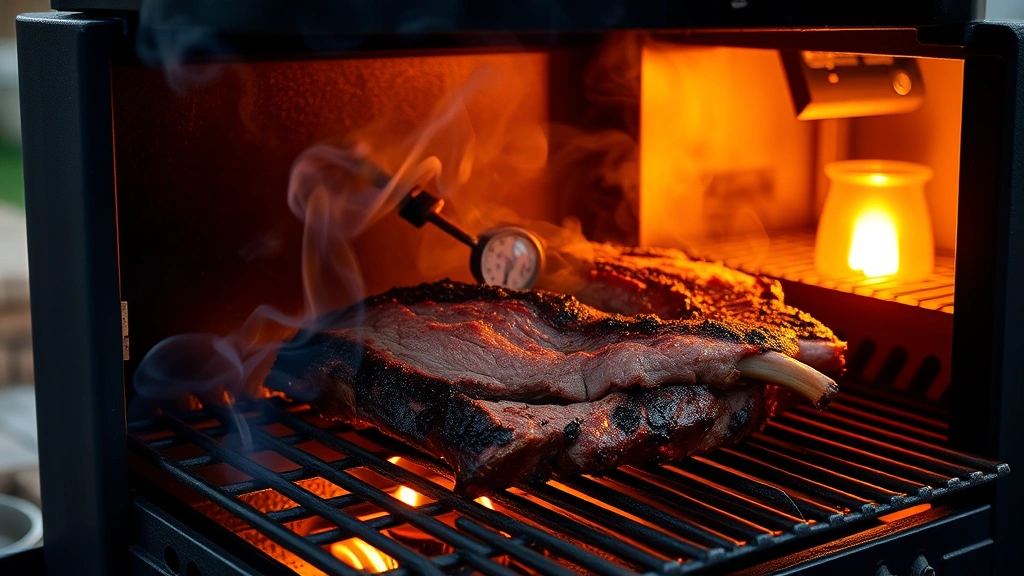
Insert your meat thermometer probe into the thickest part of the roast, positioning it away from bone contact, which can give false readings. This probe placement is crucial for accurate temperature monitoring throughout the smoking process.
Temperature Management and Timing
Temperature control separates exceptional smoked prime rib from mediocre results. Maintain your smoker at 225-250°F throughout the entire cook. Lower temperatures (225°F) produce more pronounced smoke flavor and a thicker bark but require longer cooking times—approximately 15-17 minutes per pound. Higher temperatures (250°F) accelerate cooking to roughly 12-15 minutes per pound while still developing excellent flavor and crust.
For a typical 6-pound prime rib smoked at 235°F, expect a total cooking time of 4.5 to 5.5 hours. However, time is merely an estimate; internal temperature is the true indicator of doneness. Plan for rare (120-125°F internal), medium-rare (130-135°F), or medium (135-145°F) depending on preference. Most connoisseurs recommend medium-rare as the ideal endpoint, preserving the meat’s tenderness while ensuring food safety.
Avoid opening the smoker door excessively during the cook, as each opening causes temperature fluctuations and smoke loss. Limit door openings to temperature checks every 60-90 minutes. If you must adjust vents or add fuel, work quickly and deliberately. The Amazing Ribs temperature guide provides excellent reference points for various meat thicknesses and target doneness levels.
Around the 2-hour mark, you can apply a butter baste if desired. Mix softened butter with garlic, fresh herbs like rosemary and thyme, and a pinch of sea salt. Brush this mixture onto the roast every 45 minutes for the final 2 hours of cooking. This step is optional but contributes to browning and adds richness. Be cautious not to apply butter too early, as it can prevent proper bark formation.
Wood Selection and Smoke Control
Wood choice profoundly impacts the final flavor profile of your smoked prime rib. Oak provides a balanced, medium smoke flavor that complements beef beautifully without overwhelming it. Hickory delivers stronger, more assertive smoke character with slight sweetness—excellent for those who enjoy pronounced smoke flavor. Mesquite produces intense, peppery smoke that demands careful management; use sparingly or blend with milder woods.
For prime rib, consider pairing your primary wood with complementary varieties. Combine oak with pecan for subtle sweetness, or blend hickory with a small amount of cherry wood for complexity without excessive intensity. Avoid softwoods like pine or fir, which produce acrid, unpleasant flavors. Fruitwoods like apple and cherry work beautifully but should be used judiciously, as they can impart overly sweet notes to beef.
Use wood chunks rather than chips—chunks smolder longer and produce steadier smoke. Soak chunks for 30 minutes before adding to your firebox if using an offset smoker, though some pitmasters skip soaking for drier, more consistent smoke production. In pellet smokers, wood selection is predetermined by your pellet choice, so select premium hardwood pellets from reputable manufacturers.
Aim for thin blue smoke rather than thick white smoke. Thick smoke indicates incomplete combustion and deposits bitter compounds on the meat. Adjust air vents to achieve clean, wispy blue smoke that barely visible against the sky. This requires practice and attention, but the results justify the effort.
Limit your smoke exposure to the first 2-3 hours of cooking. After this point, the meat has absorbed sufficient smoke flavor, and additional smoke becomes overpowering and unpleasant. Reduce wood additions in the final 2-3 hours and focus on maintaining steady temperature.
The Reverse Sear Technique
The reverse sear method has revolutionized prime rib smoking and represents a significant advancement in technique. This approach involves smoking the meat at low temperature until it reaches approximately 10-15°F below target doneness, then finishing with a high-heat sear to develop a spectacular crust.
Execute the reverse sear by smoking your prime rib at 225-235°F until internal temperature reaches 115°F for rare or 125°F for medium-rare. This typically requires 4-5 hours for a 6-pound roast. At this point, remove the roast from the smoker and wrap it tightly in foil, then place it in a preheated 500°F oven for 12-18 minutes. The exterior will develop a beautiful mahogany crust while the residual heat gently brings the interior to final temperature.
Some advanced cooks prefer finishing on a scorching hot grill grate directly over white-hot coals for 2-3 minutes per side, creating an intense crust with caramelized exterior. This method requires confidence and quick movements, as overcooking is possible if you’re not vigilant.
The reverse sear technique offers several advantages: it produces a superior crust without overcooking the interior, allows for more precise temperature control, and provides a window for final basting and seasoning adjustments. This method transforms good smoked prime rib into exceptional restaurant-quality results.
For enhanced crust development, brush the roast with a mixture of melted butter, Dijon mustard, and minced garlic immediately before the searing phase. This creates additional browning and adds savory depth that elevates the entire eating experience.
Resting and Carving Properly
Resting is non-negotiable for exceptional smoked prime rib. After removing from heat, wrap the roast loosely in foil and rest for 15-20 minutes. This allows carryover cooking to complete while muscle fibers relax, ensuring juices redistribute throughout the meat. Cutting into the roast immediately after cooking causes catastrophic juice loss and dry, disappointing results.
During resting, prepare a finishing salt—fleur de sel or Maldon sea salt applied just before serving adds textural contrast and enhances beef flavor perception. You can also finish with a drizzle of infused oil made with garlic and fresh herbs.
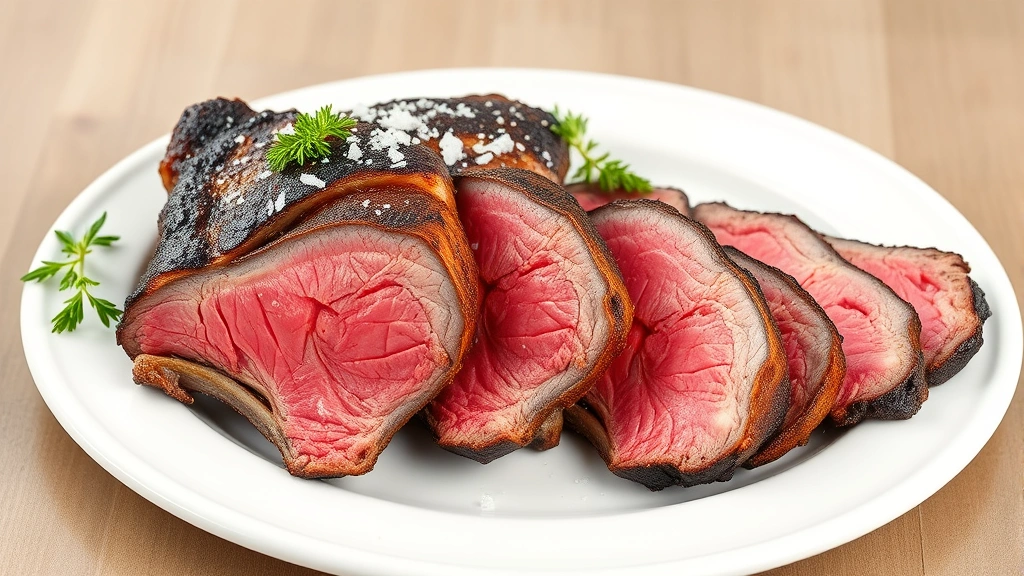
Carving technique matters for presentation and eating experience. Using a sharp carving knife, slice between the bones first to separate individual rib sections. Then slice across the grain into half-inch thickness, working perpendicular to the bone structure. This produces beautiful individual steaks that showcase the smoke ring and color gradient from crust to center.
Present carved slices slightly overlapping on a warmed serving platter, allowing the beautiful color and smoke ring to be showcased. Drizzle any pan drippings over the top for added moisture and flavor. Accompany with horseradish cream sauce, which provides sharp contrast to the rich, smoky beef.
Make pan gravy from rendered drippings and beef broth, creating a sauce that captures all the complex flavors developed during smoking. This elevates your presentation and provides an elegant finishing touch that guests will remember.
FAQ
What’s the difference between prime rib and ribeye steak?
Prime rib is a large roast cut from multiple ribs, while ribeye is a single steak cut from the same primal section. Prime rib’s larger size allows for slower, more controlled smoking, while ribeye steaks cook quickly over direct heat. Prime rib typically feeds multiple people, whereas ribeyes are individual portions.
Can I smoke prime rib in a gas smoker?
Yes, absolutely. Gas smokers maintain consistent temperatures exceptionally well, making them ideal for smoking large roasts. Add wood chips or chunks to your smoker’s smoke box to generate smoke flavor. Gas smokers require less active management than offset smokers, though some purists argue they produce less intense smoke character.
How do I know when my prime rib is done?
Use an accurate meat thermometer as your guide. For medium-rare (the recommended doneness), target 130-135°F internal temperature. Remember that carryover cooking will raise temperature 3-5°F after removal from heat, so remove the roast when it reaches 125-130°F. Never rely solely on cooking time, as variables like roast thickness, smoker efficiency, and ambient temperature affect duration.
Should I wrap my prime rib during smoking?
Wrapping (the Texas crutch) accelerates cooking and prevents excessive bark formation. For prime rib, wrapping is optional. If you wrap after 2-3 hours, you’ll achieve a more tender interior but less pronounced crust. For maximum bark development, avoid wrapping and rely on the reverse sear technique instead.
What wood produces the best smoke flavor for prime rib?
Oak provides an excellent balanced smoke flavor that complements beef without overpowering it. Hickory offers stronger character for those who prefer pronounced smoke. Avoid mesquite for prime rib, as its intensity can overwhelm the delicate flavors of this premium cut. Experiment with different woods to discover your preference.
Can I smoke a boneless prime rib?
Yes, though bone-in is superior. Boneless roasts lack the insulating properties of bones and can dry out more easily. If using boneless, reduce cooking temperature slightly to 220°F and monitor internal temperature more frequently. Boneless roasts also present less impressively when carved and plated.
How far in advance can I prepare my prime rib?
Apply your dry rub 12-24 hours before smoking and refrigerate. Remove from refrigeration 2-4 hours before smoking to reach room temperature. This advance preparation allows flavors to penetrate the meat while ensuring even cooking. Never smoke cold meat directly from the refrigerator.
What should I serve alongside smoked prime rib?
Consider pairing with nutritious side dishes like roasted vegetables, creamed spinach, or Yorkshire pudding. Horseradish cream sauce and au jus are traditional accompaniments. For lighter options, explore mindful eating approaches while still enjoying this indulgent centerpiece in reasonable portions.
Can I use a pellet smoker for prime rib?
Absolutely. Pellet smokers excel at maintaining consistent temperatures and produce excellent results. Select premium hardwood pellets and follow your manufacturer’s temperature guidelines. Pellet smokers offer convenience and precision, making them ideal for beginners and those seeking hassle-free smoking experiences.
What’s the smoke ring and how do I achieve it?
The smoke ring is a pink layer beneath the meat’s surface created by smoke penetrating the exterior. It’s purely aesthetic but indicates proper smoking technique. Achieve it by using thin blue smoke for the first 3 hours, maintaining consistent temperatures, and ensuring adequate air circulation. The smoke ring doesn’t affect flavor but provides visual proof of authentic smoking methods.


