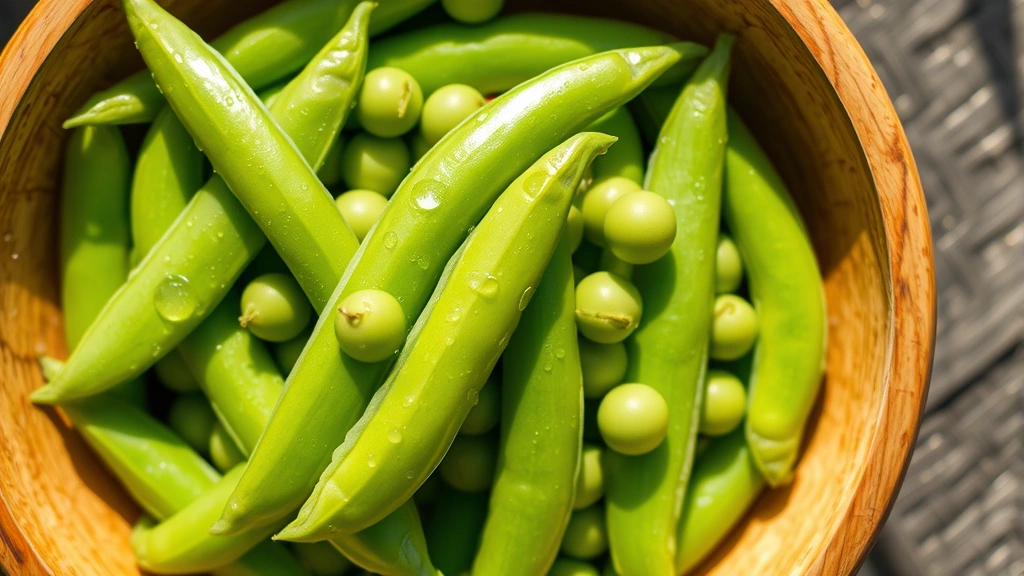
Crunchy Sugar Snap Peas Recipe: The Perfect Crispy Side Dish
Sugar snap peas are one of those vegetables that deserve far more attention than they typically receive. With their naturally sweet flavor and satisfying crunch, they transform from a simple garden vegetable into a show-stopping side dish when prepared correctly. Whether you’re looking for a quick weeknight addition to your dinner table or an elegant accompaniment to a special meal, mastering the art of cooking crunchy sugar snap peas will revolutionize your vegetable repertoire.
The key to achieving that coveted crispy-tender texture lies in understanding the science behind vegetable cooking and applying the right techniques at the right moments. This comprehensive guide walks you through everything you need to know about selecting, preparing, and cooking sugar snap peas to perfection. From simple stovetop methods to more adventurous flavor combinations, you’ll discover why this recipe has become a tried-and-true favorite in kitchens everywhere.
Understanding Sugar Snap Peas
Sugar snap peas occupy a unique position in the legume family, sitting somewhere between traditional garden peas and snow peas. Unlike their cousins, sugar snap peas are harvested when the pods are fully mature but still tender, making the entire pod edible. This characteristic alone sets them apart and explains why they’ve become increasingly popular in home cooking and professional kitchens alike.
The botanical structure of sugar snap peas contributes significantly to their texture and flavor profile. Each pod contains several small peas surrounded by a tender, crisp exterior that’s packed with natural sugars. When you bite into a properly cooked sugar snap pea, you experience a delightful contrast between the firm exterior and the slightly sweeter interior. This textural complexity is what makes them so appealing to both children and adults who might otherwise avoid vegetables.
The sugar content in these peas naturally increases as they mature, which is why picking them at the right moment matters tremendously. Sugar snap peas develop their characteristic sweetness through photosynthesis, converting sunlight into glucose that accumulates in the pod. This is why homegrown varieties often taste noticeably sweeter than grocery store versions—they’ve had more time to develop their sugars before harvest.
Selecting and Preparing Your Peas
The foundation of any excellent sugar snap pea recipe begins at the market or garden. When selecting sugar snap peas, look for pods that are bright green, firm to the touch, and free from blemishes or discoloration. The pods should feel heavy for their size, indicating they’re full of moisture and fresh. Avoid any that appear wilted, yellowed, or have soft spots, as these indicate age and declining quality.
Fresh sugar snap peas should snap cleanly when bent—this audible indicator tells you the pods contain adequate moisture and haven’t begun to dry out. If you’re purchasing them from a farmer’s market, don’t hesitate to gently bend one to test its freshness. Most vendors appreciate customers who take time to select quality produce. Store your peas in the refrigerator in a breathable bag or container, and use them within three to five days for optimal crunchiness.
Preparation is straightforward but deserves attention to detail. Rinse your sugar snap peas under cool running water and gently pat them dry with paper towels. The drying step is crucial—excess moisture on the pods can create steam during cooking, which leads to a softer texture rather than the desired crunch. Next, you’ll want to remove the string that runs along the curved edge of each pod. This fibrous string can be tough and unpleasant to bite through, so pinching off the stem end and pulling the string away is essential. Most strings come off cleanly in one motion, though occasionally you’ll encounter stubborn ones that require a second attempt.
Some cooks prefer to leave the pods whole, while others like to snap them in half for easier eating and more even cooking. If you’re cooking for young children or serving at a formal dinner, halving the pods can be more practical. For casual family meals, whole pods work perfectly well and look more impressive on the plate.
The Classic Crunchy Recipe
Ingredients:
- 1 pound fresh sugar snap peas, strings removed
- 2 tablespoons high-heat cooking oil (avocado or vegetable oil recommended)
- 3 cloves garlic, minced
- 1 teaspoon kosher salt
- ½ teaspoon freshly ground black pepper
- ½ teaspoon red pepper flakes (optional)
- 1 tablespoon unsalted butter
- Juice of ½ lemon
- Sesame seeds for garnish (optional)
Instructions:
- Prepare your cooking surface: Heat a large skillet or wok over medium-high heat for 2-3 minutes. The pan should be hot enough that a drop of water immediately sizzles and evaporates. This high heat is essential for achieving the signature crunch in your sugar snap peas.
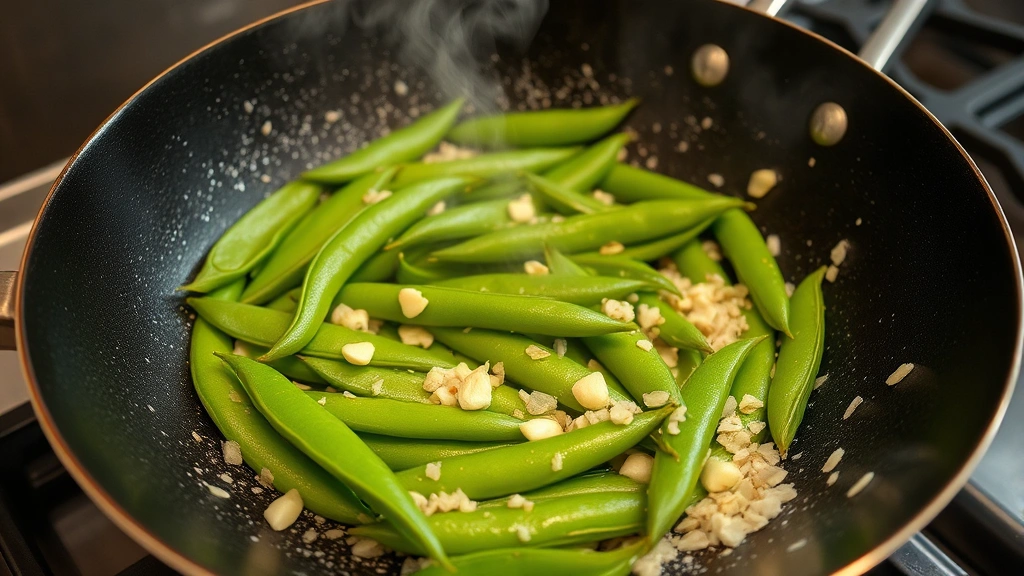
- Add oil and aromatics: Pour your chosen oil into the hot pan and swirl to coat evenly. The oil should shimmer and move freely across the surface. Immediately add your minced garlic, stirring constantly for about 30 seconds until fragrant. Don’t allow the garlic to brown, as burnt garlic tastes bitter and will compromise your dish.
- Introduce the peas: Add your prepared sugar snap peas to the pan in a single layer. You’ll hear an immediate sizzle, which indicates the Maillard reaction is beginning—this is the chemical process that creates those desirable caramelized flavors and helps maintain crunchiness. Resist the urge to stir immediately; let the peas sit undisturbed for 2-3 minutes so they develop a light golden color on one side.
- Stir and cook: After the initial resting period, stir the peas and continue cooking for another 3-4 minutes, stirring occasionally. The peas should still retain their bright green color with some light browning. The entire cooking process should take 6-8 minutes total. Overcooking is the primary enemy of crunchiness, so keep a close eye on your peas during this stage.
- Season and finish: Sprinkle the kosher salt, black pepper, and red pepper flakes over the peas, stirring well to distribute evenly. Add the butter and squeeze fresh lemon juice over everything. Toss gently for about 30 seconds until the butter melts and coats the peas. The acid from the lemon juice brightens the flavor and helps preserve the vibrant green color.
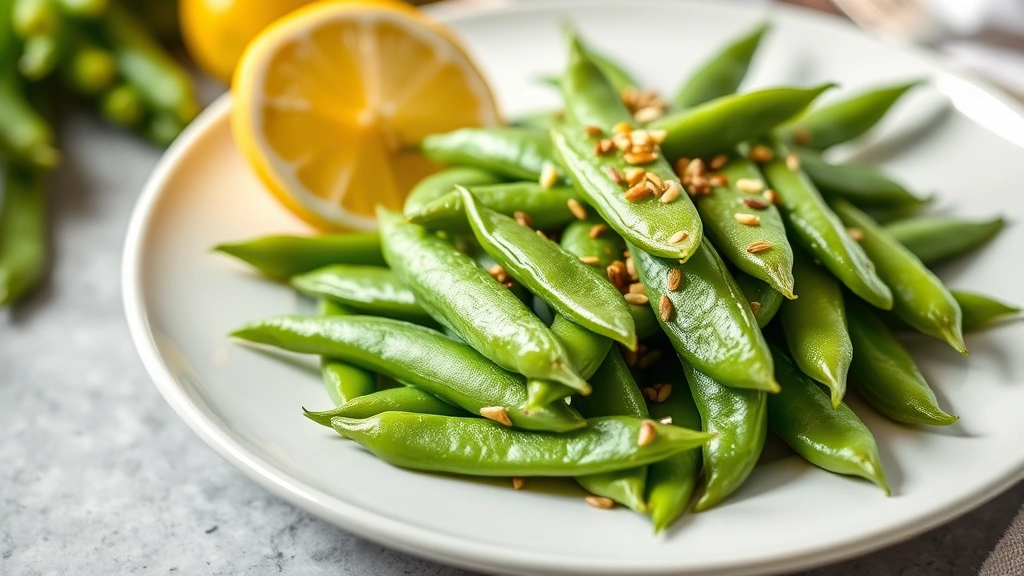
- Plate and serve: Transfer your crunchy sugar snap peas to a serving dish immediately. They’ll continue to cook slightly from residual heat, so getting them off the hot pan quickly helps maintain optimal texture. Garnish with sesame seeds if desired and serve immediately while still warm and crispy.
The timing in this recipe is critical for success. Sugar snap peas continue to soften even after you remove them from heat, so aiming for a slightly firmer texture than you ultimately want will result in perfect crunchiness by the time they reach your plate. Professional chefs often use an ice bath to stop the cooking process immediately, but for home cooking, simply removing them from heat and serving quickly achieves excellent results.
Flavor Variations and Pairings
Once you’ve mastered the basic technique, experimenting with different flavor profiles opens up endless possibilities. Your homemade sauces can transform this simple vegetable into something completely unique. Consider tossing your crunchy sugar snap peas with a soy-ginger mixture by combining 2 tablespoons soy sauce, 1 tablespoon rice vinegar, 1 teaspoon minced fresh ginger, and 1 teaspoon sesame oil. This Asian-inspired variation pairs beautifully with rice dishes, particularly crispy rice or yellow rice recipes that benefit from the bright, fresh contrast these peas provide.
For a Mediterranean approach, toss your cooked peas with a mixture of lemon juice, olive oil, minced fresh mint, crumbled feta cheese, and toasted pine nuts. This combination works wonderfully alongside grilled fish or chicken and adds sophistication to any dinner plate. The fresh mint provides an herbaceous note that complements the natural sweetness of the peas.
If you’re preparing summer salad recipes, consider adding your crunchy sugar snap peas as a textural element. Their natural sweetness and satisfying crunch elevate simple green salads and add interest to grain-based salads. They’re particularly stunning in salads featuring other crisp vegetables like radishes and cucumbers, where their bright green color creates visual appeal.
For a spicy kick, add a tablespoon of sriracha or chili paste to your butter-lemon finish, creating a sweet-spicy combination that’s absolutely addictive. Alternatively, incorporate smoked paprika and a pinch of cayenne pepper for a more subtle heat with smoky undertones. These variations work exceptionally well when serving peas alongside proteins cooked with complementary spices.
Consider pairing your sugar snap peas with rice porridge for a comforting meal, or include them in easy vegan breakfast ideas by adding them to scrambled eggs or tofu scrambles. Their versatility extends across all meal types and cuisines.
Storage and Make-Ahead Tips
While sugar snap peas are best enjoyed immediately after cooking, you can prepare them several hours in advance and reheat them gently before serving. Store cooked peas in an airtight container in the refrigerator for up to three days. When reheating, use a quick pan-fry method over medium-high heat for just 1-2 minutes, stirring frequently. Avoid using a microwave, which tends to make vegetables soggy and compromises the crunchiness you worked to achieve.
For meal prep purposes, you can blanch your sugar snap peas in boiling salted water for just 2-3 minutes, then immediately plunge them into an ice bath to stop the cooking process. This blanching method preserves color and crunchiness while extending shelf life to five days. When you’re ready to eat them, simply give them a quick stir-fry with your chosen seasonings for a fast, fresh side dish.
Raw sugar snap peas also make an excellent addition to vegetable platters and snack boards. Their natural sweetness appeals to children and adults alike, and they require no cooking whatsoever. Simply arrange them on a platter with a yogurt-based dipping sauce or a homemade sauce featuring herbs and spices.
Nutritional Benefits
Beyond their delicious taste and satisfying crunch, sugar snap peas offer impressive nutritional benefits that make them a smart addition to any diet. A one-cup serving of raw sugar snap peas contains approximately 41 calories, 3 grams of protein, 7 grams of carbohydrates, and 2 grams of fiber. They’re also an excellent source of vitamin C, providing about 30% of the daily recommended value in a single serving.
The fiber content in sugar snap peas supports digestive health and helps maintain stable blood sugar levels throughout the day. The natural plant-based protein makes them particularly valuable for vegetarian and vegan diets. Additionally, sugar snap peas contain various phytonutrients and antioxidants, including lutein and zeaxanthin, which support eye health and protect against age-related vision decline.
The vitamin K content in these peas—roughly 40% of the daily recommended value per cup—plays a crucial role in bone health and blood clotting. For individuals taking blood-thinning medications, maintaining consistent vitamin K intake is important, making sugar snap peas a reliable dietary choice when prepared regularly.
When prepared with minimal added fat and salt, as in the basic recipe provided, sugar snap peas remain a low-calorie, nutrient-dense option suitable for most dietary goals. The healthy fats from the cooking oil and butter used in preparation actually enhance the absorption of fat-soluble vitamins like vitamins A, D, E, and K found in the peas.
FAQ
Can I use frozen sugar snap peas for this recipe?
While fresh peas are ideal for maximum crunchiness, frozen sugar snap peas can work in a pinch. Thaw them completely and pat dry thoroughly before cooking. Be aware that frozen peas have already undergone blanching during processing, so they’ll require slightly less cooking time—typically 4-5 minutes instead of 6-8 minutes. They won’t achieve quite the same level of crunch as fresh peas, but they remain a convenient option for busy weeknights.
What’s the best oil to use for cooking sugar snap peas?
High-heat cooking oils work best for this recipe. Avocado oil has a smoke point around 520°F, making it excellent for high-heat cooking while adding a subtle, pleasant flavor. Vegetable oil, canola oil, and peanut oil are also suitable choices. Avoid olive oil for the initial high-heat cooking, as its lower smoke point (around 375-405°F) can cause it to break down and smoke. You can add a small drizzle of finishing olive oil after cooking if desired for flavor.
How do I know when my sugar snap peas are done cooking?
The visual cues are your best guide. Properly cooked sugar snap peas should be bright green with some light golden-brown spots where they made contact with the hot pan. They should still have a slight firmness when you bite into them—not mushy or overly soft. If you’re uncertain, remove a pea from the pan and taste it. It should offer pleasant resistance when bitten while remaining tender inside.
Can I prepare this dish ahead for a dinner party?
Yes, you can prepare the peas up to 4 hours in advance and store them in an airtight container at room temperature or in the refrigerator. Just before serving, reheat them quickly in a hot pan for 1-2 minutes with a small knob of butter. This brief reheating restores warmth without significantly compromising texture. Alternatively, serve them at room temperature with a drizzle of fresh lemon juice and good quality olive oil.
Are there any dishes that pair particularly well with crunchy sugar snap peas?
Sugar snap peas complement virtually any main protein beautifully. They pair especially well with Asian-inspired dishes like stir-fries and rice bowls, Mediterranean meals featuring fish and olive oil, and lighter spring dinners with chicken or seafood. They also work wonderfully alongside vegetarian mains like grain bowls and roasted tofu. The key is considering your peas’ flavor profile—Asian-seasoned peas pair with Asian mains, while lemon-butter peas work with Mediterranean preparations.
What should I do if my sugar snap peas turn out soft instead of crunchy?
Softness typically results from overcooking or cooking at too low a temperature. For your next attempt, ensure your pan is properly preheated until it’s quite hot, and reduce cooking time by 1-2 minutes. Remove the peas from heat as soon as they’re tender-crisp rather than waiting for them to become completely soft. If you’re using frozen peas, remember they cook faster than fresh ones. Practice and observation will help you develop the perfect timing for your specific stove and cookware.
External Resources for Further Learning:
- Culinary Arts Institute – Professional cooking techniques and vegetable preparation
- Institute of Food Technologists – Food science and cooking chemistry
- Food Science Notes – Understanding the Maillard reaction and vegetable cooking
- Serious Eats – Evidence-based cooking techniques and recipe development
- Nutritionix – Comprehensive nutritional information for vegetables
Mastering the art of cooking crunchy sugar snap peas is a simple yet impactful skill that elevates your everyday cooking. With the techniques and variations provided in this guide, you’ll be able to prepare this versatile vegetable in countless ways, impressing family and friends while enjoying its natural sweetness and satisfying texture. Whether you’re a seasoned cook or just beginning your culinary journey, this tried-and-true recipe will become a reliable favorite in your kitchen rotation.


