
Udon Noodles from Scratch: Authentic Guide to Making Japanese Udon at Home
Making udon noodles from scratch is one of the most rewarding culinary experiences you can undertake in your own kitchen. These thick, chewy Japanese noodles have a distinctive texture that’s nearly impossible to replicate with store-bought versions, and the process itself is surprisingly approachable for home cooks. Whether you’re looking to impress dinner guests or simply want to explore authentic Japanese cuisine, this comprehensive guide will walk you through every step of creating restaurant-quality udon noodles at home.
The beauty of making udon from scratch lies in understanding the fundamental relationship between flour, water, salt, and technique. Unlike dried pasta that relies on durum wheat and eggs, udon noodles are made with soft wheat flour and achieve their characteristic elasticity through proper kneading and resting. This guide covers everything from selecting the right flour to kneading, resting, stretching, and cooking your noodles to perfection.
Understanding Udon Noodles and Their Ingredients
Before diving into the actual udon noodles recipe, it’s crucial to understand what makes these noodles unique. Udon is a thick, soft wheat noodle that originated in Japan and has become a staple in Japanese cuisine. The noodles are characterized by their chewy texture, subtle wheat flavor, and ability to absorb flavorful broths and sauces.
The ingredient list for authentic udon is remarkably simple: bread flour or all-purpose flour, water, and salt. Some regional variations include a small amount of potato starch or tapioca starch, which contributes to the noodles’ distinctive texture. The magic isn’t in exotic ingredients but rather in the technique and the ratio of ingredients.
For a basic batch of udon serving 4-6 people, you’ll need:
- 3 cups bread flour or all-purpose flour (approximately 360 grams)
- 1 cup water (240 milliliters), divided
- 1 teaspoon salt
- Optional: 1-2 tablespoons potato starch or tapioca starch for added chewiness
The choice between bread flour and all-purpose flour affects the final texture. Bread flour, with its higher protein content (typically 12-14%), creates a chewier, more elastic noodle. All-purpose flour (10-12% protein) produces a slightly softer result. For authentic udon, bread flour is preferred, though all-purpose flour works well for beginners. This process shares similarities with how to make homemade bread, particularly in the importance of gluten development.
Essential Equipment and Preparation
You don’t need specialized equipment to make excellent udon at home. However, having the right tools makes the process significantly easier and more enjoyable. Here’s what you should gather:
- Large mixing bowl for combining ingredients and initial mixing
- Kitchen scale for precise measurements (highly recommended for consistency)
- Wooden spoon or dough whisk for initial mixing
- Work surface (wooden cutting board or marble countertop) for kneading
- Plastic wrap for covering dough during resting periods
- Pasta machine or rolling pin for stretching the dough
- Large pot for cooking the noodles
- Slotted spoon or spider strainer for removing noodles from boiling water
- Ruler or measuring tape (optional, for consistent noodle thickness)
Prepare your workspace by clearing a large, clean surface. Udon dough can be sticky and messy, so you’ll appreciate having plenty of room to work. Have all ingredients measured and ready before you begin—this preparation method is similar to what you’d do when following easy dinner recipes for beginners.
Making the Dough: Step-by-Step Process
Creating the foundation for your udon begins with mixing flour, water, and salt in the correct proportions. This stage sets up everything that follows, so precision matters.
Step 1: Combine Dry Ingredients
Pour 3 cups of flour into your large mixing bowl. Add 1 teaspoon of salt and stir well to distribute the salt evenly throughout the flour. This ensures that the salt dissolves and distributes uniformly in the final dough, preventing overly salty pockets.
Step 2: Add Water Gradually
Create a well in the center of your flour mixture. Slowly add water, starting with about ¾ cup, while stirring with a wooden spoon or dough whisk. The dough will seem impossibly dry at first—this is normal. Continue mixing until the flour is mostly incorporated and the mixture resembles rough breadcrumbs. You may need to add the remaining water in small increments (1-2 tablespoons at a time) depending on your flour’s absorption rate and humidity.
Step 3: Initial Mixing
Once the mixture comes together into a shaggy dough, switch to using your hands. Mix until all flour is incorporated and you have a rough, somewhat sticky ball. At this stage, the dough will be quite stiff and uneven—don’t worry about achieving a smooth texture yet. This rough dough is your starting point for the crucial kneading phase.
[IMAGE_1]
Kneading and Developing Gluten Structure
Kneading is where udon dough transforms from a rough mass into something with structure and elasticity. This process develops gluten networks that give udon its characteristic chewy texture. Unlike bread dough, which requires 8-10 minutes of kneading, udon dough needs extended kneading time—typically 15-20 minutes by hand.
Kneading Technique
Transfer your dough to a clean work surface. Begin kneading by pushing the dough away from you with the heel of your hand, folding it back over itself, rotating it, and repeating. Work methodically and maintain a steady rhythm. The dough will gradually become smoother, less sticky, and more elastic. After about 5 minutes, you’ll notice a significant change in texture.
Continue kneading for the full 15-20 minutes. Your arms will get tired—this is expected and actually a good sign that you’re doing proper work. If the dough becomes too sticky to handle, dust lightly with flour, but avoid adding excessive flour as this can make your final noodles tough and dry.
You’ll know your dough is properly kneaded when it becomes smooth, slightly glossy, and springs back quickly when you poke it with your finger. The dough should feel elastic and unified, with no visible dry spots or cracks on the surface.
Machine Kneading Alternative
If hand-kneading seems daunting, you can use a stand mixer with a dough hook. Mix on medium speed for about 10-12 minutes. The dough will still require some hand-kneading to achieve optimal texture, but this can reduce the overall effort significantly.
Resting, Stretching, and Shaping
After kneading, your dough needs rest periods that allow the gluten to relax and the starches to absorb moisture. This multi-stage resting process is essential for developing the noodles’ final texture.
First Rest: 30 Minutes
Shape your kneaded dough into a smooth ball and place it in a lightly oiled bowl or on your work surface. Cover with plastic wrap and let it rest for 30 minutes at room temperature. This initial rest allows the gluten to relax slightly and makes the dough easier to work with in the next stage.
Second Rest: 2-4 Hours or Overnight
After the first rest, knead the dough briefly for 2-3 minutes to redistribute moisture and activate the gluten again. Shape it back into a ball, cover, and refrigerate for at least 2-4 hours, or preferably overnight. This extended cold rest is crucial—it allows the dough to develop flavor and improves the final texture of your noodles. The cold temperature slows yeast activity (if any wild yeast is present) and allows for better hydration throughout the dough.
Stretching and Flattening
Remove your dough from the refrigerator and let it sit at room temperature for 15-20 minutes to warm slightly. This makes it easier to work with. On a clean, lightly floured surface, begin stretching the dough gently with your hands. You’re aiming for a rectangular sheet about ¼ inch thick.
Work slowly and gently, stretching from the center outward. If the dough resists, cover it with plastic wrap and let it rest for 5 minutes, then continue. Alternatively, use a pasta machine set to its thickest setting, running the dough through several times, folding it in half between passes, then gradually reducing the thickness setting until you reach ¼ inch.
Cutting the Noodles
Once your dough is flattened to the correct thickness, dust it lightly with flour to prevent sticking. Using a sharp knife or pasta cutter, cut the dough into noodles about ¼ to ⅜ inch wide. Udon thickness varies by region and personal preference—thicker noodles are chewier, while thinner ones cook faster and are slightly more delicate.
After cutting, gently separate the noodles and dust them generously with flour to prevent them from sticking together. At this point, you can cook them immediately or store them in the refrigerator for up to 2 days, or freeze them for up to 2 months.
Cooking Your Fresh Udon Noodles
Cooking fresh udon is different from cooking dried pasta. The noodles are delicate and cook quickly, requiring careful attention to achieve the perfect texture.
Boiling Fresh Udon
Bring a large pot of water to a rolling boil. Use plenty of water—at least 4-5 quarts for a single batch of noodles. The ample water prevents the temperature from dropping too much when you add the noodles and helps them cook evenly.
Gently add your udon noodles to the boiling water, stirring immediately with a wooden spoon to prevent them from sticking together. Fresh udon typically cooks in 8-12 minutes, depending on thickness. Frozen noodles may take 12-15 minutes. Start testing at the 8-minute mark by removing a single noodle and tasting it.
The noodles are done when they’re tender throughout but still have a slight chewiness (what the Japanese call “al dente”). The center should no longer have any chalky, floury taste. This is more tender than Italian pasta but not mushy.
Finishing the Noodles
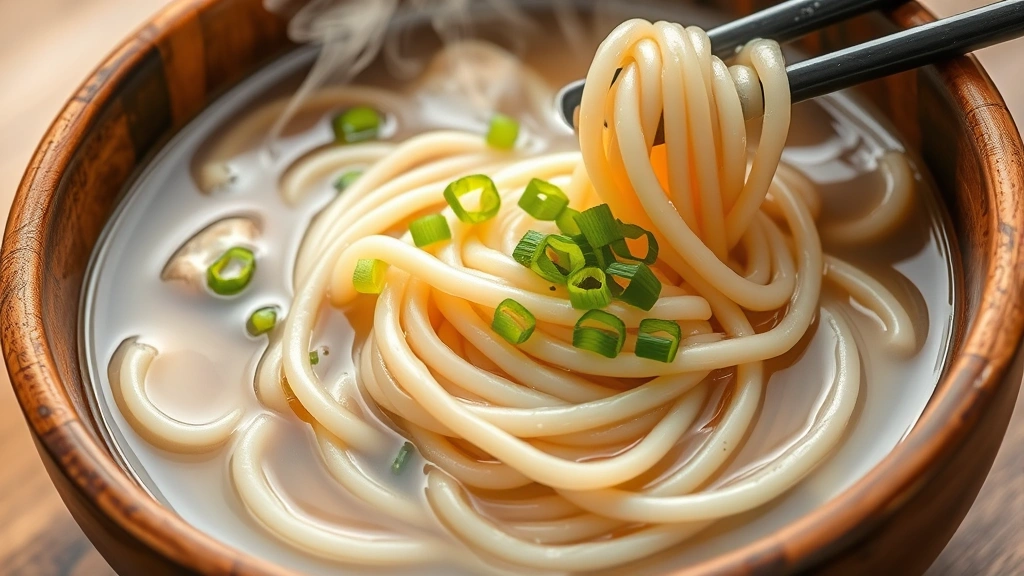
Once cooked, remove the noodles using a slotted spoon or spider strainer and place them directly into serving bowls with hot broth, or transfer them to a colander to drain if you’re making a chilled udon dish. Some cooks briefly shock the noodles in ice water after draining to stop the cooking process and enhance their chewiness, though this is optional.
For quick and easy pasta recipes, fresh udon offers versatility similar to standard pasta, though its unique texture makes it particularly suited to Japanese preparations.
Serving Suggestions and Broth Recipes
Fresh udon noodles are best served in hot, flavorful broth. The most classic preparation is kake udon, which features the noodles in a simple, clear broth made from dashi (Japanese stock), soy sauce, mirin, and salt.
Basic Udon Broth (Serves 4)
- 4 cups dashi or chicken broth
- 3 tablespoons soy sauce
- 2 tablespoons mirin
- 1 teaspoon salt
- Optional: 1 teaspoon sugar for balance
Combine all ingredients in a pot and heat until steaming. Taste and adjust seasoning as needed. Pour the hot broth over your cooked noodles in individual bowls.
Toppings and Accompaniments
Traditional udon toppings include:
- Sliced green onions (scallions)
- Tempura (shrimp or vegetable)
- Sliced kamaboko (fish cake)
- Nori (seaweed) strips
- Sesame seeds
- Shichimi togarashi (seven-spice blend)
- Grated ginger
- Soft-boiled eggs
Cold Udon Variations
In summer, udon is often served cold with a dipping sauce. Cook the noodles as usual, shock them in ice water, and serve with a concentrated dipping sauce made from dashi, soy sauce, and mirin. This is a refreshing alternative to hot preparations and works well with various toppings.
For those interested in exploring more noodle-based dishes, easy dinner recipes for beginners often feature noodle dishes as accessible yet impressive options.
FAQ
Can I make udon noodles without a pasta machine?
Absolutely. A pasta machine makes the process easier and more consistent, but it’s not essential. A rolling pin works perfectly fine for stretching the dough. The key is patience—work slowly and allow the dough to rest between stretching sessions if it becomes resistant. Many traditional udon makers use rolling pins exclusively.
What’s the difference between fresh and dried udon?
Fresh udon has a tender, chewy texture with a subtle wheat flavor. Dried udon is firmer and chewier, with a slightly more concentrated flavor. Fresh udon cooks much faster (8-12 minutes versus 10-15 minutes for dried) and has a more delicate mouthfeel. Homemade fresh udon offers superior texture and flavor compared to commercially dried versions.
How long can I store homemade udon noodles?
Fresh cooked udon should be served immediately for best texture. Uncooked fresh noodles can be refrigerated for up to 2 days when stored in an airtight container dusted with flour. For longer storage, freeze them for up to 2 months. There’s no need to thaw frozen udon before cooking—simply add a few extra minutes to the cooking time.
Why is my udon dough too sticky?
Stickiness usually indicates too much water. Remember that flour absorbs moisture differently depending on humidity and protein content. Start with slightly less water than called for and add it gradually. If your dough is already too sticky, dust it lightly with flour while kneading, rather than adding more water.
Can I use all-purpose flour instead of bread flour?
Yes, all-purpose flour works well, though the noodles will be slightly less chewy. For the most authentic texture, use bread flour, but all-purpose flour is a perfectly acceptable substitute and is often more readily available. The difference is subtle enough that most home cooks won’t notice a significant change.
What should my finished dough look like?
A properly kneaded udon dough should be smooth, slightly glossy, and elastic. When you poke it, it should spring back quickly. The surface should have no visible cracks or dry spots. It should feel unified and cohesive, though slightly softer than bread dough.
Is dashi essential for udon broth?
While traditional dashi (made from kombu seaweed and bonito flakes) offers authentic flavor, chicken broth or vegetable broth work as acceptable substitutes. Many home cooks use instant dashi powder for convenience. The important elements are quality soy sauce, mirin, and salt for balance. Experiment to find what you prefer.


