
Traditional Hamantaschen Recipe: Grandma’s Favorite
Hamantaschen are the beloved three-cornered pastries that grace tables during Purim celebrations, carrying centuries of tradition in every bite. These delightful treats combine a soft, cake-like dough with sweet fillings, creating a pastry that’s both nostalgic and utterly irresistible. Whether you’re honoring family heritage or discovering this Jewish classic for the first time, mastering the traditional hamantaschen recipe connects you to generations of home bakers who’ve perfected this cherished confection.
The beauty of hamantaschen lies in their versatility and approachability. Unlike many traditional pastries that demand precision and technical skill, these cookies welcome home bakers of all levels. The dough comes together quickly, the shaping becomes meditative once you understand the technique, and the results are consistently impressive. What makes grandma’s version special often isn’t a secret ingredient but rather patience, quality fillings, and the love baked into every batch.

Understanding Hamantaschen History and Tradition
Hamantaschen, known as “Haman’s pockets” or “Haman’s ears,” have been baked for centuries during the Jewish holiday of Purim. The name itself references Haman, the antagonist in the Book of Esther, and the three-cornered shape symbolizes either his hat or his pockets. This playful connection between pastry and storytelling makes hamantaschen more than just a treat—they’re an edible representation of Jewish cultural memory.
The tradition of baking hamantaschen brings families together, much like how preserving herbs connects us to seasonal rhythms and culinary wisdom. Grandmothers across Eastern Europe developed their own variations, passing down recipes through handwritten notes, verbal instructions, and countless baking sessions with grandchildren watching from kitchen stools. Each family’s version tells a story of immigration, adaptation, and the determination to maintain cultural identity through food.
What distinguishes traditional hamantaschen from modern interpretations is the emphasis on quality ingredients and proper technique. While contemporary recipes might use shortcuts, grandma’s approach respects the dough, allows proper rising time, and treats filling preparation as an art form. Understanding this history helps you appreciate why certain steps matter and why cutting corners diminishes the final result.
Essential Ingredients for Authentic Hamantaschen
Creating traditional hamantaschen begins with gathering quality ingredients. The dough requires simple, pantry-friendly components, but their quality directly impacts texture and flavor. Here’s what you’ll need for approximately 24-30 cookies:
- All-purpose flour: 3 cups, measured by spooning and leveling
- Granulated sugar: 1 cup for the dough
- Butter: 1 cup (2 sticks) at room temperature, unsalted
- Eggs: 3 large eggs plus 1 for egg wash
- Vanilla extract: 2 teaspoons pure vanilla
- Baking powder: 2 teaspoons
- Salt: ½ teaspoon fine sea salt
- Lemon zest: 1 tablespoon freshly grated
- Fillings: 1½ to 2 cups of your chosen filling
The flour should be measured correctly—too much flour creates dense, dry hamantaschen, while too little results in sticky dough that’s difficult to shape. Room-temperature butter creams more efficiently, incorporating air that creates the tender, cake-like crumb that characterizes authentic hamantaschen. Fresh eggs, especially the yolks, contribute richness and help bind ingredients while providing structure during baking.
Lemon zest adds brightness and complexity to the dough, distinguishing traditional recipes from basic sugar cookies. This subtle flavor enhancement appears in many Eastern European Jewish recipes, where citrus was valued for both taste and preservation properties. The baking powder ensures proper rise, creating that characteristic light texture that makes hamantaschen distinct from pie crust or shortbread.
Step-by-Step Dough Preparation
Begin by preheating your oven to 350°F (175°C) and preparing baking sheets with parchment paper. Proper oven temperature is crucial—too hot and the edges brown before the centers cook through; too cool and the cookies spread excessively.
Creaming the Base: In a large mixing bowl, combine softened butter and sugar. Using an electric mixer on medium speed, cream for 3-4 minutes until the mixture becomes pale, fluffy, and noticeably lighter in color. This process incorporates air into the butter, which is essential for proper rise and texture. Scrape down the bowl’s sides periodically to ensure even mixing.
Incorporating Eggs and Flavorings: Add eggs one at a time, beating well after each addition. The mixture should become smooth and homogeneous. Add vanilla extract and freshly grated lemon zest, mixing until fully incorporated. The zest should be visible throughout, providing both flavor and a subtle visual element.
Combining Dry Ingredients: In a separate bowl, whisk together flour, baking powder, and salt. This combination ensures even distribution of the leavening agent, preventing pockets of baking powder that could create bitter spots.
Bringing It Together: Add the dry ingredients to the wet ingredients in two additions, mixing on low speed until just combined. Overmixing develops gluten, resulting in tough cookies rather than tender ones. The dough should come together as a cohesive ball but shouldn’t be worked excessively. If the dough seems too sticky to handle, wrap it in plastic wrap and refrigerate for 30-60 minutes.
Filling Options: From Classic to Creative
The filling transforms hamantaschen from simple cookies into memorable treats. Traditional recipes feature three classic options, though modern bakers have expanded possibilities considerably.
Prune Filling (Lekvar): The most traditional choice, prune filling represents the essence of Eastern European Jewish baking. Purchase quality prune lekvar (a thick prune paste) from specialty shops, or make your own by simmering dried prunes with a touch of honey and lemon juice until completely soft, then pureeing until smooth. This filling provides deep, complex sweetness without being cloying. The natural pectin in prunes creates a filling that holds its shape during baking, preventing leakage.
Apricot Filling: A brighter alternative to prune, apricot filling offers sunny flavor and vibrant color. Use quality dried apricots, finely chopped or pureed, mixed with honey and a pinch of cinnamon. This filling has become increasingly popular among contemporary bakers who appreciate its lighter profile while maintaining traditional appeal.
Poppy Seed Filling (Mohn): This classic filling combines ground poppy seeds with honey, sugar, and sometimes egg whites, creating a dense, moist filling with distinctive nutty flavor. Poppy seed filling requires more preparation than fruit fillings but rewards the effort with authentic traditional taste. You can purchase prepared poppy seed filling or make it by grinding whole poppy seeds with honey and sugar until reaching the desired consistency.
Modern Adaptations: Contemporary hamantaschen welcome chocolate, jam, cheese fillings, or combinations thereof. However, when honoring grandma’s tradition, stick with the classics that have proven their worth across generations. These fillings complement the tender dough perfectly and represent the culinary heritage that makes hamantaschen special.
Prepare your filling in advance, allowing time for it to cool completely before assembly. Warm filling melts into the dough during folding, making proper shaping impossible. Transfer filling to a small bowl or pastry bag for easier application during construction.
Shaping and Folding Techniques
The iconic three-cornered shape requires practice but becomes intuitive once you understand the mechanics. Proper shaping ensures even baking and creates the characteristic appearance that makes hamantaschen instantly recognizable.
Preparing the Workspace: Dust a clean surface with flour and have your rolling pin ready. Work with one-quarter of the dough at a time, keeping the remainder refrigerated. Roll the dough to approximately ¼-inch thickness—thick enough to hold filling without tearing, thin enough to bake evenly without remaining doughy.
Cutting Circles: Using a 2½ to 3-inch round cutter (a drinking glass works in a pinch), cut circles from the rolled dough. Gather scraps, re-roll, and cut again until all dough is used. Place cut circles on prepared baking sheets, spacing them about 2 inches apart.
Filling and Folding: Place approximately 1 teaspoon of filling in the center of each circle. This amount is crucial—too much filling prevents proper sealing, while too little creates mostly-dough cookies. Using your fingers, fold one edge of the circle up and over the filling, creating a crease. Fold the adjacent edge up and over, creating a second crease. Finally, fold the third edge up and over, pressing gently where the three points meet to seal.
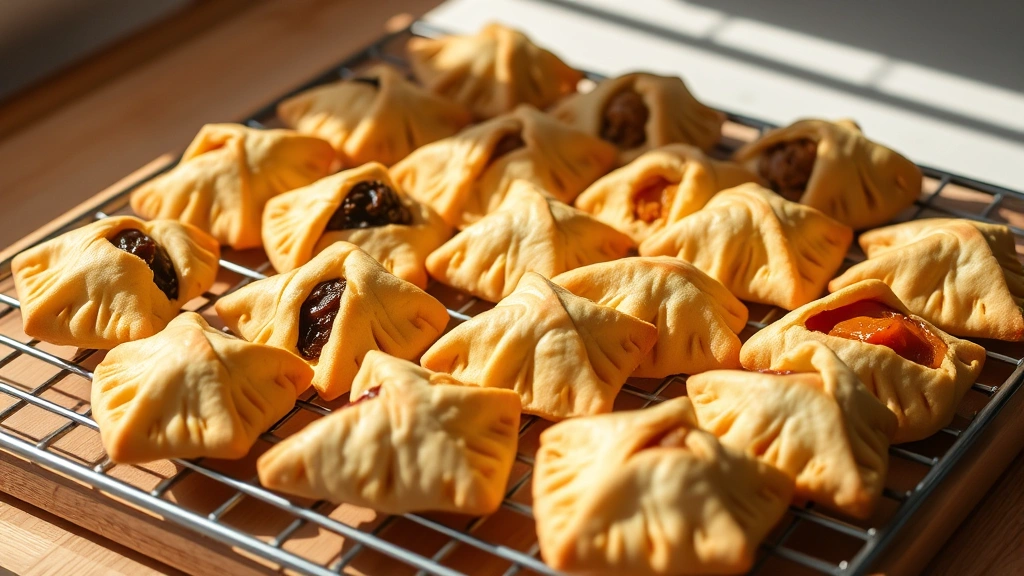
Achieving the Triangle: The three-cornered shape forms naturally when you fold the edges to the center, creating points at the three-fold junctions. A small opening intentionally remains at the center, allowing you to see the filling inside—a signature characteristic of properly made hamantaschen. This opening also allows steam to escape during baking, preventing the dough from becoming soggy.
Egg Wash Application: Beat the remaining egg with 1 tablespoon water and brush lightly over each folded cookie. This creates a golden, slightly glossy finish that’s visually appealing and indicates proper baking.
Baking and Storage Instructions
Bake hamantaschen at 350°F (175°C) for 12-15 minutes, until the edges are light golden brown and the centers are set but still slightly soft. The cookies will firm up as they cool, so avoid overbaking, which results in dry, hard texture.
Remove from the oven when the edges show light browning but the centers still appear slightly underdone. This residual heat continues cooking the centers while cooling, creating the ideal tender texture. Transfer to a wire rack for complete cooling before serving or storing.
Storage Methods: Properly stored hamantaschen remain fresh for up to one week in an airtight container at room temperature. Layer cookies between parchment paper to prevent sticking. You can also freeze unbaked shaped hamantaschen for up to three months—simply bake directly from frozen, adding 2-3 minutes to the baking time. This convenience makes hamantaschen perfect for advance preparation before holiday celebrations.
For longer storage, freeze baked hamantaschen in freezer-safe containers for up to three months. Thaw at room temperature for about one hour before serving. This flexibility allows you to bake multiple batches and enjoy them throughout the Purim season or share them with friends and family.
Consider pairing your hamantaschen with complementary treats—like homemade ice cream for a delightful dessert experience, or exploring fall recipes that celebrate similar traditional baking techniques year-round.
Understanding the connection between these traditional pastries and other culinary arts enriches your appreciation for food heritage. Much like how homemade sauces elevate simple dishes, quality hamantaschen elevate celebrations through attention to detail and respect for tradition.
FAQ
Can I make hamantaschen dough ahead of time?
Yes, absolutely. Prepare the dough, wrap it tightly in plastic wrap, and refrigerate for up to three days or freeze for up to three months. Thaw frozen dough in the refrigerator overnight before rolling and shaping. Chilled dough is actually preferable as it’s easier to handle and produces better results.
What’s the difference between hamantaschen and other filled cookies?
Hamantaschen are distinguished by their three-cornered shape, cake-like tender crumb, and traditional fillings rooted in Eastern European Jewish cuisine. The combination of creamed butter dough with baking powder creates a lighter texture than shortbread or pie crust, making them unique among filled pastries.
Can I use different fillings in the same batch?
Definitely. Many bakers prepare multiple filling varieties in a single batch, creating variety for different preferences. Keep fillings separate and use a small spoon to portion each type. You might label different hamantaschen by their filling type using a small mark made with a toothpick before baking.
Why did my hamantaschen spread too much during baking?
Over-spreading usually indicates one of three issues: oven temperature too low, dough too warm, or too much sugar in the recipe. Ensure your oven is properly preheated and calibrated. Keep dough chilled between batches, and measure ingredients accurately by weight if possible for consistency.
How do I prevent filling from leaking during baking?
Use the correct filling amount—approximately 1 teaspoon per cookie. Ensure filling is completely cool before assembly, and press the three corners together firmly to seal. Some bakers pinch the edges where corners meet for extra security.
Can I make hamantaschen dairy-free?
Yes, substitute butter with dairy-free alternatives in equal amounts. Use aquafaba (chickpea liquid) or commercial egg replacer instead of eggs. The texture may differ slightly, but the cookies will still be delicious. Ensure all fillings are also dairy-free if observing dietary restrictions.
What’s the best way to gift hamantaschen?
Layer cooled hamantaschen between parchment paper in decorative boxes or tins. Include a note about storage instructions and flavor varieties. Hamantaschen make thoughtful gifts that showcase care and culinary skill, perfect for holiday celebrations or thank-you gestures.


