Best Black Bean Chili? Tried & Tested Recipe That Delivers Bold Flavor
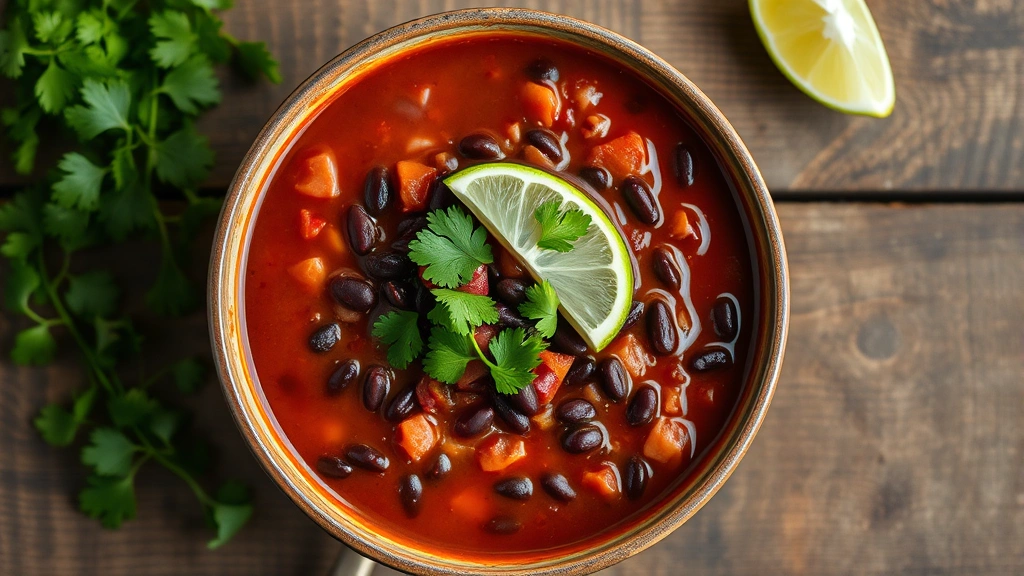
Black bean chili stands as one of the most versatile and satisfying dishes in any home cook’s repertoire. Whether you’re feeding a crowd at a casual dinner party or preparing a comforting weeknight meal, this hearty legume-based chili delivers exceptional flavor, nutrition, and adaptability. After testing dozens of variations and techniques, I’ve refined this recipe to achieve the perfect balance of spice, depth, and texture that keeps people coming back for seconds.
What makes black bean chili particularly special is its ability to absorb flavors while maintaining structural integrity through long cooking times. Unlike meat-based chilies that can become mushy or one-dimensional, black beans develop increasingly complex flavors as they simmer with aromatics, spices, and tomatoes. This recipe has been perfected through countless kitchen experiments, feedback from friends and family, and careful attention to ingredient quality and cooking technique.
Why Black Bean Chili Deserves a Spot on Your Menu
Black beans contain significantly more antioxidants than many other bean varieties, making them a nutritional powerhouse that supports overall health and wellness. The fiber content in black beans promotes digestive health while keeping you satisfied for hours after eating. Unlike some protein-heavy options like healthy food recipes with chicken breast, black bean chili offers complete plant-based protein when paired with complementary ingredients.
This chili recipe is also incredibly budget-friendly, especially when you buy dried black beans in bulk and prepare them yourself. The cost per serving remains minimal while delivering restaurant-quality results. The recipe scales beautifully, making it perfect for meal prep sessions or freezing portions for future quick dinners. Many home cooks appreciate that black bean chili works equally well as a standalone dish, a topping for rice or baked potatoes, or as a component in more complex recipes.
The versatility extends to dietary preferences as well. This recipe is naturally vegan and gluten-free, accommodating various dietary requirements without sacrificing flavor. You can easily modify spice levels to suit your heat tolerance, and the ingredient list allows for numerous substitutions based on pantry availability or personal preferences.
Essential Ingredients for Maximum Flavor
The Foundation: Start with quality dried black beans or two 15-ounce cans of cooked black beans. Dried beans offer superior texture and allow you to control sodium levels, though canned beans work beautifully for convenience. Three tablespoons of olive oil create the base for sautéing aromatics and developing fond on the pot bottom.
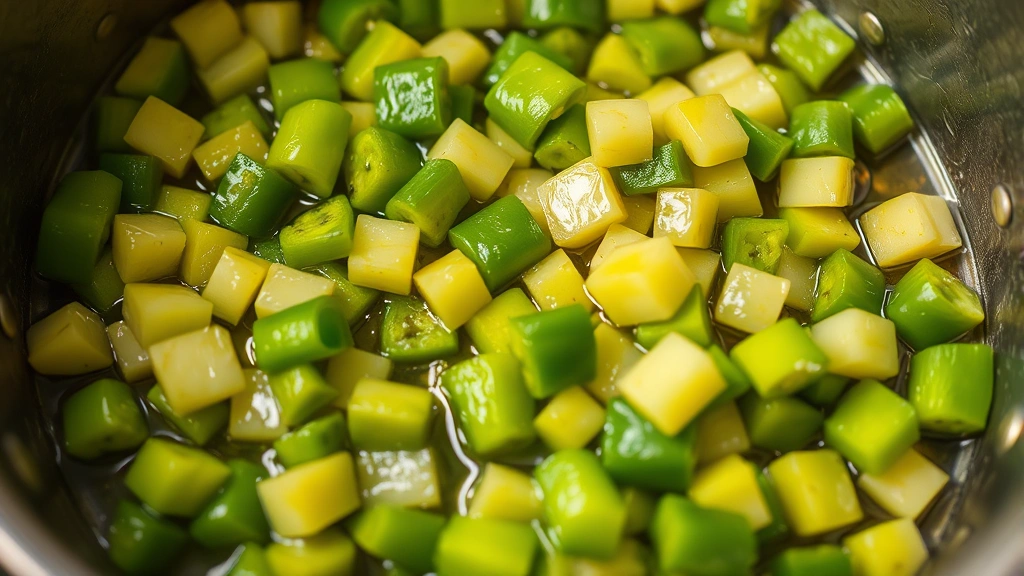
Aromatics and Flavor Builders: One large yellow onion, finely diced, provides sweetness and body. Four cloves of garlic, minced, add pungent depth that mellows during cooking. Two jalapeños, seeds removed for less heat, contribute fresh pepper notes without overwhelming the palate. A poblano pepper, diced, offers earthy complexity that distinguishes this recipe from standard versions.
Tomato Base: One 28-ounce can of crushed San Marzano tomatoes provides acidity and umami backbone. Fresh tomatoes work during peak season, though canned tomatoes offer consistency year-round. Two tablespoons of tomato paste concentrate the tomato flavor and add depth through the Maillard reaction during cooking.
Spice Profile: Two teaspoons of ground cumin, one teaspoon of smoked paprika, one teaspoon of chili powder, and half a teaspoon of cayenne pepper create a balanced heat profile. One tablespoon of cocoa powder, unsweetened, adds subtle richness and complexity that elevates the chili beyond basic versions. Serious Eats provides excellent guidance on spice toasting techniques that unlock deeper flavors.
Liquids and Seasonings: Two cups of vegetable or chicken broth, one teaspoon of dried oregano, one bay leaf, salt, and black pepper round out the ingredient list. One tablespoon of apple cider vinegar adds brightness in the final stages of cooking.
Step-by-Step Cooking Instructions
Preparation Phase: If using dried beans, soak them overnight in cold water or use the quick-soak method: bring beans and water to a boil, remove from heat, cover, and let sit one hour. Drain and rinse thoroughly. This step reduces cooking time and improves digestibility. Prepare all vegetables while beans soak or before you begin cooking, as the actual cooking process moves quickly once you start.
Building the Flavor Base: Heat olive oil in a large, heavy-bottomed pot or Dutch oven over medium-high heat. Add diced onion and cook for 4-5 minutes, stirring occasionally, until translucent and beginning to soften. The goal is to cook the onion without browning it at this stage. Add minced garlic, jalapeños, and poblano pepper, cooking for another 2-3 minutes until fragrant. This aromatic base forms the foundation for all subsequent flavors.
Add tomato paste and stir constantly for 2 minutes, allowing it to caramelize slightly against the hot pot bottom. This step, called blooming the paste, intensifies tomato flavor through the Maillard reaction. Sprinkle in cumin, smoked paprika, chili powder, and cayenne pepper, stirring continuously for 30-45 seconds. This blooming technique releases volatile oils from spices, distributing them throughout the oil and creating more pronounced flavor.
Combining Components: Pour in crushed tomatoes with their juices, scraping the pot bottom to incorporate any flavorful browned bits. Add prepared black beans (or canned beans if using), vegetable broth, cocoa powder, oregano, and bay leaf. Stir thoroughly to combine all ingredients evenly. Bring the mixture to a gentle boil, then reduce heat to low and simmer, uncovered, for 45 minutes to 1 hour.
Simmering and Adjusting: During the first 30 minutes of simmering, resist the urge to stir constantly. Let the chili develop flavors undisturbed, stirring occasionally to prevent sticking. After 45 minutes, taste and adjust seasonings. Add salt gradually, tasting between additions, as salt concentration increases as liquid reduces. If the chili seems too thin, continue simmering uncovered to reduce liquid and concentrate flavors. If too thick, add additional broth in quarter-cup increments.
Final Adjustments: In the last 5 minutes of cooking, stir in apple cider vinegar, which brightens the overall flavor profile and adds subtle tang. Taste once more and adjust salt, pepper, and spice levels to your preference. Remove the bay leaf before serving.
Perfecting the Flavor Profile
The secret to exceptional black bean chili lies in understanding how flavors develop and interact during cooking. The initial spice bloom creates bold notes that mellow and integrate as the chili simmers. Many home cooks make the mistake of adding all their spices at once without blooming them, resulting in harsh, unrefined flavors. By blooming spices in hot oil before adding liquids, you activate their essential oils and ensure even distribution throughout the dish.
Layering flavors throughout the cooking process yields superior results compared to adding everything simultaneously. The cocoa powder deserves special mention, as it’s often overlooked in black bean chili recipes. Just one tablespoon of unsweetened cocoa adds subtle depth and richness without creating a dessert-like flavor. The cocoa acts as a flavor enhancer, amplifying existing spices and adding complexity that keeps palates interested through multiple servings.
Acidity balance proves crucial for a well-rounded chili. The tomatoes provide initial acidity, but the apple cider vinegar added near the end brightens flavors that have become muted during extended cooking. This final acid addition prevents the chili from tasting flat or one-dimensional. Start with one tablespoon and add more if needed, tasting between additions.
The cooking time significantly impacts flavor development. While you could technically reduce the simmering time to 30 minutes, the extended 45-minute to 1-hour timeframe allows beans to soften further, flavors to meld, and the overall texture to reach optimal consistency. The longer cooking time also allows some liquid reduction, concentrating flavors naturally.
Serving Suggestions and Toppings
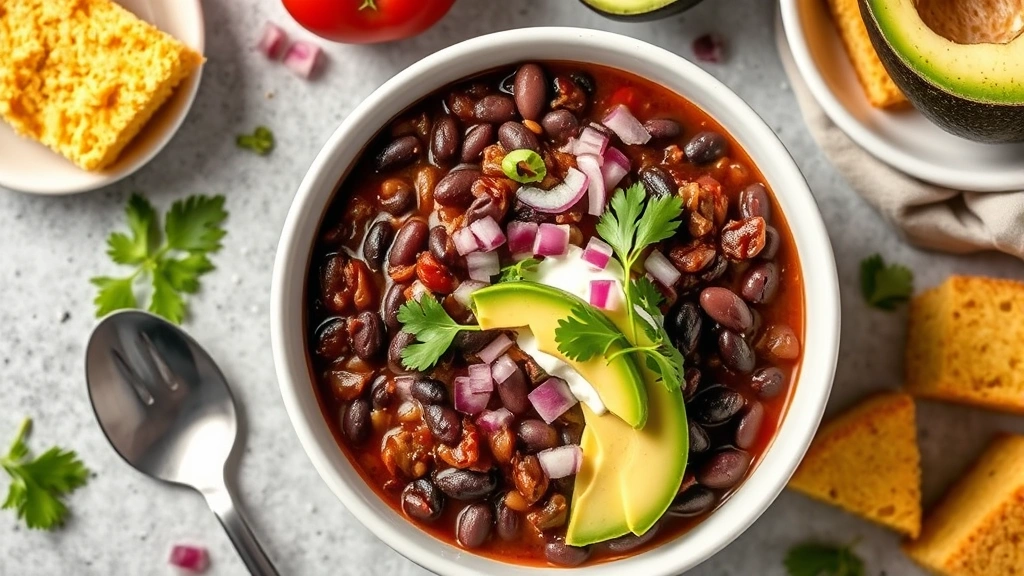
Black bean chili shines as a standalone bowl topped with simple garnishes or as a component in more elaborate dishes. Classic toppings include diced red onion, fresh cilantro, sliced jalapeños, lime wedges, and a dollop of sour cream or Greek yogurt. These fresh, acidic, and cool elements contrast beautifully with the warm, spiced chili.
For a heartier presentation, serve chili over steamed rice, quinoa, or baked sweet potatoes. This transforms the chili into a complete meal with added nutrition and satisfying carbohydrates. Chipotle bowl recipe concepts work wonderfully with black bean chili as the protein base, topped with rice, avocado, corn, and your favorite fresh vegetables.
Crusty bread or cornbread pairs exceptionally well for soaking up the flavorful broth. Consider serving alongside coleslaw for a refreshing contrast, or pair with goat cheese recipes for an elegant appetizer course. The tangy cheese complements the chili’s spice beautifully.
For entertaining, set up a chili bar allowing guests to customize their bowls with preferred toppings. This approach works particularly well when serving larger groups and accommodates various dietary preferences and spice tolerances. Provide options like shredded cheese, diced onion, cilantro, jalapeños, avocado, lime wedges, tortilla chips, and various hot sauces.
Storage and Make-Ahead Tips
Black bean chili actually improves with time as flavors continue melding and developing. Make this recipe 1-2 days ahead and refrigerate in an airtight container. The chili keeps safely for up to 5 days when properly stored in the coldest section of your refrigerator. Before serving, reheat gently over medium-low heat, stirring occasionally and adding broth if the consistency has thickened during storage.
This recipe freezes exceptionally well, making it ideal for meal prep and future quick dinners. Cool the chili completely before transferring to freezer-safe containers or bags, leaving some headspace for expansion. Frozen chili maintains quality for up to 3 months. Thaw overnight in the refrigerator before reheating, or reheat directly from frozen over low heat, stirring frequently and adding broth to reach desired consistency.
Portion the chili into individual serving sizes before freezing for maximum convenience. This approach allows you to reheat exactly what you need without defrosting and refreezing larger quantities. Label containers with the date prepared for easy identification and rotation.
Variations to Customize Your Chili
Protein Additions: While this recipe is vegetarian and vegan-friendly, you can easily add ground beef, turkey, or chorizo for a heartier version. Brown 1 pound of ground meat with the aromatics before adding tomatoes and beans. This variation works well for keto chicken recipes adaptations if you substitute ground chicken for some of the beans.
Heat Level Adjustments: For milder chili, remove jalapeño and poblano seeds entirely, or substitute with bell peppers. For extra heat, add additional cayenne pepper, fresh habaneros, or a teaspoon of hot sauce. McCormick’s spice resource center offers guidance on heat levels and spice combinations.
Bean Variations: Combine black beans with pinto beans, kidney beans, or chickpeas for textural variety. Use one cup each of two different bean varieties for interesting complexity. Each bean type brings unique flavors and textures to the finished dish.
Vegetable Additions: Add diced bell peppers in multiple colors, corn kernels, zucchini, or mushrooms for increased nutrition and textural interest. Add delicate vegetables like corn or zucchini during the final 15 minutes to prevent overcooking. Heartier vegetables like mushrooms can be added earlier.
Smoky Variations: Increase smoked paprika to 2 teaspoons or add one chipotle pepper in adobo sauce for deeper smokiness. This approach works beautifully if you’re adapting the recipe for steak salad recipe components or pairing with grilled proteins.
International Inspirations: Create a Southwestern version by adding 1 teaspoon of cumin, cilantro, and lime. For a more traditional approach, reference vintage grandma recipes that often feature simpler spice profiles and longer cooking times. A Caribbean-inspired version incorporates allspice, cinnamon, and Scotch bonnet peppers.
FAQ
Can I use canned black beans instead of dried beans?
Absolutely. Two 15-ounce cans of black beans, drained and rinsed, substitute perfectly for dried beans. This reduces total cooking time significantly, as canned beans require no pre-cooking. Simply add them with the tomatoes and broth, and proceed with the recipe. The flavor will be nearly identical, though some cooks prefer the texture of home-cooked dried beans.
How spicy is this black bean chili recipe?
This recipe delivers moderate heat that most palates find approachable. The cayenne pepper and jalapeños create noticeable spice without overwhelming heat. If you prefer milder chili, reduce cayenne to a quarter teaspoon and remove jalapeño seeds. For spicy versions, add additional cayenne or incorporate hot sauce in the final minutes of cooking.
What’s the best way to reheat leftover chili?
Reheat gently over medium-low heat in a pot on the stovetop, stirring occasionally. Add vegetable broth in quarter-cup increments if the chili has thickened during storage. Microwave reheating works but may create hot spots; stir every 90 seconds and use medium power settings. Never boil reheated chili, as this can scorch the bottom and damage the flavor.
Can I make this recipe in a slow cooker?
Yes, this recipe adapts well to slow cookers. Bloom spices in a pot on the stovetop for 30-45 seconds, then transfer everything to your slow cooker. Cook on low for 6-8 hours or high for 3-4 hours. Slow cooking allows even more flavor development, though you sacrifice some of the concentrated depth achieved through stovetop simmering.
Is this recipe gluten-free and vegan?
Yes, this recipe is naturally both gluten-free and vegan. All ingredients are plant-based, and no gluten-containing components are included. Verify that your spices and broth are certified gluten-free if preparing for those with celiac disease or gluten sensitivity.
What should I serve with black bean chili?
Black bean chili pairs beautifully with cornbread, rice, baked potatoes, or crusty bread. Fresh toppings like cilantro, diced onion, avocado, and lime wedges add brightness. Sour cream or Greek yogurt provide cool contrast to the warm spices. For entertaining, create a toppings bar allowing guests to customize their bowls.


