Best Roasted Veggies? Tried & True Recipe for Perfectly Caramelized Vegetables
There’s something almost magical about roasted vegetables. What starts as raw, firm produce transforms into tender, naturally sweet morsels with caramelized edges that make you forget you’re eating your vegetables. Whether you’re looking for a simple side dish or a foundation for meal prep, mastering the art of roasting vegetables is one of the most valuable skills in any home cook’s arsenal.
After years of experimentation and countless batches, I’ve discovered that the secret to exceptional roasted vegetables isn’t complicated—it’s about understanding the fundamentals: choosing the right vegetables, cutting them properly, seasoning generously, and roasting at the correct temperature. This guide walks you through every step, from selection to serving, so you can create restaurant-quality roasted vegetables at home every single time.
Choosing Your Vegetables
The foundation of an excellent roasted veggies recipe begins with selecting the right produce. Not all vegetables roast equally, and understanding which ones work best will dramatically improve your results. The ideal vegetables for roasting have moderate to high water content and sturdy structures that can withstand high heat without falling apart.
Top vegetables for roasting include:
- Root vegetables: Brussels sprouts, carrots, parsnips, beets, and turnips develop incredible sweetness when roasted
- Cruciferous vegetables: Broccoli, cauliflower, and cabbage become crispy and develop complex flavors
- Alliums: Red onions, shallots, and garlic turn mellow and sweet
- Peppers: Bell peppers, poblanos, and other varieties become soft and slightly charred
- Squash: Zucchini, summer squash, and delicata squash roast beautifully
- Green vegetables: Asparagus, green beans, and broccolini work wonderfully
Avoid vegetables with very high water content like cucumbers or tomatoes, unless you’re specifically looking for dried roasted versions. Fresh, firm produce will give you the best results. Look for vegetables without soft spots or blemishes, and try to select pieces of similar size within each vegetable type so they cook evenly.
Essential Equipment and Prep
Before you begin preparing your vegetables, gather your equipment. You’ll need a sturdy sheet pan (also called a baking sheet)—ideally one with a slight lip to prevent oil from dripping. Aluminum or steel pans work equally well, though darker pans may cause slightly faster browning.
A sharp knife is absolutely essential for cutting vegetables uniformly. Dull knives are dangerous and produce uneven cuts that lead to inconsistent cooking. You’ll also want parchment paper or foil to line your pan (optional but helpful for cleanup), a large mixing bowl for tossing vegetables with oil and seasonings, and a cooking thermometer to verify your oven temperature.
Preheat your oven to 400-425°F (200-220°C) about 15 minutes before you plan to roast. This ensures your vegetables start cooking immediately when they hit the hot pan, which is crucial for developing those caramelized, crispy edges that make roasted vegetables so delicious. An oven thermometer is invaluable here—many ovens run hotter or cooler than their displays indicate.
Cutting Techniques for Even Cooking
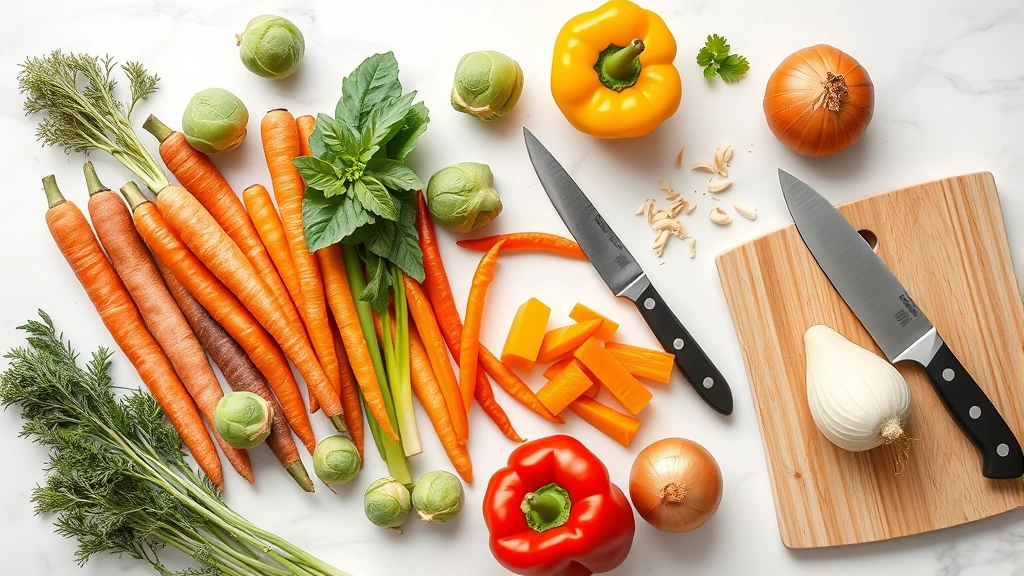
Uniform cutting is perhaps the most critical step in creating perfectly roasted vegetables. When pieces are cut to similar sizes, they cook at the same rate, preventing some from burning while others remain undercooked.
General cutting guidelines:
- Root vegetables (carrots, parsnips, beets): Cut into ¾-inch pieces. For carrots, cut diagonally or into batons for visual appeal
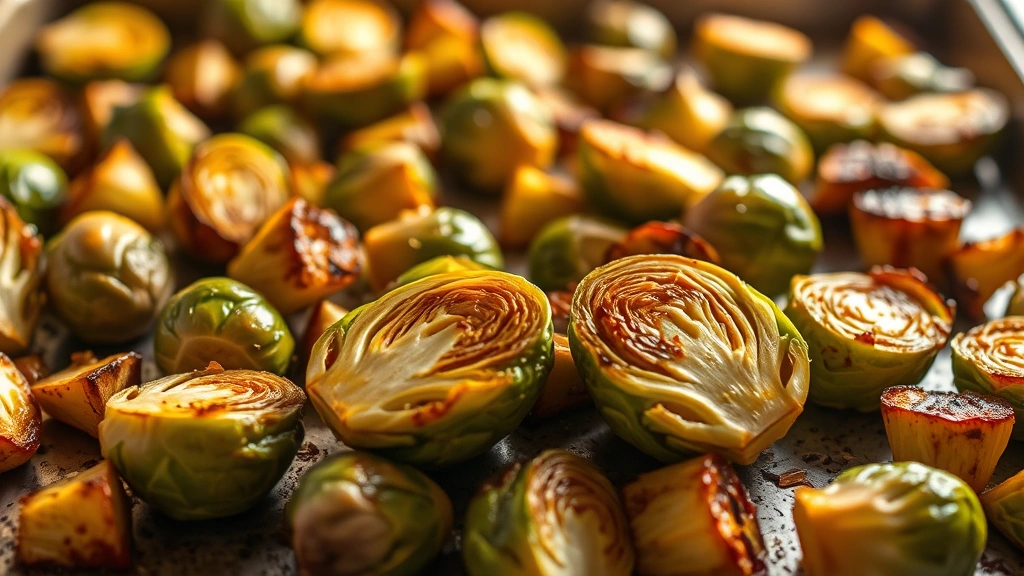
- Brussels sprouts: Trim the stem and any yellowed leaves, then cut in half lengthwise to expose the flat surface
- Broccoli and cauliflower: Cut into florets roughly 1-1.5 inches long. Include some stem pieces cut into similar sizes
- Peppers: Remove seeds and cut into 1-inch pieces
- Onions: Cut into wedges or thick slices, keeping some layers intact to prevent them from separating
- Asparagus and green beans: Leave whole or cut in half if they’re particularly long
- Squash: Cut into half-moons or cubes, roughly ¾-inch thick
The 1-inch rule is a good general standard for most vegetables. This size allows for adequate caramelization on the outside while keeping the inside tender. Smaller pieces will cook faster and become crispier; larger pieces will take longer and remain softer inside.
[IMAGE_1]
Seasoning Your Roasted Veggies
Proper seasoning transforms good roasted vegetables into outstanding ones. The key is using enough salt and fat—both are essential for flavor development and creating those crispy, caramelized edges.
Basic seasoning formula (for 4-6 servings):
- 3-4 tablespoons extra virgin olive oil
- 1 teaspoon kosher salt
- ½ teaspoon freshly ground black pepper
- Optional: ½ teaspoon garlic powder, dried Italian herbs, or smoked paprika
Place your cut vegetables in a large bowl and drizzle with olive oil. The oil should coat every piece—this is crucial for browning and preventing sticking. Add your salt and seasonings, then toss thoroughly using your hands or two large spoons. Make sure every piece glistens with oil and is evenly coated with salt.
For more adventurous flavor profiles, consider these seasoning combinations:
- Mediterranean: Fresh rosemary, thyme, and minced garlic
- Asian-inspired: Sesame oil (use half the amount), soy sauce, ginger, and a touch of honey
- Smoky and spicy: Smoked paprika, cumin, chili powder, and cayenne
- Italian: Dried oregano, basil, and red pepper flakes with a squeeze of fresh lemon
Don’t be shy with salt—vegetables need more seasoning than you might think. Taste as you go and adjust accordingly. Remember, you can always add more salt, but you cannot remove it.
The Roasting Process
Now comes the actual roasting. Spread your seasoned vegetables in a single layer on your prepared sheet pan. This is important: they should be in one layer, not piled on top of each other. If you don’t have enough space, use two pans or roast in batches. Crowded vegetables steam rather than roast, and you’ll miss out on that desirable caramelization.
Place the pan in your preheated oven on the middle rack. Set a timer for 15 minutes, then check on your vegetables. After the initial 15 minutes, give everything a good stir and shake, moving pieces from the edges toward the center. This ensures even cooking and browning.
Return to the oven for another 10-15 minutes, depending on your vegetables and how much browning you want. Dense root vegetables like beets may need up to 35-40 minutes total, while more delicate vegetables like asparagus might finish in 20-25 minutes.
Your vegetables are done when they’re fork-tender and have caramelized, golden-brown edges. Some charring is desirable—it adds depth of flavor. The edges should look slightly shriveled and brown, not just softened.
Troubleshooting Common Issues
Vegetables are soft but not browned: Your oven temperature may be too low. Increase heat by 25°F next time, or ensure your oven is properly preheated. Browning requires high heat.
Some vegetables are done while others are raw: Your pieces are cut to different sizes. Focus on uniformity when cutting. If using multiple vegetable types with different cooking times, you can stagger them—add longer-cooking vegetables first, then add quicker-cooking ones halfway through.
Vegetables are burning: Your oven runs hot, or your heat is too high. Lower temperature by 25°F, or watch more carefully during the final minutes. Move burnt pieces to the edges where heat is less intense.
Vegetables are greasy: You’ve used too much oil. Reduce to 2-3 tablespoons next time, or blot excess oil with paper towels before serving.
Vegetables taste bland: Increase salt and consider adding more seasonings. Also ensure you’re achieving proper browning—caramelization adds significant flavor complexity.
Serving and Storage Ideas
Roasted vegetables are incredibly versatile. Serve them hot as a side dish alongside chicken meatballs or breaded chicken for a complete meal. They pair beautifully with grilled proteins, making them perfect for pairing with shredded chicken in tacos or grain bowls.
Roasted vegetables also work wonderfully in quick and easy pasta recipes—simply toss with cooked pasta, olive oil, and parmesan for a satisfying dinner. They’re an excellent addition to summer salad recipes, adding substance and flavor to fresh greens. For health-conscious cooks, roasted vegetables are naturally low-calorie options that pair perfectly with high-protein mains.
Storage tips: Roasted vegetables keep well in the refrigerator for 3-5 days in an airtight container. Reheat gently in a 350°F oven for 10-15 minutes to restore some crispness, or eat them cold straight from the container for quick snacks. They freeze for up to 3 months, though texture becomes slightly softer upon thawing.
For meal prep enthusiasts, roasting a large batch on Sunday provides a ready-to-use component for weekday lunches and dinners. Portion into containers and grab as needed throughout the week.
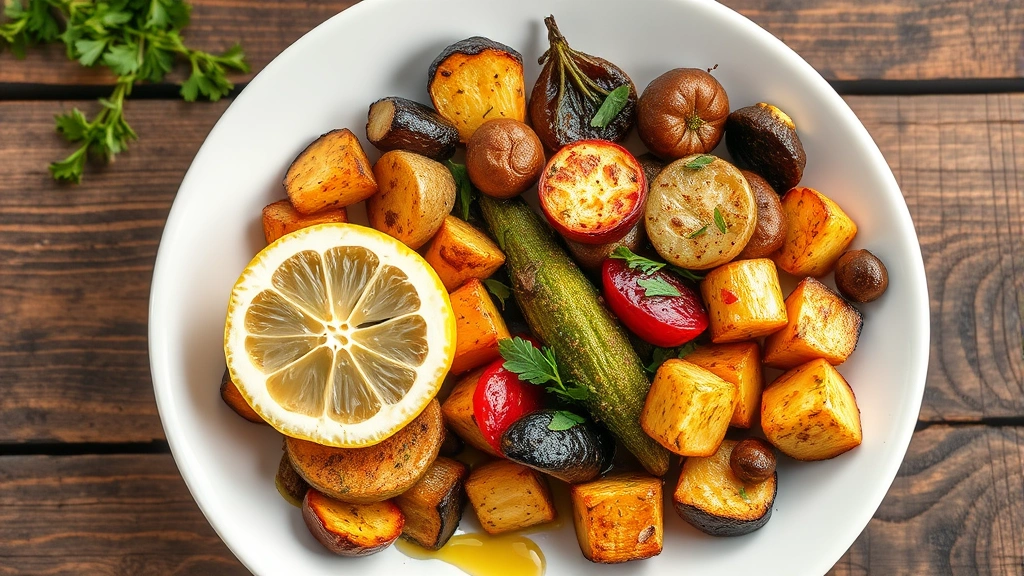
Pro tips for maximum flavor: Finish hot roasted vegetables with a squeeze of fresh lemon juice or a drizzle of aged balsamic vinegar. Fresh herbs like parsley, cilantro, or basil added after roasting provide brightness. A sprinkle of flaky sea salt on top just before serving adds textural contrast and emphasizes flavors.
FAQ
What temperature should I roast vegetables at?
The ideal temperature range is 400-425°F (200-220°C). This is hot enough to create proper caramelization and browning while allowing vegetables to cook through without burning. Some cooks prefer 450°F for extra crispiness, but monitor carefully to prevent burning.
Can I mix different vegetables on the same pan?
Yes, but group vegetables by cooking time. Put longer-cooking items like root vegetables on the pan first, then add quicker-cooking vegetables like asparagus or broccoli halfway through. Alternatively, cut denser vegetables smaller so they cook at similar rates.
Should I use olive oil or another oil?
Extra virgin olive oil is ideal for flavor, though any oil with a high smoke point works. Avocado oil, grapeseed oil, or refined vegetable oil are good alternatives. Avoid very delicate oils like flaxseed oil, which break down at high temperatures.
How do I get vegetables extra crispy?
Use enough oil, ensure pieces are cut uniformly and not crowded on the pan, and roast at 425°F or higher. Don’t skip the stirring halfway through. Roasting longer at lower temperature yields softer vegetables; shorter roasting at higher temperature yields crispier exteriors.
Can I roast vegetables without oil?
Oil is really important for browning and flavor development. You could use cooking spray or brush vegetables lightly with oil, but results won’t be as good. The oil helps create the Maillard reaction that develops those delicious caramelized flavors.
What’s the best way to cut vegetables for even cooking?
Aim for uniform sizes around ¾ to 1 inch. Use a sharp knife and take your time. For root vegetables, cut into similar-sized pieces. For vegetables like broccoli, cut florets into similar sizes. Cut onions into wedges keeping some layers together so they don’t separate completely.
How long do roasted vegetables last?
Store in an airtight container in the refrigerator for 3-5 days. They can be frozen for up to 3 months, though texture softens slightly upon thawing. Reheat in a 350°F oven for best results, or eat cold.
Can I add sauce to roasted vegetables?
Absolutely. Toss finished vegetables with balsamic glaze, tahini dressing, or a light vinaigrette. You can also add them to creamy sauces or top with grated cheese and fresh herbs. Just avoid adding wet ingredients before roasting, as they prevent proper browning.
For additional cooking techniques and scientific approaches to vegetable preparation, explore resources from the Culinary School Central, which offers comprehensive guides on cooking methods. The Serious Eats website provides deep-dive articles on food science in cooking. Learn more about vegetable selection and storage from Kitchen Stewardship, a resource dedicated to ingredient quality. For professional techniques, ChefSteps offers chef-developed cooking guides. Additionally, The Kitchn provides accessible home cooking advice and vegetable-focused recipes.


