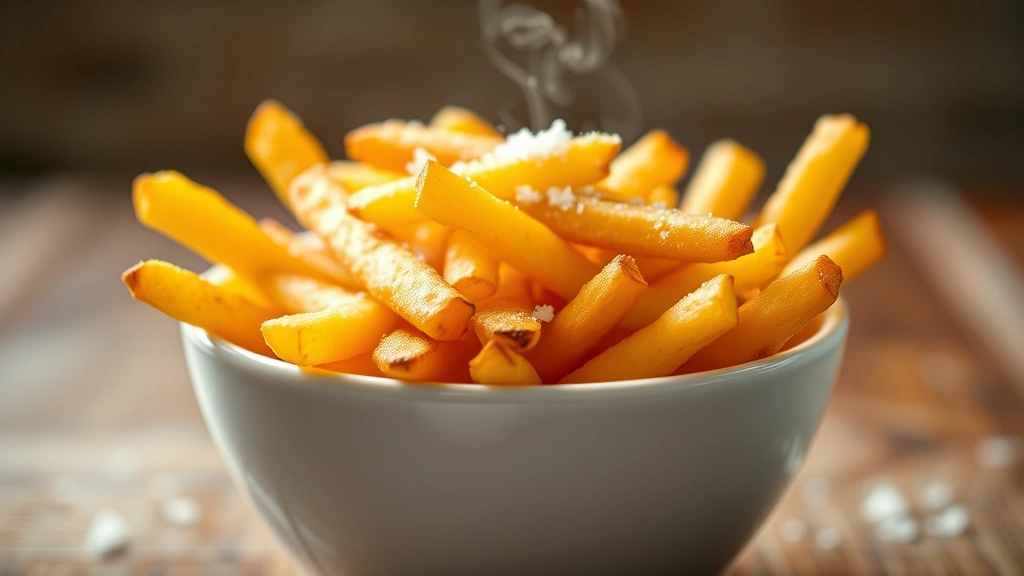
Crispy Yukon Gold Fries: Chef’s Favorite Method for Perfect Results Every Time
Yukon Gold potatoes are a game-changer when it comes to making restaurant-quality fries at home. Their naturally buttery flavor, thin skin, and waxy texture create the perfect foundation for achieving that elusive crispy exterior and fluffy interior that keeps people coming back for more. Unlike russet potatoes that can become mealy, Yukon Golds maintain their structure throughout cooking, resulting in fries that stay golden and crispy rather than turning dark or soggy.
The secret to mastering crispy Yukon Gold fries lies in understanding the science behind the cooking process. Professional chefs have perfected techniques that involve precise temperature control, proper cutting methods, and strategic seasoning timing. This comprehensive guide will walk you through every step of creating fries that rival your favorite restaurant, using methods that have been tested and refined in professional kitchens across the country. Whether you’re planning a casual weeknight dinner or impressing guests at a gathering, these methods will elevate your gluten and dairy free recipes collection with a versatile side dish.
Why Yukon Gold Potatoes Are Superior for Fries
Yukon Gold potatoes stand out from other varieties due to their unique composition and characteristics. These medium-starch potatoes contain the ideal balance of moisture and starch content that creates exceptional fries. The natural golden hue comes from carotenoids, the same compounds that give carrots their color, which also contributes to the potato’s inherent sweetness and depth of flavor.
The skin of Yukon Gold potatoes is thinner and more tender than russet varieties, which means you can leave it on for added texture and nutrients. This thin skin also crisps up beautifully during frying, creating those coveted crispy edges that make homemade fries so satisfying. The waxy nature of Yukon Golds prevents them from absorbing excessive oil, which is why they remain crispy longer after cooking compared to other potato types.
Professional chefs prefer Yukon Golds because they’re forgiving. Even if your timing isn’t perfect, these potatoes maintain their structural integrity better than starchy varieties. This makes them ideal for home cooks who are still perfecting their technique. The consistent quality across different batches also means you’ll achieve reliable results every single time you make them.
Essential Equipment and Ingredients
Before diving into the cooking process, gather the right equipment and ingredients. Having everything prepared beforehand ensures smooth execution and prevents scrambling mid-preparation. This mise en place approach is fundamental to professional cooking and will significantly improve your results.
Equipment You’ll Need:
- Heavy-bottomed pot or Dutch oven (at least 5-quart capacity)
- Deep-fry or candy thermometer (accurate to within 2 degrees)
- Sharp chef’s knife or mandoline slicer
- Slotted spoon or spider strainer
- Paper towels and cooling rack
- Large mixing bowl for soaking
- Measuring cups and spoons
- Cutting board (preferably plastic to prevent oxidation)
Ingredients for Perfect Fries:
- 2 pounds Yukon Gold potatoes (about 6-8 medium potatoes)
- Oil for frying (vegetable, peanut, or canola oil with high smoke point)
- Water for soaking
- Sea salt for finishing
- Optional: garlic powder, smoked paprika, or fresh herbs
The quality of your oil matters tremendously. Professional kitchens use oil with a high smoke point, typically between 400-450°F. Peanut oil is excellent because it adds subtle flavor and maintains stability at high temperatures. Vegetable and canola oils work well too, but avoid olive oil or butter for deep frying as they have lower smoke points and will break down at frying temperatures.
The Double-Fry Method Explained
The double-fry method is the chef’s secret weapon for achieving restaurant-quality fries with a crispy exterior and creamy interior. This technique involves two separate frying stages at different temperatures, each serving a specific purpose in developing texture and flavor.
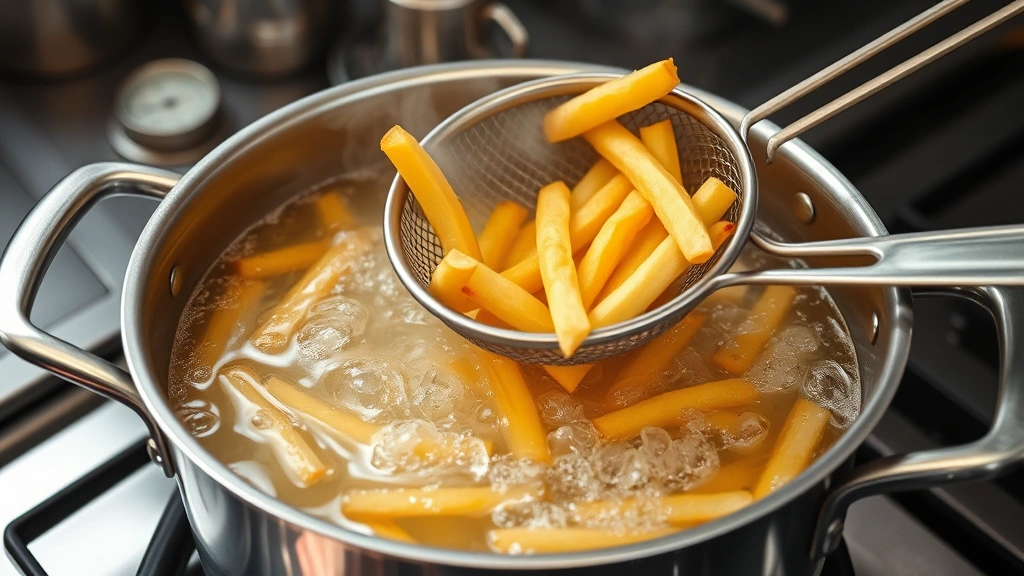
First Fry (Blanching): The initial fry at 325°F is called blanching. This lower temperature cooks the potato through without browning the exterior. During this stage, the starch gelatinizes and the interior becomes tender and fluffy. This fry typically lasts 8-10 minutes depending on your fry thickness. You’re essentially par-cooking the potatoes, which is why this stage is sometimes called the “cook” fry.
Rest Period: After the first fry, the fries must rest for at least 5-10 minutes. This crucial step allows the surface moisture to evaporate and the interior to set slightly. The temperature of the oil can also return to a stable level. Some chefs recommend resting for up to 30 minutes before the second fry, which actually yields even crispier results.
Second Fry (Crisping): The final fry at 375°F creates the golden-brown crust and completes the cooking process. This hotter temperature rapidly removes remaining surface moisture through steam, which creates those coveted crispy edges. This stage takes only 2-3 minutes and happens very quickly, so watch carefully to avoid over-browning. The contrast between the two temperatures is what creates the textural magic that makes these fries so special.
This method is used in professional kitchens worldwide because it’s virtually foolproof. The separation of cooking stages means you’re not trying to achieve two different textures simultaneously, which is why home cooks often struggle with fries that are either soggy inside or burned outside.
Step-by-Step Chef’s Technique
Step 1: Select and Prepare Your Potatoes
Choose medium-sized Yukon Gold potatoes of similar size so they cook evenly. Scrub them thoroughly under cold running water to remove any dirt. You can peel them if you prefer, but leaving the thin skin on adds texture and nutrients. Pat them completely dry with paper towels—any excess moisture will cause dangerous oil splattering and prevent proper crisping.
Step 2: Cut with Precision
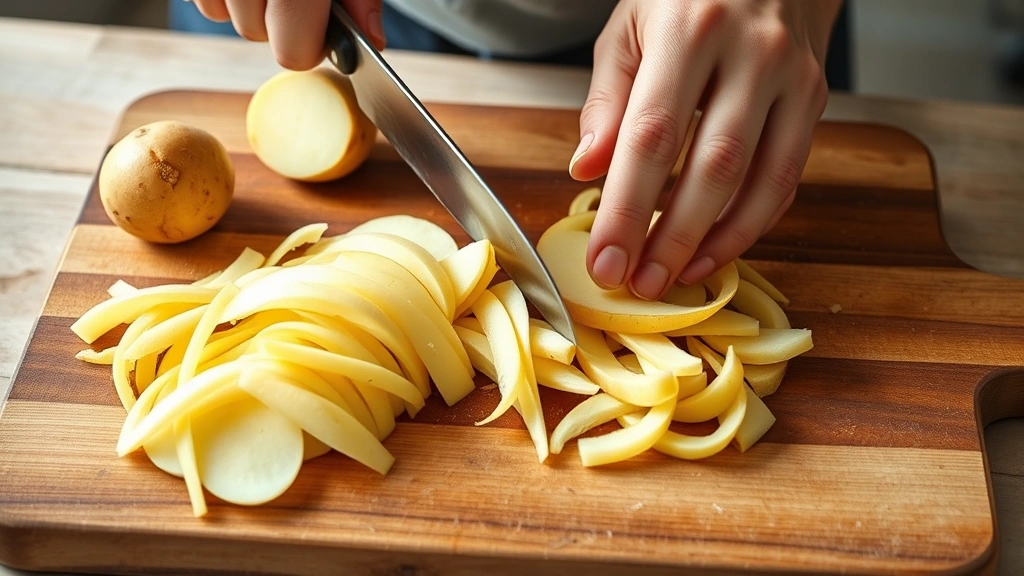
Cut your potatoes into uniform strips, ideally about ¼ inch thick and 3-4 inches long. Consistency in size is absolutely critical because thinner pieces will cook faster than thicker ones. Use a sharp knife or mandoline slicer to ensure clean cuts without crushing the potato. Immediately place cut potatoes in a bowl of cold water to prevent oxidation and remove excess starch.
Step 3: Soak Thoroughly
Soak your cut potatoes in cold water for at least 30 minutes, preferably up to 2 hours. This step removes approximately 25% of the starch content, which is essential for achieving maximum crispiness. The starch that remains will gelatinize during cooking to create the fluffy interior, while removing excess starch prevents the exterior from becoming too dark or thick. Change the water halfway through if you have time—this accelerates starch removal. After soaking, drain and pat completely dry with paper towels. Any remaining water will interfere with crisping.
Step 4: Heat Your Oil
Pour enough oil into your pot to reach about 3 inches deep. Heat the oil slowly to 325°F, using your thermometer to monitor temperature carefully. This usually takes 15-20 minutes depending on your pot size. Maintain consistent temperature throughout cooking by adjusting your heat as needed. If the oil temperature drops below 320°F during frying, your fries will absorb excess oil and become greasy.
Step 5: First Fry
Working in batches to avoid overcrowding, carefully place your potatoes into the 325°F oil. The oil should bubble gently and steadily around the fries. Fry for 8-10 minutes until the potatoes are cooked through but still pale in color. They should be soft inside when pierced with a fork but show no browning. Use a slotted spoon to stir occasionally and ensure even cooking. Remove the fries with a spider strainer and drain on paper towels.
Step 6: Rest Period
Spread the first-fried potatoes on a clean plate or tray lined with paper towels. Allow them to rest for at least 10 minutes at room temperature. This resting period is non-negotiable for achieving optimal crispiness. During this time, the residual heat continues cooking the interior slightly, and surface moisture evaporates.
Step 7: Reheat Oil and Second Fry
Increase your oil temperature to 375°F. This higher temperature will brown the exterior and create the crispy crust. Once the oil reaches temperature, carefully add your rested fries in batches. Fry for 2-3 minutes until they achieve a deep golden-brown color. Watch closely during this stage as the color develops quickly. Remove with a spider strainer and drain on fresh paper towels.
Step 8: Season Immediately
The moment your fries come out of the oil, while they’re still hot and slightly wet, season them generously with sea salt. The heat helps the salt adhere, and the slight moisture creates a light brine that enhances flavor. Toss gently to distribute seasoning evenly. Serve immediately while they’re at peak crispiness.
Seasoning and Flavoring Variations
While classic salted fries are perfect, Yukon Gold fries are versatile enough to accommodate creative seasonings. The natural buttery flavor of the potatoes provides an excellent canvas for experimentation. Consider these variations that complement your meal:
Classic Preparations:
- Sea Salt and Cracked Pepper: The simplest approach that lets the potato flavor shine through
- Garlic Parmesan: Toss warm fries with minced garlic, finely grated Parmesan cheese, and fresh parsley
- Cajun Spiced: Combine paprika, cayenne, garlic powder, and onion powder for a bold kick
- Truffle Oil: Drizzle finished fries with high-quality truffle oil and finish with fleur de sel
- Curry Powder: Mix curry powder with salt for an aromatic, slightly sweet variation
These fries pair beautifully with summer salad recipes for a complete meal. The crispy texture contrasts wonderfully with fresh, cool vegetables.
Sauce Pairings:
Serve your Yukon Gold fries with complementary dipping sauces. Classic options include malt vinegar, ketchup, and mayonnaise, but consider aioli infused with roasted garlic, sriracha mayo, or herb-infused sour cream. The rich, creamy nature of Yukon Golds means they can handle bold, intense flavors without being overwhelmed.
Troubleshooting Common Problems
Problem: Fries Are Soggy or Greasy
This typically indicates oil temperature was too low during frying. If oil temperature drops below 320°F, fries absorb excess oil instead of frying. Solution: Use an accurate thermometer and allow oil to fully reheat between batches. Also ensure fries are completely dry before frying and don’t overcrowd your pot, which lowers oil temperature. Additionally, verify you’re using oil with a high smoke point and that you’re not reusing oil more than 2-3 times.
Problem: Fries Are Dark Brown or Burnt
Overheating during the second fry causes this issue. Solution: Reduce second fry time to 2-2.5 minutes and watch carefully. Ensure you’re not skipping the soaking step, which removes starch that causes excessive browning. The first fry should be pale; if it’s already golden, your first fry temperature may be too high.
Problem: Fries Are Undercooked Inside
This happens when fries are too thick or the first fry time was insufficient. Solution: Cut fries more thinly and consistently. Increase first fry time to 10-12 minutes if using slightly thicker cuts. Ensure your thermometer is accurate and your oil is truly at 325°F during the first fry.
Problem: Fries Turn Dark Too Quickly
Insufficient starch removal causes this. Solution: Extend soaking time to 2 hours and change water halfway through. Make sure you’re starting with the correct first fry temperature of 325°F, not higher.
Storage and Reheating Tips
Freshly fried fries are best served immediately, but sometimes you need to prepare ahead or have leftovers. Proper storage and reheating techniques can help maintain quality.
Short-Term Storage (up to 2 hours):
Keep finished fries in a warm place, ideally in a low oven at 200°F in a paper-lined container. This prevents them from getting cold while allowing excess moisture to escape. Don’t cover them tightly or steam will make them soggy.
Long-Term Storage:
Cool fries completely, then store in an airtight container in the refrigerator for up to 3 days. For longer storage, freeze in a single layer on a baking sheet, then transfer to freezer bags for up to 3 months.
Reheating Methods:
The best way to restore crispiness is to re-fry at 375°F for 1-2 minutes. If you don’t want to use oil, place fries on a preheated baking sheet in a 425°F oven for 5-7 minutes. An air fryer also works excellently—heat to 400°F for 3-4 minutes. Avoid microwaving, which makes fries soggy and rubbery. These techniques also work wonderfully when preparing easy vegan breakfast ideas that include crispy potato components.
For meal prep, you can prepare the first fry ahead of time. Cool the first-fried potatoes completely, refrigerate for up to 24 hours, then proceed with the second fry when ready to serve. This is an excellent time-saving strategy for entertaining.
FAQ
Can I make crispy Yukon Gold fries in an air fryer?
Yes! While traditional deep frying yields the best results, air fryers work reasonably well. Cut potatoes into thin strips, soak as directed, pat completely dry, then toss lightly with oil. Air fry at 400°F for 15-20 minutes, shaking the basket halfway through. Results won’t match deep-fried versions but are still crispy and delicious.
What’s the best oil for frying potatoes?
Peanut oil is ideal due to its high smoke point (450°F) and neutral flavor. Vegetable and canola oils work well too (400°F smoke point). Avoid olive oil, coconut oil, or butter for deep frying as they have lower smoke points and will break down at proper frying temperatures.
How long should I soak potatoes?
Minimum 30 minutes, but 1-2 hours is optimal for maximum starch removal. The longer soak time directly correlates with crispier fries. If soaking longer than 30 minutes, change the water halfway through to accelerate starch removal.
Can I substitute other potatoes for Yukon Golds?
While you can use other varieties, results won’t be identical. Russets are starchier and can become mealy; red potatoes have less starch and may be waxy; fingerlings are too small. Yukon Golds are specifically ideal because they’re medium-starch with perfect moisture balance.
Why do my fries get soggy after a few minutes?
Either your oil temperature was too low, or you’re storing them in a covered container where steam condenses and makes them soggy. Keep finished fries in a single layer in an uncovered or loosely covered container. Serve within 10-15 minutes of frying for optimal crispiness.
How many times can I reuse frying oil?
Professional kitchens typically change oil every 2-3 uses. Strain oil through a fine mesh after each use to remove food particles. Discard oil if it becomes dark, develops an off smell, or starts smoking at lower temperatures than normal. Old oil will negatively impact your final fries.
Is peeling Yukon Gold potatoes necessary?
No. The thin, tender skin of Yukon Golds crisps beautifully and adds nutrients and texture. Peeling is purely a matter of personal preference. If you do peel, do so before soaking to prevent oxidation.
Can I prepare fries ahead for a party?
Absolutely. Complete the first fry up to 24 hours ahead, then refrigerate. When ready to serve, bring fries to room temperature (about 20 minutes), then proceed with the second fry. This strategy lets you fry in batches without stressing during entertaining. These make an excellent complement to healthy crock pot recipes for casual gatherings.
What temperature should oil be for the second fry?
The second fry should be at 375°F, which is 50 degrees hotter than the first fry. This higher temperature rapidly removes moisture and creates the crispy golden crust. Use your thermometer to ensure accuracy.


