Authentic Bistek Recipe: Grandma’s Secret Filipino Favorite
Bistek is a beloved Filipino dish that brings together tender beef, savory onions, and a tangy-salty sauce that tastes like pure comfort on a plate. This humble yet elegant recipe has graced Filipino dinner tables for generations, passed down from grandmothers who knew exactly how to coax maximum flavor from simple ingredients. The beauty of bistek lies in its simplicity—there are no complicated techniques or hard-to-find ingredients, yet the result is restaurant-quality meat that melts in your mouth.
What makes bistek truly special is the way the beef is cooked low and slow, allowing the meat to become incredibly tender while absorbing the rich flavors of soy sauce, calamansi (or lemon), and caramelized onions. Many Filipino families have their own version of this recipe, with slight variations that reflect personal preferences and family traditions. Today, I’m sharing the authentic method that produces the most flavorful, tender bistek—the way grandmothers have been making it for decades.
What is Bistek and Why You’ll Love It
Bistek is a Filipino braised beef dish that showcases the Spanish influence in Philippine cuisine, yet it has evolved into something distinctly Filipino. The word “bistek” comes from the English word “beefsteak,” but the Filipino version is quite different from its Western counterpart. Instead of being grilled or pan-seared quickly, bistek is slowly braised in a flavorful sauce that becomes glossy and rich.
The dish typically features thin slices of beef—usually sirloin or chuck—cooked with onions, soy sauce, and calamansi juice. The meat becomes so tender that you can cut it with just a spoon, and the sauce clings beautifully to every piece. It’s the kind of dish that tastes even better the next day, making it perfect for meal prep or family gatherings. If you enjoy beef pasta recipes or steak and pasta recipes, you’ll absolutely appreciate the depth of flavor in bistek.
What makes bistek particularly appealing is its versatility. It works beautifully over steamed white rice, alongside roasted vegetables, or even as a filling for sandwiches. The sauce is so delicious that you won’t want to waste a single drop, making it perfect for soaking into rice.
Essential Ingredients for Authentic Bistek
Creating an authentic bistek requires quality ingredients, though the list is refreshingly short. Here’s what you’ll need:
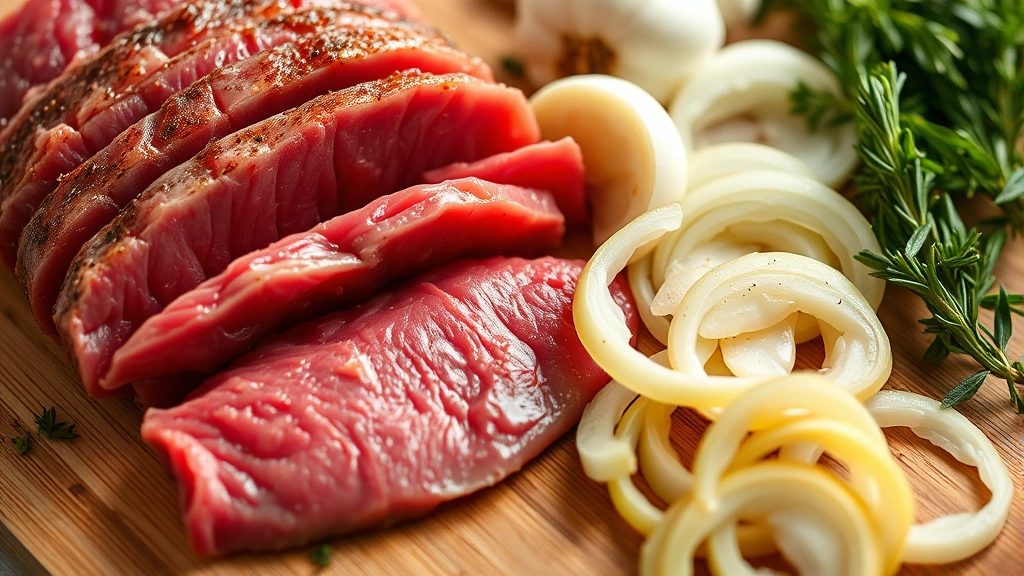
- Beef sirloin or chuck steak (2 pounds, thinly sliced)
- Yellow onions (4-5 large, sliced into rings)
- Soy sauce (1/2 cup)
- Calamansi juice or fresh lemon juice (1/4 cup)
- Garlic (6-8 cloves, minced)
- Black pepper (1 teaspoon)
- Salt (to taste)
- Vegetable oil (3 tablespoons)
- Water or beef broth (1 cup)
The quality of your beef makes a significant difference. Look for well-marbled meat from a trusted butcher, and ask them to slice it thin (about 1/4 inch). If you’re slicing at home, partially freezing the meat for 30 minutes makes this task much easier. The onions are equally important—they caramelize during cooking and create the dish’s signature sweet-savory profile.
Preparation: The Key to Tender Beef
Proper preparation is where grandma’s secret lies. Many home cooks skip crucial steps that make the difference between tough, chewy beef and fork-tender slices. Let’s break down the preparation process:
Meat Tenderizing: After slicing your beef, place each piece between two sheets of plastic wrap and gently pound it with a meat mallet. You’re not trying to pulverize the meat—just break down the muscle fibers slightly. This simple step dramatically increases tenderness and helps the meat absorb flavors more effectively. The traditional method involves using the flat side of a heavy knife or even a wooden mallet.
Marinating the Meat: While not strictly necessary, many authentic recipes call for a brief marinade. Combine 2 tablespoons of soy sauce, 1 tablespoon of calamansi juice, and the minced garlic. Coat your beef slices and let them sit for 15-30 minutes. This pre-seasoning ensures flavor penetrates the meat from the start.
Preparing the Onions: Slice your onions into rings of consistent thickness—about 1/4 inch is ideal. Keeping them in rings rather than chopping them prevents them from disappearing into the sauce and maintains their beautiful presentation. The onions will caramelize and become sweet, balancing the salty-sour notes of the sauce.
Step-by-Step Cooking Instructions
Now comes the actual cooking—and this is where patience becomes your greatest ally. The low-and-slow method is what transforms ordinary beef into something extraordinary.
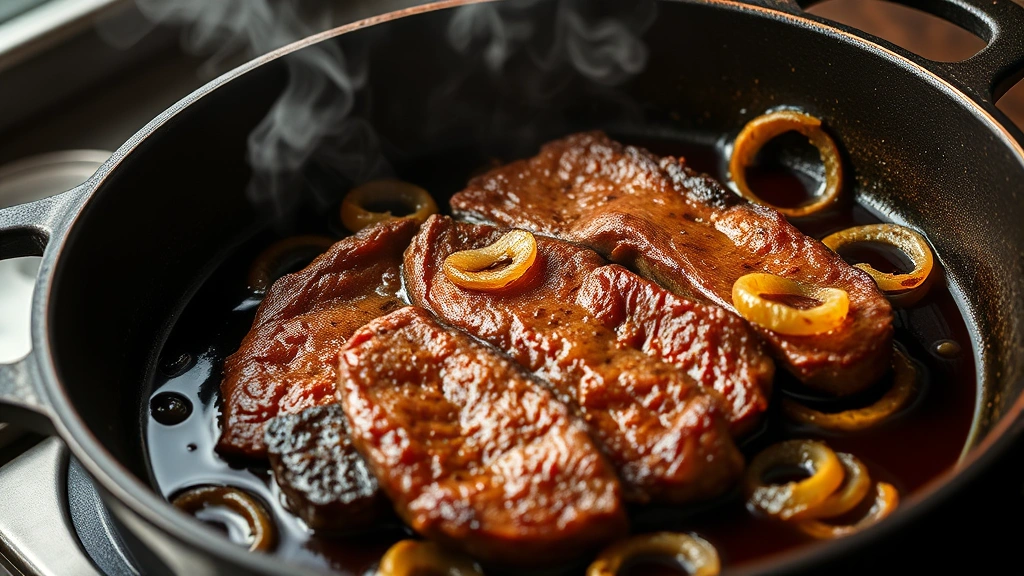
Step 1: Sear the Meat Heat your oil in a large, heavy-bottomed pan or Dutch oven over medium-high heat. Working in batches to avoid overcrowding, sear the beef slices for 2-3 minutes per side until they develop a golden-brown crust. This creates flavor through the Maillard reaction—a chemical process that develops complex, savory notes. Don’t skip this step, even though it takes extra time. Transfer the seared beef to a plate.
Step 2: Caramelize the Onions In the same pan, add the sliced onions and cook over medium heat for about 8-10 minutes, stirring occasionally. The onions will gradually turn golden and release their natural sugars. You’ll notice the pan will have browned bits (called fond) stuck to the bottom—these are flavor bombs that will enhance your sauce. Don’t wash them away!
Step 3: Build the Sauce Add the minced garlic to the caramelized onions and cook for 1-2 minutes until fragrant. Pour in the soy sauce and calamansi juice, stirring to combine. The mixture will sizzle and the flavors will intensify. Add the water or beef broth, scraping the bottom of the pan with a wooden spoon to incorporate all those flavorful browned bits.
Step 4: Braise the Beef Return the seared beef to the pan, nestling it among the onions. Add the black pepper and taste the sauce—adjust salt as needed (remember that soy sauce is already quite salty). Bring everything to a gentle simmer, then reduce heat to low. Cover the pan partially and let it braise for 45-60 minutes, stirring occasionally. The meat should be fork-tender by the end, and the sauce should have reduced and thickened slightly.
Step 5: Final Adjustments Taste your bistek and adjust seasonings as needed. If the sauce seems too thin, increase heat slightly and simmer uncovered for another 5-10 minutes. If it’s too salty, add a splash of water. The final sauce should coat the back of a spoon and cling beautifully to the beef.
Tips for Perfect Results Every Time
Grandma’s secrets aren’t really secrets—they’re just techniques perfected through repetition. Here are the tricks that separate good bistek from great bistek:
Choose the Right Cut: While sirloin is traditional, chuck steak works beautifully too. Chuck has more marbling, which keeps it juicy during the long cooking process. Avoid lean cuts like tenderloin, which can become dry.
Don’t Rush the Caramelization: The onions are crucial to bistek’s flavor profile. Give them time to develop deep color and sweetness. This isn’t a step to hurry through.
Use Fresh Calamansi if Possible: Calamansi is a small Filipino citrus fruit with a unique flavor profile. While lemon is an acceptable substitute, fresh calamansi juice creates authentic flavor. If you can find bottled calamansi juice at Asian markets, it’s worth the investment. The acidity is slightly different from lemon and creates that distinctive tang.
Pound Your Meat: This cannot be overstated. Even just 30 seconds of gentle pounding per slice makes a tremendous difference in tenderness. It’s the difference between meat you have to chew and meat that practically melts.
Don’t Overcrowd the Pan: When searing the beef, work in batches. Overcrowding causes steaming rather than searing, which means you won’t develop that golden crust and the accompanying flavor.
Low and Slow is Non-Negotiable: The braising process shouldn’t be rushed. High heat will cause the meat to toughen rather than tenderize. Gentle simmering is the key to success.
Make Extra Sauce: The sauce is so delicious that you’ll want plenty for rice. Consider increasing the liquid slightly if you prefer a saucier bistek. If you’re serving this alongside other dishes, you might enjoy exploring burger sauce recipes or green goddess dressing recipes for complementary flavor profiles.
Serving Suggestions and Pairings
Bistek is traditionally served over steamed white rice, which is the perfect vehicle for soaking up the delicious sauce. However, there are many creative ways to serve this versatile dish:
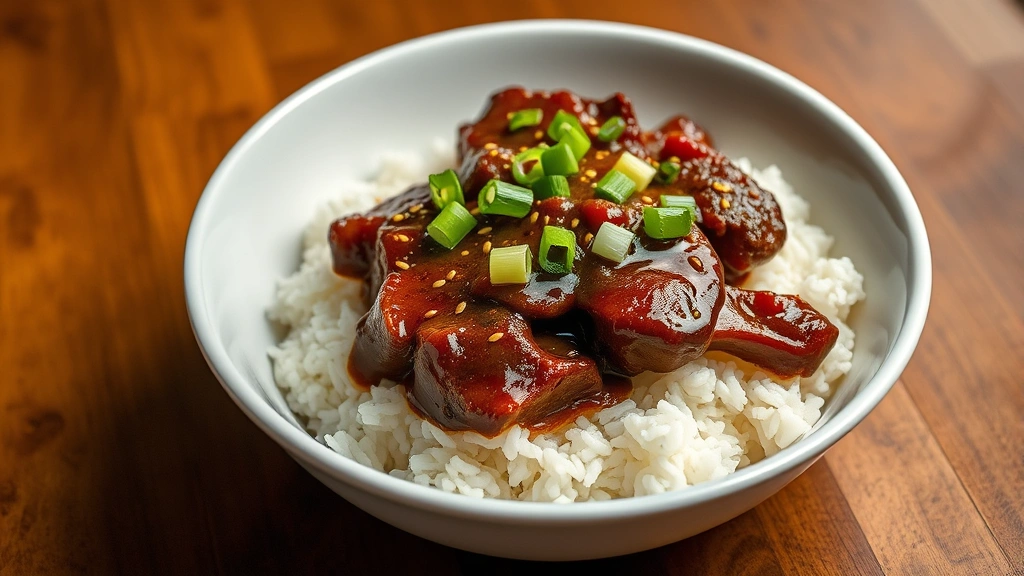
Classic Presentation: Serve bistek over hot steamed jasmine or white rice with the sauce spooned over top. Garnish with fresh green onions and sesame seeds if desired. This is how it’s served in homes and restaurants across the Philippines.
With Vegetables: Add steamed or sautéed vegetables like broccoli, carrots, or snap peas to round out the meal. The sauce complements vegetables beautifully.
In Sandwiches: Shred or chop the beef and use it as a sandwich filling with crusty bread. The caramelized onions and sauce create an incredible sandwich experience.
With Noodles: Serve bistek over egg noodles or rice noodles for a different take. The sauce clings beautifully to noodles and creates a comforting dish.
As a Rice Bowl: Layer rice with bistek and vegetables for a satisfying rice bowl that’s perfect for meal prep.
For additional inspiration on beef-based dishes, check out our collection of beef pasta recipes and steak and pasta recipes. You might also enjoy exploring chicken carbonara recipe for other comforting main dishes.
Storage and Reheating: Bistek keeps beautifully in the refrigerator for up to 4 days and actually tastes better the next day as flavors meld. Store in an airtight container with the sauce. To reheat, gently warm in a pan over low heat, adding a splash of water if needed. You can also freeze bistek for up to 3 months—thaw overnight in the refrigerator before reheating.
FAQ
Can I use a different cut of beef for this recipe?
Yes, you can experiment with different cuts. Chuck steak, brisket, and even flank steak work well. The key is slicing thin and pounding the meat to tenderize it. Avoid very lean cuts like tenderloin, which can dry out during the long braising process.
What if I don’t have calamansi juice?
Fresh lemon juice is the best substitute, though it’s slightly more acidic. You might use 3 tablespoons of lemon juice instead of 1/4 cup to match the tartness of calamansi. Some cooks also use lime juice or a combination of both.
How do I know when the beef is tender enough?
The beef should be fork-tender and easily pierced without resistance. If you can cut it with a spoon, it’s done. Most cuts need 45-60 minutes of gentle braising, but tougher cuts like chuck might need up to 90 minutes.
Can I make bistek in a slow cooker?
Absolutely! Sear the beef and caramelize the onions on the stovetop as instructed, then transfer everything to a slow cooker. Cook on low for 6-8 hours or on high for 3-4 hours. The slow, moist heat produces incredibly tender results.
Is bistek the same as Filipino beef stew?
While similar in some ways, bistek is distinct. Bistek features thin slices of beef with a glossy sauce and prominent onions, while beef stew typically has larger chunks of meat and more broth. Bistek is also quicker to prepare and has a more concentrated flavor.
Can I double this recipe?
Yes, bistek doubles easily. Just make sure your pan is large enough or work in batches during the searing stage. The braising time remains the same regardless of quantity.
What’s the best way to slice the beef thin?
Ask your butcher to slice it for you, or partially freeze the meat for 30 minutes and slice it yourself with a sharp knife, cutting against the grain. This produces more tender results than slicing with the grain.


