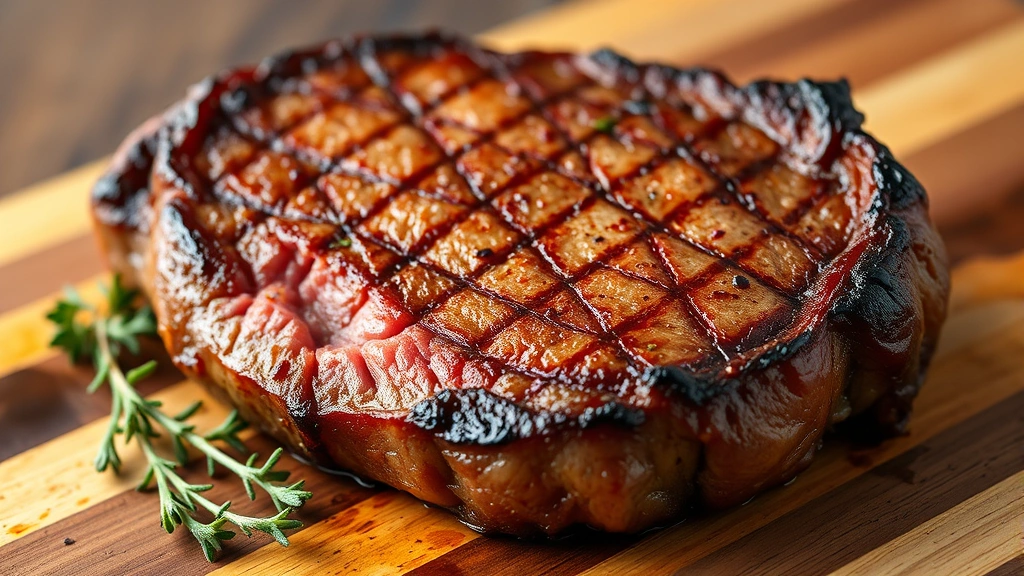
Beef Steak Salad: Chef’s Favorite Recipe
There’s something undeniably elegant about a perfectly crafted beef steak salad—it’s the kind of dish that feels indulgent yet refreshingly light, making it ideal for both weeknight dinners and impressive entertaining. This chef-favorite recipe combines tender, juicy beef with crisp greens, vibrant vegetables, and a sophisticated vinaigrette that ties everything together in harmony. Unlike heavy, mayo-laden salads, a well-executed beef steak salad celebrates the quality of its ingredients while delivering bold flavors and satisfying textures in every bite.
What makes this recipe so beloved among professional chefs is its versatility and the way it showcases the beef as the star ingredient. Whether you’re looking to impress dinner guests or simply want to elevate your everyday meal, this beef steak salad delivers restaurant-quality results at home. The key lies in understanding proper steak preparation, selecting the right greens, and mastering a complementary dressing that enhances rather than overshadows the natural flavors of the beef.
What Makes the Perfect Beef Steak Salad
The foundation of an exceptional beef steak salad rests on four critical pillars: quality beef, fresh greens, complementary vegetables, and a well-balanced dressing. Professional chefs understand that each component must work in concert, creating a dish that’s greater than the sum of its parts. The beef provides richness and protein, the greens offer textural contrast and nutritional value, and the vegetables add color, crunch, and freshness that prevents the dish from feeling heavy.
What distinguishes a chef’s beef steak salad from casual preparations is the attention to temperature, texture, and timing. The beef must be cooked to the proper doneness, rested adequately to retain its juices, and sliced against the grain to maximize tenderness. The greens should be crisp and cold, providing a stark contrast to the warm beef. The vegetables should be prepped with precision—not too large, not too small—to create a balanced bite. Even if you’re preparing easy dinner recipes for beginners, this approach to detail will elevate your cooking.
Temperature control is paramount when assembling this salad. Many home cooks make the mistake of placing warm beef directly onto cold greens, which can wilt them and create an unpleasant textural mismatch. Instead, the beef should be sliced and cooled slightly before plating, allowing the greens to maintain their crisp texture while still enjoying the warmth and flavor of the beef.
Essential Ingredients You’ll Need
For the beef and salad base, gather the following ingredients:
- Beef steak: 1.5 to 2 pounds (ribeye, New York strip, or filet mignon)
- Mixed salad greens: 8 cups (arugula, spinach, mixed lettuces)
- Cherry tomatoes: 2 cups (halved)
- Cucumber: 1 large (diced or sliced thin)
- Red onion: 1/2 medium (thinly sliced)
- Radishes: 1 cup (thinly sliced)
- Shallots: 2 medium (minced for the dressing)
- Fresh herbs: parsley, chives, and tarragon
For the vinaigrette:
- Dijon mustard: 1 tablespoon
- Red wine vinegar: 3 tablespoons
- Extra virgin olive oil: 1/2 cup
- Shallots: 2 tablespoons (minced)
- Garlic: 1 clove (minced)
- Honey: 1 teaspoon
- Sea salt and black pepper: to taste
For seasoning the beef:
- Kosher salt: 2 teaspoons
- Freshly ground black pepper: 1 teaspoon
- Garlic powder: 1/2 teaspoon
- Smoked paprika: 1/2 teaspoon (optional)
- Fresh thyme: 2 sprigs
- Butter: 2 tablespoons
Step-by-Step Cooking Instructions
Prepare Your Ingredients (15 minutes before cooking): Remove your beef from the refrigerator and allow it to come to room temperature. This ensures even cooking throughout the steak. While the beef rests, wash and dry your salad greens thoroughly—excess moisture will dilute your dressing and make the salad soggy. Prepare all vegetables and set them aside in separate bowls.
Season the Beef Generously: Pat the beef dry with paper towels to remove surface moisture, which is crucial for achieving a proper crust. Combine kosher salt, black pepper, garlic powder, and smoked paprika in a small bowl. Apply this seasoning mixture evenly to both sides of the steak, pressing gently so it adheres well.
Sear the Steak: Heat a cast-iron skillet or heavy-bottomed pan over medium-high heat until it’s smoking hot—this typically takes 2-3 minutes. Once the pan is properly heated, carefully place the seasoned beef into the pan. Do not move the steak for at least 4-5 minutes. This undisturbed time allows a flavorful crust to develop through the Maillard reaction, a chemical process that creates complex flavors.
Cook to Your Desired Doneness: Flip the steak and cook for another 3-4 minutes for medium-rare (internal temperature of 130-135°F). During the final minute of cooking, add butter and fresh thyme sprigs to the pan, tilting it to baste the steak continuously. This adds richness and flavor while ensuring even cooking.
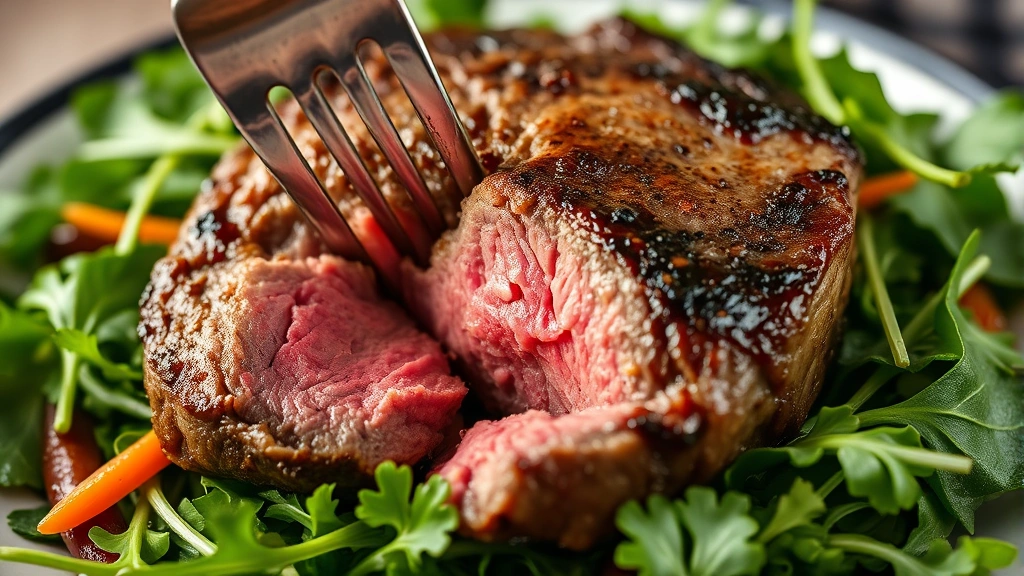
Rest the Beef: Transfer the cooked steak to a cutting board and allow it to rest for 5-7 minutes. This critical step allows the muscle fibers to relax and reabsorb the juices, resulting in a more tender and juicy final product. Skipping this step is one of the most common mistakes home cooks make.
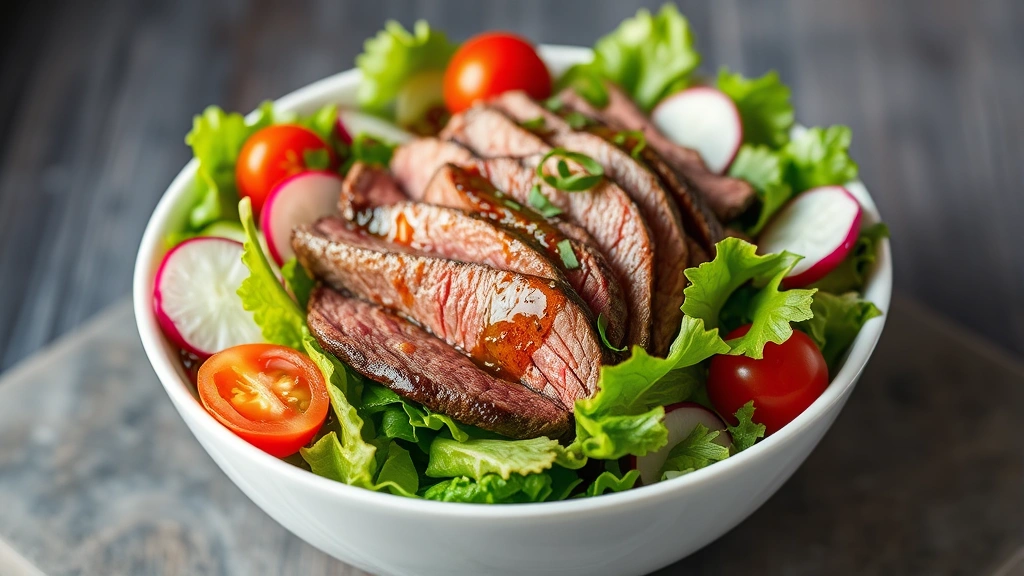
Slice and Prepare: Using a sharp knife, slice the beef against the grain into 1/4-inch thick strips. Cutting against the grain shortens the muscle fibers, making each bite more tender. If you’re unsure which direction is the grain, look for the visible lines running through the meat and slice perpendicular to them.
Assemble the Salad: Place your mixed greens in a large bowl or on individual plates. Arrange the prepared vegetables artfully around the greens. Top with the sliced beef, positioning the slices so they’re visible and appealing. Drizzle with the vinaigrette just before serving, or serve it on the side to allow guests to control the amount.
Choosing and Preparing Your Beef
The quality of your beef makes or breaks this dish, so selecting the right cut is essential. Ribeye is the chef’s choice for this recipe due to its excellent marbling—those white lines of fat running through the meat. This fat renders during cooking, keeping the meat moist and flavorful. The ribeye’s rich taste complements the fresh vegetables beautifully.
New York Strip steaks offer a leaner option with excellent flavor and a slightly firmer texture. They’re ideal if you prefer less fat but still want significant beef flavor. The strip’s natural tenderness makes it perfect for slicing thin.
Filet Mignon is the most tender cut available, though it has less marbling than ribeye or strip. It’s an excellent choice if you’re serving guests who prefer extremely tender beef, though you may want to add a bit more fat (like a compound butter) to compensate for its leanness.
When selecting beef at the butcher counter, look for:
- Bright red color (not brown or gray)
- Visible marbling throughout the meat
- Even thickness for consistent cooking
- Fresh appearance with no liquid pooling
- A steak that’s at least 1.5 inches thick
Thinner steaks cook too quickly and risk becoming tough or overcooked before the exterior develops a proper crust. Ask your butcher to cut the steak to your preferred thickness, and don’t hesitate to request specific characteristics—quality butchers take pride in helping customers select the perfect cut.
The Perfect Vinaigrette Recipe
A beef steak salad’s vinaigrette must be bold enough to complement the richness of the beef without overpowering the delicate greens. This classic French-style vinaigrette achieves that balance perfectly.
Method: In a small bowl, whisk together Dijon mustard, minced shallots, minced garlic, and red wine vinegar. The mustard acts as an emulsifier, helping the oil and vinegar blend smoothly rather than separating. Let this mixture sit for 1-2 minutes, allowing the shallots and garlic to bloom and release their flavors.
Slowly drizzle in the extra virgin olive oil while whisking constantly. Add it in a thin stream rather than all at once—this gradual incorporation creates an emulsion that coats the greens evenly. The ratio of 1 part vinegar to 3 parts oil creates a balanced dressing that’s acidic enough to be refreshing but rich enough to complement the beef.
Finish with honey, which adds a subtle sweetness that rounds out the acidity and brings all the flavors into harmony. Season with sea salt and freshly ground black pepper to taste. The dressing should taste slightly more assertive than you want in the final salad—the greens will dilute it slightly when tossed.
Pro tip: Make the vinaigrette 30 minutes before serving. This allows the flavors to meld and develop, resulting in a more sophisticated taste. If you’re preparing healthy food recipes with chicken breast or other proteins, remember that vinaigrettes are universally useful in your cooking repertoire.
Pro Tips from Professional Chefs
Use a Meat Thermometer: The most reliable way to achieve your desired doneness is with an instant-read meat thermometer. Insert it into the thickest part of the steak without touching bone. Target temperatures: 125-130°F for rare, 130-135°F for medium-rare, 135-145°F for medium. Professional chefs always use thermometers—it removes guesswork.
Pat Your Greens Completely Dry: Wet greens dilute dressing and create a soggy salad. After washing, spin them in a salad spinner and pat with paper towels. Dry greens will dress beautifully and maintain their crispness.
Chill Your Plates: Place serving plates in the freezer for 5-10 minutes before assembling the salad. Cold plates keep greens crisp longer and enhance the textural contrast with the warm beef.
Season at Every Stage: Don’t just season the beef—taste and adjust seasoning in your vinaigrette and on individual salad components. Building layers of flavor throughout the cooking process creates a more complex, satisfying dish.
Cut Against the Grain: This cannot be overstated. Identifying the grain direction and cutting perpendicular to it is the difference between tender, pleasant beef and tough, chewy beef. Look at the muscle fibers and slice across them.
Don’t Dress Too Early: Assemble greens with vegetables 10-15 minutes before serving, but add dressing only 2-3 minutes before plating. Dressed greens begin wilting immediately, and you want them crisp when eaten.
Consider the Pan Material: Cast iron retains heat exceptionally well and develops superior crust. If you don’t have cast iron, a heavy stainless steel pan works well. Avoid non-stick pans for searing—they don’t get hot enough to properly crust the beef.
Variations and Substitutions
Blue Cheese Crumble Version: Add 1 cup of crumbled blue cheese and candied walnuts. The pungent cheese pairs beautifully with beef, and the nuts add textural interest. This variation transforms the salad into a more decadent dish perfect for special occasions.
Asian-Inspired Variation: Replace the vinaigrette with a sesame-ginger dressing made from rice vinegar, sesame oil, soy sauce, ginger, and garlic. Add mandarin oranges, sliced almonds, and crispy chow mein noodles. This lighter version works wonderfully in warm weather.
Mediterranean Style: Include kalamata olives, feta cheese, roasted red peppers, and a lemon-oregano vinaigrette. Add chickpeas for extra protein and substance. This version feels lighter while remaining deeply satisfying.
Grilled Vegetable Version: Grill the vegetables (zucchini, bell peppers, eggplant) alongside the beef for added depth and smokiness. This works especially well if you’re cooking outdoors during summer months.
Warm Potato Addition: Include roasted or grilled fingerling potatoes to make this more of a complete meal. Toss them with a bit of vinaigrette while still warm so they absorb the dressing.
If you enjoy experimenting with proteins, check out these vegetarian crockpot recipes for inspiration on how to build satisfying meals around different ingredients. You can also explore how to make homemade ice cream for a sophisticated dessert to follow your beef steak salad. For cultural context and cooking inspiration, consider watching top food documentaries to watch in 2025.
FAQ
What’s the best way to achieve a perfect crust on beef?
Start with a completely dry steak and a smoking-hot pan. Don’t move the beef during the first 4-5 minutes of cooking—this undisturbed time creates the Maillard reaction, which develops the flavorful crust. Use a cast-iron skillet if possible, as it retains heat better than other cookware.
Can I prepare this salad ahead of time?
You can prepare components in advance: cook and slice the beef several hours ahead (store covered in the refrigerator), wash and dry greens the night before, and make the vinaigrette up to 24 hours early. However, assemble the salad no more than 15 minutes before serving, and add dressing just 2-3 minutes before eating to prevent wilting.
What if I don’t have a meat thermometer?
While a thermometer is ideal, you can use the touch method: press the meat with your finger and compare the resistance to the fleshy area below your thumb (rare), between thumb and forefinger (medium-rare), or between thumb and middle finger (medium). This requires practice but works in a pinch.
How long should I rest the beef after cooking?
Rest for 5-7 minutes minimum. This allows muscle fibers to relax and reabsorb juices, resulting in more tender, juicier meat. For thicker steaks (over 2 inches), 10 minutes is ideal. Tent loosely with foil to maintain warmth without trapping steam.
Can I use a different type of vinegar?
Absolutely. Balsamic vinegar creates a sweeter, richer dressing; white wine vinegar is more delicate; apple cider vinegar adds earthiness; and sherry vinegar brings complexity. Adjust the quantity based on the vinegar’s acidity—start with 2.5 tablespoons and taste as you go.
What’s the best salad green for this dish?
A mix works best: combine arugula for peppery bite, spinach for earthiness, and mixed lettuces for textural variety. Avoid iceberg lettuce, which has minimal flavor and poor nutritional value. Spring mix or mesclun blends are excellent ready-made options.
How do I know if my beef is cooked enough?
Use an instant-read meat thermometer inserted into the thickest part: 125-130°F for rare, 130-135°F for medium-rare (recommended for beef steak salad), 135-145°F for medium. Remember that beef continues cooking 3-5°F after removal from heat, so remove it 5 degrees before your target temperature.
Can I make this salad with a different cut of beef?
Yes, but choose tender cuts. Ribeye, New York strip, filet mignon, and flat iron steaks all work well. Avoid tougher cuts like chuck or round, which require longer cooking methods like braising or slow cooking. If using flat iron steak, be sure to slice very thin against the grain.


