Cherry Tomato Bruschetta: Italian Chef’s Pick for Perfect Appetizers
Cherry tomato bruschetta represents one of Italy’s most elegant yet deceptively simple appetizers. This classic dish, beloved by chefs from Rome to Milan, transforms humble ingredients into a sophisticated starter that impresses guests every single time. The beauty of authentic bruschetta lies in its balance—crispy bread, fresh tomatoes, fragrant basil, and quality olive oil working in perfect harmony.
As an Italian culinary tradition dating back centuries, bruschetta was originally created as a way to use stale bread and showcase seasonal produce. Today, cherry tomato bruschetta has become a staple at Italian restaurants and home kitchens worldwide. The smaller cherry tomatoes offer superior sweetness and less water content than their larger counterparts, making them ideal for this preparation method.
Why Cherry Tomatoes Excel in Bruschetta
Cherry tomatoes are the superior choice for bruschetta compared to standard tomatoes, and Italian chefs have known this for generations. These small, sweet orbs contain less water content, which means they won’t make your bread soggy—a critical concern when preparing bruschetta ahead of time. The natural sugar concentration in cherry tomatoes creates a more balanced, naturally sweet flavor profile that doesn’t require added sugar.
The skin-to-flesh ratio in cherry tomatoes is also ideal for this application. When halved or quartered, each piece maintains structural integrity during preparation and serving. The seeds and juice are less abundant, allowing you to control moisture levels precisely. Additionally, cherry tomatoes have thinner skins that burst delightfully on the palate, releasing their concentrated flavor without requiring lengthy cooking or reduction.
From a nutritional perspective, cherry tomatoes pack impressive benefits. They’re rich in lycopene, an antioxidant with proven health benefits, along with vitamins C and K. This makes cherry tomato bruschetta not just delicious but also a genuinely nutritious appetizer. When you’re preparing best healthy food recipes, cherry tomato bruschetta deserves a prominent place in your rotation.
Essential Ingredients and Quality Selection
Authentic cherry tomato bruschetta requires surprisingly few ingredients, but each one must be of exceptional quality. This is not a dish where shortcuts pay dividends. The ingredient list reads simply: cherry tomatoes, bread, garlic, basil, olive oil, and salt. Yet the execution separates mediocre bruschetta from memorable bruschetta.
Cherry Tomatoes: Select tomatoes that are ripe, fragrant, and firm to the touch. Look for deep color—whether red, yellow, or heirloom varieties. Avoid any with soft spots or blemishes. The best bruschetta comes from tomatoes picked at peak ripeness, ideally from a farmers market or garden. Room-temperature tomatoes will always taste better than refrigerated ones, so remove them from cold storage at least 30 minutes before preparation.
Bread Selection: Use a rustic Italian bread, preferably ciabatta or a quality baguette. The bread should have a crispy crust and airy interior. Avoid soft sandwich bread entirely—it will become mushy under the weight of the topping. Day-old bread is acceptable and sometimes preferable, as it’s slightly drier and toasts more crisply.
Garlic: Fresh, firm garlic cloves are essential. Pre-minced garlic from jars cannot replicate the flavor of freshly minced or sliced garlic. The pungency will be too sharp initially but mellows as the bruschetta sits, creating perfect flavor development over 15-30 minutes.
Fresh Basil: Use only fresh basil—dried basil will ruin the delicate balance of flavors. Italian basil (sweet basil) is traditional, though some chefs prefer purple basil for its slightly peppery notes. Purchase basil as close to preparation time as possible, or store it stem-down in water like a bouquet, covered loosely with a plastic bag.
Extra Virgin Olive Oil: This is not the place for regular olive oil. Invest in quality extra virgin olive oil with a harvest date visible on the bottle. Oils from recent harvests (within the past year) will have superior flavor and nutritional properties. Italian, Greek, or Spanish oils all work beautifully depending on your flavor preferences.
Sea Salt: Kosher salt or fleur de sel works wonderfully. The grain size matters—you want salt that dissolves readily and seasons evenly without creating overly salty pockets.
Step-by-Step Preparation Guide
Successful bruschetta requires proper sequencing and timing. Following these steps ensures optimal flavor development and texture.
Preparation Timing: Begin your preparations 45 minutes before serving. This allows flavors to marry while ensuring the bread remains crispy. If you prepare bruschetta more than one hour in advance, store the tomato mixture and bread separately, assembling only when guests arrive.
Tomato Preparation: Rinse cherry tomatoes under cool water and pat completely dry with paper towels. Moisture on the surface prevents proper seasoning adhesion. Slice tomatoes in half lengthwise, creating uniform pieces that fit nicely on bread slices. If using very large cherry tomatoes, quarter them instead. Place prepared tomatoes in a colander set over a bowl, allowing excess juice to drain naturally. This step prevents soggy bruschetta while concentrating tomato flavor.
Garlic Processing: Peel fresh garlic cloves and mince finely using a sharp knife or microplane. The goal is creating small, evenly-sized pieces that distribute throughout the topping. If you prefer milder garlic flavor, slice cloves thinly instead of mincing. Some Italian chefs rub the toasted bread with a cut garlic clove before adding the tomato mixture—this method imparts flavor without garlic pieces.
Basil Preparation: Tear basil leaves by hand rather than cutting with a knife. Metal blades bruise basil leaves, causing browning and flavor degradation. Tear leaves into bite-sized pieces, adding them only at the final moment before serving to prevent darkening.
Toasting the Bread to Perfection
The bread foundation makes or breaks your bruschetta. Proper toasting creates a crispy exterior that shatters between your teeth while maintaining a slight chew inside.
Slicing Technique: Cut your baguette or ciabatta at a slight angle into ½-inch thick slices. This angled cut creates more surface area and a more elegant presentation. Avoid cutting too thin (which creates fragile pieces) or too thick (which don’t toast evenly).
Toasting Methods: You have three excellent options for toasting. The oven method provides most control: arrange slices on a baking sheet, brush lightly with olive oil on one side, and toast at 400°F for 5-7 minutes until golden brown and crispy. Monitor carefully, as toasting times vary based on bread moisture content and oven characteristics.
The grill method offers beautiful char marks and smoky flavor: place oiled bread slices directly on a preheated grill grate, toasting 2-3 minutes per side until golden with charred marks. This method requires attention to prevent burning.
The cast iron skillet method works wonderfully indoors: heat a cast iron skillet over medium-high heat, add a thin layer of olive oil, and toast bread slices 2-3 minutes per side until golden and crispy. This method provides excellent control and creates even browning.
Cooling and Storage: Transfer toasted bread to a cooling rack rather than a plate, allowing air circulation underneath to maintain crispness. Toasted bread can be prepared up to four hours in advance and stored in an airtight container at room temperature.
Creating the Perfect Tomato Mixture
The tomato mixture is the heart of cherry tomato bruschetta. Its balance of flavors determines whether your bruschetta tastes like an authentic Italian creation or a mediocre appetizer.
Seasoning Strategy: In a medium bowl, combine drained cherry tomatoes with minced garlic. Add approximately ¼ teaspoon sea salt per cup of tomatoes, adjusting based on your preference and the saltiness of your olive oil. Toss gently to combine. The salt begins extracting tomato juices immediately, creating a light marinade. Allow this mixture to sit for 5-10 minutes, during which flavors meld and the salt dissolves completely.
Acid Balance: Add a small splash of high-quality balsamic vinegar—approximately ½ teaspoon per cup of tomatoes. Some chefs prefer red wine vinegar for its sharper acidity, while others use fresh lemon juice for brightness. The acid cuts through the richness of olive oil and enhances tomato flavor. Start conservatively; you can always add more.
Olive Oil Incorporation: Drizzle in extra virgin olive oil until the mixture looks glossy and well-coated. You’re aiming for enough oil to coat all pieces without creating a pool at the bottom. Approximately 2-3 tablespoons per cup of tomatoes works well, though this varies based on tomato juice content.
Flavor Testing: Taste the mixture on a small piece of toasted bread. This reveals how flavors work together and allows you to adjust seasoning before final assembly. The mixture should taste vibrant and balanced, with no single element overwhelming the others.
For variations, consider consulting our guide on how to make homemade salad dressings, as the same principles of balance apply to bruschetta toppings.
Assembly and Serving Techniques
Professional assembly transforms simple ingredients into an impressive appetizer worthy of any dinner party.
Garlic Rubbing Method: Some Italian chefs prefer this approach: take a cut garlic clove and rub it gently across the surface of warm toasted bread. This imparts garlic flavor without garlic pieces, creating a more refined presentation. This method works beautifully if you prefer subtle garlic presence.
Topping Application: Using a slotted spoon, place approximately 1-2 tablespoons of the tomato mixture on each toasted bread slice. The slotted spoon ensures excess liquid drains away, preventing soggy bruschetta. Arrange toppings in a single layer, creating an even distribution.
Basil Finishing: Tear fresh basil leaves and scatter over the tomato topping immediately before serving. The fresh green provides color contrast and aromatic brightness. A light sprinkle of fleur de sel on top adds textural contrast and emphasizes flavors.
Serving Temperature: Serve bruschetta at room temperature. Cold bruschetta has muted flavors, while hot bruschetta causes the tomato mixture to separate from the bread. Room temperature represents the sweet spot where all flavors shine.
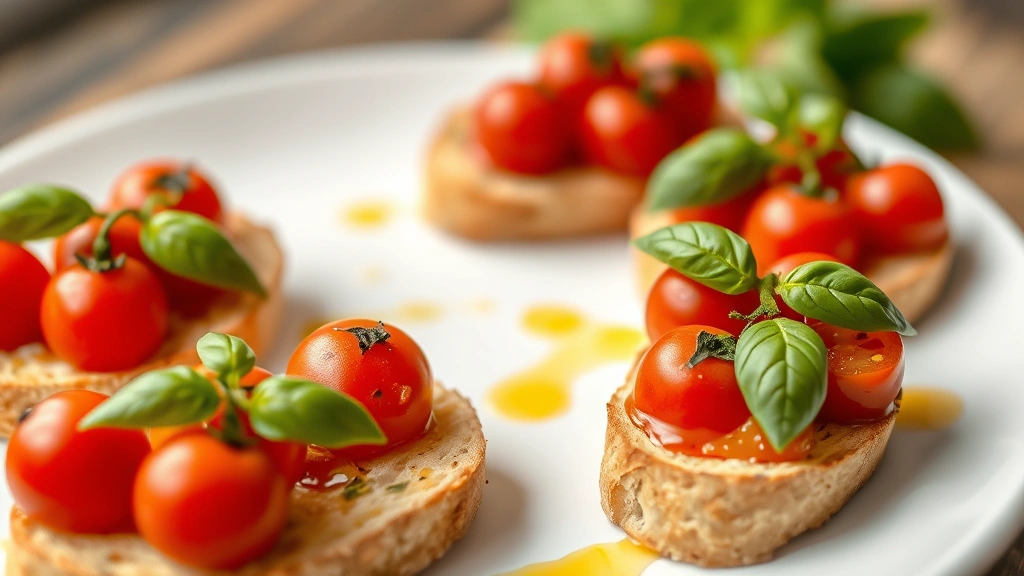
Presentation: Arrange bruschetta on a wooden board or ceramic platter, standing them slightly upright or at an angle. This showcases the colorful topping and makes them easy for guests to grab. Serve immediately after final assembly for optimal crispness.
Variations and Creative Twists
While the classic recipe remains perfect, creative variations expand your bruschetta repertoire.
Burrata Addition: Place a small dollop of creamy burrata cheese on the tomato mixture just before serving. The cool, creamy cheese contrasts beautifully with the crispy bread and fresh tomatoes. Burrata melts slightly under the warmth of the topping, creating luxurious texture.
Balsamic Reduction: Drizzle a thick balsamic reduction over finished bruschetta for sophisticated sweetness and depth. To make reduction, simmer balsamic vinegar in a small saucepan over medium heat for 10-15 minutes until thickened and syrupy. Cool before drizzling.
Anchovy Integration: Finely mince quality anchovy fillets and add to the tomato mixture. This adds umami depth and complexity. Start with one fillet per cup of tomatoes, adding more if desired. Anchovy flavor mellows as the mixture sits.
Parmesan Shavings: Use a vegetable peeler to create thin Parmigiano-Reggiano shavings. Scatter over the finished bruschetta for nutty, salty notes and elegant presentation.
Herb Variations: Incorporate fresh oregano, mint, or parsley alongside or instead of basil. Each herb creates distinct flavor profiles while maintaining the bruschetta’s essential character.
Roasted Garlic Option: Substitute roasted garlic for raw garlic when you prefer milder, sweeter garlic flavor. Roasted garlic spreads like butter on the toasted bread, creating a smooth base for the tomato topping.
For inspiration on flavor combinations, explore our collection of how to make homemade pasta sauce recipes, which use similar ingredient ratios and flavor principles.
Storage and Make-Ahead Tips
Strategic planning allows you to prepare components in advance without sacrificing quality.
Bread Preparation: Toast bread slices up to 4 hours in advance. Store in an airtight container at room temperature away from humidity. Avoid refrigerating toasted bread, as cold temperatures cause it to absorb moisture and become soft.
Tomato Mixture Storage: The prepared tomato mixture can be made up to 2 hours in advance and stored in a covered container at room temperature. The mixture actually improves as it sits, with flavors continuing to meld. Do not refrigerate, as cold temperatures suppress flavors.
Component Separation: For parties where you’re preparing bruschetta more than 2 hours ahead, keep the tomato mixture and bread completely separate. Assemble individual pieces only when guests arrive. This ensures maximum crispness and prevents sogginess.
Freezing Considerations: Toasted bread can be frozen for up to one month in an airtight container. Thaw at room temperature for 15 minutes before serving. The tomato mixture should not be frozen, as freezing destroys the fresh tomato texture and flavor.
Party Preparation: For large gatherings, prepare double batches of the tomato mixture. Keep it in a serving bowl with a slotted spoon nearby. Arrange toasted bread on a separate platter. Guests can assemble their own bruschetta, ensuring everyone gets perfectly crispy bread with fresh toppings.
Leftover Management: Leftover toasted bread keeps for 2-3 days in an airtight container and can be repurposed in salads or as croutons. Leftover tomato mixture keeps refrigerated for up to 3 days and works wonderfully over pasta, in salads, or as a condiment for grilled meats.
FAQ
Can I prepare cherry tomato bruschetta completely in advance?
Partially, yes. Toast bread up to 4 hours ahead and store in an airtight container. Prepare the tomato mixture up to 2 hours in advance. However, assemble bruschetta only 15-30 minutes before serving to maintain bread crispness. For longer advance preparation, keep components separate and assemble just before guests arrive.
Why does my bruschetta get soggy?
Soggy bruschetta results from excess tomato moisture, wet bread, or advance assembly. Use a colander to drain tomato pieces before mixing. Toast bread until completely crispy. Assemble bruschetta as close to serving time as possible. If preparing ahead, keep bread and topping separate.
What’s the best way to mince garlic for bruschetta?
Use a sharp chef’s knife for hand-mincing, or employ a microplane for fine mincing. Avoid pre-minced jarred garlic, which lacks fresh flavor. If you prefer milder garlic, slice thinly instead of mincing, or rub a cut garlic clove on the warm toast.
Can I use large tomatoes instead of cherry tomatoes?
Regular tomatoes contain more water and seeds, making them less ideal. However, you can use them by seeding them thoroughly and draining excess liquid. Cherry tomatoes provide superior results due to higher sugar content and less moisture.
Should bruschetta be served hot or cold?
Room temperature is ideal. Cold bruschetta has muted flavors, while hot bruschetta causes toppings to slide off the bread. Serve immediately after assembly at room temperature for optimal flavor and texture.
What wine pairs well with cherry tomato bruschetta?
Light, crisp white wines complement bruschetta beautifully. Consider Italian whites like Pinot Grigio, Vermentino, or Grüner Veltliner. Rosé wines also work wonderfully. Avoid heavy reds, which overpower the delicate tomato flavors.
Can I add cheese to cherry tomato bruschetta?
Yes. Fresh mozzarella, burrata, or Parmigiano-Reggiano all work beautifully. Add fresh mozzarella just before serving to prevent it from becoming oily. Burrata creates luxurious creaminess. Parmigiano shavings add nutty sophistication.


