Authentic Hainanese Chicken Rice: Chef’s Guide
Hainanese chicken rice stands as one of Southeast Asia’s most beloved comfort dishes, originating from the Hainan province of China and perfected throughout Malaysia, Singapore, and beyond. This deceptively simple yet deeply flavorful one-plate meal represents centuries of culinary tradition, where poached chicken, fragrant rice cooked in chicken fat and aromatics, and three essential sauces create a harmonious balance of textures and tastes. What makes this dish truly special is its philosophy: maximum flavor through minimal intervention, relying on the quality of ingredients and precise technique rather than complicated procedures.
Whether you’re a home cook seeking to master this classic or a culinary enthusiast looking to understand the nuances that separate mediocre from exceptional versions, this comprehensive guide will walk you through every step. We’ll explore ingredient selection, cooking methods, timing, and the cultural significance that makes Hainanese chicken rice a staple from hawker stalls to fine dining establishments.
Understanding the Fundamentals
Before diving into the recipe itself, it’s crucial to understand what makes Hainanese chicken rice distinct from other poached chicken dishes. The foundation rests on three pillars: perfectly tender, subtly flavored poached chicken; rice infused with chicken fat, ginger, and aromatics; and three complementary sauces that provide brightness, heat, and umami depth.
The beauty of this dish lies in its restraint. Unlike dishes that layer multiple cooking techniques or complex flavor profiles, Hainanese chicken rice achieves its magic through quality ingredients and respect for their natural flavors. The chicken is never heavily seasoned before cooking—the poaching liquid itself becomes the vehicle for subtle flavor development. Similarly, the rice doesn’t contain heavy spices; instead, it captures the essence of ginger and chicken fat to create an aromatic base.
This approach aligns with principles found in classical culinary training, where understanding ingredient interaction supersedes complex technique. The dish also shares philosophical similarities with other Asian comfort foods, such as caldo de pollo recipe traditions, where simple poaching creates the foundation for a complete meal.
Selecting Your Chicken
The chicken you choose will make or break your final dish. Authentic Hainanese chicken rice traditionally uses a young chicken, preferably one that weighs between 3-4 pounds (1.4-1.8 kg). Look for birds labeled as broilers or fryers rather than roasters, as these younger birds have more tender meat and delicate flavor.
Quality matters tremendously here. Seek out heritage breed chickens or pasture-raised birds if possible. Factory-farmed chickens, while convenient and economical, often lack the depth of flavor necessary for this minimalist dish. The chicken’s natural flavor will be the star, so it must be exceptional. If you can find Cornish hens or specialty breeds at local farms or Asian markets, these often provide superior results.
Check the chicken thoroughly before cooking. Remove any remaining pin feathers, and ensure the cavity is completely clean. Pat the bird dry with paper towels—this step, while seemingly minor, helps the chicken cook more evenly and develop better texture. Some chefs prefer to chill the dried chicken for several hours before cooking, as this allows the skin to firm up and cook more evenly.
For those interested in exploring different chicken preparations, understanding baked chicken tenderloin recipes can provide insights into how different cuts and cooking methods affect final texture and flavor development.
The Perfect Poaching Method
Poaching forms the heart of Hainanese chicken rice preparation. This gentle cooking method preserves the chicken’s moisture and delicate texture while infusing subtle flavors from the poaching liquid. The goal is to cook the chicken through completely while maintaining tender, juicy meat throughout.
Preparing the Poaching Liquid:
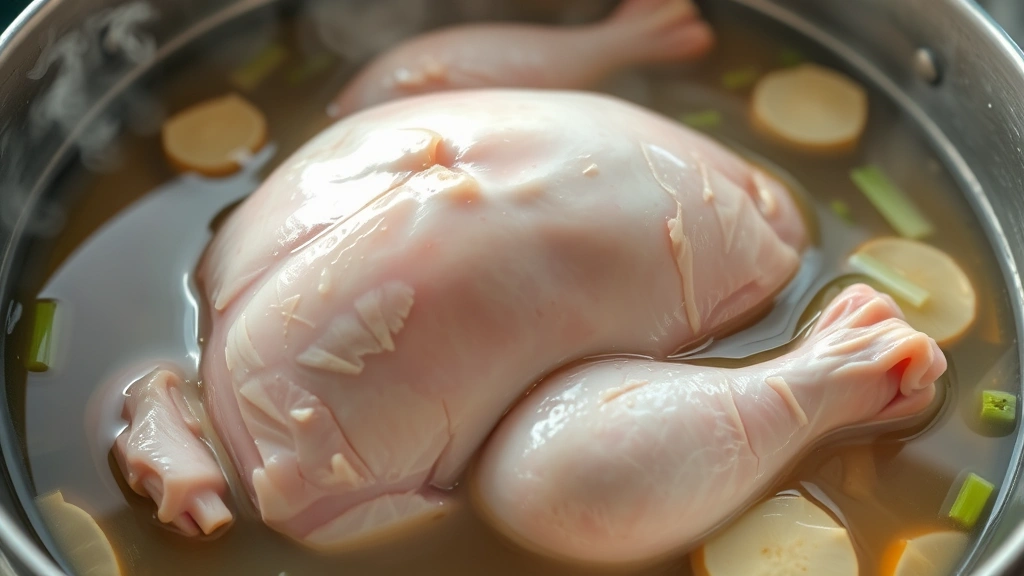
Fill a large pot with water—approximately 3-4 quarts for a 3.5-pound chicken. You want enough liquid to submerge the bird completely with several inches clearance. Add the following to the water:
- One 3-inch piece of ginger, smashed but unpeeled
- 6-8 scallions, cut into 3-inch pieces
- 1 whole star anise
- 3-4 dried shiitake mushrooms
- 2 tablespoons kosher salt
- 1 tablespoon white pepper (or a few white peppercorns)
- Optional: 1-inch piece of ginseng for additional depth
Bring this liquid to a rolling boil, allowing it to bubble vigorously for 5 minutes. This initial boil helps release flavors from the aromatics and creates a clean-tasting base.
The Poaching Process:
Gently lower the chicken into the boiling water. The liquid should return to a boil within 2-3 minutes. Once boiling resumes, reduce heat to maintain a gentle simmer—you want small bubbles breaking the surface, not a rolling boil. A rolling boil will cause the chicken’s exterior to cook faster than the interior, potentially resulting in uneven texture.
Cover the pot partially and maintain this gentle simmer. For a 3.5-pound bird, poaching typically takes 30-35 minutes. To check for doneness, pierce the thickest part of the thigh (avoiding bone) with a meat thermometer. The internal temperature should reach 165°F (74°C). Additionally, the juices should run clear when pierced.
A chef’s technique worth noting: approximately 5 minutes before the chicken finishes cooking, increase the heat slightly to bring the liquid back to a gentle boil. This step helps set the skin, giving it a more appealing appearance and texture. Immediately after cooking completes, transfer the chicken to an ice bath for 3-5 minutes. This stops the cooking process and helps set the skin further, resulting in a more tender final product.
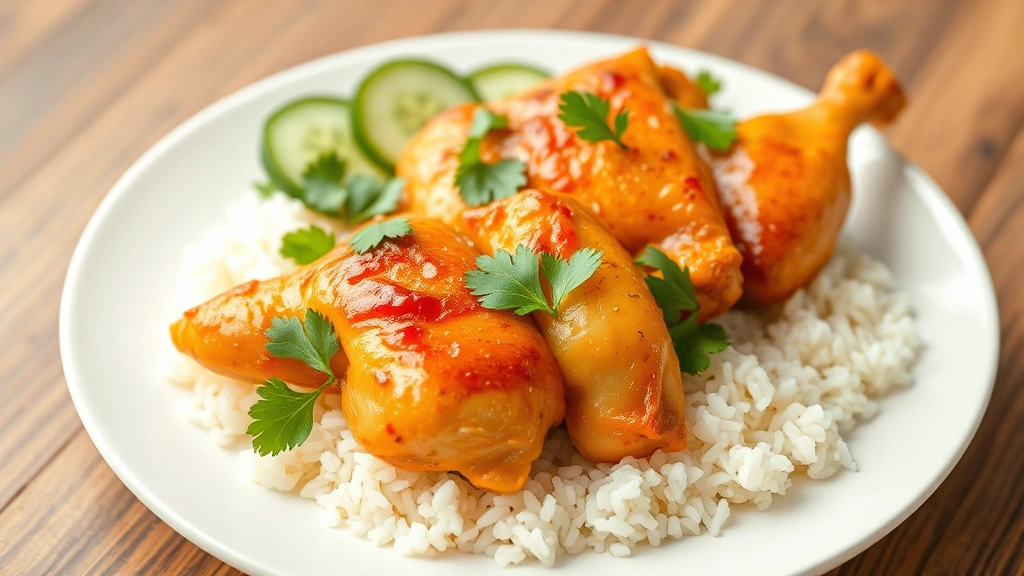
Reserve the poaching liquid—this becomes your rice cooking liquid and contributes significantly to the final dish’s flavor. Strain it through a fine-mesh sieve, discarding the solids. You should have approximately 3 cups of flavorful liquid. If you have less, supplement with additional chicken broth or water.
Crafting the Fragrant Rice
The rice in Hainanese chicken rice isn’t simply cooked in chicken broth; it’s infused with chicken fat, ginger, and aromatics to create an aromatic, subtly flavored foundation that complements the poached chicken.
Rice Selection and Preparation:
Use long-grain jasmine rice for authenticity. This variety has a naturally fragrant aroma and cooks to a fluffy texture with separate grains. Measure out 2 cups of jasmine rice and rinse it thoroughly under cold running water, stirring gently with your fingers. Continue rinsing until the water runs mostly clear—this removes excess starch and prevents the rice from becoming gummy. Drain well in a fine-mesh sieve.
The Aromatic Base:
The key to exceptional rice lies in infusing it with chicken fat and aromatics before adding liquid. Here’s the process:
- Heat 3 tablespoons of rendered chicken fat (or a combination of chicken fat and neutral oil) in a heavy-bottomed pot over medium heat
- Add 2 tablespoons of minced ginger (use young ginger if possible, as it’s more delicate)
- Cook gently for 1-2 minutes, stirring constantly, until fragrant but not browning
- Add 3-4 minced garlic cloves and cook for another 30 seconds
- Add the drained rice and stir constantly for 2-3 minutes, coating each grain with the fat and aromatics
- The rice should become slightly translucent and smell intensely fragrant at this point
Cooking the Rice:
Pour in the reserved poaching liquid (approximately 3 cups) along with 1 teaspoon of salt. Stir once, then bring to a boil over medium-high heat. Once boiling, reduce heat to the lowest setting, cover tightly with a lid, and cook undisturbed for 15 minutes. After 15 minutes, remove from heat but keep covered for an additional 10 minutes. This resting period allows the rice to finish absorbing moisture and develop optimal texture.
Fluff the rice with a fork before serving, being gentle to avoid breaking the grains. The finished rice should smell distinctly of ginger and chicken, with each grain separate and tender.
For additional inspiration on rice-based dishes and cooking techniques, explore Serious Eats’ comprehensive rice cooking guides.
Essential Sauces and Condiments
Three sauces accompany authentic Hainanese chicken rice, each serving a specific purpose in the dining experience. Together, they provide brightness, heat, and umami depth that elevates the simple components into a complete, satisfying meal.
Ginger-Scallion Sauce (Chili-Free):
This sauce provides aromatic freshness and is essential to the dish. Combine:
- 3 tablespoons minced fresh ginger
- 4 scallions, minced (white and light green parts)
- 1 teaspoon kosher salt
- 3 tablespoons neutral oil
- 1 tablespoon sesame oil
Mix the ginger, scallions, and salt in a bowl. Heat the oils together until they shimmer but don’t smoke (approximately 350°F). Pour the hot oil over the ginger-scallion mixture—it will sizzle and release aromatic compounds. Let cool slightly before serving. This sauce provides a bright, warming element that complements the chicken’s delicate flavor.
Chili Sauce (Red Sambal):
For those who enjoy heat, this sauce adds complexity and spice:
- 4-5 Thai red chilies (or 2-3 serrano peppers), roughly chopped
- 2-3 garlic cloves, roughly chopped
- 1 tablespoon fresh lime juice
- 1 teaspoon sugar
- 1/2 teaspoon salt
Combine all ingredients in a mortar and pestle, grinding to a coarse paste. Alternatively, use a food processor, pulsing until you achieve a chunky consistency. This sauce should have visible texture rather than becoming a smooth paste. The heat should be balanced with the lime juice’s brightness and the sugar’s subtle sweetness.
Dark Soy Sauce Condiment:
The third essential element is simply dark soy sauce, often combined with a touch of sesame oil. Some diners prefer it straight from the bottle, while others mix it with a small amount of sesame oil for added richness. This provides umami depth and saltiness that rounds out the overall flavor profile.
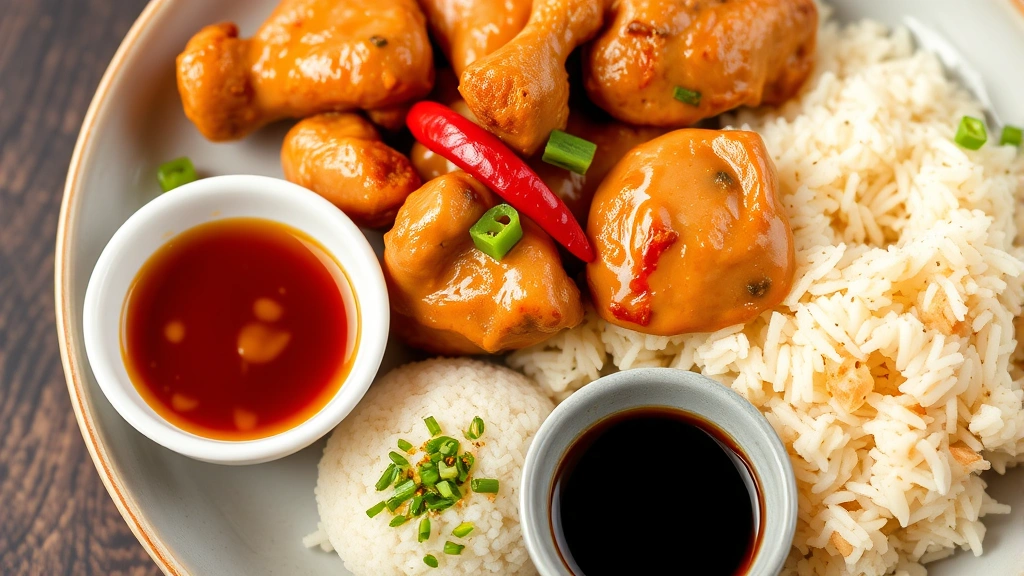
Place each sauce in small bowls so diners can customize their portions. The beauty of Hainanese chicken rice lies partly in this flexibility—each person can adjust the balance of flavors according to their preference.
Assembly and Plating
Presentation matters in Hainanese chicken rice, not from a fine-dining perspective but from a practical one. Proper plating ensures all components are visible and accessible, inviting the diner to engage with the dish.
Preparing the Chicken for Service:
Once the chicken has cooled slightly from the ice bath, it’s ready for cutting. Using a sharp chef’s knife or cleaver, cut the chicken into portions. The traditional method involves cutting the bird into 8-10 pieces: separate the legs and thighs, then cut each into 2 pieces; separate the breasts and cut each into 2-3 pieces; and include the wings. Some prefer leaving the skin on for visual appeal and texture, while others remove it for a cleaner presentation.
Arrange the chicken pieces on top of a mound of warm fragrant rice on individual plates or a shared platter. The skin should be visible, showing the delicate pale color that indicates proper poaching.
Garnish and Final Touches:
Garnish with fresh cilantro leaves and thinly sliced scallions scattered over the chicken and rice. A few slices of cucumber add freshness and traditional visual balance. Some preparations include a drizzle of the reserved poaching liquid over the chicken—this adds moisture and additional subtle flavor.
Place the three sauces in small bowls alongside the plated chicken and rice, allowing diners to customize their experience. Serve immediately while the rice is warm and the chicken is at optimal temperature.
Common Mistakes to Avoid
Even with clear instructions, several common pitfalls can compromise your Hainanese chicken rice. Understanding these mistakes helps ensure success.
Overcooking the Chicken:
This is the most frequent error. Overcooked chicken becomes dry and loses its delicate texture. Use a meat thermometer and remove the chicken immediately upon reaching 165°F (74°C) internal temperature. Remember that the chicken continues cooking slightly during the ice bath, so removing it just before reaching target temperature is acceptable.
Using Low-Quality Chicken:
Since this dish relies on the chicken’s natural flavor, using factory-farmed birds will result in a bland final product. Invest in quality poultry—your effort will be rewarded with superior results.
Neglecting the Poaching Liquid:
Many cooks discard the poaching liquid after cooking the chicken. This liquid contains dissolved chicken collagen and aromatics that become the foundation for exceptional rice. Always reserve and use it for cooking the rice.
Cooking Rice in Boiling Liquid:
Adding rice to rapidly boiling liquid can result in uneven cooking. Bring the liquid and rice together to a boil, then immediately reduce heat to maintain a gentle simmer. This prevents the exterior of the rice from cooking faster than the interior.
Skipping the Resting Period:
After the rice finishes cooking, resist the urge to open the lid immediately. The 10-minute resting period allows carryover cooking and moisture absorption, resulting in perfectly textured rice. Opening the lid prematurely releases steam and can result in undercooked grains.
Overseasoning:
The poaching liquid should taste pleasantly seasoned but not aggressively salty. Remember that the sauces will add additional salt and flavor. The chicken and rice should taste subtle and clean, allowing the sauces to shine and enabling diners to customize their experience.
For insights into seasoning philosophy and technique, exploring chicken seasoning recipe approaches can enhance your understanding of flavor balance in poultry dishes.
Understanding how different cooking methods affect chicken texture and flavor, as discussed in guides on smothered chicken recipe preparations, reinforces the importance of technique in achieving desired results.
FAQ
Can I use chicken breasts instead of a whole bird?
While possible, using only breasts isn’t ideal. Whole birds provide superior flavor and texture due to the skin and fat content. If you must use breasts, reduce cooking time to 15-18 minutes and monitor temperature carefully to prevent overcooking. Thighs alone are actually a better substitute for whole birds than breasts.
How far in advance can I prepare components?
The poaching liquid can be made 1-2 days ahead and refrigerated. The chicken can be poached up to 6 hours in advance and served at room temperature or gently reheated. The rice should be cooked fresh and served within 30 minutes of completion for best texture. Sauces can be made up to 4 hours ahead, though the ginger-scallion sauce is best prepared fresh.
What if I can’t find jasmine rice?
Jasmine rice is ideal, but long-grain white rice works as an acceptable substitute. Avoid short-grain or sticky rice varieties, as these will result in a gummy texture inappropriate for this dish. Basmati rice, while aromatic, has a different texture and flavor profile that changes the final dish.
Is the ice bath truly necessary?
Yes, the ice bath serves multiple purposes. It stops the cooking process immediately, preventing carryover cooking that can dry out the chicken. It also helps set the skin, resulting in a more delicate texture. Additionally, it allows the chicken to cool enough to handle safely while maintaining food safety standards.
Can I make this dish with a rotisserie chicken?
While convenient, store-bought rotisserie chicken isn’t ideal for authentic Hainanese chicken rice. These birds are seasoned heavily and cooked at high temperatures, resulting in different texture and flavor than properly poached chicken. For best results, commit to the poaching process—the technique isn’t difficult and requires only 30-35 minutes of actual cooking time.
What’s the best way to store leftovers?
Store chicken and rice separately in airtight containers in the refrigerator for up to 3 days. Reheat rice gently with a splash of water in a covered pot over low heat. Reheat chicken by placing it in simmering broth for 2-3 minutes. Store sauces separately in sealed containers for up to 5 days. The ginger-scallion sauce may separate; simply stir before serving.
Can I double this recipe for a crowd?
Absolutely. The recipe scales well for larger quantities. Use a larger pot for poaching and increase all ingredient quantities proportionally. When cooking larger batches of rice, maintain the same liquid-to-rice ratio and cooking times, though you may need to extend the resting period slightly. Cook chicken in batches if your pot capacity is limited rather than overcrowding, which compromises even cooking.


