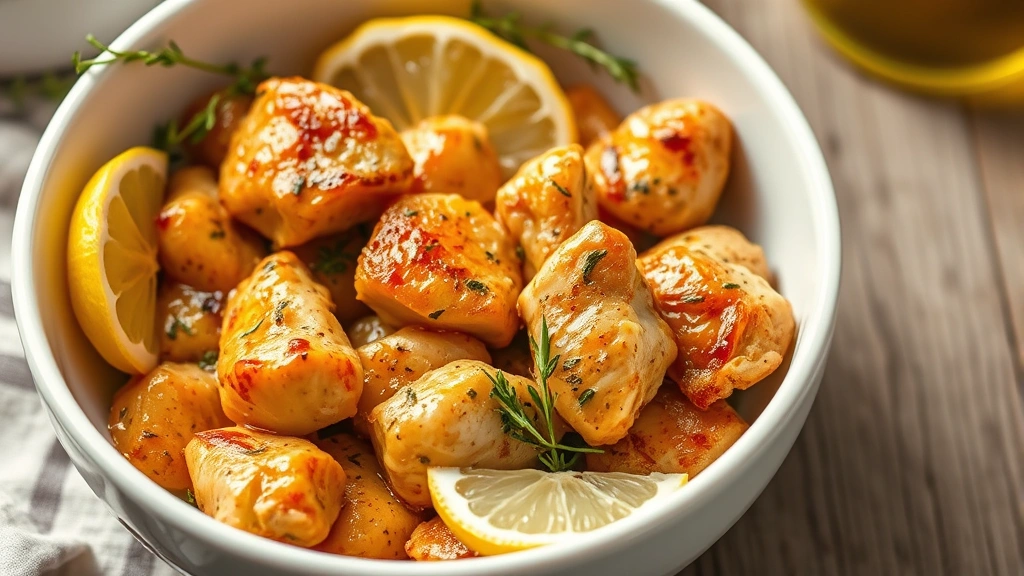
Authentic Chicken Souvlaki: A Greek Chef’s Complete Guide
Chicken souvlaki represents the heart of Greek street food culture—succulent, marinated chicken threaded onto wooden skewers and grilled to perfection over charcoal flames. This dish transcends simple cooking; it’s a culinary tradition passed down through generations of Greek families and perfected in tavernas across the Mediterranean. The magic lies not in complicated techniques but in understanding how proper marination, quality ingredients, and precise grilling transform humble chicken into restaurant-quality perfection.
Whether you’re planning a summer gathering or seeking to expand your high-protein low-calorie recipes collection, authentic chicken souvlaki delivers incredible flavor with minimal effort. This guide walks you through every step, from selecting the right chicken cuts to achieving those coveted charred edges that make souvlaki irresistible.
Essential Ingredients for Authentic Souvlaki
The foundation of exceptional chicken souvlaki begins with understanding your ingredients. Unlike many dishes that rely on numerous components, souvlaki achieves its complexity through quality and balance rather than quantity.
The Chicken: Choose bone-in, skin-on chicken thighs or a combination of thighs and breasts. Thighs contain more fat and connective tissue, which keeps them juicy during grilling. If using breasts exclusively, pound them to uniform thickness (about 1.5 inches) to prevent dry spots. Many Greek chefs prefer thighs for their superior flavor and forgiving cooking properties.
The Marinade Base: Extra virgin olive oil forms the foundation—use quality oil, as it directly affects the final taste. Greek oregano (dried is traditional and more potent than fresh) provides the signature herbal profile. Lemon juice adds acidity that tenderizes the meat while brightening flavors. Garlic, minced or sliced, infuses the chicken with pungent depth.
Supporting Players: Sea salt and black pepper are non-negotiable. Some traditional recipes include a touch of red wine vinegar for additional complexity, while others add a pinch of paprika for subtle smoke. Optional ingredients like bay leaves, thyme, or rosemary enhance depth without overwhelming the oregano’s prominence.
Complete Marinade Recipe:
- ¾ cup extra virgin olive oil
- ¼ cup fresh lemon juice
- 2 tablespoons red wine vinegar (optional but recommended)
- 2 tablespoons dried Greek oregano
- 6-8 garlic cloves, minced
- 1 teaspoon sea salt
- ½ teaspoon black pepper
- 1 bay leaf (optional)
- ½ teaspoon paprika (optional)
This marinade works for 2-3 pounds of chicken. The ratio of oil to acid (roughly 3:1) creates an emulsion that adheres to the meat while preventing it from becoming waterlogged.
Preparing and Marinating Your Chicken
Proper preparation determines whether your souvlaki reaches authentic excellence or falls short of potential.
Cutting the Chicken: Cut chicken pieces into 1.5 to 2-inch cubes, ensuring uniform size for even cooking. Remove excess skin but leave some attached for flavor and moisture. Pat pieces dry with paper towels—moisture prevents proper browning and marinade absorption. Place dried pieces in a large bowl or shallow container.
Creating the Marinade: Combine olive oil, lemon juice, and vinegar in a bowl. Whisk in minced garlic, oregano, salt, pepper, and optional ingredients. The mixture should be well-blended with visible flakes of oregano distributed throughout. Some cooks prefer to blend the marinade using an immersion blender for smoother consistency, though traditional methods involve simple whisking.
Marinating Timeline: Pour marinade over chicken pieces, ensuring even coating. Cover and refrigerate for minimum 4 hours, though 8-12 hours yields superior flavor development. Greek chefs often marinate overnight. Avoid marinating longer than 24 hours, as extended acid exposure can make the exterior mushy. Turn or shake the container halfway through marinating to ensure even coverage.
Temperature Consideration: Remove chicken from refrigeration 30 minutes before grilling. This allows the meat to reach closer to room temperature, promoting more even cooking throughout. Cold chicken placed directly on hot grates can result in charred exteriors with undercooked centers.
When you’re ready to grill, you might also explore griddle recipes as an alternative cooking method for indoor preparation during poor weather.
Skewering Techniques for Even Cooking
Proper skewering affects both cooking consistency and presentation—this step deserves careful attention.
Skewer Selection: Use wooden skewers soaked in water for minimum 30 minutes, or invest in flat metal skewers. Wooden skewers prevent rotation, ensuring even char development. Metal skewers conduct heat but allow rotation, which some prefer. Soak wooden skewers thoroughly to prevent burning during grilling.
Threading Method: Thread chicken pieces onto skewers with slight gaps between pieces—not touching but not widely spaced. Leave 2 inches of skewer exposed at the handle end for safe gripping. For flat metal skewers, thread chicken pieces horizontally to prevent spinning. Push pieces firmly but gently; they should be snug without crushing.
Optimal Configuration: Each skewer should hold 5-7 pieces depending on size. Uniform loading ensures consistent cooking across all skewers. If using thighs and breasts, separate them onto different skewers since thighs require slightly longer cooking. Arrange skewers so they don’t touch when placed on the grate.
Pro Tip: Alternate chicken pieces with vegetable chunks—red onion, bell peppers, or zucchini—if desired. Vegetables should be cut to similar sizes as chicken. This creates attractive presentation and adds complementary flavors, though traditional Greek souvlaki often features chicken alone.
Grilling Methods and Temperature Control
Grilling technique separates authentic souvlaki from mediocre results. Understanding heat management is crucial for achieving that distinctive charred exterior with juicy, tender interior.
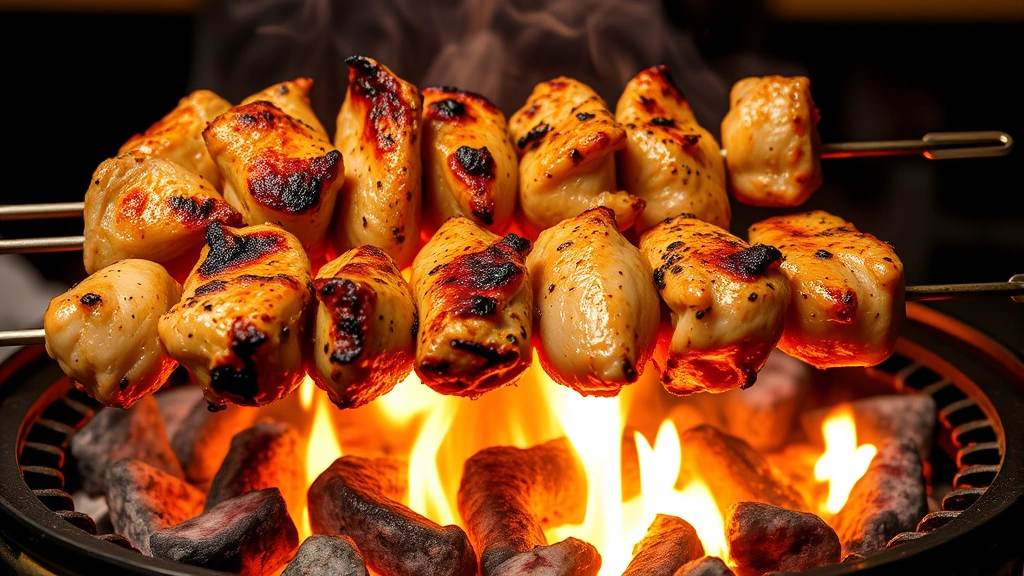
Charcoal vs. Gas: Traditional Greek preparation uses charcoal grills, which provide superior flavor through wood smoke and intense, consistent heat. Charcoal reaches higher temperatures and creates better char development. Gas grills work adequately and offer easier temperature control, though the flavor profile differs slightly. Whichever you choose, aim for high, consistent heat.
Temperature and Timing: Preheat your grill to 450-500°F (230-260°C). Place souvlaki skewers directly over heat. Each side requires 3-4 minutes of cooking, rotating a quarter turn every minute to develop even charring on all sides. Total cooking time is typically 12-16 minutes depending on piece size and heat intensity.
Doneness Testing: Chicken is done when internal temperature reaches 165°F (74°C) at the thickest part, away from bones. Use an instant-read thermometer for accuracy. The exterior should display dark char marks—not black, but deep golden-brown with visible blackened spots. Juices should run clear when a piece is pierced.
Managing Flare-ups: Marinade drips cause flare-ups on charcoal grills. Move skewers to cooler zones temporarily if flames become excessive. Maintain consistent heat by adjusting grill vents (charcoal) or burner settings (gas). The goal is controlled, even cooking rather than excessive flame exposure.
Resting Period: After removing from grill, let souvlaki rest for 5 minutes on a clean plate. This allows juices to redistribute, ensuring each piece remains moist when eaten. Cutting immediately releases precious juices; resting preserves them.
Serving Suggestions and Pairings
Authentic presentation and accompaniments elevate souvlaki from simple grilled chicken to complete Mediterranean dining experience.
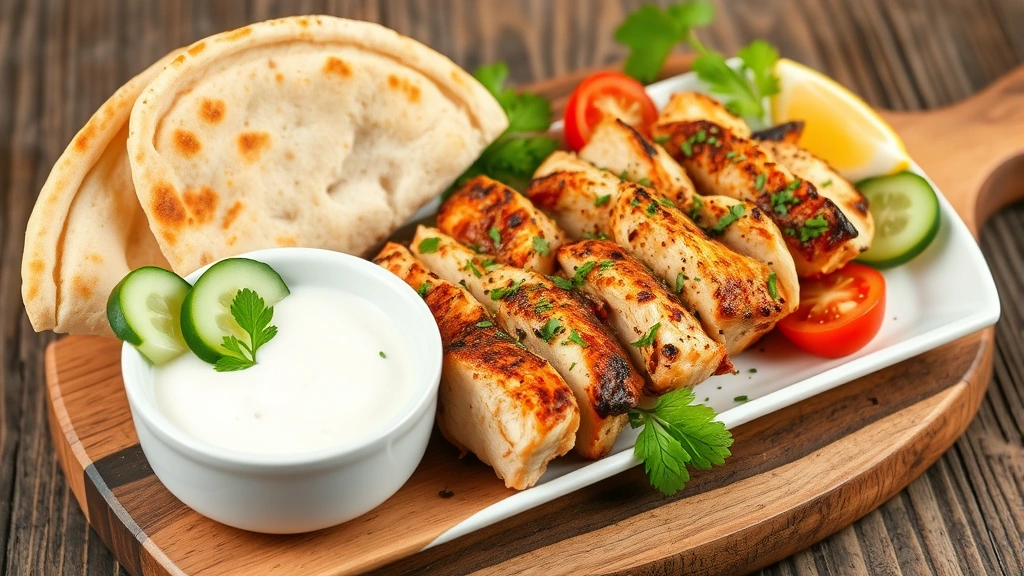
Traditional Accompaniments: Serve souvlaki with warm pita bread, allowing diners to build their own wraps. Provide tzatziki sauce (yogurt-based cucumber sauce), which cools the palate and complements the charred chicken. Add fresh tomatoes, cucumbers, and red onion slices. Lemon wedges are essential for squeezing over chicken.
Side Dish Pairings: Greek salad with feta cheese and Kalamata olives provides refreshing contrast. Roasted potatoes or rice pilaf rounds out the meal. Consider preparing rice bowl recipes as contemporary serving options, layering rice with souvlaki, vegetables, and sauce.
Beverage Matches: Greek white wines like Assyrtiko pair beautifully with souvlaki’s charred, herbaceous flavors. Greek beer offers casual, refreshing accompaniment. Ouzo (anise-flavored spirit) is traditionally served as an aperitif before the meal.
Sauce Preparation: Make tzatziki by combining Greek yogurt, grated cucumber (squeezed dry), minced garlic, fresh dill, lemon juice, and salt. Prepare this ahead; flavors improve with time. Alternatively, serve simple lemon-olive oil drizzle or traditional garlic sauce (skordalia) made with mashed potatoes, garlic, and olive oil.
For those seeking grandma approved dinner recipes, souvlaki represents the type of wholesome, family-friendly dish that connects generations through shared meals and traditions.
Storage and Make-Ahead Tips
Marinated Chicken Storage: Marinated chicken keeps refrigerated for up to 24 hours. Longer marinating risks texture degradation from excessive acid exposure. Freeze marinated chicken in airtight containers for up to 3 months. Thaw overnight in the refrigerator before grilling.
Cooked Souvlaki Storage: Refrigerate cooked souvlaki in airtight containers for 3-4 days. Reheat gently on a medium grill for 2-3 minutes per side, or in a 350°F (175°C) oven for 10-12 minutes, until heated through. Avoid overheating, which dries the meat.
Freezing Cooked Souvlaki: Freeze cooked pieces in airtight freezer bags for up to 2 months. Thaw overnight in the refrigerator before reheating. Cooked souvlaki maintains better texture than raw marinated chicken when refrozen.
Make-Ahead Strategies: Prepare marinade 2 days ahead; store in the refrigerator in an airtight container. Cut chicken and marinate up to 24 hours before grilling. Prepare all accompaniments—salads, sauces, vegetable cuts—the morning of serving. Thread skewers up to 2 hours ahead, covering with plastic wrap to prevent drying.
Transporting for Outdoor Entertaining: Transport marinated chicken in insulated coolers with ice packs. Keep skewers separate until grilling begins. Bring cooked souvlaki in insulated containers lined with foil to retain heat. Pack all sauces and accompaniments in separate containers to prevent sogginess.
Frequently Asked Questions
Can I use chicken breasts instead of thighs?
Yes, though results differ. Breasts are leaner and require careful cooking to prevent dryness. Pound them to uniform 1.5-inch thickness and don’t skip the marinating step. Consider using a combination of breasts and thighs for optimal results. Thighs’ higher fat content makes them more forgiving for beginners.
How long should I marinate chicken souvlaki?
Minimum 4 hours develops adequate flavor; 8-12 hours is ideal. Overnight marinating (up to 24 hours) works but risks mushy exteriors from excessive acid exposure. Balance flavor development with texture preservation by marinating 8-12 hours.
Can I make souvlaki in the oven?
Absolutely. Preheat to 450°F (230°C). Arrange skewers on a lined baking sheet and roast for 15-20 minutes, turning halfway through. The exterior won’t achieve the same char as grilling, but flavor remains excellent. For better browning, broil the top rack for the final 2-3 minutes.
What’s the difference between souvlaki and kebab?
Souvlaki specifically refers to Greek grilled meat on skewers with characteristic oregano-lemon marinade. Kebab is a broader term encompassing various skewered meat preparations across Middle Eastern and Mediterranean cuisines. Souvlaki emphasizes Greek oregano and simple ingredients; kebabs often include additional spices and regional variations.
Can I prepare souvlaki without a grill?
Yes, several alternatives work well. Use a grill pan or cast-iron skillet over high heat for 3-4 minutes per side. A broiler works effectively—place skewers on a broiler pan and broil 4-6 inches from heat for 12-15 minutes, turning halfway. An oven at 450°F produces acceptable results, though char development is limited.
What wooden skewers should I use?
Bamboo skewers are most common and affordable. Soak them for minimum 30 minutes to prevent burning. Wooden skewers should be at least 10 inches long for safe handling. Alternatively, invest in flat metal skewers, which conduct heat efficiently and prevent rotation.
How do I prevent chicken from sticking to the grill?
Oil the grates thoroughly before heating. Use high heat to create a crust quickly, preventing sticking. Don’t move skewers excessively—place them and let them develop char before rotating. Clean grates after each use to prevent buildup that causes sticking.
Can I make souvlaki ahead for a party?
Absolutely. Marinate chicken up to 24 hours ahead. Thread skewers 2-4 hours before grilling, covering with plastic wrap. Grill 30-45 minutes before serving for optimal temperature and texture. Keep cooked souvlaki warm in an insulated container lined with foil.
What’s the best lemon juice for the marinade?
Fresh squeezed lemon juice is superior to bottled varieties, which contain preservatives affecting flavor. Squeeze lemons 30 minutes before use for maximum juice. If using bottled juice, choose brands without additives. One medium lemon yields approximately 3 tablespoons juice.
Should I include vegetables on the same skewer?
Traditional Greek souvlaki features chicken alone. However, adding vegetables (red onion, bell peppers, zucchini) is modern and practical for complete meals. Cut vegetables to match chicken size for even cooking. Keep vegetables on separate skewers if they cook at different rates than your chicken pieces.


