Coconut Margarita Magic: Bartender’s Guide to Tropical Perfection
The coconut margarita represents the ultimate fusion of tropical paradise and classic cocktail sophistication. This vibrant drink transforms the traditional margarita into a creamy, refreshing escape that transports your taste buds to sun-soaked beaches with every sip. Whether you’re crafting cocktails for a summer gathering or perfecting your home bar skills, mastering the coconut margarita opens doors to endless flavor variations and impressed guests.
What makes the coconut margarita so magical? It’s the perfect balance of citrus brightness, smooth tequila warmth, and rich coconut creaminess that creates a drinking experience far more complex than its simple ingredient list suggests. The drink appeals to both margarita purists who appreciate its elegant simplicity and tropical cocktail enthusiasts who crave bold, adventurous flavors. This comprehensive guide walks you through every aspect of creating the perfect coconut margarita, from ingredient selection to advanced bartending techniques.
Essential Ingredients for Coconut Margarita Success
Understanding your ingredients is the foundation of exceptional cocktail creation. The coconut margarita relies on a carefully balanced combination of components that work together to create harmony in your glass. Each ingredient plays a specific role, and quality matters tremendously when you’re working with such a short ingredient list.
Premium tequila forms the backbone of your drink, providing the spirit base and character. You’ll want to invest in 100% agave tequila rather than mixtos, which contain additives that muddy the delicate flavors you’re building. The tequila’s notes should complement rather than compete with the coconut and citrus elements.
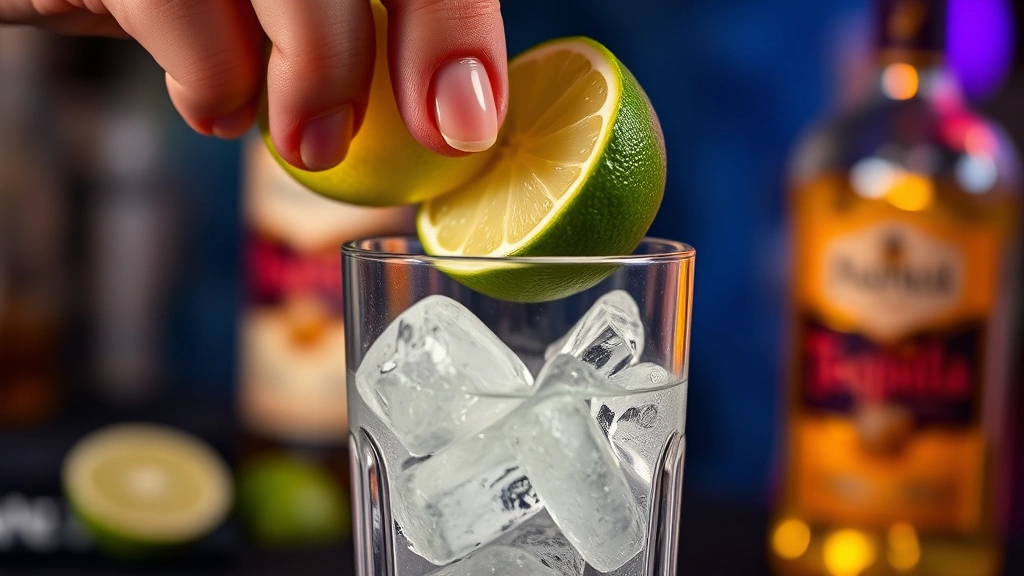
Fresh lime juice is non-negotiable for authentic margarita making. Bottled lime juice contains preservatives that create a flat, artificial taste that undermines your entire drink. One fresh lime yields approximately one ounce of juice, so plan accordingly. The acidity in fresh lime juice brightens the coconut’s richness and creates the essential citrus backbone.
Coconut liqueur like Coco López, Malibu, or similar products provides sweetness and coconut flavor while maintaining proper drink proportions. Some bartenders prefer cream of coconut for its richer texture, while others opt for coconut rum for additional spirit depth. Your choice here significantly impacts the final flavor profile.
Orange liqueur such as Cointreau, Grand Marnier, or Triple Sec adds complexity and helps marry the flavors together. This ingredient bridges the gap between the tropical coconut elements and the traditional margarita structure, preventing the drink from feeling one-dimensional.
Ice might seem simple, but quality ice matters in cocktail crafting. Large, clear ice cubes melt more slowly than standard ice, preventing your drink from becoming watered down. This is especially important in coconut margaritas where the coconut cream can separate if the drink becomes too cold or diluted improperly.
Choosing Your Tequila and Spirits
The spirit selection dramatically influences your coconut margarita’s character and quality. This is where many home bartenders either elevate or diminish their final product. Understanding tequila classifications helps you make informed decisions that align with your flavor goals.
Blanco tequila is the most common choice for margaritas. It’s unaged, bottled immediately after distillation, and presents bright, pure agave flavors without oak influence. Blanco tequilas showcase the terroir of their production region beautifully. In coconut margaritas, blanco allows the coconut and citrus to shine without competing with barrel notes.
Reposado tequila spends two to eleven months in oak barrels, developing golden color and subtle vanilla, caramel, and wood notes. Using reposado in your coconut margarita creates a more sophisticated drink with additional depth. The barrel aging adds complexity that sophisticated drinkers appreciate, though it can sometimes overshadow delicate coconut flavors if not balanced carefully.
Añejo tequila, aged one to three years, develops rich, complex characteristics that can overwhelm a coconut margarita. While technically you can use it, the cost and flavor intensity usually make it an unnecessary choice for this particular application. Save your premium añejos for sipping neat or in spirit-forward cocktails.
For your orange liqueur component, Cointreau represents the premium standard with its clear appearance and balanced sweet-bitter orange profile. Grand Marnier offers deeper orange intensity with cognac undertones. Triple Sec provides excellent value without sacrificing quality. Your choice depends on budget and desired flavor intensity.
When crafting low carb dinner recipes or considering cocktails within specific dietary parameters, remember that most spirits contain negligible carbohydrates, though coconut cream and liqueurs do add sugar content.
Coconut Elements: Cream vs. Milk vs. Liqueur
The coconut component represents the soul of your margarita, and you have several options, each creating distinctly different results. Understanding these alternatives empowers you to customize drinks to your preferences and available ingredients.
Cream of coconut, often sold under the Coco López brand, is a sweetened, thick coconut product used in piña coladas and tropical drinks. It creates rich, luxurious margaritas with creamy mouthfeel and pronounced coconut flavor. The downside is its sweetness, which requires careful balancing with lime juice and potentially less orange liqueur. This option works beautifully for dessert-style margaritas.
Coconut milk, the canned variety found in international sections, offers lighter coconut flavor with less sweetness than cream of coconut. It creates smoother, more elegant drinks that feel less heavy. The trade-off is less pronounced coconut character, though some prefer this subtle approach. Shake vigorously to incorporate fully and prevent separation.
Coconut rum like Malibu or Bacardi Coconut provides coconut flavor while contributing additional spirit volume. This approach requires less additional sweetener since coconut rums already contain sugar. The drink becomes more spirit-forward and less creamy. Many bartenders prefer this method for its balance and drinkability.
Coconut liqueur such as Monin or Torani coconut syrup represents a concentrated option. A small amount (0.5 ounces) delivers intense flavor without excessive sweetness or texture. This works wonderfully for bartenders who want control over coconut intensity without the creaminess of cream of coconut.
Experiment with combinations: using both coconut rum and a splash of cream of coconut creates layered complexity that pure versions cannot achieve. The best approach depends on your taste preferences and the occasion.
The Classic Coconut Margarita Recipe
This foundational recipe provides the template from which all variations emerge. Master this version before exploring advanced techniques and creative modifications.
Ingredients (serves 1):
- 2 ounces premium blanco tequila
- 1 ounce fresh lime juice
- 0.75 ounces Cointreau or Triple Sec
- 0.75 ounces cream of coconut (or 1 ounce coconut milk)
- 0.5 ounces simple syrup (optional, for additional sweetness)
- Ice (preferably large cubes)
- Lime wheel and toasted coconut for garnish
Step-by-step instructions:
- Chill your glassware. Fill your margarita glass with ice while you prepare the drink. A cold glass maintains proper temperature and presentation throughout consumption.
- Measure ingredients precisely. Use a jigger for accuracy. Pour tequila first, then lime juice, orange liqueur, and coconut cream into your cocktail shaker.
- Add ice to the shaker. Fill approximately three-quarters full with quality ice. The amount of ice affects dilution and final temperature.
- Shake vigorously for 10-15 seconds. This duration properly chills the drink and incorporates all ingredients. Vigorous shaking is especially important with cream-based ingredients to ensure proper emulsification.
- Strain into your prepared glass. Use a cocktail strainer to prevent ice from falling into your drink. The drink should be properly chilled and well-mixed.
- Garnish immediately. Add your prepared lime wheel and toasted coconut rim while the drink is at optimal temperature.
This classic recipe balances coconut richness with citrus brightness and spirit warmth. The proportions work because the 2:1:0.75:0.75 ratio maintains traditional margarita structure while incorporating coconut elements seamlessly.
Advanced Techniques and Variations
Once you’ve mastered the classic version, explore these advanced approaches that professional bartenders use to create signature drinks and impress discerning cocktail enthusiasts.
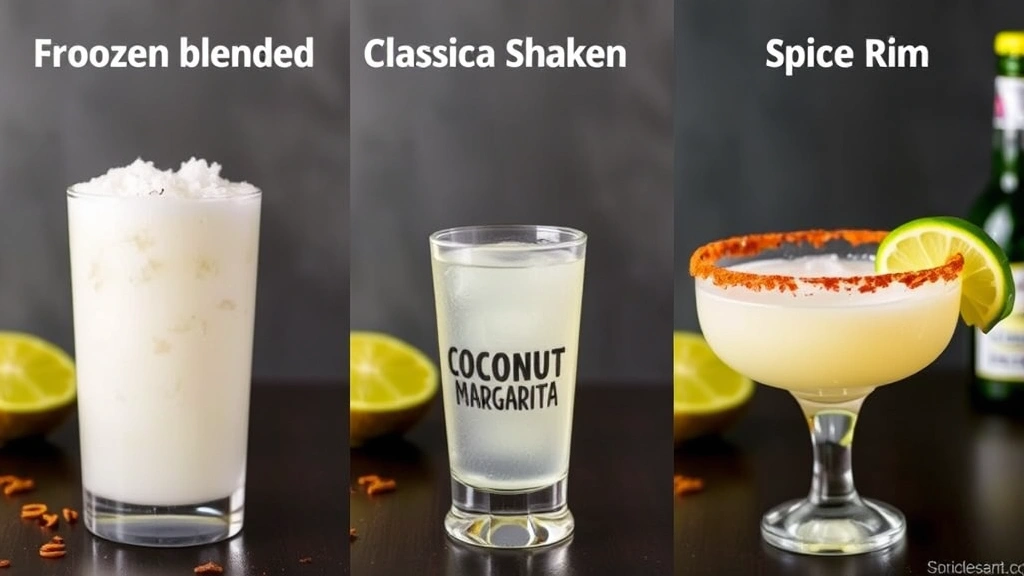
The frozen coconut margarita transforms the drink into a slushy dessert-cocktail hybrid. Blend your measured ingredients with 1.5 cups of crushed ice until smooth and slushy. This variation works wonderfully for pool parties and casual gatherings. The frozen preparation dilutes the drink slightly, so consider increasing spirit portions slightly to compensate.
The spiced coconut margarita incorporates cayenne pepper, jalapeño, or habanero for heat contrast. Rim your glass with a mixture of salt, sugar, and dried chili powder. Muddle two thin jalapeño slices in your shaker before adding other ingredients. The heat brings out the sweetness in coconut while creating complexity that makes the drink more interesting.
The aged coconut margarita uses reposado or añejo tequila instead of blanco. This creates a more sophisticated, sipping-oriented drink suitable for after-dinner service. The barrel notes complement coconut beautifully, creating a drink that feels more substantial and contemplative.
The tropical coconut margarita adds 0.5 ounces of pineapple juice or passion fruit purée. This creates a more complex tropical profile that bridges toward tiki cocktails while maintaining margarita structure. The additional fruit juice requires reducing other components slightly to prevent oversweetness.
The dry coconut margarita appeals to those who find standard versions too sweet. Use 0.5 ounces coconut milk instead of cream of coconut, reduce simple syrup, and increase lime juice to 1.25 ounces. This creates a more spirit-forward, citrus-driven drink that coconut simply enhances rather than dominates.
Like preparing healthy ground turkey recipes, cocktail creation benefits from understanding ingredient interactions and flavor balance. Small adjustments create dramatically different results.
Advanced bartenders also explore infusions and house-made components. Coconut-infused tequila (steeping toasted coconut in blanco tequila for one week) intensifies coconut flavor naturally. House-made coconut syrup (equal parts coconut water, sugar, and toasted coconut, simmered and strained) provides fresh coconut character without artificial flavors.
Garnishing Like a Professional Bartender
Garnishes aren’t merely decorative—they contribute aroma, flavor, and visual appeal that complete the drinking experience. Professional bartenders understand that garnish selection elevates ordinary drinks into memorable creations.
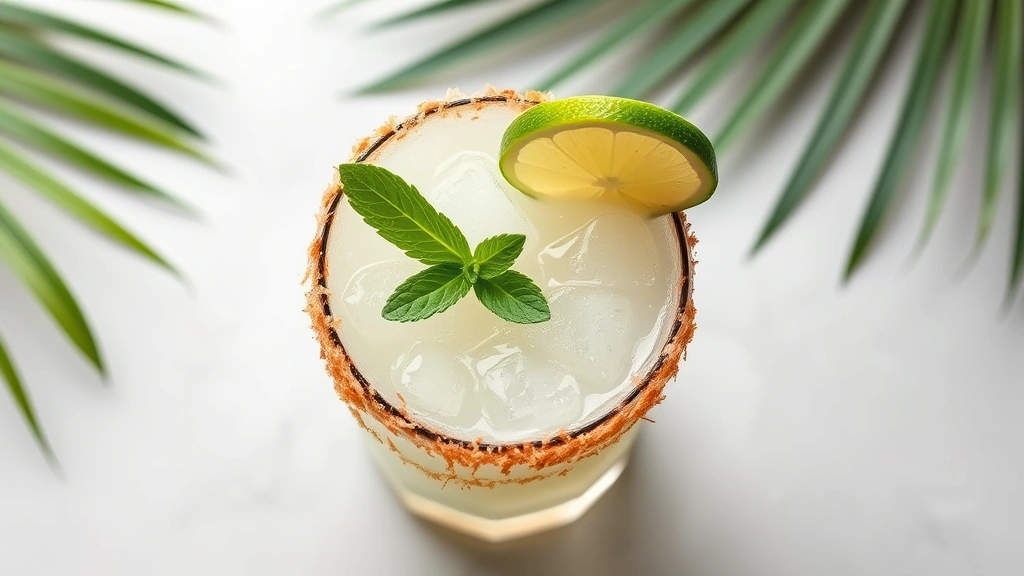
The toasted coconut rim represents the signature coconut margarita garnish. Toast unsweetened shredded coconut in a dry pan over medium heat for 2-3 minutes, stirring constantly until golden and fragrant. Mix with sea salt and a touch of sugar on a shallow plate. Rim your glass by rubbing the lime-juice-dampened rim through this mixture. The toasted coconut provides textural contrast and reinforces coconut flavor with each sip.
Lime wheels and twists add visual appeal and aromatic complexity. Cut fresh limes into thin wheels, or use a channel knife to create long, elegant twists. Place a wheel on the glass rim or twist a strip over the drink to express oils across the surface.
Fresh mint sprig adds tropical freshness and aroma. Slap the mint gently between your hands to release oils before placing it in the drink. This small touch creates aromatic complexity that enhances the drinking experience.
Coconut flakes and edible flowers create visually stunning presentations for special occasions. Toast coconut flakes separately from the salt rim, then apply them only to the upper half of the rim for visual interest. Small edible flowers like pansies or orchids add elegance without affecting flavor significantly.
Pineapple wedges work beautifully, especially in tropical variations. A small pineapple spear placed across the glass rim adds color and tropical character that immediately communicates the drink’s flavor profile.
Professional presentation matters because visual appeal influences taste perception. A beautifully garnished drink tastes better than an identical drink presented plainly—this is established culinary science. Take time with garnishing, as it separates professional-quality cocktails from casual home versions.
Batch Cocktails and Party Preparation
When hosting gatherings, preparing individual cocktails becomes impractical. Batch preparation allows you to serve multiple drinks efficiently while maintaining quality and consistency. This approach works wonderfully for Grandma’s recipe box summer potluck style entertaining where casual gatherings call for accessible, delicious drinks.
The batch formula: Multiply your single-drink recipe by the number of servings desired. For a party of twelve, multiply each ingredient by twelve. Mix all components except ice in a large pitcher or drink dispenser. This can be prepared several hours ahead, covering and refrigerating until service time.
Example batch recipe (serves 12):
- 24 ounces blanco tequila
- 12 ounces fresh lime juice
- 9 ounces Cointreau
- 9 ounces cream of coconut
- 6 ounces simple syrup
Combine these in a large pitcher. When ready to serve, fill your cocktail shaker with ice, add 6 ounces of the batch mixture, and shake for 10-15 seconds before straining into a prepared glass. This method maintains proper chilling and dilution while serving multiple guests efficiently.
Alternative batch service: Prepare the batch mixture and serve it directly over ice in a punch bowl. Guests serve themselves, though this method provides less control over dilution and chilling. The tradeoff is maximum convenience for casual gatherings.
Set up a self-serve garnish station where guests can customize their drinks. Provide toasted coconut rim mixture, lime wheels, mint sprigs, and pineapple wedges. This interactive approach engages guests and accommodates individual preferences while reducing your service burden.
For extended parties, batch preparation also applies to vegetarian slow cooker recipes and other make-ahead components. The principle of preparing components in advance, then finishing with fresh elements, applies across entertaining contexts.
Make-ahead considerations: Prepare all non-citrus components the day before. Fresh lime juice oxidizes and loses brightness within 24 hours, so juice limes immediately before service. Pre-chill your pitcher and glassware to minimize ice melting during service. Have all garnish components prepared and stored in covered containers in the refrigerator.
Understanding food science principles from the Institute of Food Technologists helps explain why certain preparations work. Citric acid in lime juice oxidizes quickly, copper in fresh ingredients affects color stability, and temperature control prevents unwanted chemical reactions.
FAQ
Can I make coconut margaritas without cream of coconut?
Absolutely. Coconut milk creates a lighter version, or use coconut rum for a spirit-forward approach. Coconut liqueur or house-made coconut syrup work beautifully. Each option creates different flavor and texture results, so experiment to find your preference.
What’s the difference between a coconut margarita and a piña colada?
Piña coladas use rum as the base spirit with coconut cream and pineapple juice, creating a tropical dessert drink. Coconut margaritas use tequila as the base with lime juice and orange liqueur, maintaining traditional margarita structure with coconut as an enhancement. Margaritas emphasize citrus and spirit balance, while piña coladas emphasize creamy sweetness.
Should I use frozen or fresh lime juice?
Fresh lime juice is always superior for cocktails. Frozen lime juice lacks the aromatic oils and bright character of fresh juice. Bottled juice contains preservatives that create flat, artificial flavors. If fresh limes are unavailable, frozen juice is acceptable, but fresh juice should be your standard.
How do I prevent my coconut margarita from separating?
Vigorous shaking for 10-15 seconds properly emulsifies cream-based ingredients. Serve immediately after straining. Avoid letting the drink sit too long before serving, as separation occurs over time. If you’re batch-preparing, add cream components only when shaking individual drinks rather than in the batch mixture.
Can I make coconut margaritas ahead for a party?
Yes, prepare the batch mixture without lime juice and cream components. Add fresh lime juice and cream ingredients when shaking individual drinks. This maintains freshness and prevents separation. The non-citrus components can sit refrigerated for up to 24 hours.
What type of glass should I use?
Traditional margarita glasses work beautifully. Some bartenders prefer rocks glasses for a more casual presentation. Frozen versions work in any glassware. The key is chilling your glass beforehand to maintain optimal temperature.
How can I reduce sweetness in a coconut margarita?
Use coconut milk instead of cream of coconut, reduce orange liqueur to 0.5 ounces, increase lime juice to 1.25 ounces, and skip additional simple syrup. This creates a more balanced, spirit-forward drink where coconut enhances rather than dominates.
What’s the best tequila for coconut margaritas?
Premium 100% agave blanco tequila provides the ideal base. Look for brands like Patrón, Don Julio, Espolòn, or El Tesoro. The pure agave character allows coconut and citrus to shine without competing barrel notes or additives from mixtos.
Can I make a spicy coconut margarita?
Yes! Rim your glass with salt-sugar-chili powder mixture, muddle jalapeño slices in your shaker, or add a pinch of cayenne pepper to the drink itself. The heat brings out sweetness in coconut while creating interesting complexity. Start with small amounts and adjust to your heat tolerance.
How do I make coconut-infused tequila?
Toast unsweetened shredded coconut in a dry pan until golden and fragrant. Add one cup of toasted coconut to a bottle of blanco tequila. Seal and let infuse for five to seven days, shaking daily. Strain through fine mesh, discarding solids. The infused tequila provides natural coconut flavor for ultra-fresh drinks.
Professional bartenders at renowned establishments like the Cocktail Training Academy emphasize that mastering foundational cocktails like the margarita opens doors to creative variations. Understanding proportions, techniques, and ingredient interactions allows you to innovate confidently.
The coconut margarita represents accessible sophistication—a drink that impresses without requiring extensive equipment or rare ingredients. Whether you’re crafting drinks for casual gatherings or developing signature cocktails for personal enjoyment, this comprehensive guide provides everything needed to create exceptional versions consistently. Start with the classic recipe, master the technique, then explore variations that align with your palate and entertaining style. Coconut margarita magic emerges from understanding fundamentals, respecting ingredients, and approaching cocktail creation with the same care that goes into Greek food recipes and other culinary pursuits.


