
Best Standing Rib Roast? Family Favorite Recipe
A standing rib roast is the crown jewel of holiday dinners and special occasions. This impressive cut of beef, also known as prime rib, offers incredible flavor, tenderness, and that show-stopping presentation that makes guests feel truly celebrated. Whether you’re hosting Thanksgiving, Christmas, or an elegant dinner party, mastering this classic dish will elevate your cooking reputation significantly.
The beauty of a standing rib roast lies in its marbling and bone structure. The bones act as a natural roasting rack while infusing the meat with rich, beefy flavor during cooking. With the right technique, temperature control, and seasoning strategy, you’ll create a restaurant-quality roast with a perfectly pink center and a gorgeous caramelized crust that your family will request year after year.
This comprehensive guide walks you through selecting the perfect roast, preparing it properly, and roasting it to absolute perfection. We’ll cover timing, temperature management, resting protocols, and carving techniques that ensure every slice impresses.
Selecting Your Standing Rib Roast
The foundation of an exceptional standing rib roast begins at the butcher counter. You want to choose a roast with excellent marbling—those white lines of intramuscular fat that render during cooking and keep the meat incredibly juicy. Prime grade beef is superior to Choice grade, offering more marbling and superior flavor development.
For serving size, plan on approximately one bone per person, plus one extra. A three-bone roast serves four to six people, while a four-bone roast feeds six to eight. Bone-in roasts are essential; the bones provide structure, insulation, and flavor that boneless versions cannot match. Ask your butcher to remove the chine bone (the backbone that runs along the ribs) to make carving significantly easier.
The roast should weigh between six and ten pounds for optimal cooking. Smaller roasts cook too quickly and may not develop proper crust, while larger ones present temperature management challenges. Request that your butcher trim excess external fat, leaving only a quarter-inch layer for protection and flavor.
Purchase your roast two to three days before cooking. This allows the meat to age slightly, developing deeper flavor complexity. Store it on the lowest shelf of your refrigerator in its original packaging to prevent cross-contamination.
Preparation and Seasoning Strategy
Remove your standing rib roast from the refrigerator at least four hours before roasting, ideally six to eight hours. This crucial step allows the meat to come to room temperature, ensuring even cooking throughout. Cold meat in the center will be difficult to cook to your desired doneness while the exterior overcooks.
Pat the roast completely dry with paper towels. Moisture on the surface prevents proper browning and crust formation. Don’t skip this step—it’s essential for achieving that beautiful mahogany exterior.
Season generously with kosher salt and freshly ground black pepper at least forty minutes before roasting. Many cooks prefer seasoning the night before, allowing salt to penetrate the meat and enhance flavor throughout. The salt dissolves slightly and is reabsorbed by the meat, improving moisture retention and seasoning distribution.
Create an herb crust by combining softened butter with fresh rosemary, thyme, minced garlic, and crushed Dijon mustard. Rub this mixture evenly across the meat surface. This creates an aromatic, flavorful crust and adds visual appeal. Some cooks prefer a simpler approach with just salt, pepper, and fresh herbs tied to the bone for a more traditional presentation.
Place the roast bone-side down in a heavy roasting pan. The bones naturally elevate the meat slightly, allowing hot air to circulate underneath. This positioning prevents the bottom from steaming and ensures even cooking.
The Roasting Process
Preheat your oven to 450 degrees Fahrenheit for at least thirty minutes. An adequately preheated oven is critical for developing the proper crust. If your oven temperature fluctuates, use an oven thermometer to verify accuracy.
Place the roast in the preheated oven and sear at high temperature for fifteen minutes. This initial blast creates the Maillard reaction—the chemical process that develops that delicious brown crust and complex flavors. You’ll notice the oven filling with an incredible aroma.
After fifteen minutes, reduce the oven temperature to 325 degrees Fahrenheit. This lower temperature allows the interior to cook gently while the exterior is already properly browned. Maintain this temperature for the remainder of cooking.
Roast without basting. Opening the oven door repeatedly releases heat and extends cooking time. The meat’s own juices provide sufficient moisture. However, after the first hour, you may add aromatic vegetables like halved onions and carrot chunks to the pan for additional flavor complexity.
Insert a meat thermometer into the thickest part of the roast, avoiding bone contact. Monitor temperature every thirty minutes during the latter stages of cooking. This prevents overcooking and ensures precision.
Temperature Control and Timing
Cooking time depends on several variables: roast size, oven accuracy, starting temperature, and your desired doneness level. As a general guideline, allow thirteen to fifteen minutes per pound at 325 degrees Fahrenheit after the initial sear.
Target internal temperatures vary by preference. For rare, cook to 120-125 degrees Fahrenheit. Medium-rare, the most popular choice for prime rib, reaches 130-135 degrees Fahrenheit. Medium is 135-145 degrees Fahrenheit. Remember that carryover cooking will raise the internal temperature by five to ten degrees Fahrenheit during resting.
For a five-pound, three-bone roast, expect approximately one hour and twenty minutes to one hour and forty minutes of cooking time after the initial sear to reach medium-rare. A seven-pound, four-bone roast may require two to two and a half hours. Start checking temperature at the lower end of your estimated time.
Temperature consistency is more important than precise timing. Invest in a reliable instant-read thermometer or use a remote probe thermometer that alerts you when the target temperature is reached. This eliminates guesswork and prevents the most common mistake: overcooking.
If your roast is cooking faster than expected, lower the oven temperature by twenty-five degrees. If it’s cooking slowly, increase temperature slightly. These adjustments help maintain your target cooking timeline.
Resting and Carving
When the roast reaches your target internal temperature, remove it from the oven immediately. Place it on a cutting board or serving platter and tent loosely with aluminum foil. This resting period is absolutely critical—don’t skip it.
Allow the roast to rest for twenty to thirty minutes. During this time, the muscle fibers relax and reabsorb the juices that were pushed toward the center during cooking. Cutting immediately would cause all these precious juices to run onto the plate instead of remaining in the meat. Proper resting is the difference between a juicy roast and a dry one.
While resting, tent the roast loosely—don’t cover it tightly. Loose tenting allows some steam to escape while retaining enough heat to keep the roast warm. The internal temperature will rise five to ten degrees during this period, which is expected and accounted for in your target temperature.
To carve, place the roast bone-side up. Using a sharp carving knife, slice perpendicular to the bones, creating one-inch-thick slices. Each slice should have a bone attached or be boneless depending on your preference. Stand between the bones and slice downward for the cleanest cuts.
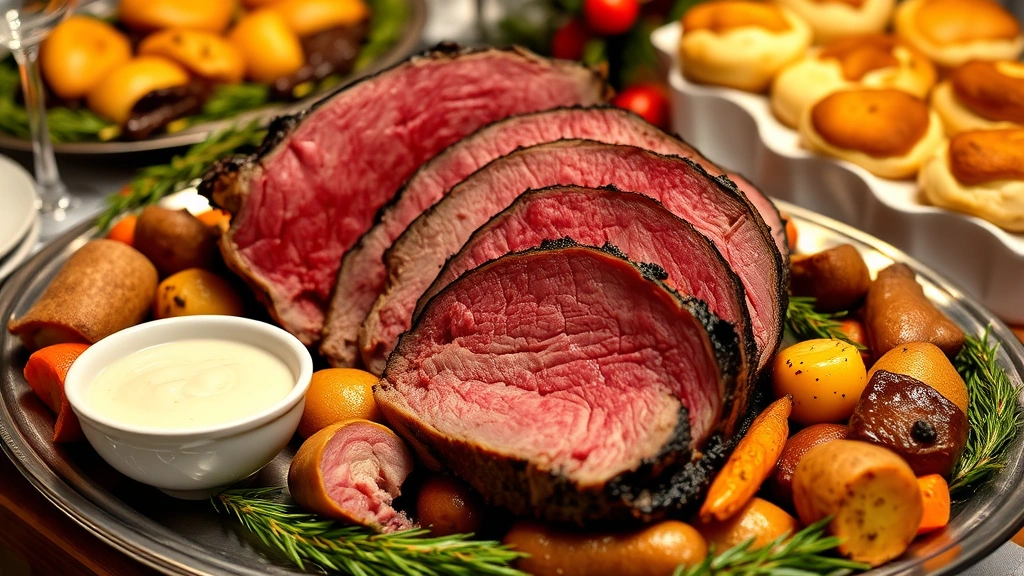
For presentation, arrange slices slightly overlapping on a warm serving platter. Drizzle with any pan juices. The beautiful pink center, surrounded by the gorgeous brown crust, creates an impressive display that justifies all your effort.
Perfect Side Dishes
A standing rib roast deserves complementary sides that enhance rather than overshadow the star. Yorkshire puddings are the traditional British accompaniment, using beef drippings for incredible flavor. These puffy, golden popovers soak up pan juices beautifully.
Creamed horseradish sauce provides a sharp, peppery contrast to the rich beef. Mix prepared horseradish with heavy cream, a touch of vinegar, and salt. This classic pairing elevates every bite.
Roasted root vegetables—carrots, parsnips, and potatoes—cooked alongside or separately complement the roast perfectly. Toss with herbs and olive oil for caramelized perfection. Consider best healthy food recipes that feature roasted vegetables for inspiration on flavor combinations.
A simple green salad with vinaigrette provides freshness and cuts through the richness. Asparagus with lemon butter, creamed spinach, or roasted Brussels sprouts also work wonderfully. These lighter sides balance the meal composition.
For starch options beyond potatoes, consider a mushroom risotto or wild rice pilaf. Both absorb pan juices beautifully and add sophisticated flavor complexity. Garlic mashed potatoes remain the ultimate comfort side that nobody refuses.
Troubleshooting Common Issues
If your roast is cooking unevenly with one side browning excessively, rotate the pan halfway through cooking. Ovens have hot spots; rotation ensures even browning and cooking.
Should the exterior brown too quickly before the interior reaches proper temperature, tent the roast loosely with foil to reduce heat exposure. The foil prevents further browning while allowing interior cooking to continue.
If you accidentally overcook your roast, slice it immediately and serve with rich pan sauce or au jus to compensate for any dryness. While disappointing, even slightly overcooked prime rib remains delicious due to its marbling.
For a roast that seems to be cooking too slowly, increase oven temperature by twenty-five degrees. Verify your oven temperature with a separate thermometer, as many home ovens run cooler than displayed.
If you don’t have pan drippings for gravy, create a simple au jus by deglazing the roasting pan with beef broth over stovetop heat, scraping up browned bits. This concentrated liquid is liquid gold for serving.
To prevent the roast from drying out if held warm before serving, slice it, arrange on a platter, and keep it loosely tented in a warm oven set to 200 degrees Fahrenheit. Sliced meat dries faster than whole roasts, so slice only when ready to serve if possible.
Many home cooks benefit from learning how to cook with cast iron, as cast iron distributes heat exceptionally evenly for roasting applications.
FAQ
How far in advance can I season the standing rib roast?
Season it up to twenty-four hours ahead. Salt applied overnight penetrates the meat, improving flavor distribution and moisture retention. Pat the surface dry again before roasting if moisture has accumulated.
Can I cook a boneless rib roast using this method?
Yes, but bone-in is superior. Boneless roasts cook slightly faster (reduce time by ten to fifteen percent) and lack the bones’ insulating and flavoring properties. Use the same temperature protocol but check doneness earlier.
What’s the difference between standing rib roast and prime rib?
Standing rib roast and prime rib refer to the same cut. Prime rib refers to the USDA grade (Prime) combined with the cut name (rib roast). Standing describes the presentation method—bones standing upright during cooking.
Should I use a meat thermometer?
Absolutely. It’s the most reliable method for achieving your desired doneness. Touch tests and timing estimates are unreliable across different ovens and roasts.
Can I prepare this roast ahead and reheat it?
You can roast it partially a day ahead, then finish cooking before serving. Roast to 120 degrees Fahrenheit, cool completely, refrigerate, then roast again at 325 degrees Fahrenheit until reaching desired final temperature. This method prevents overcooking while allowing advance preparation.
What’s the best way to store leftover standing rib roast?
Slice the cooled roast, layer slices with parchment paper in an airtight container, and refrigerate up to four days. Reheat gently at 250 degrees Fahrenheit with a little broth to restore moisture. Leftover slices make incredible sandwiches or can be incorporated into easy dinner recipes for beginners like beef stir-fries.
Can I use a slow cooker or Instant Pot instead?
These methods don’t develop the proper crust that makes standing rib roast special. Stick with traditional oven roasting for optimal results. The oven’s dry heat creates the Maillard reaction that pressure cookers and slow cookers cannot replicate.
How do I achieve a perfect crust?
Start with the meat at room temperature and completely dry. Sear at 450 degrees Fahrenheit for fifteen minutes, then reduce heat. Never baste, as moisture prevents crust development. Proper seasoning with salt and pepper applied well in advance also contributes to crust quality.
What’s the ideal serving size per person?
Plan on eight to ten ounces of bone-in roast per person, which typically means one bone per person. This accounts for the bone weight while providing generous meat portions.
Should I bring the roast to room temperature if I forgot?
Yes, always bring it to room temperature before roasting, even if it takes longer. This ensures even cooking. If severely time-constrained, increase oven temperature slightly and monitor closely, but room temperature is ideal.

The standing rib roast’s appeal extends beyond flavor—it’s a showstopper presentation that commands attention at any table. The combination of tender, perfectly cooked meat with aromatic herb crusts and rich pan juices creates an unforgettable dining experience. Whether you’re celebrating a milestone or simply treating your family to something special, this recipe delivers restaurant-quality results that prove you’re a confident, skilled cook.
The key to success lies in patience: bringing meat to temperature, allowing proper resting, and using accurate temperature monitoring. These fundamentals transform a good roast into an extraordinary one. Your family will request this recipe for years to come, making it a treasured addition to your cooking repertoire.
For inspiration on complementary dishes, explore best seafood recipes for elegant accompaniments or visit quick breakfast recipes for leftover preparation ideas. You might also visit the Fresh Plated Daily Blog for additional holiday entertaining inspiration and seasonal cooking techniques.
Professional culinary resources like Culinary School Forum and Serious Eats offer advanced techniques for those wanting to deepen their roasting knowledge. Epicurious provides additional prime rib variations and serving suggestions from renowned chefs. Understanding the science behind cooking, available through resources like Institute of Food Technologists, enhances your ability to troubleshoot and adapt recipes to your specific needs.
Master this standing rib roast recipe, and you’ll have a signature dish that defines your cooking identity. The confidence gained from successfully executing this impressive centerpiece transfers to other cooking challenges. Start with these fundamentals, trust your thermometer, and enjoy the compliments that inevitably follow.


