How to Make Smothered Chicken: Grandma’s Secret Recipe
Smothered chicken is the ultimate comfort food that brings back memories of home-cooked meals and family gatherings. This classic dish features tender chicken pieces braised in a rich, savory sauce loaded with caramelized onions, mushrooms, and aromatic seasonings. What makes smothered chicken truly special is the slow-cooking method that allows the chicken to absorb all those delicious flavors while becoming incredibly moist and fall-apart tender. Whether you’re looking for a satisfying dinner recipe for beginners or want to recreate your grandmother’s beloved dish, this guide will walk you through every step of the process.
The beauty of smothered chicken lies in its simplicity and versatility. You don’t need fancy ingredients or complicated techniques—just quality chicken, fresh vegetables, and time for everything to meld together beautifully. This recipe has been passed down through generations because it consistently delivers restaurant-quality results in your own kitchen. The sauce becomes thick, glossy, and absolutely irresistible, making it perfect for serving over rice, mashed potatoes, or egg noodles. Let’s dive into Grandma’s secret recipe and discover why this dish has earned its place at dinner tables everywhere.
Ingredients You’ll Need
Before you start cooking, gather all your ingredients to ensure a smooth cooking process. Here’s what you’ll need for this classic smothered chicken recipe that serves 4-6 people:
- 4-5 pounds chicken (bone-in, skin-on thighs and drumsticks work best, though breasts are acceptable)
- 4 tablespoons butter (divided for browning and sauce)
- 3 large yellow onions (sliced into thick rings)
- 1 pound fresh mushrooms (sliced—cremini or button varieties)
- 4 cloves garlic (minced finely)
- 2 cups chicken broth (low-sodium preferred)
- 1 cup heavy cream (or half-and-half for lighter version)
- 2 tablespoons all-purpose flour (for thickening)
- 2 teaspoons dried thyme (or 1 tablespoon fresh)
- 1 teaspoon dried rosemary (or ½ tablespoon fresh)
- 2 bay leaves
- Salt and black pepper (to taste)
- 1 teaspoon paprika (for color and subtle flavor)
- Fresh parsley (for garnish, optional)
The key to authentic smothered chicken is using quality ingredients. Don’t skimp on the butter or cream—they create that luxurious sauce that makes this dish so memorable. Fresh mushrooms and onions are essential; frozen versions won’t provide the same texture and flavor development.
Preparation Steps
Proper preparation is crucial for achieving the best results with your smothered chicken. Taking time to prep ingredients correctly will make the actual cooking process much smoother and more enjoyable.
Step 1: Prepare the Chicken
Pat your chicken pieces dry with paper towels—this is essential for proper browning. Moisture on the surface prevents the chicken from developing that golden, flavorful crust. Season generously with salt, black pepper, and paprika on all sides. If you have time, let the seasoned chicken sit at room temperature for 15-20 minutes before cooking. This helps the meat cook more evenly.
Step 2: Prepare the Vegetables
Slice your onions into thick rings about ½-inch wide, keeping some layers intact for a rustic presentation. Slice the mushrooms into ¼-inch thick pieces—not too thin, as they’ll shrink considerably during cooking. Mince your garlic finely and set aside. Having everything prepped and ready (what chefs call “mise en place”) makes the cooking process stress-free.
Step 3: Measure Out Your Seasonings and Liquids
Combine your dried herbs in a small bowl. Pour your chicken broth into a measuring cup. Have your heavy cream and flour accessible. This preparation prevents scrambling mid-recipe and ensures you don’t accidentally miss any ingredients.
The Cooking Method
Now comes the magic—transforming simple ingredients into an unforgettable dish. Follow these steps carefully for the best results.
Step 1: Brown the Chicken (10-12 minutes)
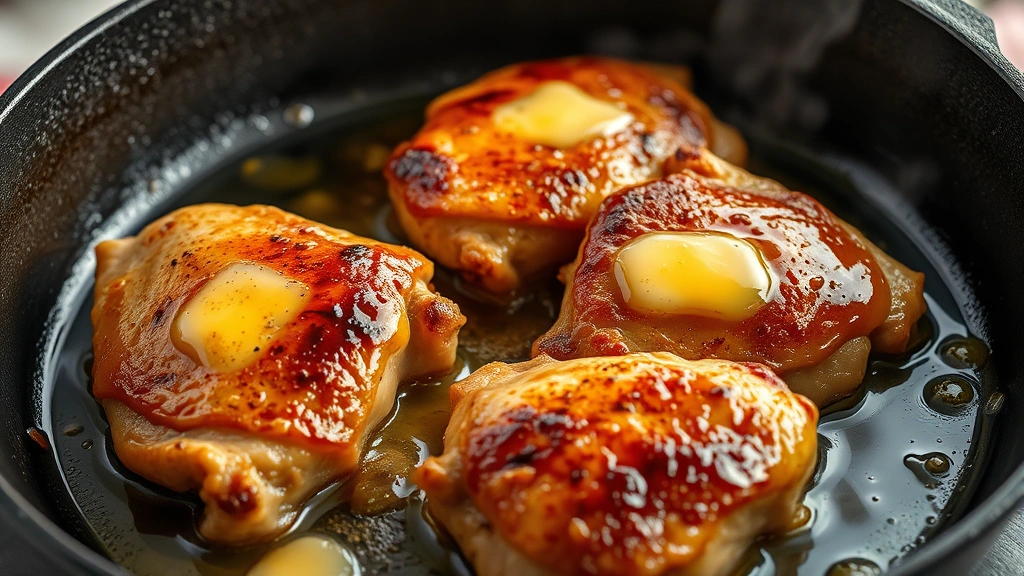
Heat 2 tablespoons of butter in a large Dutch oven or heavy-bottomed skillet over medium-high heat. Once the butter is foaming and fragrant, carefully place the chicken pieces in the pan, skin-side down. Don’t overcrowd the pan; work in batches if necessary. Let the chicken cook undisturbed for 5-6 minutes until the skin turns golden brown. This browning process develops deep, savory flavors through the Maillard reaction—a chemical process that creates complex tastes.
Flip the chicken and brown the other side for another 4-5 minutes. The chicken doesn’t need to be cooked through at this point; we’re just developing color and flavor. Transfer the browned chicken to a plate and set aside.
Step 2: Sauté the Aromatics (8-10 minutes)
Add the remaining 2 tablespoons of butter to the same pan. Add your sliced onions and cook, stirring occasionally, for about 5-6 minutes until they begin to soften and turn golden. The onions will release their natural sugars and caramelize slightly, adding sweetness and depth to your sauce. Add the minced garlic and cook for another minute until fragrant.
Step 3: Add the Mushrooms (5-7 minutes)
Stir in your sliced mushrooms and cook for 5-7 minutes, stirring occasionally. The mushrooms will release their moisture and begin to brown slightly. This step is crucial because mushrooms add an umami richness that makes the sauce incredibly satisfying. Don’t rush this step—let the mushrooms develop color for maximum flavor.
Step 4: Create the Sauce Base (3-4 minutes)
Sprinkle the flour over the vegetables and stir well, coating everything evenly. Cook for 2-3 minutes, stirring constantly. This step cooks out the raw flour taste and helps thicken the sauce later. Slowly pour in the chicken broth while stirring, scraping up any browned bits from the bottom of the pan—these bits contain incredible flavor.
Step 5: Combine and Braise (45-50 minutes)
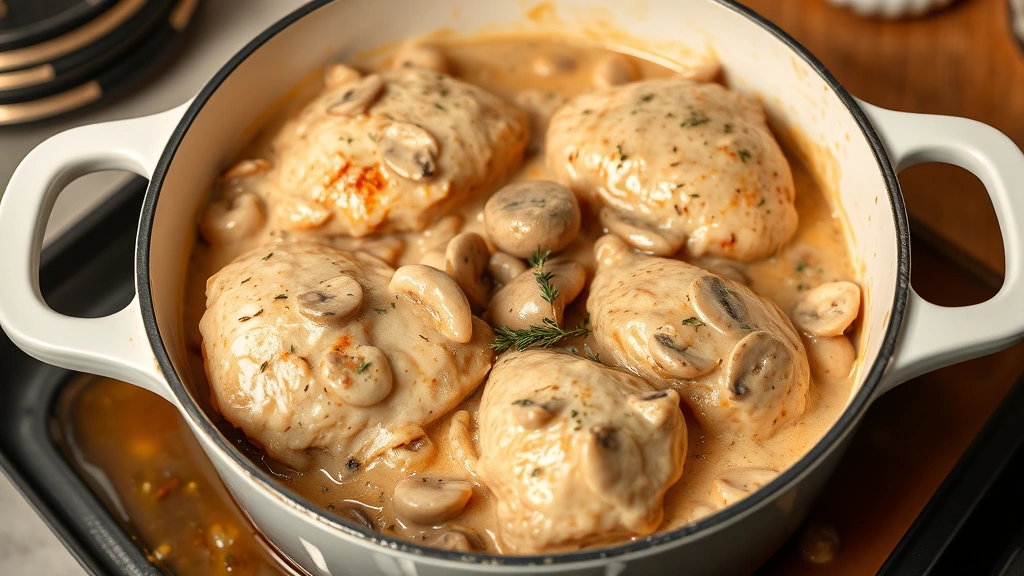
Return the browned chicken pieces to the pan, nestling them among the vegetables. Add the bay leaves and your combined dried herbs. Bring everything to a gentle simmer, then reduce heat to medium-low. The liquid should barely bubble—aggressive boiling will make the chicken tough. Cover the pan with a lid (or aluminum foil if you don’t have one) and let it simmer for 45-50 minutes, depending on the size of your chicken pieces.
Check the chicken after 30 minutes. The internal temperature should reach 165°F (74°C) when measured with a meat thermometer in the thickest part, away from bone. The chicken should be very tender and easily pierced with a fork.
Step 6: Finish the Sauce (5 minutes)
Remove the bay leaves. Stir in the heavy cream, a little at a time, until fully incorporated. Let the sauce simmer for another 2-3 minutes without a lid, allowing it to thicken slightly and the flavors to meld. Taste and adjust seasonings with additional salt and pepper as needed. The sauce should be creamy, rich, and coat the back of a spoon.
For a thicker sauce, mix 1 tablespoon of cornstarch with 2 tablespoons of cold water to create a slurry, then whisk it into the simmering sauce. For a thinner sauce, simply add more broth. This is your opportunity to customize the consistency to your preference.
Serving Suggestions
Smothered chicken pairs beautifully with numerous side dishes. Here are some classic combinations that work wonderfully:
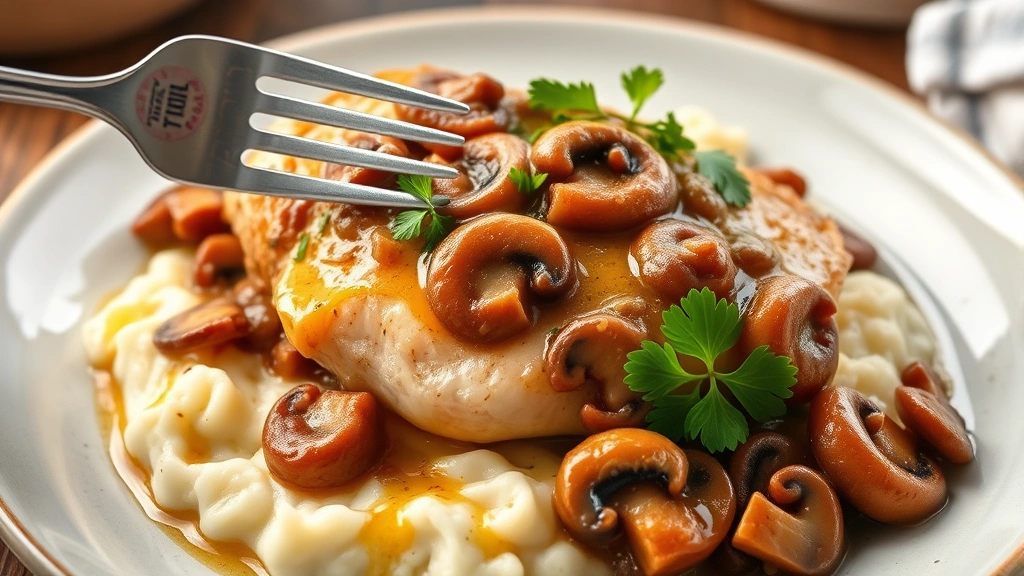
- Creamy Mashed Potatoes: The ultimate pairing—mashed potatoes soak up the delicious sauce perfectly
- Buttered Egg Noodles: Tender noodles provide a delicate base for the rich sauce
- Fluffy White Rice: A lighter option that lets the chicken and sauce shine
- Crusty Bread: Perfect for soaking up every last drop of sauce
- Steamed Green Vegetables: Asparagus or green beans add freshness and balance the richness
- Roasted Root Vegetables: Carrots and parsnips complement the earthy mushrooms
If you’re interested in exploring more easy dinner recipes for beginners, you’ll find that smothered chicken is one of the most forgiving dishes to master. For a complete meal, consider adding a fresh salad on the side. You might even explore making homemade salad dressings to complement your dinner.
Garnish your finished dish with fresh parsley for color and a bright flavor note that cuts through the richness of the cream sauce. A sprinkle of fresh thyme also looks beautiful and adds aromatic complexity.
Tips and Tricks for Success
Choose the Right Chicken Parts
While this recipe works with any chicken parts, thighs and drumsticks are ideal because they contain more fat and connective tissue, making them more forgiving if slightly overcooked. They also stay juicier than breasts. However, if you prefer white meat, use bone-in, skin-on breasts and reduce the cooking time to 30-35 minutes.
Don’t Skip the Browning Step
Browning the chicken is non-negotiable. This step develops flavor through the Maillard reaction and creates a protective crust that keeps the meat juicy during braising. Even if you’re in a hurry, don’t skip this step. For more information about cooking techniques, check out Serious Eats, which provides excellent guidance on fundamental cooking methods.
Use Fresh Herbs When Possible
While dried herbs work fine, fresh thyme and rosemary provide superior flavor. If using fresh herbs, double the amount called for in the recipe. Add half during cooking and stir in the remaining fresh herbs in the last few minutes for maximum flavor.
Make It Ahead
Smothered chicken actually tastes better the next day after flavors have melded. Prepare it completely, cool to room temperature, then refrigerate in an airtight container for up to 3 days. Reheat gently over medium-low heat, adding a splash of broth if the sauce has thickened too much during storage.
Customize the Vegetables
While onions and mushrooms are traditional, you can add bell peppers, carrots, or celery. Add harder vegetables like carrots early in the process so they have time to soften. Add tender vegetables like bell peppers later to preserve their texture.
Control the Sauce Consistency
The sauce should coat the chicken and vegetables but not be overly thick or thin. During the final cooking step, you have complete control. If it’s too thin, simmer uncovered for an additional 5-10 minutes. If it’s too thick, whisk in additional broth one tablespoon at a time until you reach the desired consistency.
Temperature Matters
Use a meat thermometer to ensure the chicken reaches 165°F (74°C) for food safety. This takes the guesswork out of doneness and ensures perfectly cooked chicken every time. Insert the thermometer into the thickest part of the thigh without touching bone for the most accurate reading.
Season in Layers
Season the chicken before browning, then taste the sauce before serving and adjust as needed. This layered seasoning approach creates more complex, balanced flavors than seasoning all at once.
FAQ
Can I use chicken breasts instead of thighs?
Yes, you can use bone-in, skin-on chicken breasts, though they’re less forgiving than thighs. Reduce the braising time to 30-35 minutes and watch carefully to prevent overcooking. Breasts can become dry if cooked too long. Thighs are recommended for best results because they stay moist and tender.
How long does smothered chicken keep in the refrigerator?
Properly stored smothered chicken keeps for 3-4 days in an airtight container. The sauce may thicken as it cools; simply add a splash of broth when reheating to reach the desired consistency. Reheat gently over medium-low heat to prevent the cream from breaking.
Can I freeze smothered chicken?
Yes, smothered chicken freezes well for up to 3 months. Cool completely before transferring to a freezer-safe container. Thaw overnight in the refrigerator before reheating. The texture of the chicken remains excellent after freezing, though the mushrooms may become slightly softer.
What if my sauce is too thin?
Create a slurry by mixing 1 tablespoon of cornstarch with 2 tablespoons of cold water. Whisk it into the simmering sauce and cook for 1-2 minutes until thickened. Alternatively, simmer uncovered for 5-10 minutes to reduce and concentrate the sauce.
Can I use Greek yogurt instead of heavy cream?
You can use Greek yogurt for a lighter version, but add it only at the very end and don’t let it boil, as high heat causes yogurt to separate. Sour cream works similarly. The flavor will be slightly tangier, which some people enjoy. Heavy cream creates the most luxurious, traditional result.
Is smothered chicken gluten-free?
To make this recipe gluten-free, substitute cornstarch or arrowroot powder for the all-purpose flour in the same amount. Both work equally well for thickening the sauce. Ensure your chicken broth is gluten-free, as some commercial brands contain gluten.
What wines pair well with smothered chicken?
A medium-bodied white wine like Pinot Grigio or Sauvignon Blanc complements smothered chicken beautifully. Light red wines like Pinot Noir also work well. The acidity in these wines cuts through the richness of the cream sauce.
Can I make this in a slow cooker?
Yes! Brown the chicken and vegetables in a skillet, then transfer everything to a slow cooker with the broth and herbs. Cook on low for 6-8 hours or high for 3-4 hours. Add the cream during the last 30 minutes of cooking. This method is perfect if you want dinner ready when you arrive home.
What’s the best way to reheat smothered chicken?
Reheat gently over medium-low heat in a skillet or Dutch oven, stirring occasionally. Add a splash of broth or water if the sauce has thickened. Avoid high heat, which can cause the cream to break and the chicken to become tough. Reheating in a 325°F oven, covered, also works well.
Can I add wine to this recipe?
Absolutely! After browning the chicken, deglaze the pan with ½ cup of dry white wine, scraping up the browned bits. Let it simmer for 2-3 minutes to cook off the alcohol, then proceed with the recipe as written. The wine adds complexity and depth to the sauce.


