Campfire Recipe in Minecraft: Complete Crafting Guide
The campfire is one of Minecraft’s most versatile and aesthetically pleasing blocks, serving both practical and decorative purposes in your survival world. Whether you’re looking to cook food, create a cozy gathering spot, or add atmospheric lighting to your base, understanding the campfire recipe is essential for any player. This comprehensive guide will walk you through everything you need to know about crafting, using, and maximizing your campfire setup.
Campfires were introduced in the Village & Pillage update and have become a staple feature in modern Minecraft gameplay. They provide a unique cooking method that differs from traditional furnaces, allowing you to prepare meals while maintaining that authentic outdoor camping aesthetic. Learning the exact crafting requirements and optimal placement strategies will enhance your survival experience significantly.
Campfire Recipe and Crafting Requirements
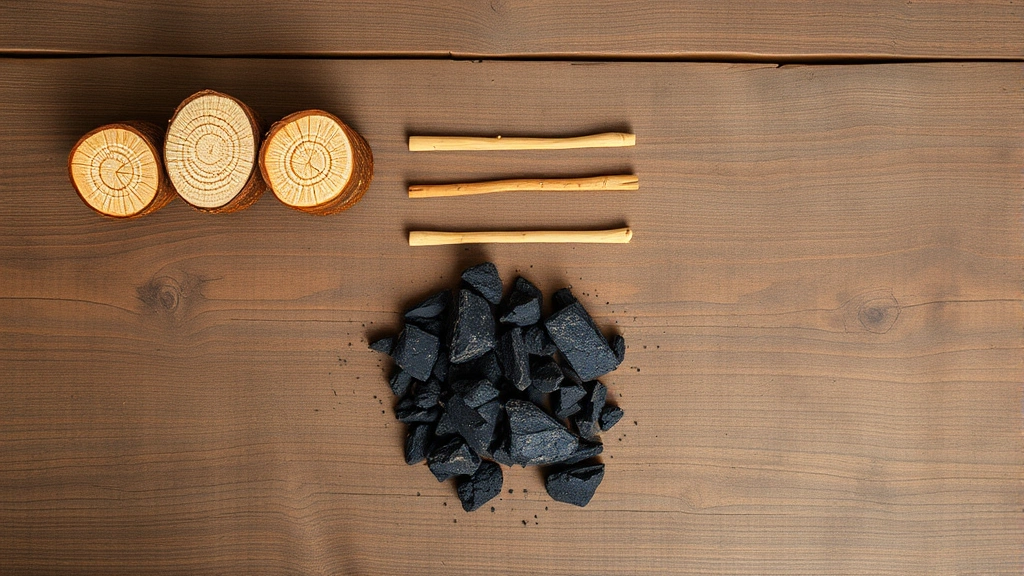
The campfire recipe in Minecraft requires exactly five specific materials arranged in a particular pattern on your crafting table. To create a single campfire, you’ll need three wooden logs (any type), three sticks, and one coal or charcoal. This straightforward recipe makes campfires accessible relatively early in your survival journey, though you’ll need to gather resources efficiently.
The beauty of this recipe lies in its simplicity and resource availability. Wooden logs are abundant in most Minecraft biomes, sticks can be crafted from logs or found in various locations, and coal is discoverable through mining or can be obtained by smelting wood. The flexibility in material choices—accepting any log type and either coal or charcoal—means you can adapt based on what’s readily available in your current location.
Unlike furnaces that require iron ingots, campfires are completely wooden-based constructions, making them perfect for early-game cooking solutions. This accessibility has made campfires a favorite among speedrunners and survival enthusiasts who need quick cooking solutions without advanced mining requirements.
Step-by-Step Crafting Instructions
To craft a campfire, follow these precise steps on your crafting table:
- Open your crafting table interface by right-clicking on the crafting table block
- In the 3×3 grid, place three wooden logs in the top row (any log type works: oak, birch, spruce, jungle, acacia, or dark oak)
- Place three sticks in the middle row, with one stick in the center position and two sticks on the sides
- Place one coal or charcoal in the bottom-center position
- Click the campfire icon that appears in the result slot
- Drag the completed campfire into your inventory
The exact positioning matters for this recipe to work correctly. The three logs must occupy the entire top row, the sticks must form a horizontal line in the middle row with the center position occupied, and the coal or charcoal must sit alone in the bottom-center slot. Any deviation from this pattern will prevent the recipe from registering.
If you’re having trouble with the recipe, ensure you’re using actual wooden logs and not wooden planks. Many new players make this mistake, attempting to craft campfires with planks instead of logs. The distinction is crucial—planks are crafted from logs and won’t satisfy the recipe requirements. Similarly, verify that your coal is genuine coal and not just a dark-colored block.
Materials You’ll Need
Understanding each material’s role helps you gather efficiently:
- Wooden Logs (3): The primary structural component, available from any tree type. Logs provide the bulk of the campfire’s construction and determine its appearance based on wood type
- Sticks (3): Crafted by placing two planks vertically in your crafting table, or found naturally in forests and villages. Sticks form the framework that holds the structure together
- Coal (1): Mined from coal ore blocks found underground, typically between Y-levels 0 and 127. Coal serves as the heat source for the campfire
- Charcoal (1 alternative): Created by smelting wooden logs in a furnace, offering an alternative to mined coal with identical functionality
For gathering efficiency, prioritize finding a forest biome where you can harvest multiple logs quickly. A single tree provides enough logs for several campfires, making early exploration worthwhile. Sticks can be crafted from the excess planks generated when breaking logs into planks at your crafting table, creating a zero-waste gathering process.
Coal mining requires a stone pickaxe or better, making it a mid-game material if you’re starting fresh. However, charcoal offers a perfect early-game alternative—simply smelt any excess wooden logs you’ve gathered in a furnace to produce charcoal, which functions identically to coal in the campfire recipe.
Cooking with Your Campfire
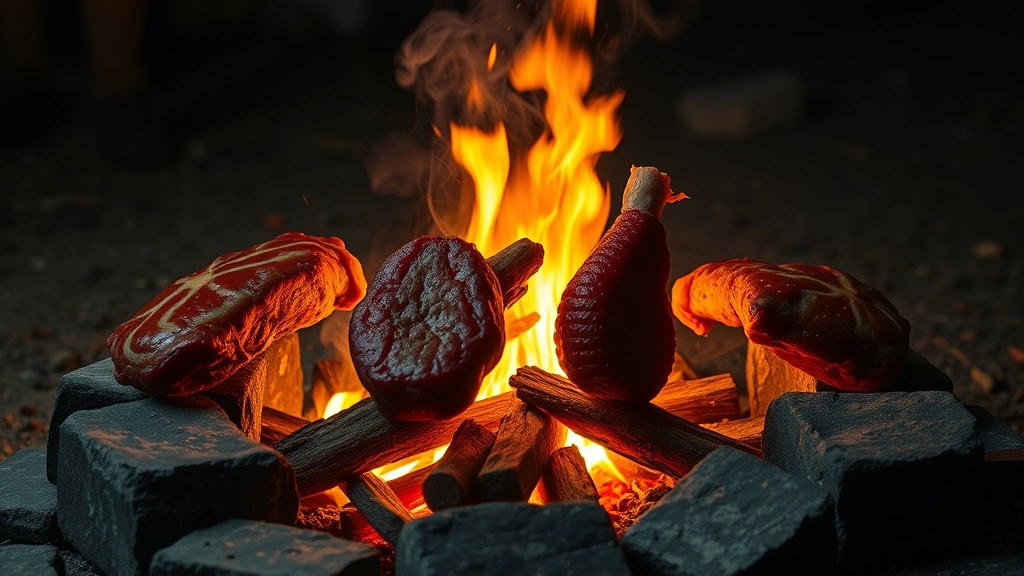
Once crafted and placed, your campfire becomes a functional cooking device. Simply approach the campfire and right-click on it while holding raw food items. The campfire accepts raw beef, raw pork, raw chicken, raw mutton, and raw fish. Each item requires approximately 30 seconds to cook, faster than furnace cooking and without consuming fuel after the initial placement.
Unlike furnaces, campfires cook items simultaneously on multiple sides. You can place up to four food items on a single campfire at once, with each occupying one of the four sides. This parallel cooking capability makes campfires incredibly efficient for preparing large quantities of food for adventures or for feeding animals in your farm.
Cooked items drop automatically when finished, landing on the ground near the campfire. This means you don’t need to actively monitor your cooking process—simply place food and return when ready. The dropped items never disappear unless you leave them for more than five minutes, giving you plenty of time to collect your meals.
Many players combine campfires with quick breakfast recipes concepts by cooking multiple stacks of food in advance, creating a reliable food supply for exploration and building projects. The visual appeal of a functioning campfire also makes it perfect for roleplay scenarios where you’re simulating actual meal preparation.
Advanced Campfire Techniques
Experienced players use campfires in creative ways beyond basic cooking. Signal fires represent the most iconic advanced technique—stacking multiple campfires vertically creates impressive visual columns of smoke visible from great distances. This serves both aesthetic and practical purposes, acting as navigation landmarks or base markers in your world.
Combining campfires with high protein recipes for weight loss concepts means optimizing your cooking strategy—focusing on protein-rich foods like beef and chicken that restore more hunger points per item cooked. This efficiency-focused approach maximizes your food output relative to time invested.
Soul campfires represent a variant recipe using soul sand and soul soil instead of regular logs, producing blue flames instead of orange. They serve identical cooking functions while providing unique visual variety for themed builds. The soul campfire recipe follows the same pattern but substitutes soul-based materials for wooden logs.
Campfire placement strategy affects your base’s functionality. Positioning campfires near gathering areas encourages social cooking in multiplayer servers, while isolated campfires serve as emergency cooking stations during unexpected situations. Integrating campfires into your base design creates natural gathering points that enhance both utility and aesthetics.
Automated cooking systems leverage campfires by using hopper mechanics and item sorters, though this requires more advanced redstone knowledge. These systems allow semi-automatic food production, though the setup complexity often exceeds the benefit for casual players.
Building Creative Campfire Setups
Campfires shine in creative building scenarios where functionality meets aesthetics. Medieval villages benefit tremendously from campfire placement, with fires in town squares, guard posts, and residential areas creating authentic period-appropriate atmospheres. The smoke particles and warm lighting elevate these builds from simple structures to immersive environments.
Camping bases rely heavily on campfire construction, with multiple fires arranged around a central gathering area. This design mimics real-world camping scenarios where multiple fires serve different purposes—one for cooking, others for warmth and ambiance. The visual variety created by multiple fires adds depth and realism to your outdoor settlements.
Incorporating campfires into gluten-free dessert recipes concepts translates to Minecraft through roleplay scenarios where you’re simulating outdoor cooking. While Minecraft lacks actual dessert items, players create themed areas where campfires would logically be used for preparing elaborate meals, enhancing narrative immersion.
Rooftop campfires serve as chimney alternatives for fantasy and medieval builds, with smoke creating the illusion of inhabited structures. This technique proves especially effective in large-scale village projects where dozens of buildings need visual distinction and life-like qualities. Strategic fire placement guides player movement through your builds while maintaining architectural integrity.
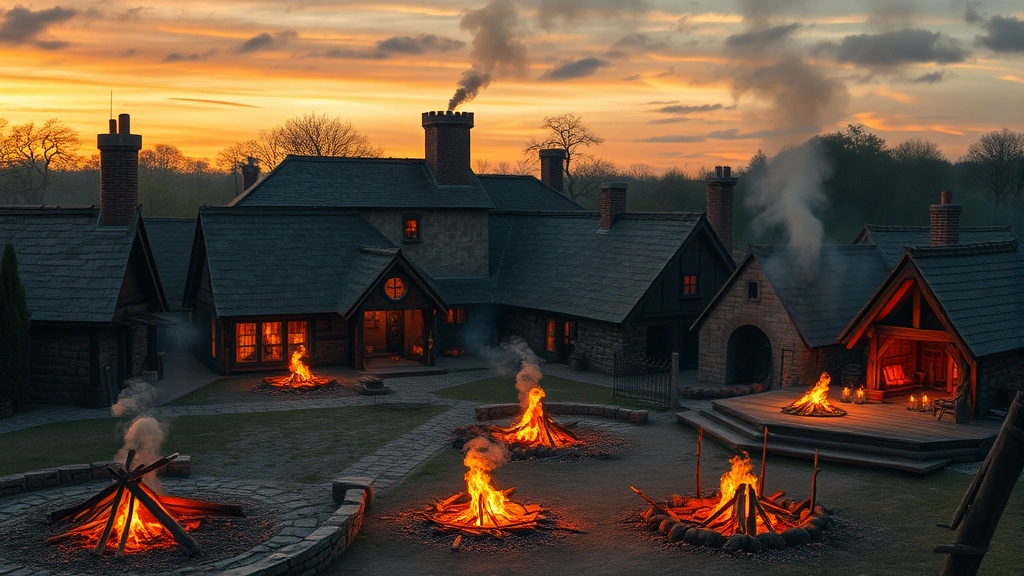
Decorative campfire rings involve placing campfires in circles surrounded by stone blocks or decorative materials, creating authentic fire pit aesthetics. These setups serve no functional purpose beyond visual appeal, yet they’re among the most popular campfire applications in creative building communities. The simplicity of construction makes them accessible to builders of all skill levels.
Underground bases benefit from strategic campfire placement, as the light and smoke particles provide essential visual interest in otherwise dark environments. Careful placement prevents smoke from accumulating excessively, maintaining visibility while adding atmospheric depth. This balance between function and aesthetics separates exceptional underground bases from merely functional ones.
Campfire farms represent an interesting hybrid approach where you maintain multiple campfires in organized rows specifically for mass-cooking operations. These farms support large-scale survival projects, multiplayer servers with numerous players, or challenge runs requiring massive food quantities. The visual result resembles an actual outdoor cooking facility, reinforcing the immersive Minecraft experience.
External resource mentions enhance your crafting knowledge: Minecraft Wiki’s comprehensive campfire documentation provides detailed technical specifications, while Planet Minecraft showcases thousands of creative campfire applications from the community. These resources offer inspiration and technical details beyond basic crafting.
For building inspiration, YouTube tutorial channels dedicated to Minecraft building provide visual demonstrations of campfire integration techniques. Watching experienced builders work through their creative process accelerates your own building skill development and exposes you to novel applications you might not discover independently.
The official Minecraft Forum maintains active communities discussing survival strategies, building techniques, and creative campfire applications. Engaging with these communities connects you with experienced players who can answer specific questions about your projects and offer personalized advice.
Players interested in culinary inspiration might explore Serious Eats for real-world cooking techniques, applying actual food preparation knowledge to enhance their roleplay scenarios. While Minecraft’s cooking mechanics are simplified, understanding real cooking principles enriches your creative storytelling and base design philosophy.
FAQ
Can I use charcoal instead of coal in the campfire recipe?
Yes, charcoal functions identically to coal in the campfire recipe. Charcoal is created by smelting wooden logs in a furnace and provides a perfect early-game alternative when coal mining isn’t yet possible. This flexibility makes campfires accessible from the earliest survival stages.
How long does food take to cook on a campfire?
Raw food items require approximately 30 seconds of cooking time on a campfire. This is notably faster than furnace cooking, which takes 10 seconds per item but requires fuel. The parallel cooking capability of campfires makes them competitive or superior for bulk cooking operations.
Can I cook different food types simultaneously on one campfire?
Yes, you can place up to four different food types on a single campfire, with each occupying one side. This means you could cook beef, chicken, pork, and fish all at once on a single fire, maximizing efficiency for varied meal preparation.
Do campfires require fuel after being placed?
No, campfires don’t consume fuel after placement. The coal or charcoal used in the recipe initiates the fire permanently. You can cook unlimited items without adding additional resources, making campfires extremely efficient cooking devices.
What’s the difference between regular and soul campfires?
Soul campfires produce blue flames instead of orange and use soul-based materials in their recipe. Functionally, they’re identical for cooking purposes, but they provide unique visual variety for themed builds, particularly those with nether or gothic aesthetics.
Can I pick up a campfire after placing it?
Yes, campfires drop as items when broken with any tool or by hand. Items currently cooking on the campfire will burn and be lost, so harvest your food before breaking the fire. This allows you to relocate campfires freely within your base.
Do campfires hurt mobs or players?
Campfires deal damage to mobs and players who walk through them, similar to lava but less severe. This makes them useful for mob control in certain build scenarios, though careful placement prevents accidental damage to yourself or allies.
How many campfires should I have in my base?
The optimal number depends on your playstyle and cooking needs. Casual players might maintain 2-3 campfires, while multiplayer server administrators or challenge runners might use 10+. Start with one or two and expand based on your actual cooking demands.


