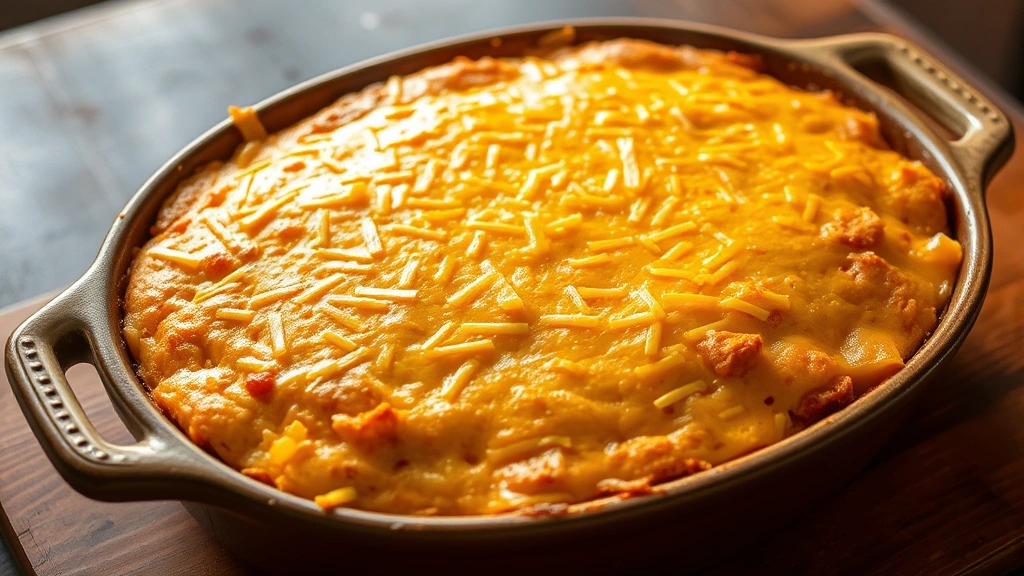
Cornbread Casserole Recipe: A Family Favorite That’s Easy to Make
There’s something truly special about a warm, golden cornbread casserole fresh from the oven. This beloved comfort food has graced dinner tables for generations, bringing families together with its irresistible combination of creamy textures and savory flavors. Whether you’re preparing a weeknight dinner or hosting a holiday gathering, a cornbread casserole recipe delivers impressive results with minimal effort. The beauty of this dish lies in its versatility—you can customize it with your favorite proteins, vegetables, and seasonings to create a meal that’s uniquely yours.
A cornbread casserole is essentially a one-dish wonder that combines the wholesome goodness of cornbread with creamy, savory fillings. Unlike traditional cornbread served as a side dish, this casserole transforms cornbread into the star of the meal. The golden cornbread layer acts as both a base and topping, creating a comforting texture that appeals to both children and adults. Many families have passed down their own variations, making this recipe a true family favorite that evolves with each generation.
In this comprehensive guide, we’ll explore everything you need to know about making the perfect cornbread casserole. From ingredient selection to baking techniques, you’ll discover the secrets to creating a dish that tastes homemade, looks impressive, and satisfies hungry appetites every single time.
Essential Ingredients and Substitutions
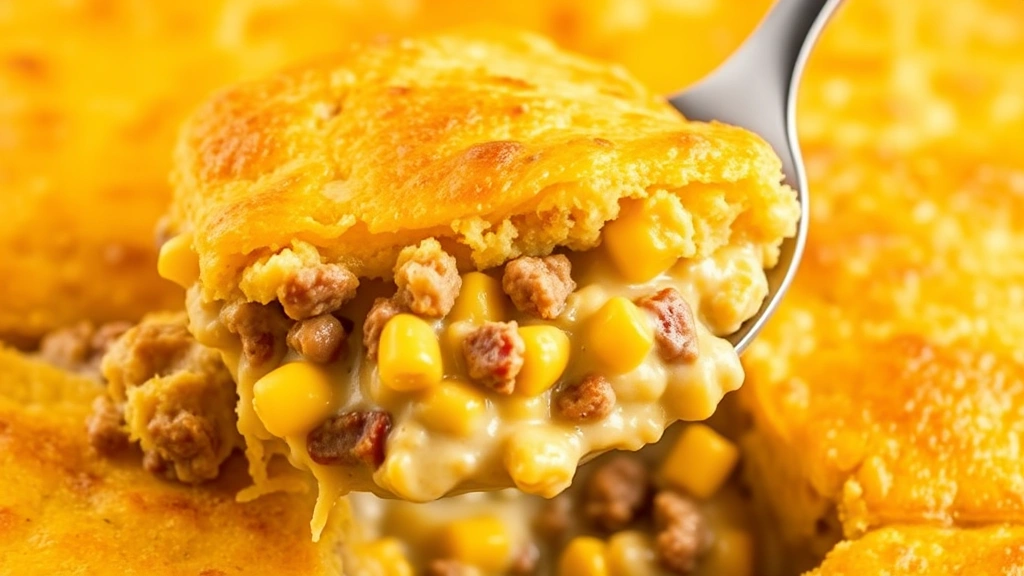
Creating an outstanding cornbread casserole begins with understanding your ingredients. The foundation of this dish typically includes cornmeal, flour, eggs, milk, and baking powder to create the cornbread layer. For the filling, you’ll need proteins such as ground beef, shredded chicken, or sausage, combined with vegetables like corn, bell peppers, and onions. A creamy base—usually made from cream of chicken soup, sour cream, or a simple cream sauce—binds everything together beautifully.
The cornbread component requires quality cornmeal for the best flavor and texture. Yellow cornmeal provides a classic appearance and slightly sweet flavor, while white cornmeal offers a more subtle taste. Look for stone-ground cornmeal from reputable sources, as it typically contains more nutrients and superior flavor compared to heavily processed varieties. You’ll also need all-purpose flour, which provides structure, along with baking powder and a pinch of salt to enhance flavors.
When selecting your protein, ground beef is the most traditional choice for cornbread casserole, offering rich flavor and satisfying texture. However, shredded rotisserie chicken provides a lighter alternative, while breakfast sausage adds a flavorful twist that many families adore. If you’re vegetarian, consider using lentils, black beans, or crumbled tofu as protein-rich substitutes that maintain the dish’s heartiness.
For the creamy filling, homemade sauces create superior results compared to canned soups, though both work in this recipe. A simple béchamel sauce—made from butter, flour, and milk—provides a classic, elegant base. Sour cream adds tang and richness, while heavy cream creates luxurious texture. Some families prefer chicken broth mixed with cream for lighter results.
- Cornmeal: Use stone-ground for superior flavor; avoid instant varieties that lack texture
- Vegetables: Fresh corn kernels, diced bell peppers, chopped onions, and diced jalapeños work beautifully
- Cheese: Sharp cheddar, Monterey Jack, or a blend adds depth and richness
- Seasonings: Cumin, chili powder, paprika, garlic powder, and black pepper enhance the savory profile
- Dairy: Whole milk, Greek yogurt, or sour cream all contribute to creamy texture
Step-by-Step Preparation Guide
Successful cornbread casserole begins with organized preparation. Start by preheating your oven to 350°F (175°C) and gathering all ingredients in one location. This mise en place approach ensures smooth cooking without interruptions. Grease a 9×13-inch baking dish with butter or cooking spray, creating a non-stick surface for easy serving.
Begin the filling preparation by heating one tablespoon of oil in a large skillet over medium-high heat. Add one pound of ground beef, breaking it into small pieces as it cooks. This process typically takes 5-7 minutes, until the meat is thoroughly browned and no pink remains. Drain excess fat from the pan, leaving about one tablespoon for flavor. Add diced onions and bell peppers, cooking for 3-4 minutes until vegetables soften and become fragrant.
Pour in one can (14.5 ounces) of diced tomatoes with their juices, along with one cup of fresh or frozen corn kernels. Add one teaspoon cumin, one teaspoon chili powder, one teaspoon paprika, and salt and pepper to taste. Stir well, allowing flavors to meld for 2 minutes. In a separate bowl, combine one cup sour cream with one can (10.5 ounces) cream of chicken soup, whisking until smooth. Pour this mixture into the skillet with the meat and vegetables, stirring gently to combine. Transfer this filling to your prepared baking dish, spreading it evenly across the bottom.
Now prepare the cornbread topping, which will be poured directly over the filling. In a large mixing bowl, whisk together one cup cornmeal, one cup all-purpose flour, one-quarter cup sugar, one tablespoon baking powder, and one teaspoon salt. In another bowl, beat three large eggs with one cup whole milk and three tablespoons melted butter. Make a well in the center of your dry ingredients and pour in the wet mixture, stirring gently until just combined. Don’t overmix—a few lumps are perfectly acceptable and create tender cornbread.
Pour the cornbread batter evenly over the filling layer, using a spatula to spread it smoothly. If desired, sprinkle one cup shredded sharp cheddar cheese over the top, which will melt beautifully during baking. This step is optional but highly recommended by families who’ve perfected this recipe.
Baking Instructions and Timing
Place your assembled casserole in the preheated 350°F oven and bake for 35-40 minutes. The casserole is ready when the cornbread topping turns golden brown and a toothpick inserted into the cornbread layer comes out clean or with just a few moist crumbs. The filling should be bubbling around the edges, indicating that the entire dish has reached the proper temperature throughout.
If you notice the cornbread top browning too quickly while the center remains pale, cover the casserole loosely with aluminum foil and continue baking. This technique prevents over-browning while allowing the interior to cook through. Remove the foil during the final 5 minutes of baking if you prefer extra color and crispness on top.
For those using slow cooker cooking methods, you can adapt this recipe for a Crock-Pot by preparing the filling and pouring it into the slow cooker, then adding the cornbread batter on top. Cook on high for 2-3 hours, or on low for 4-5 hours, until the cornbread is cooked through.
Allow the casserole to rest for 10 minutes after removing from the oven. This resting period allows the dish to set slightly, making it easier to cut into neat portions while remaining hot enough to serve. The filling will continue cooking slightly from residual heat, reaching the perfect consistency.
Popular Variations and Pro Tips
One of the greatest advantages of cornbread casserole is its incredible versatility. Create a Mexican-inspired version by adding one tablespoon cumin, one teaspoon smoked paprika, and diced jalapeños to the filling. Use black beans instead of traditional ground beef, and finish with Mexican blend cheese. Serve with sour cream and fresh cilantro for an authentic touch.
For a lighter version, substitute ground turkey for ground beef and use low-fat sour cream. Add extra vegetables like zucchini, mushrooms, and spinach to increase nutritional value without compromising flavor. This approach is perfect for families seeking healthier breakfast and dinner options.
A seafood variation offers elegant sophistication—replace ground beef with cooked shrimp or crab meat, and use Old Bay seasoning instead of cumin and chili powder. This version pairs beautifully with a fresh green salad, creating a complete meal that feels special enough for entertaining.
Pro tips for perfect results every time: First, don’t skip the resting period—it makes serving much cleaner. Second, use room-temperature eggs, as they incorporate more smoothly into your cornbread batter. Third, measure your cornmeal by spooning it into your measuring cup and leveling off rather than scooping directly from the bag, which packs the cornmeal and creates dry cornbread. Fourth, taste your filling before baking and adjust seasonings—this is your last opportunity to perfect the flavor profile.
For those who enjoy cooking with cast iron, consider preparing your cornbread casserole in a cast iron skillet. The even heat distribution creates beautifully browned edges, and cast iron retains heat wonderfully for presentation at the table.
Serving Suggestions and Pairings
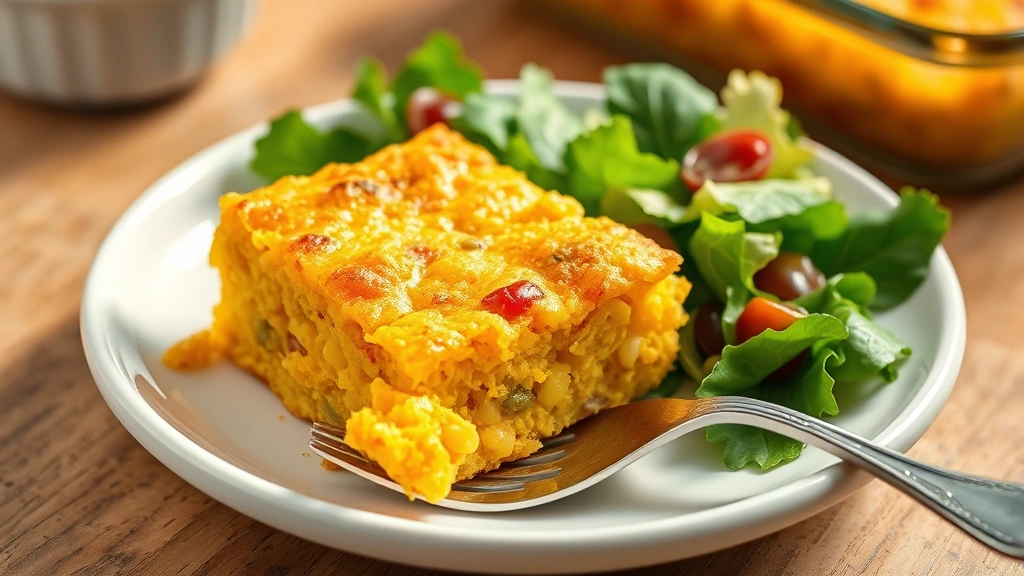
Cornbread casserole shines as a standalone main dish, but thoughtful pairings elevate the entire meal. A crisp green salad with vinaigrette provides refreshing contrast to the casserole’s richness. Consider summer salad recipes that feature fresh vegetables and bright flavors—a cilantro-lime vinaigrette or a simple ranch dressing complement the savory casserole beautifully.
Steamed or roasted vegetables round out the meal nutritionally. Roasted broccoli, green beans, or asparagus offer healthy balance, while their slightly bitter notes contrast pleasantly with the cornbread’s subtle sweetness. Creamed corn or buttered peas provide classic comfort-food pairings that families have enjoyed for generations.
For beverages, unsweetened iced tea with lemon is a traditional choice that doesn’t compete with the casserole’s flavors. Lemonade offers refreshing sweetness, while a light beer or crisp white wine pairs well for adult gatherings. Coffee or hot tea completes the meal if serving breakfast or brunch variations.
Portion size matters when serving—a typical serving is a 3×4 inch square, which provides a balanced amount of cornbread topping and filling. This size feeds approximately 6-8 people from a standard 9×13-inch casserole, making it ideal for family dinners and potluck gatherings.
Storage and Reheating Guidelines
Properly stored cornbread casserole keeps for up to four days in the refrigerator. Allow the casserole to cool completely before covering with plastic wrap or transferring to an airtight container. The filling and cornbread maintain excellent texture when stored correctly, though the cornbread topping may soften slightly over time as it absorbs moisture from the filling.
For freezing, allow the casserole to cool completely, then cover tightly with plastic wrap and aluminum foil to prevent freezer burn. Frozen cornbread casserole keeps for up to three months. Thaw overnight in the refrigerator before reheating, or reheat directly from frozen by increasing baking time to 50-60 minutes at 350°F.
Reheating is straightforward and maintains quality beautifully. Cover the casserole with foil and bake at 350°F for 15-20 minutes if reheating from refrigerated temperature, or 25-30 minutes if reheating from frozen. Remove the foil during the final 5 minutes to refresh the cornbread top. Alternatively, individual portions can be microwaved on 50% power for 2-3 minutes until heated through, though oven reheating produces superior results.
Frequently Asked Questions
Can I make cornbread casserole ahead of time?
Absolutely! Prepare the assembled casserole up to 24 hours in advance by covering it tightly with plastic wrap and refrigerating. Bake directly from the refrigerator, adding 5-10 minutes to the baking time. Alternatively, prepare and bake the casserole completely, then refrigerate and reheat as needed.
What’s the difference between cornbread casserole and cornbread dressing?
Cornbread dressing (or stuffing) typically uses cubed cornbread mixed with broth and seasonings, creating a moist, bread-like consistency. Cornbread casserole features a creamy filling topped with cornbread batter, offering distinct layers and textures. Both are delicious, but they’re prepared and served differently.
Can I use self-rising cornmeal?
Self-rising cornmeal contains leavening agents, so you’ll need to reduce the baking powder in your recipe to one teaspoon instead of one tablespoon. Self-rising cornmeal can create overly fluffy cornbread if you use the full amount of baking powder called for in traditional recipes.
Is cornbread casserole gluten-free?
Traditional cornbread casserole contains all-purpose flour, which includes gluten. However, you can easily create a gluten-free version by substituting all-purpose flour with a one-to-one gluten-free baking blend. The results are excellent and most diners won’t notice the difference.
How do I prevent the cornbread from sinking into the filling?
Ensure the filling is not too hot when you pour the cornbread batter over it—if the filling is extremely hot, it can cause the batter to sink. Let the filled casserole sit at room temperature for 5 minutes before baking. Additionally, don’t overmix your cornbread batter, as this can affect its ability to rise properly.
Can I double this recipe?
Yes! Use two 9×13-inch baking dishes and double all ingredients. The baking time remains approximately the same, though you may need to rotate the pans halfway through baking for even browning. This is perfect for feeding a crowd or preparing meals for freezing.
What proteins work best in cornbread casserole?
Ground beef, ground turkey, shredded chicken, sausage, and bacon are all excellent choices. For vegetarian options, try lentils, black beans, crumbled tofu, or chickpeas. Each protein creates a unique flavor profile while maintaining the dish’s essential comfort-food character.


