Juicy Instant Pot Chicken Breast Recipes: Step-by-Step Guide
There’s nothing quite like perfectly cooked chicken—tender, juicy, and ready in minutes. The Instant Pot has revolutionized how home cooks prepare chicken breast, transforming what was once a dry, disappointing protein into succulent, restaurant-quality meals. Whether you’re a busy parent, a meal-prep enthusiast, or simply someone who wants dinner on the table fast, mastering Instant Pot chicken breast recipes is a game-changer.
The secret to juicy Instant Pot chicken lies in understanding pressure cooking science, timing, and a few crucial techniques that prevent overcooking. In this comprehensive guide, we’ll walk you through everything you need to know to achieve perfectly moist chicken every single time. From basic preparations to advanced flavor combinations, you’ll discover why the Instant Pot has become the go-to appliance for chicken lovers everywhere.
Let’s dive into the methods, tips, and recipes that will transform your chicken cooking game forever.
Why the Instant Pot Creates Juicy Chicken
The Instant Pot’s magic comes from its sealed pressure cooking environment. When you pressure cook chicken, the steam trapped inside the pot raises the internal temperature quickly and evenly, while simultaneously keeping the meat moist through retained moisture. This is fundamentally different from traditional cooking methods.
At standard atmospheric pressure, water boils at 212°F (100°C). Inside an Instant Pot, pressure increases the boiling point to approximately 250°F (121°C). This higher temperature cooks protein more efficiently, but here’s the crucial part: the pressurized steam environment prevents moisture from evaporating from the chicken’s surface. According to Serious Eats’ food science research, this combination of factors allows chicken breast to reach safe internal temperature (165°F/74°C) while maintaining its natural juices.
Traditional oven or stovetop cooking requires higher temperatures and longer exposure to dry heat, which inevitably causes moisture loss. The Instant Pot eliminates this problem entirely. Additionally, the rapid cooking time—often just 8-10 minutes under pressure—means less time for protein fibers to contract and squeeze out their moisture.
Preparation: The Foundation of Success
Before you even touch the Instant Pot, preparation determines your success rate. The quality of your raw ingredients and how you prep them will directly impact your final dish.
Selecting Your Chicken
Choose bone-in, skin-on chicken breasts when possible, as they retain more moisture than boneless, skinless varieties. However, boneless, skinless breasts work beautifully too—just reduce cooking time by 1-2 minutes. Fresh chicken is preferable to frozen, though frozen works if you add 5 minutes to cooking time. Pat your chicken dry with paper towels before cooking; this helps browning and prevents steam buildup.
Thickness Matters
Uniform thickness is critical for even cooking. If your breasts are significantly thicker than others, use a meat mallet to pound them to consistent thickness (about 1.5 inches). This prevents some pieces from overcooking while others remain undercooked. This step is especially important if you’re cooking multiple breasts simultaneously.
Seasoning Strategy
Season your chicken generously with salt and pepper at least 15 minutes before cooking. This allows salt to penetrate the meat and enhance its natural flavors through a process called osmosis. Don’t be shy—proper seasoning is what separates good chicken from great chicken. Consider creating a dry rub with garlic powder, paprika, thyme, or other complementary spices.
Essential Cooking Methods
There are three primary methods for cooking chicken in the Instant Pot, each with distinct advantages.
Method 1: The Steaming Rack Method
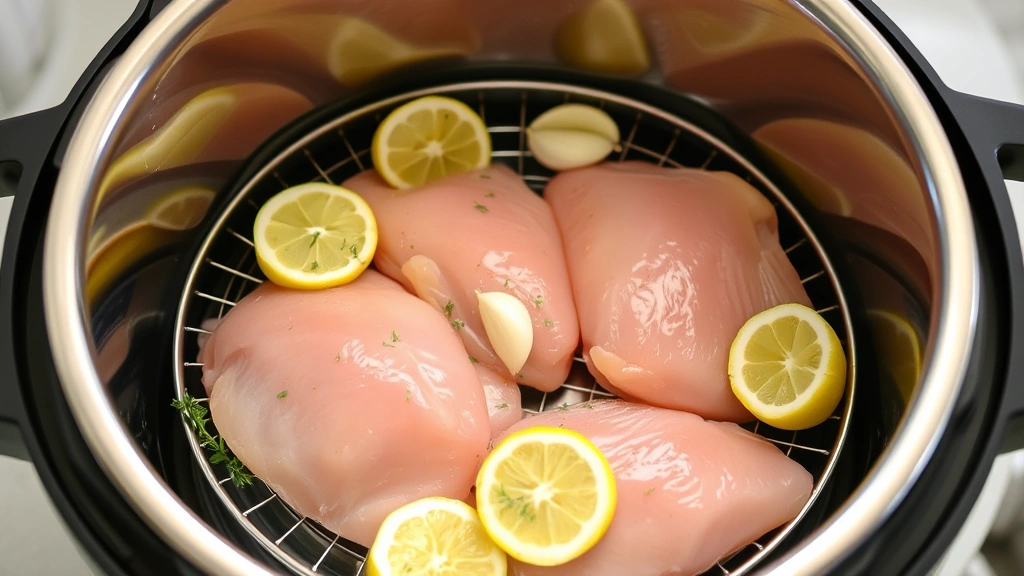
This is the simplest and most foolproof approach for beginners. Add one cup of water (or chicken broth) to the Instant Pot and place the steaming rack inside. Arrange chicken breasts on the rack, ensuring they don’t touch the bottom of the pot. This method prevents direct contact with the cooking liquid and produces incredibly juicy results.
Steps:
- Add liquid to the pot (water or broth)
- Insert steaming rack
- Place seasoned chicken on the rack
- Close the lid and set to high pressure
- Cook for 8 minutes (frozen: 12-15 minutes)
- Quick release pressure immediately
- Check internal temperature reaches 165°F
This method is perfect for meal prep and works well when you need plain chicken for salads or easy Instant Pot recipes.
Method 2: The Sauté and Pressure Method
For deeper flavor development, sauté your chicken briefly before pressure cooking. This creates a golden exterior and develops fond (browned bits) that add complexity to your sauce.
Steps:
- Select sauté mode on your Instant Pot
- Heat oil or butter until shimmering
- Brown chicken on both sides (2-3 minutes per side)
- Remove chicken temporarily
- Sauté aromatics (onions, garlic) if desired
- Deglaze the pot with liquid, scraping up fond
- Return chicken to pot
- Close lid and pressure cook for 8 minutes
- Quick release and serve
This method is ideal for comfort food recipes where sauce and flavor are paramount.
Method 3: The Braising Method
Submerge chicken in flavorful liquid—wine, broth, or sauce—for cooking. This method infuses chicken with tremendous flavor and is perfect for dishes that will be served with sauce.
Steps:
- Combine liquid and seasonings in the pot
- Place chicken directly in the liquid
- Close lid and pressure cook for 8 minutes
- Quick release pressure
- Remove chicken and reduce sauce if desired
Use this method when making curries, stews, or saucy dishes.
Top Instant Pot Chicken Recipes
Now that you understand the science and methods, let’s explore specific recipes that showcase the Instant Pot’s versatility.
Classic Lemon Herb Chicken
This simple yet elegant dish proves that the best flavors don’t require complicated preparations. Combine one cup of chicken broth with juice and zest of two lemons, three minced garlic cloves, two teaspoons of dried thyme, and one teaspoon of rosemary. Place chicken breasts on the steaming rack, pour the mixture around (not over) them, and pressure cook for 8 minutes. The result is aromatic, juicy chicken perfect for serving over rice or alongside roasted vegetables.
Creamy Tuscan Garlic Chicken
Brown four chicken breasts in the sauté function with olive oil. Remove and set aside. In the same pot, sauté six minced garlic cloves and one diced onion until fragrant. Add half a cup of chicken broth and half a cup of heavy cream, plus one teaspoon of Italian seasoning. Return chicken to the pot and pressure cook for 8 minutes. Quick release, then stir in sun-dried tomatoes and fresh spinach just before serving. This dish pairs beautifully with easy homemade bread recipes for soaking up the sauce.
Honey Soy Ginger Chicken
Combine one-third cup soy sauce, one-quarter cup honey, three tablespoons rice vinegar, three minced garlic cloves, and one tablespoon fresh grated ginger in the Instant Pot. Add one cup of chicken broth and place chicken on the steaming rack. Pressure cook for 8 minutes, quick release, and finish with a teaspoon of sesame oil and sliced green onions. Serve over rice for an impressive weeknight dinner.
Buffalo Chicken
Place chicken on the steaming rack with one cup of chicken broth and pressure cook for 8 minutes. Quick release, shred the chicken, and toss with one cup of buffalo sauce and two tablespoons of butter. This versatile preparation works for buffalo chicken dip, sandwiches, salads, or grandma approved dinner recipes that feed a crowd.
Salsa Verde Chicken
This hands-off recipe couldn’t be simpler. Place four chicken breasts on the steaming rack with two cups of salsa verde and one cup of chicken broth. Pressure cook for 8 minutes, quick release, and shred. Use for tacos, burrito bowls, enchiladas, or nachos. The versatility makes this a meal-prep superstar.

Troubleshooting Common Issues
Even experienced cooks encounter occasional problems. Here’s how to solve the most common Instant Pot chicken challenges.
Dry or Tough Chicken
The most common complaint. This usually indicates overcooking. Remember: 8 minutes under high pressure is typically sufficient for boneless, skinless breasts. If your chicken is consistently dry, reduce cooking time to 7 minutes. Additionally, ensure you’re using the quick release method rather than natural release, which continues cooking the chicken as pressure decreases.
Undercooked Chicken
If your chicken reaches only 160°F after cooking, you likely have frozen chicken that needed extra time, or your breasts were thicker than average. For frozen chicken, add 5-7 minutes to cooking time. For thick breasts, pound them to uniform thickness before cooking.
Watery Sauce
Too much liquid produces diluted sauce. Use the sauté function after pressure cooking to reduce sauce to desired consistency. Alternatively, add less liquid from the start—you can always add more, but you can’t remove it.
Chicken Sticking to Pot
Ensure you have at least one cup of liquid in the pot and use the steaming rack method to keep chicken elevated. If using the braising method, stir occasionally during sauté mode to prevent sticking.
Rubbery Texture
This indicates the chicken reached too high a temperature. Confirm your Instant Pot’s pressure calibration is correct. Older models may run slightly hotter, requiring reduced cooking times.
Storage and Meal Prep Tips
One of the Instant Pot’s greatest advantages is meal-prep efficiency. Here’s how to maximize your preparation time.
Refrigerator Storage
Cooked chicken keeps for 3-4 days in an airtight container. Store it in the cooking liquid to maintain moisture, or drain and store separately. Properly stored chicken is perfect for quick lunches throughout the week.
Freezing Strategies
Freeze cooked chicken in portions for up to three months. Use freezer bags or airtight containers, removing as much air as possible. Label with the date and cooking method. Frozen chicken defrosts safely in the refrigerator overnight or quickly in cool water.
Meal Prep Efficiency
Cook a large batch of plain seasoned chicken using the steaming rack method. Once cooled, portion and freeze. Throughout the week, thaw portions and transform them into different dishes—add to salads one day, tacos the next, and pasta the following day. This strategy helps with food waste reduction tips while ensuring you always have protein ready.
Broth Reuse
Don’t discard the cooking liquid! This nutrient-rich broth becomes the foundation for soups, sauces, and future chicken cooking. Freeze it in ice cube trays for convenient portioning.

FAQ
How long does it take to cook chicken in an Instant Pot?
Boneless, skinless chicken breasts typically cook in 8 minutes under high pressure, plus 10-15 minutes for pressure to build and release. Total time is usually 20-30 minutes from start to finish. Frozen chicken requires 12-15 minutes under pressure.
Can I cook frozen chicken directly in the Instant Pot?
Yes, absolutely. Add 5-7 minutes to cooking time and ensure you have adequate liquid. Many cooks prefer cooking from frozen as it eliminates defrosting time while maintaining juiciness.
What’s the difference between quick release and natural release?
Quick release immediately vents pressure, stopping the cooking process. Natural release allows pressure to decrease gradually over 10-20 minutes, which continues cooking the chicken gently. For chicken breast, quick release prevents overcooking.
Why is my chicken stringy or separated?
Stringiness typically indicates the chicken was overcooked or is being shredded too aggressively. If cooking for a specific recipe, reduce cooking time by one minute. When shredding, use two forks gently rather than vigorous pulling.
Can I use bone-in chicken breasts?
Yes, bone-in breasts produce incredibly juicy results. They require the same 8-minute cooking time and retain moisture exceptionally well. The bone conducts heat efficiently and adds flavor to cooking liquid.
What liquid should I use for cooking?
Chicken broth, water, wine, or any combination works. Broth adds flavor, while water is neutral. Acidic liquids like lemon juice or vinegar don’t significantly affect cooking time. Avoid thick sauces that may prevent pressure from building properly.
Is Instant Pot chicken safe to eat?
Absolutely. The Instant Pot’s precise temperature control ensures chicken reaches the safe internal temperature of 165°F (74°C) consistently. Always verify with a meat thermometer for peace of mind.
Can I double the recipe?
Yes, but with caveats. You can stack chicken on the steaming rack or layer it, but ensure proper heat circulation. If braising, avoid overfilling—the pot should be no more than two-thirds full. Cooking time remains the same for doubled recipes.
What accessories are essential for cooking chicken?
A meat thermometer is non-negotiable for verifying doneness. The steaming rack comes with most models. Consider investing in silicone egg bites molds or stackable containers for meal prep. A sharp knife makes shredding easier.
How do I prevent the “burn” message?
This error occurs when food particles stick to the pot bottom, preventing pressure from building. Always add adequate liquid, use the sauté function carefully, and ensure the inner pot is clean. If it persists, deglaze the pot thoroughly after browning.
Mastering Instant Pot chicken breast recipes transforms weeknight cooking from stressful to effortless. With proper understanding of pressure cooking science, appropriate preparation techniques, and practice with these proven methods, you’ll consistently produce restaurant-quality, juicy chicken at home. Start with the steaming rack method, experiment with different seasonings and sauces, and soon you’ll develop the confidence to improvise your own variations. The Instant Pot isn’t just a kitchen appliance—it’s your secret weapon for delicious, efficient, perfectly cooked chicken every single time.


