Sleep-Boosting Salad? Nutritionist Approved Recipes for Better Rest
If you’ve ever wondered whether your dinner plate could actually improve your sleep quality, you’re onto something real. The connection between nutrition and sleep science is well-established, and certain salads packed with specific ingredients can genuinely support better rest. Unlike trendy fad diets, sleep-supporting salads work with your body’s natural circadian rhythms and neurochemistry to promote deeper, more restorative sleep.
The magic lies in combining ingredients rich in magnesium, tryptophan, complex carbohydrates, and antioxidants—nutrients your body needs to produce serotonin and melatonin. Whether you’re interested in fall recipes featuring seasonal ingredients or year-round options, understanding the science behind sleep-boosting foods transforms salad from a side dish into a therapeutic tool for better rest.
This guide explores nutritionist-approved salad recipes designed to enhance sleep quality, backed by the latest food science research. You’ll discover which ingredients matter most, how to combine them effectively, and several complete recipes you can prepare tonight.
The Science Behind Sleep-Boosting Foods
Your body requires specific nutrients to manufacture neurotransmitters that regulate sleep. Serotonin, often called the “happiness hormone,” serves as a precursor to melatonin—the hormone that signals your body it’s time to rest. This biochemical cascade depends heavily on dietary inputs consumed hours before bedtime.
Magnesium acts as a natural relaxant, activating your parasympathetic nervous system and reducing cortisol levels. Tryptophan, an amino acid, crosses the blood-brain barrier more effectively when consumed with carbohydrates, allowing your brain to produce serotonin more efficiently. Complex carbohydrates slow digestion, providing sustained glucose levels that support stable sleep architecture throughout the night.
Research from the National Sleep Foundation indicates that meals consumed 2-3 hours before sleep significantly impact sleep quality. Salads offer the perfect vehicle for these sleep-supporting nutrients because they’re light enough to digest comfortably but nutrient-dense enough to provide real therapeutic benefit.

Essential Ingredients for Sleep-Supporting Salads
Building an effective sleep salad means understanding which ingredients pack the most sleep-supporting power. Here are the nutritionist-approved foundations:
- Magnesium-rich greens: Spinach, kale, and Swiss chard contain 150-300mg magnesium per cooked cup. Raw spinach in salads still provides substantial amounts, though cooking increases bioavailability.
- Tryptophan sources: Pumpkin seeds, sunflower seeds, turkey, chicken, and nuts contain this essential amino acid. A quarter-cup of pumpkin seeds provides approximately 200mg of tryptophan.
- Complex carbohydrates: Sweet potatoes, chickpeas, lentils, and whole grains provide sustained energy and facilitate tryptophan absorption. Unlike simple sugars, these promote stable blood glucose during sleep.
- Healthy fats: Walnuts, almonds, avocado, and olive oil support nutrient absorption and provide omega-3 fatty acids that reduce inflammation and support brain health.
- Antioxidant vegetables: Beets, tomatoes, bell peppers, and carrots contain polyphenols that reduce oxidative stress, allowing your body to focus energy on restorative sleep processes.
When building your salad, aim to include at least three of these categories in each meal. The synergy between ingredients amplifies their sleep-supporting effects far beyond what individual components could achieve alone.
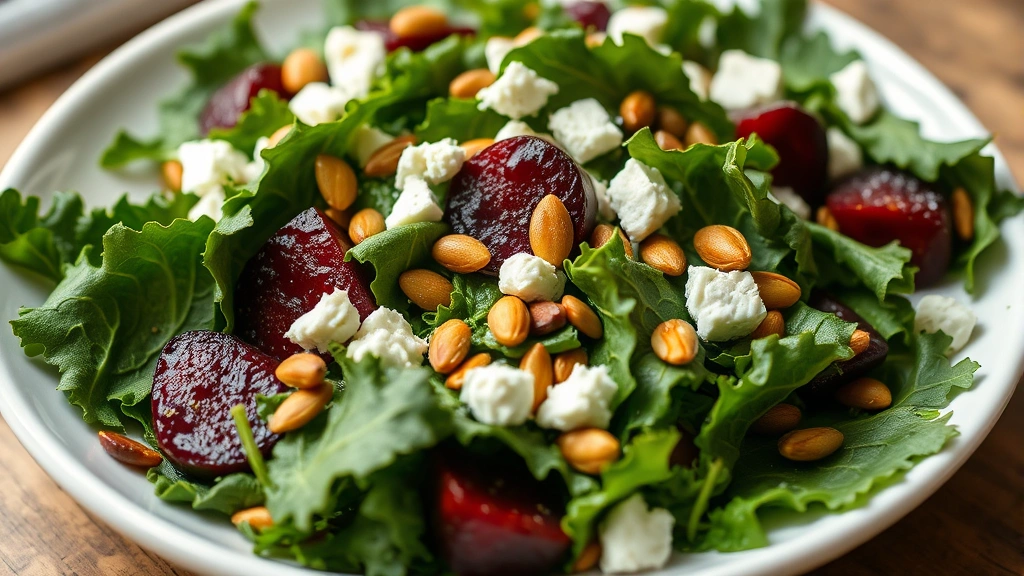
The Magnesium-Rich Green Base Salad
This foundational recipe emphasizes magnesium content while remaining light enough for evening consumption. Serves 2 as a main course or 4 as a side dish.
Ingredients:
- 3 cups fresh spinach (raw)
- 2 cups kale, chopped and lightly massaged
- 1 cup shredded beets (raw or lightly roasted)
- ½ cup pumpkin seeds
- ¼ cup crumbled goat cheese
- 2 tablespoons raw almonds, sliced
- 3 tablespoons extra virgin olive oil
- 1 tablespoon balsamic vinegar
- 1 teaspoon Dijon mustard
- Sea salt and black pepper to taste
Preparation Method:
- Massage kale with a pinch of sea salt for 2-3 minutes to soften the leaves and improve digestibility. This step is crucial because softer greens digest more easily, preventing sleep disruption from digestive activity.
- Combine spinach and kale in a large bowl. Add shredded beets and toss gently to distribute color evenly.
- Toast pumpkin seeds in a dry skillet over medium heat for 3-4 minutes, stirring frequently. Toasting enhances their nutty flavor and makes tryptophan more bioavailable.
- Whisk together olive oil, balsamic vinegar, and Dijon mustard in a small bowl. Add salt and pepper to taste. The mustard emulsifies the dressing while adding negligible calories.
- Pour dressing over greens immediately before serving. Toss thoroughly to coat all leaves.
- Top with toasted pumpkin seeds, almonds, and goat cheese. Serve immediately while the contrast between cool greens and warm seeds remains.
This salad provides approximately 450mg of magnesium per serving, roughly 120% of the recommended daily intake. The beets add natural sweetness without refined sugars, supporting stable blood glucose during sleep. Serve this 2-3 hours before bedtime for optimal sleep benefits.
Tryptophan-Loaded Turkey and Walnut Salad
Turkey’s reputation for causing post-Thanksgiving drowsiness isn’t myth—it genuinely contains substantial tryptophan. This salad leverages that advantage while combining complementary sleep-supporting ingredients. If you’re interested in sophisticated steak seasoning techniques, similar principles apply to seasoning turkey for salads.
Serves 2 generously.
Ingredients:
- 8 ounces roasted turkey breast, cubed
- 4 cups mixed greens (romaine, spinach, arugula)
- 1 cup roasted sweet potato cubes (see preparation below)
- ½ cup toasted walnuts, halved
- ½ cup dried cherries or cranberries
- ¼ cup pumpkin seeds
- 2 tablespoons crumbled feta cheese
- 2 tablespoons extra virgin olive oil
- 1 tablespoon apple cider vinegar
- ½ teaspoon Dijon mustard
- ¼ teaspoon cinnamon
- Sea salt and black pepper to taste
Preparation Method:
- Prepare sweet potatoes by cutting them into ½-inch cubes. Toss with 1 teaspoon olive oil, salt, and pepper. Spread on a baking sheet and roast at 400°F for 15-18 minutes until edges caramelize. Sweet potatoes’ complex carbohydrates enhance tryptophan absorption significantly.
- Toast walnuts in a dry skillet over medium heat for 3-4 minutes, stirring occasionally. This amplifies their natural omega-3 content and deepens flavor without added calories.
- Create the dressing by whisking olive oil, apple cider vinegar, Dijon mustard, and cinnamon. The cinnamon adds warmth and helps regulate blood glucose stability throughout the night.
- Arrange mixed greens on plates or in bowls. Layer roasted sweet potatoes, turkey cubes, and toasted walnuts evenly.
- Drizzle dressing over the salad and top with dried cherries, pumpkin seeds, and feta cheese.
- Serve at room temperature or slightly warm. The contrast between cool greens and warm roasted vegetables creates an appealing eating experience.
Each serving contains approximately 350mg of tryptophan, well above the amount needed to influence serotonin production. The sweet potatoes provide complex carbohydrates that facilitate tryptophan transport across the blood-brain barrier. Enjoy this salad 2-3 hours before your desired sleep time.
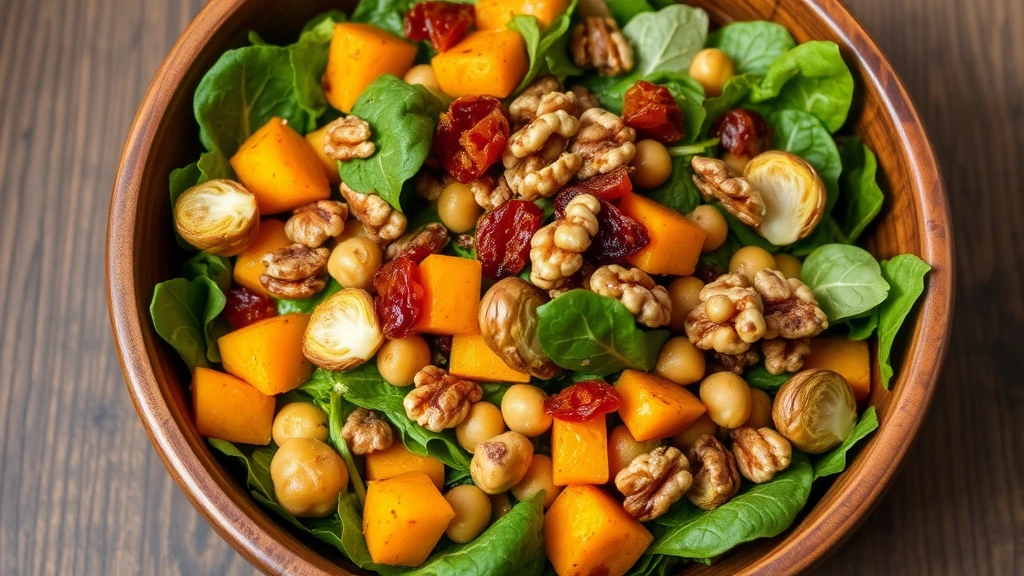
Carbohydrate-Complex Roasted Vegetable Salad
This hearty salad emphasizes complex carbohydrates through chickpeas and roasted vegetables, creating sustained glucose availability that supports consistent sleep architecture. Similar principles guide preparation of candied yams and other root vegetable dishes.
Serves 3 as a complete meal.
Ingredients:
- 1 can (15 oz) chickpeas, drained and rinsed
- 2 cups cubed butternut squash
- 1 cup Brussels sprouts, halved
- 1 medium red bell pepper, cut into chunks
- 5 cups mixed greens
- ¼ cup sunflower seeds
- ¼ cup chopped walnuts
- ¼ cup dried apricots, chopped
- 3 tablespoons extra virgin olive oil
- 1 tablespoon maple syrup
- 2 tablespoons apple cider vinegar
- 1 teaspoon Dijon mustard
- ½ teaspoon cumin
- Sea salt and black pepper to taste
Preparation Method:
- Preheat oven to 425°F. On a large baking sheet, combine chickpeas, butternut squash, Brussels sprouts, and red bell pepper. Toss with 2 tablespoons olive oil, salt, pepper, and cumin.
- Spread vegetables and chickpeas in a single layer. Roast for 25-30 minutes, stirring halfway through, until vegetables caramelize and chickpeas develop crispy edges. The Maillard reaction during roasting creates complex flavors while preserving nutritional content.
- Toast sunflower seeds and walnuts separately in a dry skillet over medium heat for 3-4 minutes each. Set aside.
- Prepare the dressing by whisking remaining olive oil, maple syrup, apple cider vinegar, Dijon mustard, and a pinch of cumin. Maple syrup provides natural sweetness while supporting stable glucose levels better than refined sugars.
- Arrange mixed greens in bowls. Top with roasted vegetables and chickpeas while still warm.
- Sprinkle with toasted sunflower seeds, walnuts, and dried apricots.
- Drizzle dressing over the salad just before serving to maintain textural contrast.
Chickpeas provide approximately 15g of complex carbohydrates and 8g of protein per cup, making them exceptionally effective at facilitating tryptophan absorption. The butternut squash adds natural sweetness and additional magnesium. This salad’s substantial nature makes it ideal as your main evening meal rather than a light side dish.
Antioxidant-Rich Berry and Spinach Salad
Berries contain anthocyanins and other polyphenols that reduce inflammation and oxidative stress—conditions that disrupt sleep quality. This lighter salad works well as a complement to protein-focused dinners or as a standalone meal.
Serves 2.
Ingredients:
- 4 cups fresh spinach
- 1 cup blueberries (fresh or frozen)
- ½ cup raspberries
- ½ cup blackberries
- ¼ cup sliced almonds
- ¼ cup pumpkin seeds
- 2 tablespoons crumbled goat cheese
- 2 tablespoons extra virgin olive oil
- 1 tablespoon raw honey
- 1 tablespoon fresh lemon juice
- ½ teaspoon vanilla extract
- Pinch of sea salt
Preparation Method:
- Toast almonds in a dry skillet over medium heat for 3-4 minutes until fragrant. Toasting increases their polyphenol bioavailability.
- Toast pumpkin seeds in the same skillet for 3-4 minutes. These additions should be warm but not scorched.
- Place fresh spinach in a large bowl. If using frozen berries, thaw them slightly at room temperature for 10-15 minutes to preserve their juice.
- Create the dressing by whisking olive oil, honey, lemon juice, vanilla extract, and sea salt. The vanilla adds depth without calories while supporting the salad’s sleep-promoting profile.
- Gently toss spinach with dressing just before serving. The spinach’s delicate leaves require gentler handling than heartier greens.
- Top with mixed berries, toasted almonds, pumpkin seeds, and crumbled goat cheese.
- Serve immediately to maximize the contrast between cool berries and warm toasted nuts.
Berries contain melatonin naturally, reinforcing your body’s own melatonin production. Their anthocyanins reduce the inflammation that often accompanies poor sleep quality. This salad works particularly well served 1-2 hours before bedtime.
Timing and Serving Suggestions
When you eat your sleep-boosting salad matters as much as what you eat. Nutritionists recommend consuming these meals 2-3 hours before your intended sleep time. This window allows sufficient digestion while keeping nutrients available when your body needs them for sleep preparation.
Avoid eating these salads immediately before bed—your digestive system needs time to process food, and active digestion can disrupt sleep quality. Conversely, eating too early means nutrients won’t be available when your body produces melatonin in the evening.
Temperature considerations also matter. While cold salads work perfectly well, slightly warm components (like roasted vegetables) can enhance digestibility and create a more satisfying eating experience. The warmth signals to your body that you’re consuming a substantial meal, activating proper digestive processes.
Portion size should be moderate. A generous salad as your main course works better than a light side salad. You want enough nutrients to influence your body’s sleep chemistry without creating excessive digestive burden. Aim for 3-4 cups of greens plus 1-1.5 cups of additional ingredients per serving.
If you’re interested in exploring healthy crock pot recipes for other meals, remember that sleep-boosting principles apply across your entire diet. Consistency matters—eating sleep-supporting foods several times weekly creates more noticeable benefits than occasional consumption.
Hydration deserves attention too. While these salads contain water-rich vegetables, drinking adequate water throughout the day (but less in the 2-3 hours before bed) supports better sleep. Dehydration disrupts sleep quality and increases nighttime waking.
Consider pairing these salads with grandma approved dinner recipes for balanced meals. Traditional wisdom about lighter evening meals aligns perfectly with modern sleep science.
FAQ
Can I eat these salads every night?
Yes, these salads are designed for regular consumption. Variety matters though—rotating between different recipes prevents nutritional monotony and ensures you receive diverse phytonutrients. Aim to eat sleep-supporting salads 4-5 times weekly for optimal results.
Will these salads help if I have insomnia?
These salads support better sleep through nutrition, but clinical insomnia often requires professional treatment. Consider them a complementary strategy alongside medical guidance. Many sleep specialists recommend dietary modifications as part of comprehensive insomnia treatment.
What if I don’t like certain ingredients?
Substitute liberally while maintaining the sleep-supporting nutrient profile. Don’t like beets? Use carrots or roasted red peppers. Prefer chicken to turkey? Swap it in. The goal is creating salads you’ll actually eat regularly.
Can I prepare these salads in advance?
Prepare components separately and assemble just before eating. Greens wilt when dressed in advance, and toasted nuts lose crispness. Pre-roast vegetables and store them refrigerated for up to 3 days, then assemble fresh salads as needed.
Are these salads suitable for all dietary restrictions?
These recipes accommodate most diets. Vegetarians can easily follow them. For vegan diets, replace goat cheese with nutritional yeast or cashew cream. Those with nut allergies can substitute seeds for nuts while maintaining sleep-supporting benefits.
How do I know if these salads are working?
Track your sleep quality for 2-3 weeks before making dietary changes, then monitor after adding these salads to your routine. You may notice falling asleep more easily, sleeping more deeply, or waking fewer times during the night. Keep a simple sleep journal noting bedtime, wake time, and subjective sleep quality.
Should I eat these salads if I’m taking sleep medication?
Consult your healthcare provider before making significant dietary changes while taking sleep medication. Some nutrients can interact with medications, though most sleep-supporting foods are generally safe alongside conventional treatments.
What about salad dressing—can I use store-bought versions?
Commercial dressings often contain added sugars that destabilize blood glucose and disrupt sleep. Homemade dressings take just 2-3 minutes and let you control ingredients completely. The recipes provided above all use simple, whole-food dressings.
Can children eat these salads?
Yes, these salads work well for children struggling with sleep. Reduce portion sizes appropriately and allow kids to customize toppings based on preferences. Teaching children to eat sleep-supporting foods builds healthy habits for life.
How do these salads compare to sleep supplements?
Whole foods provide nutrients in synergistic combinations that isolated supplements cannot replicate. While melatonin supplements might help you fall asleep, food-based approaches support your body’s natural sleep processes more comprehensively. Food-first strategies typically create more sustainable long-term results.


